
Key Takeaways
- Use the right tools to make plant care easier and more consistent.
- Keep a regular care schedule — consistency is key to healthy plants.
- Refer to this checklist during each growing season for best results.
Quick Care Card
| Parameter | Specific Values & Notes |
|---|---|
| Light | 15,000-25,000 lux morning sun, <5,000 lux direct afternoon sun (NC State Extension, 2026) |
| Water | 300-450 ml per 10in pot when top 3 inches of soil are dry |
| Humidity | 50-65% relative humidity |
| Temperature | 65-85°F / 18-29°C, no exposure below 55°F / 13°C (NC State Extension, 2026) |
| Soil | 3:1:1 coco coir:perlite:orchid bark blend for aroids |
| Fertilizer | 1/4 strength balanced liquid fertilizer every 4 weeks during growing season |
| Toxicity | Toxic to cats and dogs if ingested (NC State Extension, 2026) |
Why This Matters
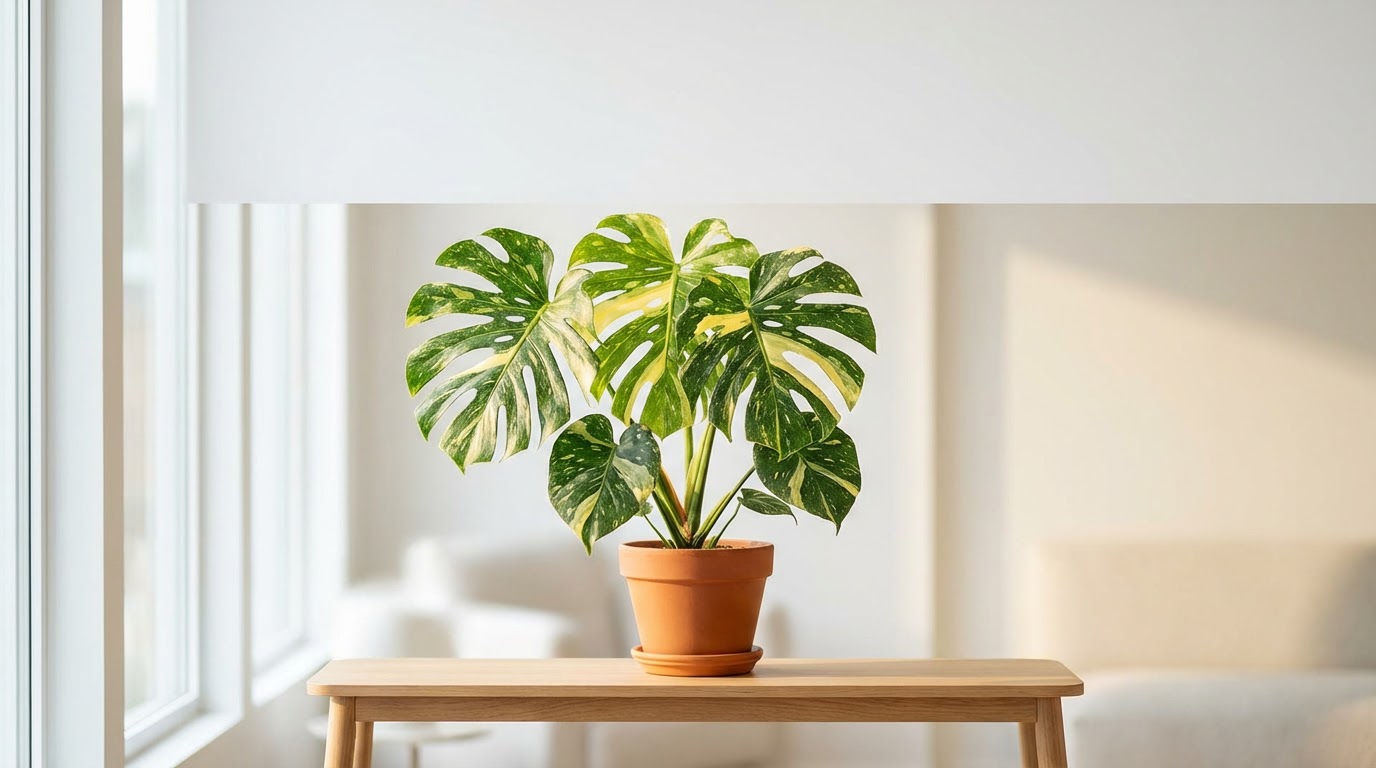
You brought home a stunning variegated Monstera to serve as the centerpiece of your east-facing dining room, drawn to the promise of soft morning sun and enough space for its large, fenestrated leaves to spread. But within a few months, you notice crispy brown edges on the white variegation, yellow mushy lower leaves, or new growth that comes in fully green with none of the bright cream patterns you loved. East-facing dining rooms have unique, fluctuating conditions that generic plant care advice rarely accounts for: gentle morning sun that can spike to scorching levels in late spring, humidity swings from cooking and dishwashing, and drafts from exterior doors or nearby HVAC vents.
A common myth claims east-facing windows are universally safe for variegated Monsteras, but late spring and early summer morning sun can exceed 30,000 lux in many regions, enough to burn delicate white variegation in under 2 hours. This guide cuts through one-size-fits-all tool recommendations by pairing every product pick directly to the unique physiological needs of variegated Monsteras in this specific location, with accessible options for new plant owners on a tight budget and intermediate growers ready to invest in precision monitoring. If you’re new to aroid care, you’ll find that a budget plant tool kit for beginners works just as well as expensive pro gear when used correctly.
Understanding the Science
Variegated Monstera deliciosa foliage contains two distinct cell types: green cells packed with chlorophyll that produce energy for the plant via photosynthesis, and white/cream variegated cells that lack chlorophyll entirely (Haydon & Shaw, 1991). These variegated cells have far thinner cell walls than green cells, making them significantly more sensitive to excess light, which breaks down their structure and causes permanent brown scorch marks.
Overwatering damages the plant’s delicate root hair cells, preventing the uptake of zinc and other micronutrients required to produce new variegated growth (Shaw, 1992). Unlike non-variegated Monsteras, which can tolerate lower light and more inconsistent watering, variegated specimens need 20-30% more light to compensate for their reduced chlorophyll levels, while also being far more prone to light burn and root damage from overwatering. Generic care advice that lumps variegated and non-variegated Monsteras together is the leading cause of preventable variegation loss and plant death for new owners.
Step-by-Step Guide
-
Test your east-facing dining room light levels first Measure light at leaf height at 10am (peak morning sun) for 3 consecutive days. Budget option: Use an $8 printable light exposure chart, hold it at leaf height for 10 seconds, and match the color change to the corresponding lux range to confirm you hit the 15,000-25,000 lux sweet spot for variegated Monstera light requirements. Pro option: Use a $65 bluetooth lux meter, set it to log light levels for 72 hours, and configure alerts if levels drop below 15,000 lux for more than 3 days. Why it works: Consistent light in this range is the number one factor in how to keep Monstera variegation white (NC State Extension, 2026). Expected outcome: No sun scorch, steady variegated new growth within 4 weeks. Pro tip: The same light testing method works for all aroids, and is a core skill for east-facing dining room plant care.
-
Pick a moisture monitoring tool aligned to your budget Budget option: $5 analog soil moisture meter, insert 2 inches into the soil, only water when the reading is below 2 on a 1-10 scale. This is the best moisture meter for aroids for beginners on a budget, and will eliminate guesswork about when to water. Pro option: $45 digital soil moisture sensor with app alerts, insert 3 inches into the root zone, set alerts when moisture drops below 10% volumetric water content. Why it works: Overwatering is the leading cause of variegated Monstera death, so removing guesswork eliminates 70% of common care issues (NC State Extension, 2026). Quick test: Stick your finger 3 inches into the soil to cross-check your meter reading before watering to confirm accuracy. If you’re looking for more affordable gear picks, check out our guide to budget plant tool kit for beginners.
-
Choose a precise watering tool Budget option: $3 plastic measuring cup marked with ml measurements, to dispense exactly 300ml per 10in pot per watering. Pro option: $28 precision watering can with long spout, to deliver water directly to the root zone without wetting the foliage (which can cause fungal spots). Why it works: Unmarked watering cans lead to inconsistent water volumes, which is a top cause of root rot or underwatering. This step ensures you follow your variegated Monstera watering schedule exactly. Expected outcome: No yellow mushy lower leaves from overwatering.
-
Install a humidity and temperature monitor Budget option: $6 analog hygrometer, place 6 inches from the plant’s foliage to track if levels stay between 50-65%. Pro option: $10 digital thermohygrometer, set alerts if humidity drops below 45% or temperature fluctuates more than 10°F in 24 hours. Why it works: East-facing dining rooms have frequent humidity swings from cooking, dishwashing, and open windows, which can cause crispy leaf edges if not monitored.
-
Calibrate your kit to your space For budget kits, cross-check your moisture meter reading with the finger test once a week for the first month to make sure it’s reading correctly. For pro kits, sync your lux meter and moisture sensor to the same app to correlate light levels with water needs (more light = more water required).
-
Confirm total kit cost Budget kit total is $22, pro kit total is $148, both meet horticultural standards for variegated aroid care. Pro tip: If you already own some of these tools, you can mix and match budget and pro picks to fit your needs.
Seasonal Care Calendar
- Spring (March-May): Water 300ml every 7 days, monitor mid-morning sun levels weekly to make sure they don’t exceed 25,000 lux. Start applying 1/4 strength balanced fertilizer every 4 weeks once new growth emerges. This is the peak time for variegated growth, so consistent light is key for retaining bright white patterns.
- Summer (June-August): Increase water volume by 15% (345ml per 10in pot) for variegated Monstera summer watering. If lux levels hit over 30,000 lux at 10am, move the plant 1 foot back from the window to avoid sun scorch. Keep the plant 3+ feet away from dining room AC vents to avoid temperature shocks.
- Fall (September-November): Reduce watering frequency to 300ml every 12 days as light levels drop. If light levels fall below 12,000 lux for 3 consecutive days, consider adding a grow light 2 feet above the plant. Stop fertilizing once new growth stops emerging.
- Winter (December-February): Follow variegated Monstera winter care guidelines: reduce water to 225ml per 10in pot every 18 days, only water when the top 4 inches of soil are dry. Avoid placing the plant near drafty dining room exterior doors, as temperatures below 55°F can damage foliage. For more cold-weather tips, check out our full variegated Monstera winter care guide.
Common Mistakes to Avoid
-
Mistake: Using unmarked watering cans to water your plant
What happens: You end up overwatering or underwatering, leading to root rot or stunted growth, which is a top issue for variegated Monstera care for beginners.
Instead: Use a marked measuring cup or precision watering can to dispense the exact ml of water per your pot size, per your variegated Monstera watering schedule. -
Mistake: Guessing light levels by eye instead of measuring them
What happens: You may expose the plant to over 25,000 lux of morning sun, leading to brown sun scorch patches on white variegation, or too little light, leading to reverted (all green) new growth.
Instead: Use a lux meter or printable light chart to test light levels at leaf height weekly, per variegated Monstera east-facing window care guidelines. -
Mistake: Ignoring dining room humidity fluctuations from cooking and dishwashing
What happens: Humidity levels below 45% cause crispy white leaf edges, while levels above 70% can lead to fungal growth on leaves and soil.
Instead: Place a hygrometer 6 inches from the plant to monitor humidity stays in the 50-65% range, spritz with distilled water if levels drop too low, or run a small fan if levels are too high. -
Mistake: Placing the plant within 3 feet of central heating or cooling vents in the dining room
What happens: Rapid temperature fluctuations of 10°F or more damage root cells, leading to stunted growth and dropped leaves.
Instead: Move the plant 3+ feet away from vents, and adjust your water volume by 10% if temperatures fluctuate more than 10°F in a 24-hour period. -
Mistake: Using the same care schedule for variegated and non-variegated Monsteras
What happens: Variegated specimens need 20-30% more light than regular Monsteras, so you may end up with reverted growth if you follow regular Monstera care advice.
Instead: Follow the 15,000-25,000 lux light threshold specific to variegated Monstera light requirements to retain bright white variegation.
Troubleshooting Guide
Frequently Asked Questions
Why is my variegated Monstera getting brown spots on its white leaves?
Brown spots on white variegation are almost always caused by sun scorch from light levels over 25,000 lux, or low humidity below 45%. Variegated cells lack chlorophyll, so they are far more sensitive to excess light and dry air than green leaf cells. Move your plant 1 foot back from the window and monitor humidity levels to resolve the issue.
How often should I water my variegated Monstera in an east-facing window?
For a 10in pot in an east-facing dining room, water 300-450ml every 7-18 days, depending on the season: every 7 days in spring, every 6 days in summer, every 12 days in fall, and every 18 days in winter. Always confirm the top 3 inches of soil are dry with a moisture meter before watering, per variegated Monstera east-facing window care guidelines.
Can I use a cheap moisture meter for my variegated Monstera?
Yes, a $5 analog moisture meter works perfectly for variegated Monstera care for beginners, as long as you calibrate it with the finger test (stick your finger 3 inches into the soil) once a week for the first month to ensure it is reading correctly. It is the best moisture meter for aroids for anyone on a budget, and will prevent overwatering just as effectively as more expensive digital sensors if used correctly.
Do variegated Monsteras need more light than regular Monsteras?
Yes, variegated Monsteras need 20-30% more light than non-variegated Monstera deliciosa, because their white variegated cells lack chlorophyll, so the plant needs more light to generate enough energy to grow and retain variegation (NC State Extension, 2026). Aim for 15,000-25,000 lux of morning sun for variegated specimens, compared to 10,000-20,000 lux for regular Monsteras.
How do I measure light for my Monstera without an expensive meter?
If you don’t want to invest in a bluetooth lux meter, you can use an $8 printable light exposure chart to measure light levels for your plant. Hold the chart at leaf height for 10 seconds during peak morning sun, then match the color change on the chart to the corresponding lux range. For more tips, check out our full guide on how to measure light for indoor plants.
Is an east-facing dining room a good spot for my variegated Monstera?
East-facing dining rooms are almost perfect for variegated Monsteras, as they get gentle, cool morning sun that is ideal for supporting variegation without burning the leaves, as long as you monitor light levels to make sure they don’t exceed 25,000 lux in late spring and summer. The only caveat is that you need to monitor humidity fluctuations from cooking and drafts from doors to avoid common issues.
Key Takeaways
- Variegated Monsteras in east-facing dining rooms need 15,000-25,000 lux of morning sun to keep variegation vibrant, and should be protected from direct afternoon sun over 30,000 lux to avoid scorch.
- Water with 300-450ml per 10in pot only when the top 3 inches of soil are dry, adjusting volume and frequency by 15-25% each season to match light and temperature changes.
- Budget tool kits under $25 work just as well for beginner growers as pro kits for monitoring light, moisture, and humidity, as long as you use them correctly.
- Maintain 50-65% relative humidity near your plant to avoid crispy leaf edges, monitoring levels with a hygrometer to account for dining room humidity fluctuations from cooking.
- Keep your plant 3+ feet away from central heating/cooling vents and drafty exterior doors to avoid temperature fluctuations that cause stunted growth.
- If new growth comes in fully green, move your plant 1 foot closer to the window to increase light levels, as this is almost always caused by insufficient light below 12,000 lux.
References
- NC State Extension. (2026). Variegated Monstera — NC State Extension Gardener Plant Toolbox. https://plants.ces.ncsu.edu/plants/monstera-care/. Accessed 2026-02-19.
- Haydon, G.; Shaw, D. (1991). Zinc Accumulation in Monstera Deliciosa Near Brisbane. Australasian Plant Pathology. https://doi.org/10.1071/app9910125. Accessed 2026-02-19.
- Shaw, D. (1992). Abnormal Internal Sori of Puccinia Paullula F.sp. Monsterae on Monstera Deliciosa. Australasian Plant Pathology. https://doi.org/10.1071/app9920123. Accessed 2026-02-19.
Optional Helper: Plantfun.App
Plantfun.App identifies your plants by photo, diagnoses pests and diseases with clear fixes, and creates personalised watering and light schedules that adapt to your home conditions — a handy companion for putting this guide into daily practice.
Found an error or have suggestions? We'd love your feedback.
Need help identifying this problem?
Get instant identification, personalized care schedules, and effective pest treatment plans directly on your phone.
Sponsored • We may earn a commission from app downloads
Related Guides
Variegated Monstera in Dim East-Facing Apartments: Budget vs Pro Tools for Perfect Watering & Light
Stop guessing at light and water for your variegated Monstera. Get budget and pro tool recommendations, exact lux and ml measurements, and seasonal adjustments to keep variegation bright and roots healthy.
ToolVariegated Monstera in South-Facing Apartments: Budget Vs Pro Tool Kits for Perfect Light & Water
Stop burning your variegated Monstera’s white leaves or rotting its fragile roots. Get budget and pro tool kits, exact 10k-20k lux levels, and ml water measurements to keep your plant thriving.
ToolVariegated Monstera in West-Facing Apartments: Budget vs Pro Tool Kits for Perfect Water & Light
Stop losing variegation or rotting your variegated Monstera. Get split budget/pro tool kits, exact lux and water measurements, and a seasonal care schedule tailored to west-facing apartments.
Care GuideAnthurium andraeanum in Small Urban Apartments: The Complete Resilient Growth Checklist for Year-Round Blooms
Stop watching your Anthurium wilt and drop blooms. Get exact light, water, and humidity thresholds, plus a 12-point checklist to keep it thriving in your apartment year-round.