
Key Takeaways
- Always check plant toxicity before bringing new plants into a home with pets or children.
- Keep toxic plants out of reach — use high shelves or hanging planters.
- Know the symptoms of plant poisoning so you can act quickly if ingestion occurs.
Quick Care Card
| Parameter | Exact Specs | Notes |
|---|---|---|
| Light | 500-2,500 lux low indirect | Avoid direct midday sun, ideal for north-facing playroom windows |
| Water | 150-200ml every 10-14 days | Only water when top 2 inches of soil are completely dry |
| Humidity | 30-50% RH | No misting required, tolerates standard household humidity |
| Temperature | 60-80°F / 16-27°C | Avoid exposure to temperatures below 55°F / 13°C |
| Soil | 3 parts all-purpose potting mix + 1 part perlite | Well-draining to prevent root rot |
| Fertilizer | Diluted 10-10-10 once every 3 months | Only apply during spring and summer active growth |
| Toxicity | 100% non-toxic to humans, dogs, cats | No calcium oxalate crystals that cause irritation (ASPCA, 2026) |
Non-Toxic Substitution Cheat Sheet
| Plant Name | Toxic to Kids/Pets | Low Light Tolerance (lux range) | Water Frequency | Maintenance Level |
|---|---|---|---|---|
| Peperomia obtusifolia | No (ASPCA 2026) | 500-2,500 | 150-200ml every 10-14 days | Low |
| Pothos (Epipremnum aureum) | Yes (calcium oxalate crystals) | 500-3,000 | 150-250ml every 7-10 days | Low |
| ZZ Plant (Zamioculcas zamiifolia) | Yes (calcium oxalate crystals) | 200-2,000 | 200ml every 2-3 weeks | Very Low |
| Snake Plant (Sansevieria trifasciata) | Yes (saponins, toxic to pets) | 500-10,000 | 200ml every 2-4 weeks | Very Low |
Why This Matters
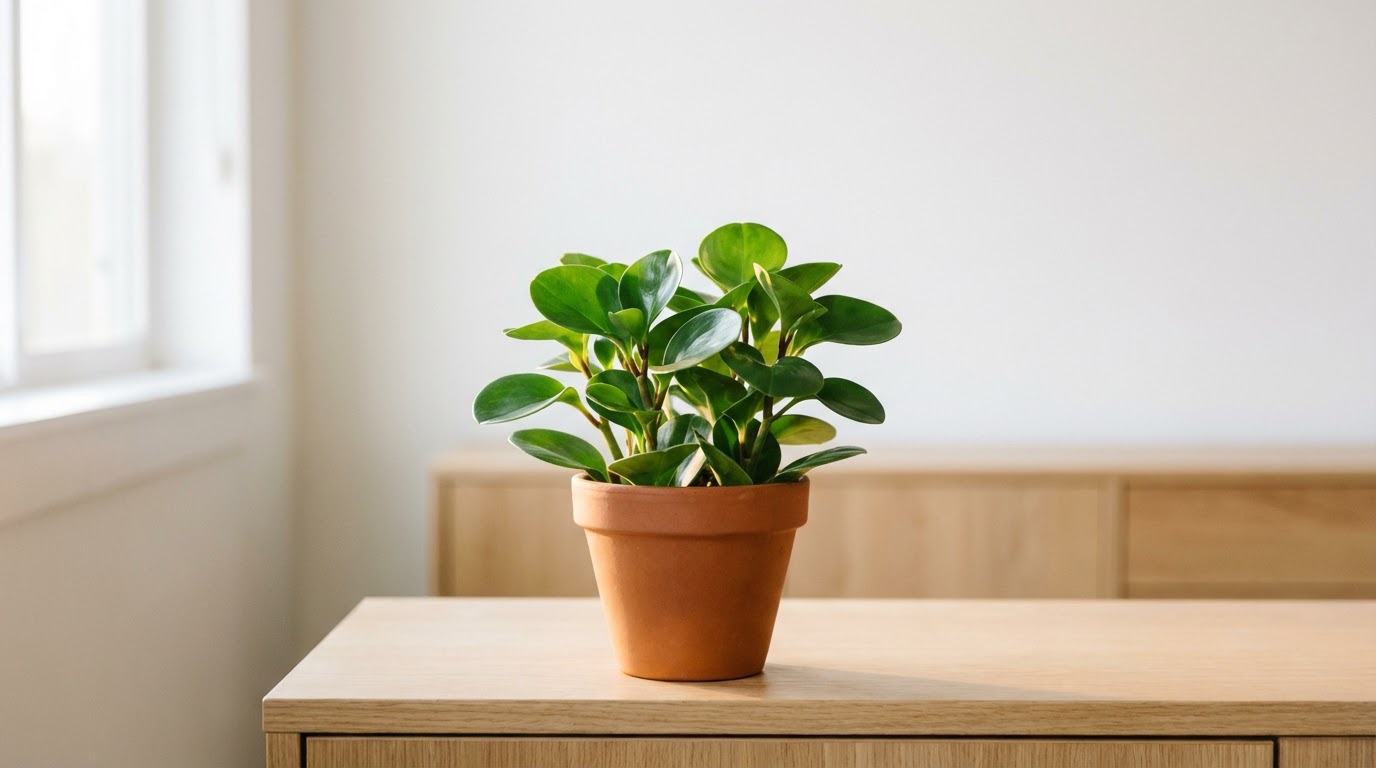
You’ve just decorated your playroom with a lush pothos, thinking it’s the perfect low-light pick—until your toddler grabs a leaf and shoves it in their mouth, or your cat takes a bite and starts drooling. Most popular low-light houseplants (pothos, ZZ plants, snake plants) contain calcium oxalate crystals that cause painful mouth, throat, and skin irritation for kids and pets, per ASPCA (2026). Many families unknowingly keep these toxic plants in play spaces, leading to preventable visits to the vet or pediatrician for ingestion incidents. Peperomia obtusifolia is the ideal swap: it has the same lush, compact growth habit as pothos, thrives in low light, and is completely non-toxic for growing households. If you want to test your playroom’s light levels before purchasing a plant, follow our guide to <a href=“https://letbug.com/how-to-test-indoor-light-levels”>testing indoor light levels for houseplants</a>. You can also explore our full list of <a href=“https://letbug.com/non-toxic-houseplants-for-families”>toddler safe indoor greenery options</a> for more ideas.
Understanding the Science
Peperomia obtusifolia’s thick, succulent-like leaves are adapted to store water for extended dry periods, per (Gilman, 2007), which makes it tolerant of inconsistent watering common in playrooms (forgotten waterings, accidental spills from kids). Unlike toxic pothos or ZZ plants, Peperomia obtusifolia sap has no calcium oxalate crystals, so ingesting small amounts of leaves or sap will not cause irritation or poisoning for kids or pets, per ASPCA (2026). A HortScience study (Henny, 1985) found that Peperomia obtusifolia grows steadily even in light levels as low as 500 lux, which is typical of north-facing playrooms or spaces far from windows, making it far more suited to low-light family spaces than many other non-toxic plants that require brighter light. Its compact root system also means it does not need frequent repotting, making it one of the best low maintenance safe houseplants for busy families.
Step-by-Step Guide
- First, test your playroom’s light levels with a cheap light meter to confirm they fall between 500 and 2,500 lux (the ideal range for Peperomia obtusifolia low light care, per NC State Extension 2026). If light is below 500 lux, install a 10W grow light on an 8-hour daily timer to prevent leggy growth. Why it works: This ensures your plant gets enough light to stay full and lush without burning its leaves. Pro tip: You can also use your phone’s light meter app for a rough estimate if you don’t have a dedicated tool.
- Choose a planting setup: Use a 6-inch nursery pot with drainage holes, filled with a mix of 3 parts all-purpose potting mix and 1 part perlite for optimal drainage. Place the nursery pot inside a weighted 7-inch terracotta decorative pot to prevent tipping from cat jumps or accidental kid knocks (a key part of cat proof houseplant placement). Why it works: The weighted pot adds stability, while the nursery pot with drainage prevents root rot from overwatering or spills. For more tips on securing your plants, check our guide to <a href=“https://letbug.com/child-proof-indoor-planters”>child-proof indoor planter setups</a>.
- Place your plant 3 to 5 feet from a north-facing playroom window, mounted on a floating wall shelf that is at least 4 feet high, to keep it out of toddler reach. Keep it at least 2 feet away from toy storage bins or play tables to avoid accidental knocks during playtime. Why it works: This position delivers the exact low indirect light the plant needs while keeping it safely away from curious little hands and paws.
- Set your watering schedule: Water with 175ml of filtered water only when the top 2 inches of soil are completely dry (stick your finger 2 inches into the soil to test—if it feels dry, it’s time to water). For most low-light playrooms, this works out to every 10 to 14 days, per USDA NRCS (2026). Why it works: Peperomia obtusifolia stores water in its leaves, so overwatering is the most common cause of plant death. Pro tip: Mark your watering days on a calendar to avoid forgetting or overwatering.
- Clean your plant’s leaves once a month with a damp microfiber cloth to remove playroom dust, which can block light absorption. No misting is required, as this plant tolerates standard 30-50% household humidity. Why it works: Dusty leaves reduce the plant’s ability to photosynthesize, leading to slow growth or yellowing leaves.
- Fertilize once every 3 months during spring and summer only, using a 10-10-10 liquid fertilizer diluted to half the recommended strength. Skip fertilizing entirely in fall and winter when the plant is dormant. Why it works: Too much fertilizer can burn the plant’s roots, and it does not need extra nutrients during its dormant period.
Seasonal Care Calendar
- Spring: Once temperatures stay consistently above 60°F (16°C), fertilize once with diluted 10-10-10 fertilizer. Check if the plant is root bound (roots growing out of the drainage holes) and repot into a pot 1 inch larger if needed, using the 3:1 potting mix to perlite ratio.
- Summer: Increase water to 200ml every 10 days as temperatures rise (Peperomia obtusifolia summer watering adjusts to warmer, drier air). Move the plant 1 foot further from the window if you notice harsh midday sun hitting its leaves to prevent scorching.
- Fall: Reduce water to 150ml every 14 days as temperatures drop and light levels decrease. Stop fertilizing entirely to prepare the plant for winter dormancy.
- Winter: Keep the plant at least 1 foot away from drafty playroom windows and heating vents to avoid temperature drops below 55°F (13°C). Water only when the top 3 inches of soil are dry, as growth slows significantly during this time (key for Peperomia obtusifolia winter care, per NC State Extension 2026).
Common Mistakes to Avoid
Mistake: Placing the plant on low coffee tables, play benches, or floor level What happens: Curious toddlers or cats will chew leaves or knock the pot over, leading to mess or damaged plants Instead: Mount the plant on 4ft+ high floating shelves, or use weighted hanging planters to keep it out of reach
Mistake: Overwatering immediately after an accidental kid spill on the pot What happens: Soggy soil leads to root rot, which will kill the plant in 2-4 weeks if not corrected Instead: Pour out all excess water from the drainage tray immediately, and wait 3 extra days before your next scheduled watering to let the soil dry out completely
Mistake: Putting the plant in a full dark playroom corner with no natural or artificial light What happens: Leggy, stretched growth, lost leaf variegation, and eventual plant death Instead: Add a 10W grow light on an 8-hour daily timer if natural light levels are below 500 lux
Mistake: Using decorative pots without drainage holes directly for planting What happens: Water gets trapped at the bottom of the pot, leading to soggy soil and root rot Instead: Keep the plant in its nursery pot with drainage holes, and place it inside the decorative pot, emptying any excess water from the decorative pot once a week
Mistake: Fertilizing the plant in fall or winter when it is dormant What happens: Excess nutrients burn the plant’s roots, leading to brown leaf edges and stunted growth Instead: Only fertilize during spring and summer, when the plant is actively growing
Troubleshooting Guide
Frequently Asked Questions
Can I keep Peperomia obtusifolia in my playroom with toddlers and cats?
Yes, absolutely. Peperomia obtusifolia is 100% non-toxic to humans, dogs, and cats per the ASPCA (2026), so accidental ingestion of small amounts of leaves will not cause any irritation or poisoning. This makes it one of the best child safe indoor plants for playrooms, especially for busy families who want greenery without the safety risk. You can also check our full list of non-toxic houseplants for families for more options.
How often do I water Peperomia obtusifolia in a low-light room?
For low-light playrooms with light levels between 500 and 2,500 lux, water 150-200ml every 10-14 days, only when the top 2 inches of soil are completely dry. Adjust for seasons: use 200ml every 10 days in summer, and 150ml every 14 days in fall and winter. To test if your plant needs water, stick your finger 2 inches into the soil—if it feels dry, it’s time to water. This answers the common question of how often to water Peperomia obtusifolia for low-light conditions.
Is Peperomia obtusifolia really non-toxic to kids?
Yes. Peperomia obtusifolia toxicity for kids is non-existent, per the ASPCA (2026) and NC State Extension (2026). Unlike toxic plants like pothos, it does not contain calcium oxalate crystals that cause painful mouth, throat, or skin irritation if chewed or touched. Ingestion of small amounts of leaves may cause very mild, temporary digestive upset in rare cases, but no serious symptoms.
What is a safe non toxic alternative to pothos for playrooms?
Peperomia obtusifolia is the best non toxic alternative to pothos for playrooms. It has a similar lush, compact growth habit, thrives in the same low-light conditions that pothos prefers, requires the same low level of maintenance, and is completely non-toxic for kids and pets. It’s also one of the best non toxic houseplants for beginners, as it tolerates missed waterings and low light very well.
Can Peperomia obtusifolia survive with no natural light?
Peperomia obtusifolia can survive with no natural light if you provide artificial grow light. It needs a minimum of 500 lux of light for 8 hours a day to stay healthy, so if your playroom has no windows, install a 10W full-spectrum grow light on an 8-hour daily timer. Without any light (natural or artificial), the plant will become leggy and die within 2-3 months.
How do I cat-proof my Peperomia obtusifolia?
The best cat proof houseplant placement for Peperomia obtusifolia is to mount it on a 4ft+ high floating wall shelf that cats cannot jump to, or place it in a weighted 6-inch terracotta pot that is too heavy for cats to knock over. You can also use a hanging planter mounted from the ceiling, out of reach of jumping cats. Since the plant is non-toxic, you don’t need to worry about poisoning if your cat does take a bite, just keep it out of reach to prevent damage to the plant.
Key Takeaways
- Peperomia obtusifolia is 100% non-toxic for kids, dogs, and cats per the ASPCA, making it the perfect swap for toxic low-light plants like pothos, ZZ plants, and snake plants in playrooms
- It thrives in 500-2,500 lux of low indirect light, which is typical of most north-facing playrooms or spaces far from windows
- Mount your plant on a 4ft+ high floating shelf, or use a weighted terracotta pot to keep it out of toddler reach and prevent tipping from cat jumps
- Water 150-200ml every 10-14 days, only when the top 2 inches of soil are completely dry, to avoid overwatering and root rot
- It tolerates standard 30-50% household humidity, so no extra misting or humidifiers are required for playroom placement
- Adjust care for seasons: increase watering in summer, reduce watering and stop fertilizing in fall, and keep it away from drafty windows in winter for best Peperomia obtusifolia winter care results
- If your playroom has light levels below 500 lux, add a 10W grow light on an 8-hour daily timer to prevent leggy growth and lost variegation
References
- Gilman, E. (2007). Peperomia obtusifolia Peperomia, Baby Rubber Plant. EDIS. https://doi.org/10.32473/edis-fp466-1999. Accessed 2026-02-19.
- Henny, R. (1985). BA Induces Lateral Branching of Peperomia obtusifolia. HortScience. https://doi.org/10.21273/hortsci.20.1.115. Accessed 2026-02-19.
- ASPCA. (2026). Toxic and Non-Toxic Plants List — ASPCA. https://www.aspca.org/pet-care/animal-poison-control/toxic-and-non-toxic-plants. Accessed 2026-02-19.
- NC State Extension. (2026). Peperomia Obtusifolia Care — NC State Extension Gardener Plant Toolbox. https://plants.ces.ncsu.edu/plants/peperomia-obtusifolia/. Accessed 2026-02-19.
- USDA NRCS. (2026). Peperomia obtusifolia — USDA Plants Database. https://plants.usda.gov/home/plantProfile?symbol=PEOB. Accessed 2026-02-19.
Optional Helper: Plantfun.App
Plantfun.App identifies your plants by photo, diagnoses pests and diseases with clear fixes, and creates personalised watering and light schedules that adapt to your home conditions — a handy companion for putting this guide into daily practice.
Found an error or have suggestions? We'd love your feedback.
Need help identifying this problem?
Get instant identification, personalized care schedules, and effective pest treatment plans directly on your phone.
Sponsored • We may earn a commission from app downloads
Related Guides
Non-Toxic Peperomia Obtusifolia Placement Guide for Toddler & Cat Accessible Living Rooms
Keep your toddlers and cats safe while adding vibrant greenery to your living room. Get non-toxic Peperomia obtusifolia placement tips, science-backed care rules, and easy swaps for common toxic side table plants like pothos, ZZ, and snake plants.
Safety GuidePeperomia Obtusifolia for Low-Light Playrooms: Pet & Child Safe Placement & Complete Care Guide
Keep your playroom green and safe for kids and pets. Get exact Peperomia obtusifolia care specs, child-proof placement hacks, and non-toxic swaps for existing toxic playroom plants.
Safety GuidePeperomia Obtusifolia Placement & Care Guide for Toddler & Cat-Friendly Living Rooms
Keep your living room green without risking toddler or cat safety. Get exact Peperomia obtusifolia care specs, non-toxic placement hacks, and toxic plant swap ideas to eliminate accidental ingestion risks.
Care GuideThe Complete Peperomia Obtusifolia Care Checklist for Resilient Growth in Small Urban Apartments
Grab a free actionable Peperomia obtusifolia care checklist tailored for small urban apartments, with exact light, water, and humidity thresholds to keep your plant lush and pest-free all year.