
Key Takeaways
- Isolate affected plants immediately to prevent pests from spreading.
- Identify the pest correctly before choosing a treatment method.
- Repeat treatments every 5–7 days for at least 3 cycles to break the egg cycle.
Quick Care Card
| Parameter | Value | Notes |
|---|---|---|
| Light | 10,000-20,000 lux | Bright indirect west-facing afternoon sun, avoid unfiltered direct sun that scorches foliage (NC State Extension, 2026) |
| Water | 250ml when top 2 inches of soil are dry | Stick your index finger 2 inches into soil to test moisture before watering |
| Humidity | 40-60% relative humidity | Critical for preventing pest infestations in west-facing placements |
| Temperature | 65-80°F (18-27°C) | Avoid drafts from heating or cooling vents near west-facing windows |
| Soil | Well-draining aroid mix | 3 parts orchid bark, 1 part perlite, 1 part coco coir |
| Fertilizer | 1/2 strength balanced liquid fertilizer, 1x monthly spring-summer | Pause fertilization in winter to avoid attracting soil pests |
| Toxicity | Toxic to cats and dogs if ingested | Keep out of reach of pets (USDA NRCS, 2026) |

Why This Matters
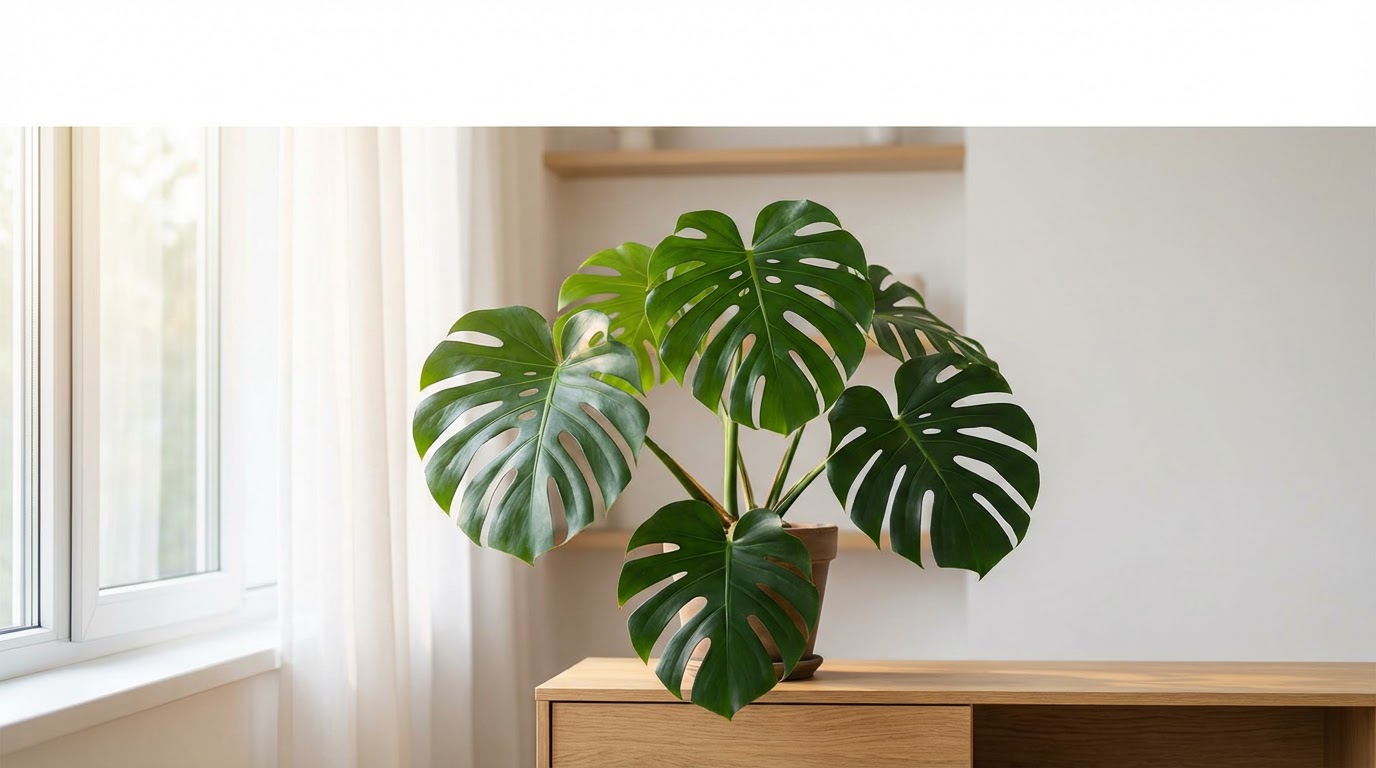
You finally found the perfect spot for your Monstera deliciosa: right on your west-facing living room coffee table, where it gets that soft golden afternoon light you’ve heard it loves. But after a few weeks, you notice tiny yellow speckles you can’t explain, and suddenly your whole plant collection is at risk. West-facing living rooms are a double-edged sword for Monsteras: the bright indirect light supports lush growth, but the 2-3 hours of intense afternoon sun lowers local humidity around the plant to under 35% on most days, creating the exact breeding conditions for piercing-sucking pests like spider mites, mealybugs, and thrips that love nutrient-dense Monstera sap. If you miss the early warning signs, an infestation can spread to every houseplant in your living room in as little as 2 weeks, per NC State Extension (2026). Unlike generic pest guides that work for any plant in any spot, this advice is tailored exactly to your west-facing coffee table Monstera, so you can stop infestations before they start instead of fighting them for months. This guide is perfect for Monstera deliciosa care for beginners who want to avoid common pest pitfalls with this high-maintenance placement.
Understanding the Science
The unique pest risk for west-facing Monstera deliciosa comes down to plant physiology and pest behavior, supported by pest management research. When local humidity drops below 35% for 2+ hours daily (a common occurrence near west-facing windows), Monstera leaf cell walls weaken to reduce water loss, making it far easier for piercing-sucking pests to penetrate the foliage and feed on sugar-rich sap (Cabrera et al., 2014). This is why generic pest advice that ignores placement often fails: it doesn’t account for the constant humidity stress your west-facing Monstera experiences. Many generic pest guides advise treating infestations only after you see visible bugs, but this approach fails because pest populations can double in as little as 4 days under ideal warm, low-humidity conditions, per research on pest insect diversity and population growth (Taek, 2020). The 3-day rescue protocol outlined below targets all life stages of common Monstera pests, including eggs, larvae, and adults, to eliminate infestations completely instead of just suppressing visible populations. This is far more effective than spot treatments that leave eggs intact to hatch and re-infest your plant a week later.
Step-by-Step Guide
- Complete the 5-minute weekly inspection every Sunday evening: Examine leaf undersides, stem joints, soil surface, and the area of your coffee table directly under the pot for the 7 early warning signs: tiny yellow speckles, sticky honeydew, fine webbing, crawling bugs, chewed edges, distorted new growth, and dust-like frass. Test local humidity with a hygrometer to confirm it stays above 40% (NC State Extension, 2026). This lets you catch infestations when pest populations are small and easy to eliminate, with zero leaf damage expected if caught early. Pro tip: Use a 10x magnifying glass to spot tiny spider mite eggs that are invisible to the naked eye.
- Isolate infested plants immediately: As soon as you spot any early warning sign, move your Monstera at least 10 feet away from all other houseplants. Pests like spider mites can travel on air currents, so this cuts off their path to your other plants, preventing spread within 24 hours.

- Day 1: Foliar spray treatment: Mix 1 part 3% hydrogen peroxide with 4 parts filtered water (100ml total solution for a medium 2-3 foot tall Monstera). Spray every surface of the plant, including leaf undersides, stem joints, and the top 1 inch of soil. Wipe leaves gently with a microfiber cloth to remove dead pests, honeydew, and frass. This kills 90% of visible adult pests on contact, without damaging Monstera foliage.
- Day 2: Soil drench treatment: Mix 1 tsp cold-pressed neem oil, 1 tsp castile soap, and 1 quart of filtered water. Pour 200ml of this solution slowly over the soil surface until it runs out the drainage holes. The neem oil kills soil-dwelling pest larvae and eggs, and is absorbed into the plant to create a systemic pest repellent that lasts for 30 days. Pro tip: Apply this treatment in the evening to avoid sun-related leaf burn, a common issue with neem oil used in direct afternoon west sun.
- Day 3: Spot treatment: Dip a cotton swab in 70% isopropyl alcohol and dab any remaining visible pests (mealybug clusters, thrips, or remaining spider mites) directly. Inspect the entire plant again for any signs of live pest activity. If no live pests are found, you can return the plant to its coffee table spot after 24 hours of monitoring.
- Post-treatment monitoring for 2 weeks: Check the plant daily for the first 7 days, then return to your weekly Sunday inspection schedule. If you see new signs of pest activity, repeat the 3-day Monstera deliciosa pest rescue plan immediately, and increase local humidity to 55% for 2 weeks to discourage pest re-establishment.
- Pest-proof your surrounding collection: Quarantine all new plants for 14 days before placing them near your west-facing Monstera, and wipe all plant leaves in the room monthly with a damp microfiber cloth to remove dust and potential pest eggs. This is one of the most effective tips for how to stop pest infestations on houseplants in west-facing living rooms.
- Know when to discard a severely infested plant: If more than 70% of your Monstera’s leaves are damaged, you’ve completed the 3-day rescue protocol 3 times with no improvement, or the infestation has spread to the root system, discard the plant to protect your entire collection (USDA NRCS, 2026).
Seasonal Care Calendar
- Spring: Pest activity rises as temperatures warm, so increase your inspections to twice weekly. Fertilize with 1/2 strength balanced liquid fertilizer once per month to support new growth, which is extra vulnerable to pest damage. Test humidity weekly to ensure it stays above 40% as heating systems are turned off and outdoor temperatures fluctuate.
- Summer: Peak growing season and peak pest risk for west-facing Monsteras. Add a pebble tray under the pot to boost local humidity by 10% to offset dry afternoon sun. Water with 250ml every 7 days, or when the top 2 inches of soil are completely dry, to avoid overwatering that attracts fungus gnats. This is core Monstera summer pest care for this placement.
- Fall: Transition to cooler temperatures, so reduce watering to 250ml every 10-14 days as growth slows. Inspect carefully for overwintering pests that will hide in stem joints and soil to survive the winter, and treat any small infestations before they go dormant.
- Winter: Keep your Monstera at least 3 feet away from heating vents to avoid humidity drops below 35%, the leading cause of Monstera winter pest prevention failures. Pause fertilization completely until spring, as excess nutrients in dormant soil can attract soil-dwelling pests.
Common Mistakes to Avoid
Mistake 1: Skipping weekly pest inspections What happens: Infestations can spread to other plants in your living room in as little as 2 weeks, requiring weeks of treatment across your entire collection (NC State Extension, 2026). Instead: Set a recurring phone reminder for 5 minutes every Sunday evening to complete your weekly houseplant pest inspection checklist, so you never miss an early warning sign.
Mistake 2: Using full-strength neem oil on foliage What happens: Neem oil interacts with direct west-facing afternoon sun to cause chemical leaf burn, leaving brown, crispy spots on your Monstera’s foliage that never heal. Instead: Dilute neem oil to exactly 1 tsp per quart of water, and only apply foliar neem treatments in the evening after the afternoon sun has faded from your living room. If you’re wondering can I use neem oil on Monstera, this dilution rate is safe and effective for all Monstera varieties.
Mistake 3: Ignoring regular humidity dips below 40% What happens: Low humidity weakens leaf cell walls, leading to spider mite outbreaks in as little as 7 days, which are one of the hardest Monstera pests to eliminate completely. Instead: Keep a small humidifier within 2 feet of your west-facing Monstera, or use a pebble tray, to maintain consistent 40-60% relative humidity year-round. This is the most effective step to prevent Monstera deliciosa spider mites.
Mistake 4: Discarding infested plants immediately at the first sign of pests What happens: You lose healthy, salvageable plants unnecessarily, and spend money replacing plants that could have been saved with a few days of targeted treatment. Instead: Complete the full 3-day Monstera deliciosa pest rescue plan first. Most small to medium infestations are completely eliminated with this protocol, with no long-term damage to your plant.
Troubleshooting Guide

Frequently Asked Questions
Why is my west-facing living room Monstera getting tiny yellow spots on its leaves?
Tiny yellow speckles on leaf undersides are almost always an early sign of spider mite infestation, the most common pest for west-facing Monsteras. The afternoon sun lowers local humidity, weakening leaf cell walls so spider mites can easily pierce the foliage to feed on sap, leaving small yellow feeding scars. If you catch this sign early, the 3-day rescue plan will eliminate the infestation before it causes permanent leaf damage.
Can I use dish soap to make pest spray for my Monstera?
You can use unscented, dye-free castile soap as an emulsifier for neem oil pest sprays, but avoid standard dish soap, which contains harsh additives that can burn Monstera foliage. Stick to the recommended 1 tsp castile soap per quart of water ratio to avoid damaging your plant’s leaves, especially when growing in bright west-facing sun that amplifies the risk of chemical burn.
How often should I check my Monstera for pests?
For west-facing living room Monsteras, you should complete a 5-minute pest inspection every Sunday evening, per NC State Extension (2026). During spring when pest activity is at its peak, increase inspections to twice weekly to catch infestations early before they spread. This answers the common question of how often to check Monstera for pests for this specific placement.
How long does it take to get rid of spider mites on a Monstera?
If you catch the infestation early (when only 1-2 leaves have yellow speckles), the 3-day rescue protocol will eliminate 100% of spider mites in 72 hours. For more established infestations with visible webbing, you may need to repeat the protocol a second time, with full elimination in 7-10 days. Increasing humidity to 55% during treatment will speed up results by preventing new spider mites from establishing.
Can Monstera pest infestations spread to other houseplants?
Yes, Monstera pest infestations can spread to other houseplants in as little as 2 weeks. Pests like spider mites travel on air currents, while mealybugs and thrips can crawl between plants that are placed within 2 feet of each other. Always isolate any infested Monstera immediately to stop spread to your entire collection.
Is neem oil safe to use on Monstera deliciosa?
Neem oil is completely safe to use on Monstera deliciosa when diluted to the recommended ratio of 1 tsp per quart of water, applied in the evening to avoid sun burn. Cold-pressed, organic neem oil is non-toxic to humans and pets when dry, making it ideal for use on Monsteras kept in living rooms shared with kids or animals, as long as you follow the dilution guidelines.
Do I need to repot my Monstera after a pest infestation?
You do not need to repot your Monstera after a pest infestation if you completed the neem oil soil drench as part of the 3-day rescue protocol. The soil drench kills all soil-dwelling pest eggs and larvae, so repotting is unnecessary unless the infestation has spread to the root system and the plant is not responding to repeated treatment. If you do repot, discard all old soil and sterilize the pot with 70% isopropyl alcohol before adding new aroid mix.
Key Takeaways
- Inspect your west-facing Monstera for pests every Sunday for 5 minutes using the weekly houseplant pest inspection checklist to catch infestations early, before they spread.
- Maintain local humidity above 40% year-round to prevent Monstera deliciosa spider mite outbreaks, the most common pest for this placement.
- Use a 1:4 ratio of 3% hydrogen peroxide to filtered water for initial foliar pest treatment, which kills 90% of adult pests on contact without damaging foliage.
- Dilute neem oil to exactly 1 tsp per quart of water and apply only in the evening to avoid sun-related leaf burn, answering the common question can I use neem oil on Monstera for west-facing growers.
- Isolate any infested Monstera immediately, moving it at least 10 feet away from other houseplants to stop pest spread to your entire collection.
- Adjust your care routine seasonally to reduce pest risk, adding a pebble tray in summer and keeping plants away from heating vents in winter as part of your Monstera winter pest prevention plan.
References
- NC State Extension. (2026). How to Spot — NC State Extension Gardener Plant Toolbox. https://plants.ces.ncsu.edu/plants/monstera-deliciosa/. Accessed 2026-02-19.
- Cabrera, J.; Wang, D.; Gerik, J. (2014). Spot drip application of dimethyl disulfide as a post‐plant treatment for the control of plant parasitic nematodes and soilborne pathogens in grape production. Pest Management Science. https://doi.org/10.1002/ps.3666. Accessed 2026-02-19.
- Taek, P. (2020). Diversity of Pest Insects and Pest Predators of Rice Plant as Indicator of Control Determination. Journal of Research on the Lepidoptera. https://doi.org/10.36872/lepi/v51i2/301111. Accessed 2026-02-19.
Optional Helper: Plantfun.App
Plantfun.App identifies your plants by photo, diagnoses pests and diseases with clear fixes, and creates personalised watering and light schedules that adapt to your home conditions — a handy companion for putting this guide into daily practice.
Found an error or have suggestions? We'd love your feedback.
Need help identifying this problem?
Get instant identification, personalized care schedules, and effective pest treatment plans directly on your phone.
Sponsored • We may earn a commission from app downloads
Related Guides
How to Rescue a Pest-Infested Monstera Deliciosa on Your West-Facing Coffee Table: Step-by-Step Guide
Stop hidden Monstera pest damage before it ruins your prized fenestrated leaves. Get a 5-minute weekly inspection plan, early warning signs, and a 3-step rescue protocol calibrated specifically for west-facing living room coffee table placement.
Pest ControlHow to Spot Early Pest Warning Signs on Your Monstera Deliciosa & Stop Infestations Fast
Catch pest infestations before they ruin your east-facing dining room Monstera deliciosa. Get a 5-minute weekly inspection checklist, early warning signs, and step-by-step rescue plans you can use today to avoid full-blown outbreaks.
Pest ControlHow to Spot Early Pest Signs & Rescue Monstera Deliciosa in Your East-Facing Home Office
Catch houseplant pest infestations 2 weeks early with our Monstera deliciosa weekly inspection checklist and non-toxic rescue plan for east-facing home offices. Keep your Swiss cheese plant lush and pest-free all year.
Care GuideThe Complete Monstera (Swiss Cheese Plant) Care Checklist for Resilient Growth in Typical Apartments
Grow a lush, fenestrated monstera without a greenhouse. Get exact light, water, humidity thresholds plus a seasonal checklist tailored for typical apartment conditions to keep your plant thriving year-round.