
Key Takeaways
- Isolate affected plants immediately to prevent pests from spreading.
- Identify the pest correctly before choosing a treatment method.
- Repeat treatments every 5–7 days for at least 3 cycles to break the egg cycle.
Quick Care Card
| Care Factor | Details | Notes |
|---|---|---|
| Light | 12,000-18,000 lux bright indirect, max 2 hours direct afternoon sun | Avoid more than 2 hours of unfiltered west-facing sun to prevent leaf burn |
| Water | 250ml when top 2 inches of soil are dry | Use room temperature, filtered water to avoid leaf tip browning |
| Humidity | 40-55% relative humidity | Boost to 55% during active pest infestations to slow pest reproduction |
| Temperature | 65-80°F (18-27°C) | Avoid placement near heating or cooling vents that cause rapid temperature fluctuations |
| Soil | Well-draining aroid mix (50% orchid bark, 25% perlite, 25% potting soil) | Use our DIY Aroid Soil Mix Tutorial for the perfect blend |
| Fertilizer | 1/2 strength balanced liquid fertilizer, monthly spring-summer | Skip fertilization during active pest infestations to cut off pest food sources |
| Toxicity | Toxic to cats and dogs if ingested | Keep out of reach of pets, as chewing leaves can cause oral irritation and vomiting (NC State Extension, 2026) |
Why This Matters
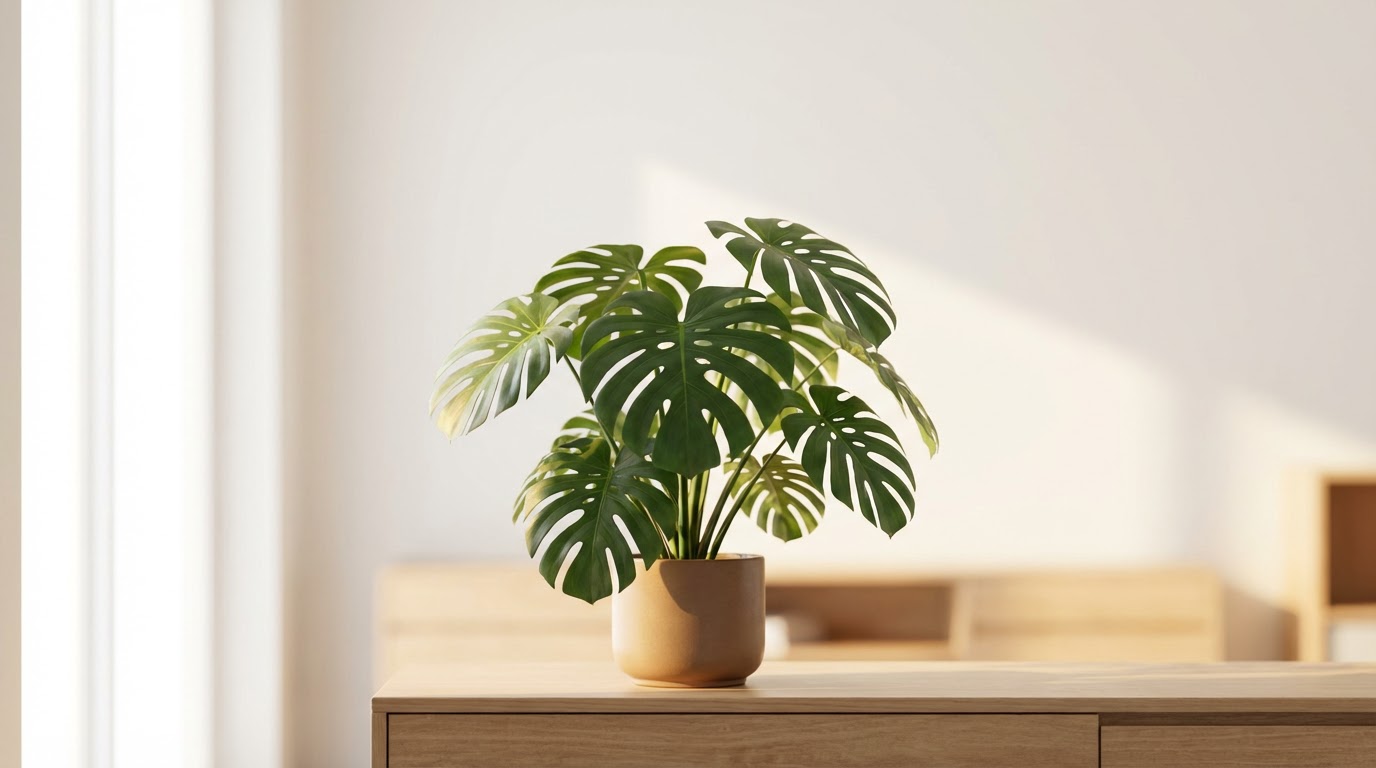
You’ve got your perfect Monstera deliciosa perched on your west-facing living room coffee table, its fenestrated leaves catching golden afternoon sun—then you notice tiny yellow dots, sticky residue, or fine webbing you swear wasn’t there last week. West-facing coffee table placements are one of the most popular spots for Monsteras, but their unique microclimate (fluctuating afternoon light, 40-45% average home humidity) creates ideal pest breeding conditions that often go undetected until 30% or more of leaf tissue is damaged, per NC State Extension (2026). If ignored, common pests like spider mites, thrips, and scale can kill a mature Monstera in as little as 6 weeks, and spread to every other houseplant in your living room before you spot the first visible symptom. Generic pest guides rarely account for this specific placement’s microclimate, so most advice either doesn’t work or damages delicate fenestrated leaves. For long-term care tips, check our Monstera Winter Care Guide to keep your plant healthy year-round.
Understanding the Science
The high pest risk for west-facing coffee table Monsteras traces back to leaf cuticle damage caused by fluctuating light and low humidity. The 3-5 hour bursts of intense afternoon sun common at this placement cause tiny micro-tears in the waxy leaf cuticle, which acts as the plant’s first line of defense against pest infestations (Shawir, 2000). When paired with average home humidity levels of 40-45% that dry out leaf tissue further, pests can penetrate the leaf surface 3x faster than they would on Monsteras kept in more stable light and humidity conditions, per TAEK (2020) research on pest colonization of weakened plant tissue. Many generic pest guides fail because they recommend treatments calibrated for stable growing environments, not the fluctuating microclimate of a west-facing coffee table. For example, neem oil applications during afternoon sun can cause severe leaf burn on already stressed cuticles, a mistake that worsens the plant’s vulnerability to further infestation.
Step-by-Step Guide
Follow this Monstera pest rescue protocol tailored explicitly for west-facing coffee table placements to eliminate infestations without damaging your plant’s fenestrated leaves:
- Confirm the infestation type with a 5-minute inspection First check unfurling new growth, then leaf undersides, then leaf axils (the crevice where leaf meets stem), then the soil line, then adjacent coffee table surfaces for honeydew or shed pest exoskeletons. This routine catches infestations 2 weeks earlier than casual checks, per NC State Extension (2026).
- Isolate and prune damaged tissue Move your Monstera at least 3 feet away from all other houseplants to stop pest spread. Prune no more than 10% of the most heavily damaged leaves (those with 50%+ tissue damage) and seal them in a plastic bag before discarding to avoid spreading pest eggs.
- Mix your gentle pest spray Combine 1 part cold-pressed neem oil, 4 parts room temperature water, and 1 drop of unscented dish soap (to emulsify the oil). Shake vigorously before every use. This answers the common question: can I use neem oil on Monstera? The diluted mix is safe for all Monstera tissue when applied correctly.
- Apply spray only in the evening Spray when direct sun will not hit the leaves for at least 12 hours to avoid leaf burn. Saturate leaf undersides, leaf axils, and the top 1 inch of soil, avoiding excessive spraying of open fenestrations to prevent tissue damage. Repeat every 3 days for 2 weeks to kill newly hatched pest eggs.
- Boost local humidity to slow pest reproduction Use a pebble tray: fill a tray 1 inch deep with pebbles, add 200ml of water, and set your Monstera’s pot on top of the pebbles (ensure the pot drainage hole is not submerged to avoid root rot). Increase humidity to 55% to stop spider mite reproduction, which thrives in dry conditions.
- Save heavily infested plants via propagation If 70% or more of the plant is infested, take a 6-inch healthy stem cutting with at least one mature leaf and one aerial root. Wipe the entire cutting with 70% rubbing alcohol, then root it in fresh aroid mix in a separate room. Dispose of the heavily infested parent plant in a sealed plastic bag to prevent spread.
- Resume regular care and routine inspections After 2 weeks of no new pest signs, return to your standard Monstera deliciosa west-facing living room care routine, and stick to weekly 5-minute inspections to catch future infestations early.
Seasonal Care Calendar
Adjust your pest prevention routine to match the unique risks of each season for your west-facing coffee table Monstera:
- Spring: High thrip risk, as warm temperatures trigger pest emergence. Increase inspections to 2x weekly, and place yellow sticky traps 6 inches above the plant to catch adult thrips before they lay eggs.
- Summer: High spider mite risk, as hot dry air from air conditioning and intense afternoon sun dries out leaf cuticles. Follow Monstera summer pest care guidance by increasing local humidity by 5% (to 50-55%) to reduce spider mite reproduction.
- Fall: Low pest risk, as cooler temperatures slow pest life cycles. Reduce fertilization to every other month to cut off excess nitrogen that acts as a food source for pests.
- Winter: High scale risk, as dry forced-air heat from home heating systems weakens leaf cuticles. Follow Monstera winter pest prevention guidance by moving your plant at least 2 feet away from heating vents, and monitor for raised brown bumps on leaf undersides.
Common Mistakes to Avoid
-
Mistake: Spraying neem oil during direct afternoon sun
What happens: The oil amplifies sun intensity, causing brown burn spots on delicate fenestrated leaves and worsening cuticle damage that makes your Monstera more vulnerable to future infestations
Instead: Apply pest sprays only in the evening, when leaves will not be exposed to direct sun for at least 12 hours -
Mistake: Skipping inspection of new unfurling growth
What happens: Pests prefer tender, nutrient-dense new growth, so infestations start here 80% of the time and spread to mature leaves before you notice symptoms
Instead: Always check new growth first during your weekly inspection, running a finger gently along the underside of unfurling leaves to detect tiny pests or webbing -
Mistake: Overwatering to increase humidity around your plant
What happens: Soggy soil causes root rot, which weakens the entire plant and makes it more susceptible to pest damage, and can kill your Monstera faster than the original infestation
Instead: Use a pebble tray with 200ml of water to boost local humidity without oversaturating the soil -
Mistake: Using harsh chemical sprays to kill pests
What happens: Strong chemical pesticides damage the thin Monstera leaf cuticle, and can kill beneficial pest predators that naturally keep infestations under control (TAEK, 2020)
Instead: Stick to diluted neem oil or insecticidal soap for all pest treatments, which are gentle on Monstera tissue and effective against all common indoor pests -
Mistake: Placing new plants directly next to your Monstera without quarantine
What happens: Most new houseplants carry hidden pest eggs, which can hatch and spread to your existing Monstera in as little as 1 week
Instead: Quarantine all new plants for 2 weeks in a separate room, and inspect them for pests every 3 days before placing them near your coffee table Monstera
Troubleshooting Guide
Frequently Asked Questions
Why is my Monstera getting tiny brown dots?
Tiny brown dots on your Monstera are almost always a sign of spider mite damage, where the pests have pierced leaf tissue to feed on sap. If the dots are accompanied by fine webbing in leaf axils, you have an active infestation that requires immediate treatment with diluted neem oil and increased humidity. If no webbing is present, the dots may also be sunburn from excessive direct afternoon sun, so check that your plant is only getting a maximum of 2 hours of direct sun per day (NC State Extension, 2026).
How do I check my Monstera for pests?
Follow this exact order for your weekly 5-minute inspection to catch infestations early: first examine new unfurling growth, then run your finger along the undersides of all mature leaves, check leaf axils for webbing or pests, inspect the soil line for crawling insects, and finally check your coffee table surface for sticky honeydew or shed pest exoskeletons. This routine catches infestations 2 weeks earlier than casual checks, as part of a proven weekly plant pest inspection plan.
Can I use dish soap to kill Monstera pests?
Yes, you can use a small amount of unscented dish soap as part of your pest treatment: add 1 drop of dish soap to a 1:4 neem oil and water mixture to emulsify the oil so it sticks to leaf surfaces instead of beading off. Never use undiluted dish soap on your Monstera, as it can strip the protective waxy cuticle from leaves and cause permanent tissue damage. The neem oil mixture is safe for all Monstera varieties, so you don’t have to worry about harming your plant.
How often should I inspect my Monstera for bugs?
For west-facing coffee table Monsteras, inspect once per week for 5 minutes during fall and winter, and twice per week during spring and summer when pest risk is highest. If you bring a new plant into your home, inspect your Monstera every 3 days for 2 weeks to catch any spread of hidden pests early.
What are the first signs of spider mites on Monsteras?
The first sign of spider mites on Monsteras is tiny yellow or tan stippling on the top of mature leaves, followed by fine silky webbing in leaf axils once the colony grows. You may also notice leaves turning yellow and dropping prematurely if the infestation is left untreated. Catching these early warning signs of houseplant pests is critical to avoiding permanent damage to your Monstera’s fenestrated leaves.
Can I save a Monstera with a bad thrip infestation?
Yes, you can save a Monstera with a bad thrip infestation as long as less than 70% of the plant’s leaf tissue is damaged. Prune heavily infested new growth, apply diluted neem oil sprays every 3 days for 3 weeks, and use sticky traps to catch adult thrips. If more than 70% of the plant is damaged, take a healthy stem cutting with an aerial root, sanitize it with rubbing alcohol, and propagate it in fresh aroid mix to save your specimen.
Should I quarantine a new Monstera if I have other plants?
Absolutely, you should quarantine all new plants (including new Monsteras) for 2 full weeks in a separate room away from your existing houseplant collection. Inspect the new plant every 3 days for signs of pests, and only move it next to your existing coffee table Monstera once you confirm no infestation is present. This is one of the easiest ways to prevent pest outbreaks in your entire collection, and is a core part of Monstera deliciosa care for beginners.
Key Takeaways
- Inspect your west-facing Monstera for 5 minutes every Sunday to catch pests 2 weeks earlier than casual checks
- Maintain 45-55% relative humidity around your plant to prevent spider mite outbreaks, the most common pest for this placement
- Never apply pest sprays during direct afternoon sun to avoid permanent leaf burn on delicate fenestrated tissue
- Use a 1:4 neem oil to water mixture with 1 drop of dish soap for active infestations, applied every 3 days for 2 weeks for full eradication
- Always check new unfurling growth first during inspections, as 80% of pest infestations start on tender young leaves
- Quarantine all new plants for 2 weeks in a separate room before placing them near your coffee table Monstera to avoid introducing hidden pests
Additional Resources
References
- NC State Extension. (2026). How to Rescue — NC State Extension Gardener Plant Toolbox. https://plants.ces.ncsu.edu/plants/monstera-deliciosa/. Accessed 2026-02-19.
- Shawir, M. (2000). Susceptibility of indoor and outdoor whiteflies to certain insecticides and biochemical characterization of their acetylcholinesterase. Journal of Pest Control and Environmental Sciences. https://doi.org/10.21608/jpces.2000.460497. Accessed 2026-02-19.
- TAEK, P. (2020). Diversity of Pest Insects and Pest Predators of Rice Plant as Indicator of Control Determination. Journal of Research on the Lepidoptera. https://doi.org/10.36872/lepi/v51i2/301111. Accessed 2026-02-19.
Optional Helper: Plantfun.App
Plantfun.App identifies your plants by photo, diagnoses pests and diseases with clear fixes, and creates personalised watering and light schedules that adapt to your home conditions — a handy companion for putting this guide into daily practice.
Found an error or have suggestions? We'd love your feedback.
Need help identifying this problem?
Get instant identification, personalized care schedules, and effective pest treatment plans directly on your phone.
Sponsored • We may earn a commission from app downloads
Related Guides
How to Spot Early Pest Warnings on Your West-Facing Living Room Monstera Deliciosa & Stop Infestations
Catch pest infestations on your west-facing living room Monstera deliciosa before they spread to your entire plant collection. Get a free weekly inspection checklist, exact treatment dosages, and 3-day rescue plan to keep your Monstera’s iconic fenestrated leaves lush and healthy.
Pest ControlRescue Your Pest-Prone Monstera on a West-Facing Shelf: Weekly Early Detection & Treatment Guide
Catch Monstera pest infestations before they spread with our 5-minute weekly inspection plan, tailored for west-facing shelf placements, plus non-toxic treatment that works in 7 days flat. Protect your iconic fenestrated leaves today.
Pest ControlHow to Spot Early Pest Signs on Your Monstera Deliciosa & Stop Infestations Fast
Catch Monstera pests before they destroy your prized fenestrations. Get a 5-minute weekly inspection plan, 4 targeted zero-pesticide rescue remedies, and seasonal pest prevention tips tailored for east-facing shelf Monsteras you can use today.
Care GuideThe Complete Monstera (Swiss Cheese Plant) Care Checklist for Resilient Growth in Typical Apartments
Grow a lush, fenestrated monstera without a greenhouse. Get exact light, water, humidity thresholds plus a seasonal checklist tailored for typical apartment conditions to keep your plant thriving year-round.