
Key Takeaways
- Check soil moisture before watering — overwatering is the #1 killer of houseplants.
- Ensure your plant gets the right amount of light for its species.
- Be patient with recovery — most plants need 2–4 weeks to bounce back.
Quick Care Card
| Parameter | Exact Value | Notes |
|---|---|---|
| Light | 1000-5000 lux | No direct sun; measure 2-3 feet from north window |
| Water | 150-200ml per 6-inch pot | Only when top 3 inches of soil are dry, ~every 21-28 days |
| Humidity | 30-50% | No misting required; matches average north-facing studio humidity |
| Temperature | 60-85°F / 16-29°C | Avoid exposure below 50°F / 10°C |
| Soil | 3 parts all-purpose potting mix + 1 part perlite | pH 6.0-7.0, well-draining |
| Fertilizer | 1/4 strength balanced 10-10-10 | Apply once every 3 months in spring/summer growing season only |
| Toxicity | Mildly toxic to cats/dogs | Contains calcium oxalate crystals; keep out of reach of pets (ASPCA, 2026) |
Why This Matters
If you live in a north-facing studio, you know the struggle: your only window faces a shaded brick wall, your HVAC keeps humidity hovering between 35-40% year-round, and every bright-light plant you’ve brought home has wilted within months. You probably picked up a ZZ plant because everyone says it’s “unkillable,” but generic ZZ care guides don’t account for the unique low-light, low-humidity conditions of your space, leading to frustrating issues like yellowing leaves, no new growth, or unexpected rot. This guide cuts through the generic advice to give you measurable, testable steps tailored exactly to your apartment’s environment, so you can grow a healthy ZZ without constant upkeep.
A common myth you’ve likely heard is that ZZs can survive in complete darkness, but the reality is they need consistent low-level light to thrive long-term. If you’ve been struggling to keep your ZZ alive in your north-facing studio, you’re not making a “bad plant parent” mistake — you just haven’t had access to guidance tailored to your space’s specific parameters.
Understanding the Science
ZZ plants evolved in the low-light understories of East African grasslands, developing thick, potato-like underground structures called rhizomes that store water and nutrients to survive long periods of drought (Henny & Chen, 2013). This adaptation is what makes them so resilient, but it also means their water and nutrient needs drop significantly in low-light environments.
When ZZs are exposed to light levels below 1000 lux (the average light level 4+ feet from a north-facing window), photosynthesis slows by up to 60% compared to plants in bright indirect light, according to research on indoor plant growth response to low light levels (Gautam et al, 2021). This means the plant uses far less water and fertilizer than generic guides recommend, so following standard “water every 2 weeks” advice almost always leads to rhizome rot in north-facing apartments.
Step-by-Step Guide
- Pre-assessment health check First confirm your ZZ’s current status by looking for 3 key thriving signs: glossy frond sheen, no yellowing lower leaves, and 1-2 new fronds per growing season. Quick test: Run your finger along the top of a mature frond — it should feel waxy and shiny, not dull or pale. If any of these signs are missing, you’ll adjust care in the steps below.
- Test your light levels Use a cheap light meter or free phone app to measure lux 2-3 feet from your north window. You want a reading between 1000-5000 lux (Henny & Chen, 2013). If it’s below 1000 lux, move the plant closer to the window, or plan to add a small grow light to hit the minimum threshold.
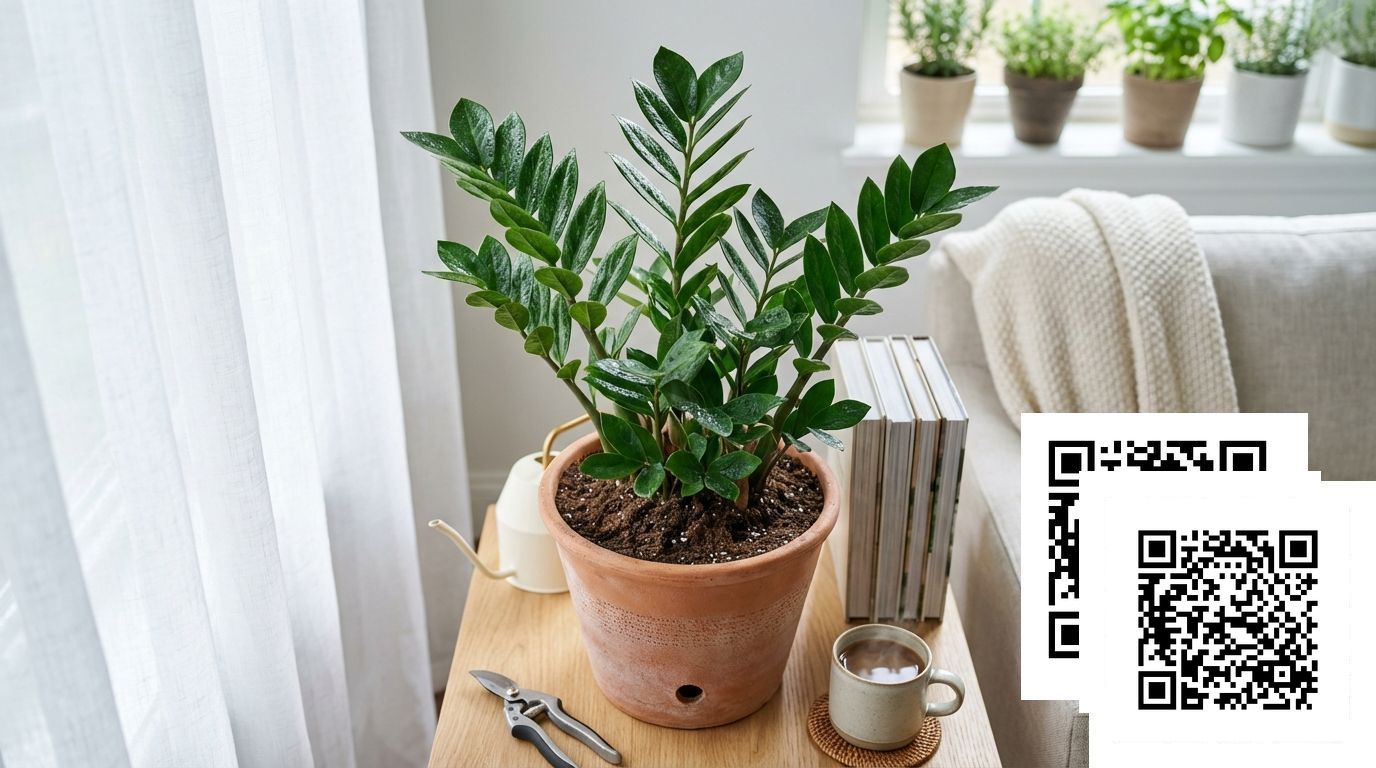
- Pot and soil setup Use a 6-inch terracotta pot with drainage holes (terracotta wicks excess moisture, critical for preventing rot in low-light spaces). Fill with your custom soil mix: 3 parts all-purpose potting mix + 1 part perlite, which ensures fast drainage and a pH between 6.0-7.0, ideal for ZZ rhizome health.
- Repot (if needed) If your ZZ is root bound (roots circling the bottom of the pot), gently loosen the rhizomes, place in the new pot, fill with soil, and water with exactly 150ml of room-temperature distilled water immediately after repotting. Skip watering for 2 weeks after repotting to let roots settle.
- Establish your watering routine Insert a wooden skewer 3 inches deep into the soil before every watering. Only water if the skewer comes out completely dry, with no damp soil stuck to it. For north-facing studios, this will be every 21-28 days on average, eliminating guesswork from how often to water ZZ plant in low light.
- Monthly maintenance Wipe fronds with a damp microfiber cloth once per month to remove dust. Dust blocks light absorption by up to 30%, which is especially problematic in low-light spaces. Skip misting entirely, as it can lead to fungal leaf spots — ZZ plant humidity requirements of 30-50% match the average studio humidity, so no extra humidity adjustments are needed.
- Seasonal adjustment check At the start of each season, review the seasonal care calendar below to tweak your watering and fertilization routine. Expected outcome: 1-2 new glossy fronds per growing season, no yellowing, and no pest issues with minimal upkeep.
Seasonal Care Calendar
- Spring (March-May): As light levels rise, increase water to 200ml per 6-inch pot every 21 days, when the top 3 inches of soil are dry. Apply your first annual fertilizer dose: 1/4 strength balanced 10-10-10 liquid fertilizer, following the ZZ plant fertilizer schedule to avoid overfeeding. You should see new frond shoots popping up within 4 weeks.
- Summer (June-August): No water adjustments are needed for ZZ plant summer watering; keep watering 200ml every 21 days when the soil passes the skewer test. Avoid placing your ZZ near AC drafts, as cold air can damage fronds and slow growth.
- Fall (September-November): Reduce water to 150ml every 28 days, as light levels drop and photosynthesis slows. Stop fertilizing entirely for the winter months, as the plant enters dormancy and doesn’t need extra nutrients.
- Winter (December-February): ZZ plant winter care prioritizes avoiding overwatering over consistent hydration. If temperatures drop below 60°F, move your ZZ 1 foot closer to the north window to get maximum available light. Skip watering entirely if the top 3 inches of soil are still moist after 30 days.
Common Mistakes to Avoid
-
Mistake: Watering on a fixed schedule (e.g., every 2 weeks) instead of testing soil moisture
What happens: Excess water sits around the ZZ’s water-storing rhizomes, leading to rhizome rot, the #1 cause of ZZ death in low-light apartments
Instead: Insert a wooden skewer 3 inches deep into the soil before watering. Only water if it comes out completely dry, no damp soil residue. -
Mistake: Placing your ZZ in a dark corner with <1000 lux of light
What happens: The plant can’t photosynthesize enough to support new growth, leading to leggy, pale fronds and stunted development
Instead: Move the plant to within 3 feet of your north window. If light levels are still below 1000 lux, supplement with a 10W grow light for 4 hours per day, positioned 1 foot above the fronds. -
Mistake: Over-fertilizing in low light to “boost growth”
What happens: Excess fertilizer builds up as salt in the soil, burning leaf tips and damaging the rhizome’s delicate root system
Instead: Only fertilize once every 3 months in the growing season at 1/4 strength, and flush the soil with 500ml of distilled water every 6 months to remove excess salt deposits. -
Mistake: Misting fronds to increase humidity for your ZZ
What happens: Standing water on fronds creates the perfect environment for fungal leaf spots, which can spread and damage large sections of the plant
Instead: Wipe fronds with a damp microfiber cloth once per month to remove dust. ZZ plant humidity requirements are only 30-50%, which matches the average humidity of north-facing studios, so no additional humidity adjustments are needed. -
Mistake: Using a plastic pot with no drainage holes for your ZZ
What happens: Excess water can’t escape, leading to consistent damp soil and rhizome rot even if you water on the correct schedule
Instead: Use a terracotta pot with drainage holes, which wicks away excess moisture and allows air flow to the rhizomes.
Troubleshooting Guide
Yellow or Mushy Lower Leaves
Symptom: Soft, yellow lower leaves that fall off easily, with damp or soggy soil.
Likely cause: Overwatering leading to early-stage rhizome rot, the most common answer to why is my ZZ plant turning yellow in low-light apartments.
Fix:
- Stop watering immediately, and let the top 3 inches of soil dry completely for 2-4 weeks.
- If the issue persists, gently remove the plant from its pot, trim any soft, brown rotted rhizome sections with sterile scissors, and repot in fresh, dry soil mix.
- Adjust your watering schedule to only water when the 3-inch skewer test comes out completely dry.
Leggy, Pale New Fronds
Symptom: New fronds are long, thin, pale green, and spaced further apart than older fronds, with no glossy sheen.
Likely cause: Insufficient light (below 1000 lux), which prevents the plant from producing enough chlorophyll to support thick, healthy growth.
Fix:
- Move the plant to within 2 feet of your north window to increase light exposure.
- If light levels are still below 1000 lux, add a 10W full-spectrum grow light set to run 4 hours per day, 1 foot above the plant’s fronds.
- Wipe fronds monthly to remove dust that blocks light absorption.
Brown, Crispy Leaf Tips
Symptom: Dry, brown tips on otherwise healthy green fronds, with no yellowing or mushy tissue.
Likely cause: Over-fertilization leading to salt buildup in soil, or exposure to cold drafts from AC or heating vents.
Fix:
- Flush the soil with 500ml of distilled water, pouring slowly until water runs out the drainage holes, to remove excess salt deposits.
- Move the plant at least 3 feet away from AC, heating, or exterior door drafts.
- Reduce fertilizer applications to 1/4 strength once every 3 months in the growing season only.
No New Frond Growth
Symptom: No new fronds emerge during the spring and summer growing season, with existing fronds remaining green and healthy.
Likely cause: Light levels are just high enough to keep the plant alive, but not high enough to support new growth, or the plant is root bound.
Fix:
- Move the plant 1 foot closer to your north window to increase light exposure to at least 2000 lux during the growing season.
- Check if the plant is root bound by gently lifting it out of its pot: if roots are circling the bottom, repot into a pot 1 inch larger than the current one.
- Apply 1/4 strength 10-10-10 fertilizer once in early spring to support new growth.
Frequently Asked Questions
Can I keep a ZZ plant in a north-facing apartment with no other windows?
Yes, ZZ plants are one of the best low light apartment resilient plants for this exact scenario, as long as you maintain light levels between 1000-5000 lux (Henny & Chen, 2013). If your only window is north-facing, place the plant within 3 feet of the window to hit that lux range. If light levels are lower than 1000 lux, supplement with a small grow light for 4 hours per day to support growth.
Why is my ZZ plant not growing new fronds in my low-light studio?
The most common reason for a ZZ plant not growing new fronds is insufficient light levels below 2000 lux, which means the plant is only producing enough energy to survive, not to grow new tissue. Another possible cause is root bound rhizomes that have no room to expand in their current pot. Try moving the plant closer to your north window first, and check for root binding if you still don’t see new growth after 4 weeks.
How often should I water my ZZ plant in a north-facing apartment?
For a 6-inch potted ZZ in a north-facing apartment, you will need to water every 21-28 days on average, with 150-200ml of water per watering. The exact timing will vary by season, so always test the soil moisture with a 3-inch skewer test before watering: only water if the skewer comes out completely dry. This prevents overwatering, which is the leading cause of rhizome rot in low-light ZZ plants.
Do ZZ plants need grow lights in low-light homes?
ZZ plants only need grow lights if your north-facing window provides less than 1000 lux of light, which is common if your window faces a tall building or brick wall that blocks most natural light. If you do need a grow light, a 10W full-spectrum LED light run for 4 hours per day is sufficient to keep your ZZ healthy and growing (Gautam et al, 2021). You don’t need a high-powered grow light for ZZ plants, as they thrive in low to moderate indirect light.
Is a ZZ plant toxic to my apartment cat?
Yes, ZZ plants are mildly toxic to cats and dogs if ingested, according to the ASPCA (2026). The plant contains calcium oxalate crystals that can cause mouth irritation, vomiting, and diarrhea if eaten. Place your ZZ on a high shelf or windowsill that your cat can’t reach to avoid accidental ingestion.
Can ZZ plants survive in north-facing rooms with no natural light at all?
While ZZ plants can survive for up to 6 months in very low light (below 1000 lux) by using stored nutrients in their rhizomes, they will not grow long-term without at least 1000 lux of light, either natural or artificial. If your north-facing room has no natural light, you will need to add a grow light to keep your ZZ alive for more than 6 months. This is a common myth that ZZs can live in complete darkness, but they do need some light to photosynthesize long-term.
How do I fix ZZ plant rhizome rot in my low-light apartment?
To complete a ZZ plant rhizome rot fix, first remove the plant from its pot and gently brush away all wet soil from the rhizomes. Use sterile scissors to trim any soft, brown, rotted sections of the rhizome, leaving only firm, white or light yellow healthy tissue. Repot the plant in fresh, dry 3:1 potting mix and perlite, and don’t water for at least 2 weeks after repotting to let the rhizomes heal. Adjust your watering schedule to only water when the top 3 inches of soil are completely dry to prevent rot from recurring.
Key Takeaways
- Maintain light levels between 1000-5000 lux for optimal ZZ growth, placing your plant within 3 feet of your north-facing window to hit this range.
- Water with 150-200ml per 6-inch pot only when the top 3 inches of soil are completely dry, tested via a wooden skewer inserted into the soil.
- Avoid misting your ZZ to prevent fungal leaf spots; ZZ plant humidity requirements of 30-50% match the average north-facing studio humidity, so no extra humidity is needed.
- Fertilize once every 3 months in the spring and summer growing season only, using 1/4 strength balanced 10-10-10 fertilizer to avoid salt buildup.
- Keep temperatures between 60-85°F (16-29°C) and avoid exposure below 50°F (10°C) to prevent cold damage to fronds and rhizomes.
- Wipe fronds with a damp microfiber cloth once per month to remove dust, which improves light absorption in low-light environments.
References
- Henny, R.; Chen, J. (2013). Florida Foliage House Plant Care: ZZ Plant. EDIS. https://doi.org/10.32473/edis-ep480-2013. Accessed 2026-02-19.
- Gautam, B.; Dubey, R.; Kaur, N. (2021). GROWTH RESPONSE OF INDOOR ORNAMENTAL PLANT SPECIES TO VARIOUS ARTIFICIAL LIGHT INTENSITIES (LED) IN AN INDOOR VERTICAL GARDEN. Plant Archives. https://doi.org/10.51470/plantarchives.2021.v21.no1.096. Accessed 2026-02-19.
- ASPCA. (2026). Toxic and Non-Toxic Plants List — ASPCA. American Society for the Prevention of Cruelty to Animals. https://www.aspca.org/pet-care/animal-poison-control/toxic-and-non-toxic-plants. Accessed 2026-02-19.
Optional Helper: Plantfun.App
Plantfun.App identifies your plants by photo, diagnoses pests and diseases with clear fixes, and creates personalised watering and light schedules that adapt to your home conditions — a handy companion for putting this guide into daily practice.
Found an error or have suggestions? We'd love your feedback.
Need help identifying this problem?
Get instant identification, personalized care schedules, and effective pest treatment plans directly on your phone.
Sponsored • We may earn a commission from app downloads
Related Guides
ZZ Plant Care Checklist for North-Facing Apartments: Get Lush Resilient Growth Year-Round
Stop letting your ZZ plant turn yellow or grow leggy in your dim north-facing apartment. Get exact light levels, water amounts, and a seasonal calendar for lush, resilient growth all year.
Care GuideZZ Plant in Low-Light North-Facing Studios: The Only Care Guide You’ll Ever Need
Grow a lush ZZ plant even in your dim north-facing studio. Get exact lux thresholds, watering amounts, and a seasonal care calendar to avoid yellow leaves, rhizome rot, and stunted growth without guesswork or extra bright light.
Care GuideThe Complete ZZ Plant Care Checklist for Resilient Growth in Low-Light Urban Apartments
Keep your ZZ plant thriving even in dark apartment corners. Get exact light levels, watering amounts, and a seasonal care checklist for lush, resilient growth all year long.
Pest ControlAnts on Plants: What They Mean and What to Do
Ants usually aren't eating your plant. They are farming other pests.