
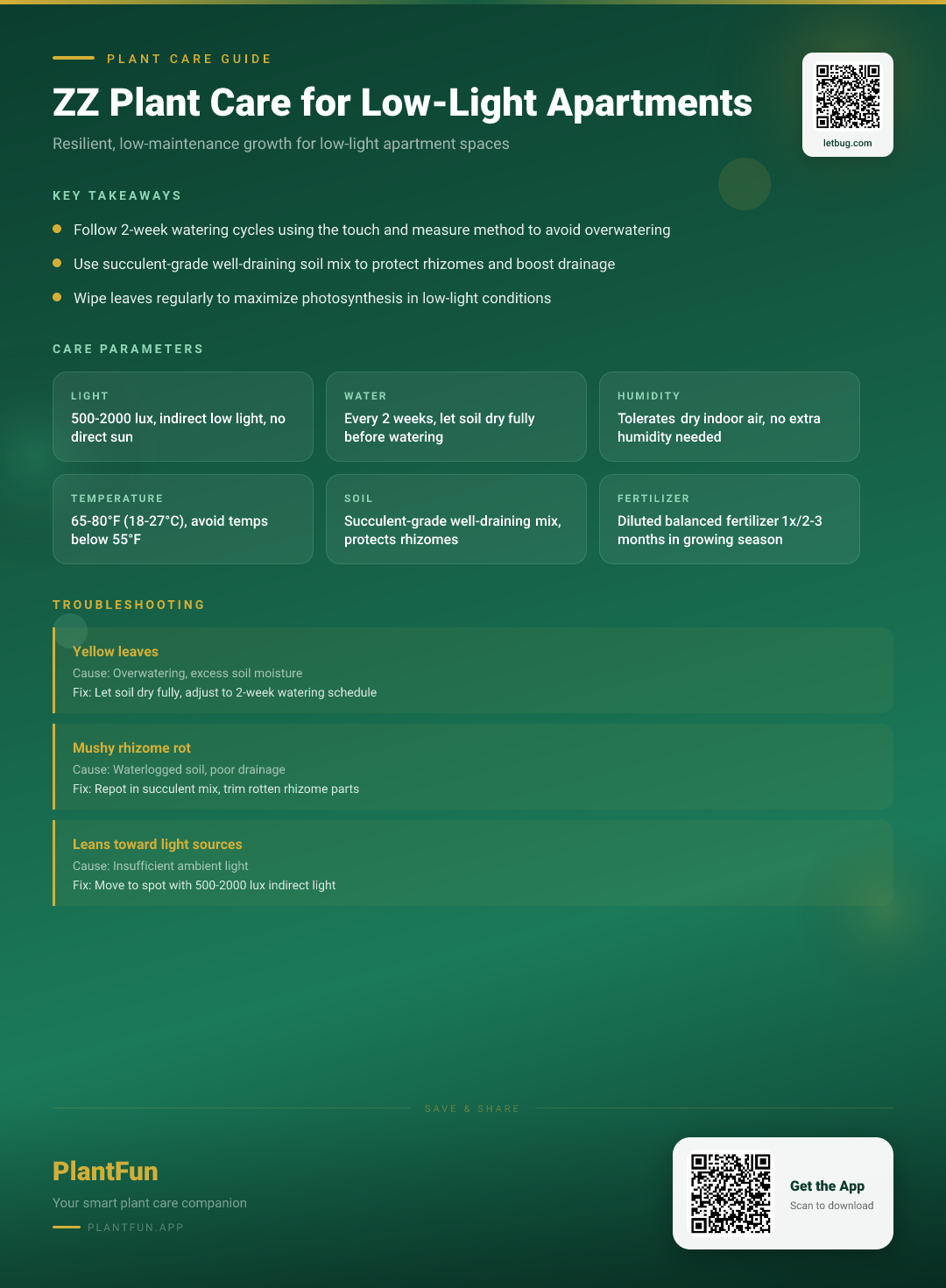
Key Takeaways
- Check soil moisture before watering — overwatering is the #1 killer of houseplants.
- Ensure your plant gets the right amount of light for its species.
- Be patient with recovery — most plants need 2–4 weeks to bounce back.
TL;DR: The Essentials
Stop treating your Zamioculcas zamiifolia like it thrives on neglect. While resilient, it needs bright, indirect light (500–2,000 lux) and strictly infrequent watering—only when the soil is completely dry. Avoid soggy rhizomes at all costs; they are your plant’s water-storage organs and the first thing to rot in dense soil. Keep it in a well-draining, chunky succulent mix, and keep it away from pets (NC State Extension, 2026).
My Experience: Breaking the “Indestructible” Myth
When I first bought my ZZ plant, I tucked it into a windowless bathroom corner, convinced by the urban legend that these plants don’t need light. After six months, the stems stretched out, leaning aggressively toward the doorway, and the vibrant green leaves turned a sickly olive. I learned the hard way that “low light” doesn’t mean “no light.” By moving it to a spot with consistent, soft ambient light and adjusting my watering to a strict 2-3 week cycle, I finally saw the sturdy, vertical growth that characterizes a healthy Zamioculcas.
Quick Care Card: Essential Thresholds for Apartment ZZs
| Feature | Requirement |
|---|---|
| Light | 500–2,000 lux (Bright, indirect) |
| Water | Every 2–4 weeks; let soil dry completely |
| Humidity | 40%–60% (Average room air) |
| Temperature | 65°F–80°F (18°C–27°C) |
| Soil | Well-draining succulent/cactus mix |
| Fertilizer | Balanced liquid feed, diluted, 2x/year |
| Toxicity | Toxic to cats and dogs (ASPCA, 2026) |
Why Your Apartment ZZ Plant Isn’t Growing as Fast as You Think
Zamioculcas growth rate is naturally slow (Henny & Chen, 2013). Because this plant has evolved to store water in fleshy, underground rhizomes, it doesn’t need to put energy into constant vegetative production. In many apartments, the light is simply insufficient to fuel the photosynthesis required for new stem development. If you want faster growth, you must move the plant closer to a light source, not add more fertilizer, which can actually cause root burn.
Light Requirements: Decoding 500-2,000 Lux in Typical Apartment Corners
In my experience, ZZ plant light requirements are often misunderstood. While they can tolerate lower light, they perform best in the 500–2,000 lux range (Henny & Chen, 2013). You don’t need a professional meter; if you can comfortably read a book in that spot, the plant is getting enough light to maintain health. Avoid direct, harsh sun, which can scorch the glossy leaves.
Watering Mastery: The ‘Touch and Measure’ Method for 2-Week Cycles
How do I know if my ZZ plant needs water? I use the “stick test.” I push my finger two inches into the soil; if it feels even slightly damp, I wait another three days. Overwatering is the most common killer of this plant (NC State Extension, 2026). In an apartment, air circulation is often lower than in a greenhouse, so the soil stays wet longer. Only water when the rhizomes have depleted their moisture reserves.
Soil and Drainage: Why Succulent-Grade Mixes Save Your Rhizomes
Standard indoor potting soil holds too much moisture for the ZZ’s potato-like rhizomes. I always mix in extra perlite or pumice to ensure the drainage is rapid. A proper ZZ plant soil mix should allow water to pass through almost immediately after pouring (Halawa & Aisuwarya, 2023). If you are looking to optimize your indoor setup, check our guide on choosing the right planters to ensure you have adequate drainage holes.
Temperature & Humidity: Surviving 65-80°F (18-27°C) and Dry Air
Your apartment’s ambient temperature is usually perfect for a ZZ. They enjoy typical room temps between 65°F and 80°F (NC State Extension, 2026). While they tolerate dry air well, occasional misting isn’t necessary; in fact, I avoid it, as wet leaves can harbor fungal issues in stagnant apartment air.
Seasonal Shifts: How to Adjust Care During Short Winter Days
ZZ plant winter care is simple: do less. As the days shorten and the sun intensity drops, your plant enters a period of dormancy. Reduce your watering frequency. I often find I only need to water once every four to six weeks during the winter. Avoid placing the plant near cold drafts from windows or direct heat from radiators, as rapid temperature fluctuations cause leaf drop.
Common Mistakes: Identifying Leaf Yellowing vs. Rhizome Rot
Overwatering
Symptom: Yellowing lower leaves that eventually turn mushy.
Likely cause: The rhizomes are sitting in water, preventing oxygen intake.
Fix:
- Remove the plant from the pot to inspect the rhizomes.
- Trim any brown, squishy roots or rhizome sections with sterilized shears.
- Repot in fresh, dry, fast-draining soil.
Inadequate Light
Symptom: Long, “leggy” stems stretching toward the light source.
Likely cause: The plant is compensating for insufficient light intensity.
Fix:
- Gradually move the plant to a brighter location.
- Rotate the pot 90 degrees every month to ensure even growth.
FAQ: Why is my ZZ plant leaning toward the window?
This is a classic case of phototropism. The plant is searching for more light to photosynthesize. While it’s a sign your plant is “hunting” for better conditions, it can eventually lead to stems toppling over. Rotate your plant weekly to balance the weight.
FAQ: Can I keep my ZZ plant in the bedroom?
Yes, you absolutely can! It is a great low-maintenance choice for bedrooms. However, keep in mind that the ASPCA classifies the ZZ plant as toxic if ingested, so it should be kept out of reach of curious pets (ASPCA, 2026).
Expert Tips: Cleaning Leaves for Optimal Photosynthesis
In urban environments, dust settles quickly on foliage. Dust acts as a barrier to light absorption. I wipe my ZZ leaves down with a damp cloth once a month. It not only keeps the plant looking glossy but ensures that every surface area is optimized for photosynthesis, which is critical for healthy plant growth.
References
- Henny, R.; Chen, J. (2013). Florida Foliage House Plant Care: ZZ Plant. EDIS. https://doi.org/10.32473/edis-ep480-2013. Accessed 2026-03-17.
- Halawa, H.; Aisuwarya, R. (2023). Smart Plant Pot Robot with IoT Integration for Indoor Ornamental Plants Care. JITCE (Journal of Information Technology and Computer Engineering). https://doi.org/10.25077/jitce.7.2.97-106.2023. Accessed 2026-03-17.
- ASPCA. (2026). Toxic and Non-Toxic Plants List — ASPCA. https://www.aspca.org/pet-care/animal-poison-control/toxic-and-non-toxic-plants. Accessed 2026-03-17.
- NC State Extension. (2026). ZZ Plant Care — NC State Extension Gardener Plant Toolbox. https://plants.ces.ncsu.edu/plants/zamioculcas-zamiifolia/. Accessed 2026-03-17.
Optional Helper: Plantfun.App
Plantfun.App identifies your plants by photo, diagnoses pests and diseases with clear fixes, and creates personalised watering and light schedules that adapt to your home conditions — a handy companion for putting this guide into daily practice.
Found an error or have suggestions? We'd love your feedback.
Need help identifying this problem?
Get instant identification, personalized care schedules, and effective pest treatment plans directly on your phone.
Sponsored • We may earn a commission from app downloads
Related Guides
ZZ Plant Care Checklist for Urban Apartments: 7 Tips for Resilient, Lush Growth
Stop guessing at ZZ Plant care. Grab our apartment-specific checklist with exact light, water, and soil parameters to avoid yellow leaves and grow lush, resilient fronds year-round.
Care GuideThe Complete ZZ Plant Care Guide for Small 1-Bedroom Apartments: Tips for Lush Resilient Growth
Maximize growth for your low-maintenance houseplant without sacrificing square footage. Get exact light, water, and soil thresholds for ZZ plant care in small 1-bedroom apartments, plus space-saving hacks you can implement today.
Care GuideZZ Plant Care Checklist for North-Facing Apartments: Get Lush Resilient Growth Year-Round
Stop letting your ZZ plant turn yellow or grow leggy in your dim north-facing apartment. Get exact light levels, water amounts, and a seasonal calendar for lush, resilient growth all year.
Pest ControlAnts on Plants: What They Mean and What to Do
Ants usually aren't eating your plant. They are farming other pests.