
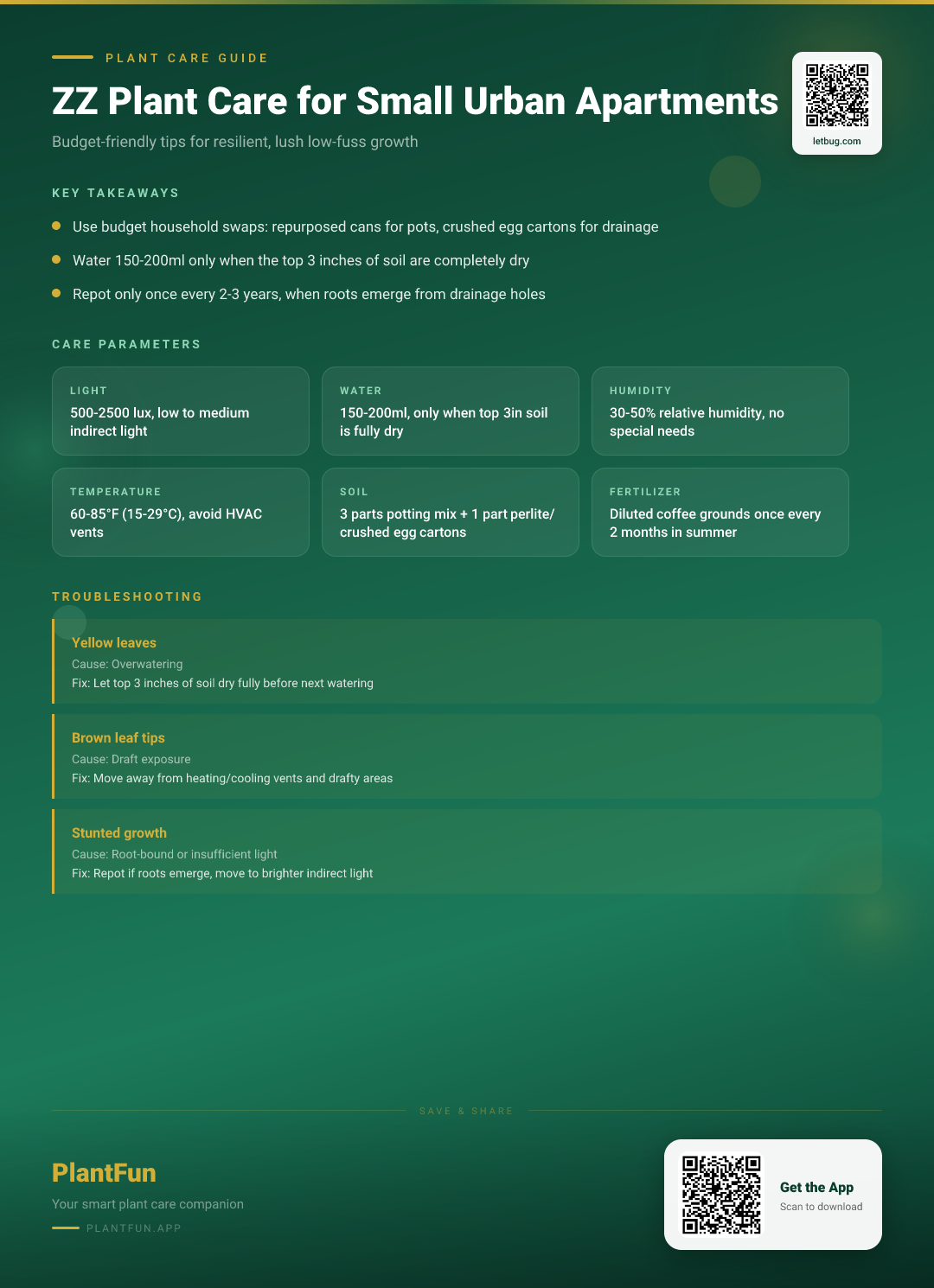
Key Takeaways
- Check soil moisture before watering — overwatering is the #1 killer of houseplants.
- Ensure your plant gets the right amount of light for its species.
- Be patient with recovery — most plants need 2–4 weeks to bounce back.
Quick Care Card
| Care Category | Measurable Threshold |
|---|---|
| Light | 500–2,500 lux (low to medium indirect light) |
| Water | 150–200ml only when top 3 inches of soil are fully dry |
| Humidity | 30–50% relative humidity |
| Temperature | 60–85°F (15–29°C) |
| Soil | 3 parts regular potting mix + 1 part perlite/crushed egg cartons |
| Fertilizer | Diluted used coffee grounds once every 2 months in summer only |
| Toxicity | Toxic to cats, dogs, and humans if ingested (ASPCA, 2026) |
Download the full free 1-page printable ZZ plant care checklist here to tape to your fridge for easy reference.
Why ZZ Plants Are Perfect for Typical Urban Apartments
Native to the drought-prone, low-light understories of eastern African grasslands, ZZ plants (Zamioculcas zamiifolia) evolved with thick, water-storing rhizomes and waxy leaves that reduce moisture loss, making them uniquely suited to the inconsistent conditions of small urban rentals (Henny & Chen, 2013). Unlike finicky tropical plants, they tolerate forgotten watering, low light from north-facing windows, and dry HVAC air without losing their glossy, lush appearance. They also grow slowly, so they won’t outgrow limited shelf or counter space for years, making them ideal for ZZ plant care for beginners navigating apartment living for the first time.
If you’re looking for other hardy plants for your space, check out our roundup of the best low-light apartment houseplants.
No-Fuss Budget ZZ Plant Supply List
You don’t need expensive specialty gear for ZZ plant resilient growth tips that work. All the supplies you need are likely already in your home:
- Pots: Cleaned 15-oz to 1-quart food cans (punch 2-3 ¼-inch drainage holes in the bottom with a nail and hammer, no cost) instead of $20+ decorative ceramic pots
- Drainage amendment: Crushed dry egg cartons instead of $8 perlite bags
- Fertilizer: Used, unsweetened coffee grounds instead of $15 specialty houseplant fertilizer
- Moisture tester: A wooden chopstick or your finger instead of $12 digital moisture meters
- Leaf cleaner: A damp microfiber cloth instead of $6 chemical leaf shine products
Light Placement Guide for Apartment Spaces
ZZ plants thrive in 500–2,500 lux of low to medium indirect light, a range perfectly matched to most apartment spaces (Henny & Chen, 2013). Ideal spots include:
- North-facing window sills
- Corners 5+ feet away from south or west-facing windows (to avoid direct sun that scorches leaves)
- Hallways with regular overhead light access
Quick test: If you can read a paperback book comfortably in the spot during the day without turning on artificial light, it has sufficient light for ZZ plant low light care. Avoid spots where direct sun hits the leaves for more than 1 hour per day.
Exact Watering Schedule for Forgetful Owners
Wondering how often to water ZZ plants? Water only 150–200ml of room-temperature water when the top 3 inches of soil are fully dry (Halawa et al, 2023). To test moisture, stick your index finger 3 inches deep into the soil, or insert a wooden chopstick: if no soil sticks to the chopstick when you pull it out, it’s time to water.
- Summer (May to August): Water every 2-3 weeks, following the soil dryness rule
- Winter (November to February): Water every 4-6 weeks, as the plant enters dormancy and uses less moisture
Always dump excess water from the saucer under the pot 10 minutes after watering to avoid root rot. For more help fixing overwatering issues, see our houseplant root rot rescue tutorial.
Humidity & Temperature Rules for HVAC Apartments
ZZ plant humidity requirements sit at 30–50% relative humidity, and their ZZ plant temperature range is 60–85°F (15–29°C) (Henny & Chen, 2013). Most apartments already fall within these ranges, but HVAC systems can create edge cases:
- If your winter heating drops humidity below 30%, place a shallow tray of water near the plant (no need for an expensive humidifier)
- Never place your ZZ plant within 2 feet of heating vents, AC units, or drafty winter windows: sudden temperature fluctuations cause leaf drop and stunted growth
Budget Soil & Repotting Tips
ZZ plants grow very slowly, so you only need to repot them once every 2-3 years, when you see thick white roots growing out of the drainage holes at the bottom of the pot (Henny & Chen, 2013). For budget soil, mix:
- 3 parts regular, generic potting mix (available for $2 per bag at dollar stores)
- 1 part crushed dry egg cartons (or perlite, if you already have it on hand) to improve drainage
When repotting, only go up 1-2 inches in pot size: overly large pots hold excess moisture that causes root rot, and take up unnecessary space in small apartments.
Seasonal Care Calendar for Apartment Dwellers
Adjust your care routine to match seasonal apartment conditions to avoid guesswork:
- January-February (winter dormancy): Follow ZZ plant winter care rules: water every 4-6 weeks, no fertilizer, keep plants 2+ feet away from space heaters and drafty windows
- March-April (spring): Resume watering when the top 3 inches of soil are dry, apply first feeding of diluted coffee grounds
- May-August (summer): Follow ZZ plant summer watering schedule: water every 2-3 weeks, feed with diluted coffee grounds once every 2 months, wipe leaves with a damp cloth monthly to remove dust that blocks photosynthesis
- September-October (fall): Gradually reduce watering frequency, stop all fertilizer applications
- November-December: Return to winter dormancy care routine
For more zero-cost care hacks, check out our guide to kitchen scrap uses for houseplants.
5 Common Apartment ZZ Plant Mistakes to Avoid
- Mistake: Watering on a fixed schedule regardless of soil moisture What happens: Soggy soil causes rhizome rot, the leading cause of yellow ZZ plant leaves Instead: Test the top 3 inches of soil every 2 weeks, only water 150-200ml when fully dry
- Mistake: Placing your ZZ plant near HVAC vents or drafty windows What happens: Sudden temperature shifts cause sudden, widespread leaf drop Instead: Keep plants at least 2 feet away from vents, and move them away from drafty windows during winter cold snaps
- Mistake: Buying and applying expensive specialty fertilizer every month What happens: Salt buildup in soil burns leaf tips and damages rhizomes Instead: Use diluted used coffee grounds (1 part grounds mixed with 5 parts water) once every 2 months in summer for ZZ plant budget care tips that cost nothing
- Mistake: Repotting your ZZ plant every year to “encourage growth” What happens: Root shock stunts growth for 6+ months, and overly large pots increase rot risk Instead: Repot only every 2-3 years, when roots emerge from drainage holes
- Mistake: Using chemical leaf shine products to make leaves glossy What happens: Products clog leaf pores, reducing photosynthesis and slowing growth Instead: Wipe leaves with a damp microfiber cloth for the same glossy effect for free, one of the easiest cheap ZZ plant care hacks
FAQ: Why is my ZZ plant getting yellow leaves in my apartment?
90% of yellow ZZ plant leaves are caused by overwatering (Henny & Chen, 2013). First, check the soil: if the top 3 inches are soggy, stop watering completely for 2-3 weeks until the soil is fully dry. If the yellowing spreads, gently remove the plant from its pot, cut away any mushy, brown rotting rhizomes, and repot in fresh, dry soil. Less common causes include placement within 2 feet of heating vents, or sudden exposure to direct sun.
FAQ: Can I keep a ZZ plant in a dark windowless apartment office?
ZZ plants are one of the most low-light tolerant houseplants, so they can survive in windowless spaces as long as they get at least 200 lux of artificial light (equal to standard overhead fluorescent lights left on for 8+ hours per day) (Halawa et al, 2023). Growth will be very slow, but you can boost it by moving the plant to a brighter spot for 2-3 days every month if possible. This answers the common question: can ZZ plants grow in dark apartments?
FAQ: How often do I need to feed my ZZ plant if I’m on a tight budget?
ZZ plants are extremely light feeders, so you only need to feed them 2-3 times per year, only during the spring and summer growing season. Use diluted used coffee grounds (1 part unsweetened used grounds mixed with 5 parts water) for zero cost, and skip feeding completely during fall and winter when the plant is dormant. You never need to buy specialty fertilizer for healthy ZZ plant growth.
Printable Checklist Recap
Our free ZZ plant care checklist includes these easy, actionable steps you can reference at a glance:
- Light Check: Confirm your plant spot gets enough light to read a book during the day without artificial light (500-2500 lux)
- Water Check: Every 2 weeks, test the top 3 inches of soil. Only water 150-200ml if no soil sticks to your finger or chopstick
- Placement Check: Confirm the plant is at least 2 feet away from HVAC vents and drafty windows, with a temperature of 60-85°F and 30-50% humidity
- Monthly Maintenance: Wipe leaves with a damp cloth, check for roots growing out of drainage holes
- Seasonal Adjustment: Follow the seasonal care calendar to adjust watering frequency, and add diluted coffee grounds once every 2 months in summer
Tape the checklist to your fridge to eliminate all decision fatigue for ZZ plant apartment care.
References
- Henny, R.; Chen, J. (2013). Florida Foliage House Plant Care: ZZ Plant. EDIS. https://doi.org/10.32473/edis-ep480-2013. Accessed 2026-02-28.
- Halawa, H.; Aisuwarya, R. (2023). Smart Plant Pot Robot with IoT Integration for Indoor Ornamental Plants Care. Journal of Information Technology and Computer Engineering. https://doi.org/10.25077/jitce.7.2.97-106.2023. Accessed 2026-02-28.
- ASPCA. (2026). Toxic and Non-Toxic Plants List. American Society for the Prevention of Cruelty to Animals. https://www.aspca.org/pet-care/animal-poison-control/toxic-and-non-toxic-plants. Accessed 2026-02-28.
Optional Helper: Plantfun.App
Plantfun.App identifies your plants by photo, diagnoses pests and diseases with clear fixes, and creates personalised watering and light schedules that adapt to your home conditions — a handy companion for putting this guide into daily practice.
Found an error or have suggestions? We'd love your feedback.
Need help identifying this problem?
Get instant identification, personalized care schedules, and effective pest treatment plans directly on your phone.
Sponsored • We may earn a commission from app downloads
Related Guides
The Complete ZZ Plant Care Checklist for Resilient Growth in Low-Light Urban Apartments
Keep your ZZ plant thriving even in dark apartment corners. Get exact light levels, watering amounts, and a seasonal care checklist for lush, resilient growth all year long.
Care GuideZZ Plant Care Checklist for North-Facing Apartments: Get Lush Resilient Growth Year-Round
Stop letting your ZZ plant turn yellow or grow leggy in your dim north-facing apartment. Get exact light levels, water amounts, and a seasonal calendar for lush, resilient growth all year.
Care GuideZZ Plant in North-Facing Studio Apartments: The Only Care Checklist You’ll Ever Need
Stop guessing ZZ plant care for your low-light north-facing apartment. Get exact lux thresholds, water amounts, and a seasonal checklist to grow thick, glossy fronds for years.
Pest ControlAnts on Plants: What They Mean and What to Do
Ants usually aren't eating your plant. They are farming other pests.