
Key Takeaways
- Check soil moisture before watering — overwatering is the #1 killer of houseplants.
- Ensure your plant gets the right amount of light for its species.
- Be patient with recovery — most plants need 2–4 weeks to bounce back.
Quick Care Card
| Parameter | Exact Value | Notes |
|---|---|---|
| Light | 8,000-15,000 lux | Bright indirect morning light, within 2 feet of east-facing window (NC State Extension, 2026) |
| Water | 150ml per plant | Only apply when top 1.5 inches of soil is completely dry |
| Humidity | 60-70% | Boost with misting or pebble tray if forced heating drops levels below 50% (USDA NRCS, 2026) |
| Temperature | 68-78°F (20-26°C) | No dips below 60°F (15°C) to avoid bud abortion |
| Soil | 1:1:1 orchid bark, perlite, peat moss | Fast-draining, airy mix for epiphytic root health |
| Fertilizer | 10-30-10 NPK diluted 1/4 strength | Apply every 4 weeks during spring and summer growing season |
| Toxicity | Mildly toxic to cats and dogs | Contains calcium oxalate crystals that cause oral irritation if ingested (ASPCA, 2026) |
Why This Matters
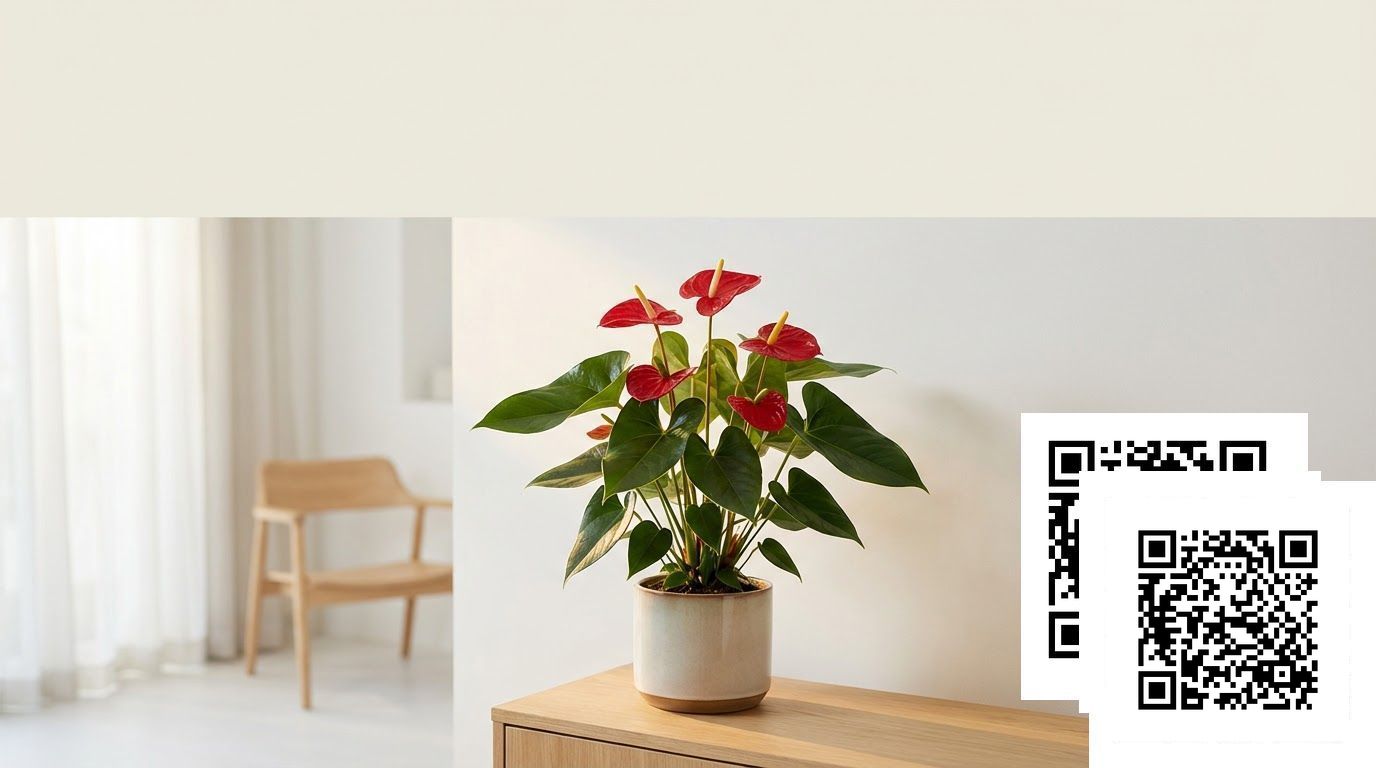
You picked up a gorgeous flamingo flower for your east-facing home office, drawn to its glossy green leaves and bright red spathes. Three months later, it’s still producing new foliage, but there are zero blooms in sight — even though you water it regularly and keep it near the window. This is an extremely common problem for Anthurium andraeanum owners, as east-facing home offices bring unique constraints: limited morning light, forced winter heating that dries out air, and inconsistent care on weekends when you’re not at your desk.
According to NC State Extension (2026), healthy anthuriums can bloom 10+ months out of the year when given optimal conditions, so you don’t have to settle for a foliage-only plant. A quick 10-second test can tell you if your current setup is holding it back: hold your hand 6 inches above the plant at 10AM. If you don’t see a soft, defined shadow, your light levels are too low to support blooming.
Understanding the Science
Anthurium blooms are not actually flowers — the colorful, waxy spathe is a modified leaf, while the tiny, bumpy central spadix holds the plant’s true flowers. These structures develop from specialized meristem tissue that requires consistent energy and moisture to form properly. Research from (Polwaththa & Amarasinghe, 2024) shows that light levels below 8,000 lux reduce photosynthetic output by 40% or more, so the plant prioritizes basic foliage growth over energy-intensive bud development.
Excess nitrogen from standard all-purpose fertilizer further suppresses blooming, as nitrogen drives chlorophyll and leaf production at the expense of reproductive growth. (Saidi et al., 2018) found that anthuriums require a 3x higher phosphorus to nitrogen ratio to trigger bud formation, which is why generic fertilizers often lead to lush green leaves and zero blooms. Low humidity from forced winter heating damages delicate meristem tissue, causing developing buds to abort before they are visible to the naked eye.
Step-by-Step 7-Week Blooming Remedy Plan
Follow these exact, measurable steps to trigger bud formation and get your anthurium blooming again:
- Reposition your plant within 2 feet of your east-facing window – This delivers 8,000-12,000 lux of bright indirect morning light, the minimum required for bud development. Use a cheap lux meter to confirm levels, or rely on the shadow test mentioned earlier. Expected outcome: Increased energy production within 2 weeks, with no new pale foliage. Pro tip: If you have frosted window film, move the plant 6 inches closer to hit the required lux threshold.
- Adjust your watering routine to 150ml of room-temperature distilled water only when the top 1.5 inches of soil is completely dry – Stick your index finger 1.5 inches into the soil to test moisture levels; if it’s fully dry, water. Inconsistent moisture is a top cause of stunted growth, as both overwatering (root rot) and underwatering (drought stress) stop nutrient uptake. Expected outcome: No new yellow lower leaves within 3 weeks.
- Boost local humidity to 65% immediately – Mist the foliage twice daily with 20ml of distilled water, or place a 2-inch pebble tray with 100ml of water under the pot (make sure the pot’s drainage hole is not sitting in standing water). This protects developing meristem tissue from drying out. Expected outcome: No crinkled new growth within 1 week.
- Apply 1/4 strength 10-30-10 NPK bloom fertilizer at week 1 – This high-phosphorus formula is the ideal anthurium fertilizer for blooms, as it supports root and bud development instead of excess foliage growth. Never use full-strength fertilizer, as it causes root burn and salt buildup in soil. Expected outcome: Visible small bud formation at the base of the plant within 4 weeks.
- Set a weekly soil check reminder for workdays – This eliminates the common pattern of overwatering during the workweek and forgetting to water on weekends. If you’re away for 2+ days, use a self-watering spike with a 500ml reservoir to keep moisture levels consistent.
- Reapply fertilizer at week 4 – Repeat the 1/4 strength 10-30-10 application to support ongoing bud development. Skip this step if you notice brown leaf tips, a sign of fertilizer burn.
- Move the plant at least 3 feet away from forced air heat vents – Winter heating can drop local humidity to below 40% within 1 foot of a vent, causing developing buds to drop before they open. Relocate the plant to the side of your desk away from direct air flow. Expected outcome: Fully formed, colorful spathes opening by week 7.
Seasonal Care Calendar for East-Facing Home Offices
Adjust your routine throughout the year to maintain consistent blooms:
- Spring (March-May): As morning light intensity increases, adjust watering to 150ml every 7 days on average. Start fertilizing every 4 weeks with 1/4 strength 10-30-10 NPK. This is peak blooming season, so you can expect new spathes every 4-6 weeks (NC State Extension, 2026).
- Summer (June-August): Move the plant 3 feet back from the east-facing window to avoid mid-morning sun scorch (summer east light can exceed 20,000 lux, which burns leaf tissue). Keep a pebble tray filled at all times to maintain humidity during hot, dry weather. Anthurium summer watering may increase to 150ml every 5-6 days as soil dries faster.
- Fall (September-November): Reduce watering to 150ml every 12 days as light levels drop. Stop fertilizing entirely to let the plant enter a semi-dormant period. Check for drafty windows, as temperature dips below 60°F (15°C) stop bud formation.
- Winter (December-February): Keep the plant at least 3 feet away from forced air heat vents. If lux levels drop below 6,000 lux at mid-morning, add a 10W full-spectrum grow light set to run 4 hours daily, starting 1 hour after sunrise. This is a critical part of anthurium winter care to prevent blooming drop-off.
Common Mistakes to Avoid
Mistake: Placing your anthurium more than 3 feet from your east-facing window What happens: Light levels drop below 6,000 lux, so the plant can’t produce enough energy to form flower buds, even if it looks healthy with green foliage. This is the top cause of anthurium not blooming in home offices. Instead: Keep the plant within 2 feet of the window, or add a full-spectrum grow light if you can’t reposition it.
Mistake: Using high-nitrogen all-purpose fertilizer on your anthurium What happens: Excess nitrogen pushes lush green leaf growth, but leaves no phosphorus for bud development, so you get zero blooms even with perfect light. Instead: Switch to a 10-30-10 NPK bloom fertilizer, diluted to 1/4 strength, to avoid root burn and support flowering. This is a safe, effective anthurium bloom booster for regular use.
Mistake: Overwatering during the workweek and forgetting to water on weekends What happens: Inconsistent moisture causes root rot or drought stress, both of which stop nutrient uptake and stunt growth, preventing blooming. Instead: Set a phone reminder to check soil moisture every 7 days. For weekend or 2-week work trips, use a self-watering spike with a 500ml reservoir to keep moisture levels consistent.
Mistake: Placing your anthurium directly above a forced air heat vent in winter What happens: Humidity drops below 40% around the plant, damaging delicate developing bud tissue and causing buds to drop before they open. Instead: Move the plant to the side of your desk at least 3 feet away from vents, and add a 2-inch pebble tray with 100ml of water under the pot to boost local humidity.
Mistake: Using dense, regular potting soil for your anthurium What happens: Anthuriums are epiphytes, so their roots need consistent air flow. Dense soil holds too much moisture, causing root rot and stopping blooming. Instead: Use a 1:1:1 mix of orchid bark, perlite, and peat moss for fast drainage and ample air flow around roots (USDA NRCS, 2026).
Troubleshooting Guide
Frequently Asked Questions
Why is my anthurium only growing leaves and no flowers?
This is almost always caused by either insufficient light (below 8,000 lux) or excess nitrogen from all-purpose fertilizer. Anthuriums allocate energy to foliage first when light is low, and excess nitrogen pushes vegetative growth instead of reproductive (flower) growth. Follow the 7-step remedy plan above, and you should see buds within 4 weeks.
Can I keep my anthurium in my east-facing home office?
Absolutely! East-facing windows provide the perfect bright indirect morning light anthuriums need to bloom, as long as you keep the plant within 2 feet of the window to hit 8,000-15,000 lux. You just need to adjust care for forced winter heating and inconsistent weekend watering, which are common in home office environments. This is one of the best plants for east-facing home offices if you follow the care guidelines.
How often do I need to water my anthurium in the winter?
For east-facing home offices with forced winter heating, you’ll need to water your anthurium 150ml every 10-12 days, only when the top 1.5 inches of soil is completely dry. Winter light levels are lower, so the plant uses less water, and overwatering is the most common issue during this season. Always check soil moisture before watering, instead of following a strict schedule.
Do anthuriums need direct sunlight to bloom?
No, anthuriums do not need direct sunlight to bloom, and direct midday or afternoon sun will burn their leaves. They need 8,000-15,000 lux of bright indirect light, which is exactly what east-facing morning light provides. If you don’t have enough natural light, you can use a full-spectrum grow light to hit the required lux levels. Wondering can anthurium grow in low light? They can survive in light below 6,000 lux, but they won’t bloom consistently.
What is the best fertilizer for anthurium blooms?
The best fertilizer for anthurium blooms is a 10-30-10 NPK formula, diluted to 1/4 strength, applied every 4 weeks during the spring and summer growing season. The high phosphorus content supports root and bud development, while the lower nitrogen content prevents excess foliage growth. Avoid full-strength fertilizer, which can cause root burn and salt buildup in the soil.
Should I mist my anthurium every day?
Yes, misting your anthurium 1-2 times daily with distilled water is a great way to maintain the 60-70% relative humidity it needs to develop healthy flower buds, especially in dry home office environments with forced heating. Misting is especially helpful in winter, when indoor humidity can drop below 30% near heat vents.
Key Takeaways
- Keep your Anthurium andraeanum in 8,000-15,000 lux of bright indirect morning light (within 2 feet of an east-facing window) for consistent blooming
- Maintain 60-70% relative humidity to protect developing flower buds and prevent bud drop
- Use 10-30-10 NPK fertilizer diluted to 1/4 strength every 4 weeks in the spring and summer growing season to support bud development
- Water 150ml only when the top 1.5 inches of soil is completely dry to avoid root rot and drought stress
- Keep your plant at least 3 feet away from forced air heat vents in winter to avoid low humidity damage to buds
- Use a 10W full-spectrum grow light for 4 hours daily if natural light drops below 6,000 lux in winter
- Use a 1:1:1 mix of orchid bark, perlite, and peat moss for well-draining soil that supports healthy root growth
References
- Polwaththa, K.; Amarasinghe, A. (2024). Investigating the Impact of Copper Sulfate on the In vitro Propagation of Anthurium (Anthurium andraeanum Lind.). International Journal of Plant & Soil Science. https://doi.org/10.9734/ijpss/2024/v36i84941. Accessed 2026-02-19.
- Saidi, A.; Daneshvar, Z.; Hajibarat, Z. (2018). Comparison of Genetic Variation of Anthurium (Anthurium andraeanum) Cultivars Using SCoT, CDDP and RAPD Markers. Plant Tissue Culture and Biotechnology. https://doi.org/10.3329/ptcb.v28i2.39676. Accessed 2026-02-19.
- ASPCA. (2026). Toxic and Non-Toxic Plants List — ASPCA. https://www.aspca.org/pet-care/animal-poison-control/toxic-and-non-toxic-plants. Accessed 2026-02-19.
- NC State Extension. (2026). Anthurium andraeanum — NC State Extension Gardener Plant Toolbox. https://plants.ces.ncsu.edu/plants/anthurium-andraeanum/. Accessed 2026-02-19.
Optional Helper: Plantfun.App
Plantfun.App identifies your plants by photo, diagnoses pests and diseases with clear fixes, and creates personalised watering and light schedules that adapt to your home conditions — a handy companion for putting this guide into daily practice.
Found an error or have suggestions? We'd love your feedback.
Need help identifying this problem?
Get instant identification, personalized care schedules, and effective pest treatment plans directly on your phone.
Sponsored • We may earn a commission from app downloads
Related Guides
Why Your Anthurium Isn’t Blooming in a Low-Lit Home Office: 7 Fixes That Actually Work
Stop wondering why your office anthurium never blooms. Get exact lux levels, 50ml watering amounts, humidity targets, and 7 science-backed fixes to produce bright, long-lasting spathes all year.
Care GuideThe Complete Anthurium Care Guide for 500 Sq Ft Studio Apartments: Grow Blooms Year-Round
Grow vibrant, year-round anthurium blooms even in a tiny 500 sq ft studio apartment. Get exact light levels, measured watering amounts, and space-saving hacks that fit your small living space.
Care GuideThe Complete Anthurium Andraeanum Care Checklist for East-Facing Apartments: Grow Resilient Blooms Year-Round
Stop struggling to get your Anthurium to bloom in your apartment. Grab this 12-point care checklist with exact light, water, humidity parameters for year-round resilient growth and bright blooms.
Pest ControlAnts on Plants: What They Mean and What to Do
Ants usually aren't eating your plant. They are farming other pests.