
Key Takeaways
- Check soil moisture before watering — overwatering is the #1 killer of houseplants.
- Ensure your plant gets the right amount of light for its species.
- Be patient with recovery — most plants need 2–4 weeks to bounce back.
When I first brought my Tillandsia ionantha into my studio apartment, I treated it like a piece of plastic décor. I left it on a shelf, ignored it for weeks, and wondered why it turned into a shriveled, brown husk. It wasn’t until I began mimicking the canopy environment—understanding its physiology as an epiphyte—that I saw the vibrant, blush-toned growth that makes these plants so rewarding. Proper air plant care for beginners isn’t about neglect; it’s about mastering a specific, low-effort routine.
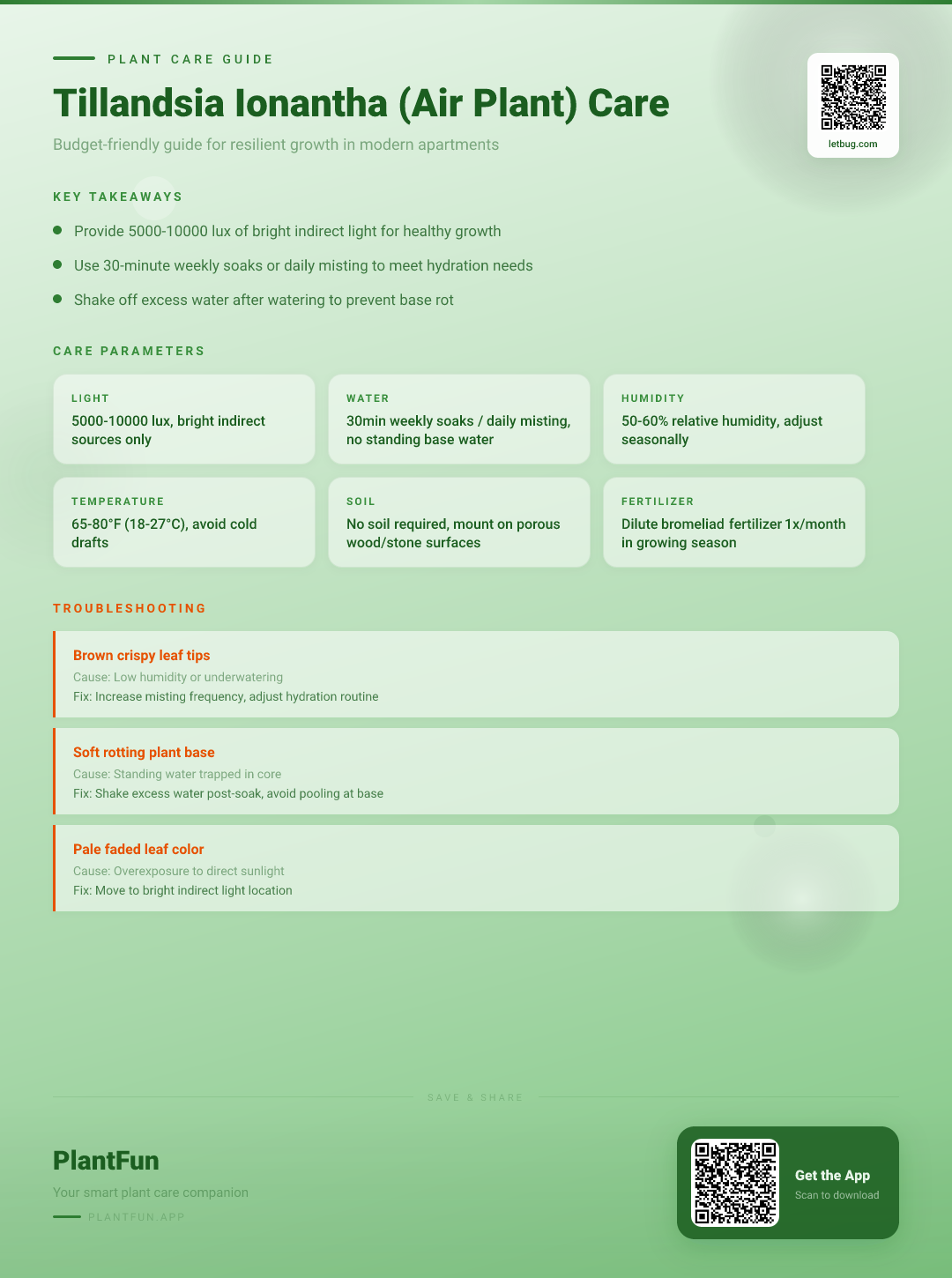
Quick Care Card: Essential Thresholds for Apartment Success
| Feature | Requirement |
|---|---|
| Light | 5,000–10,000 lux (bright indirect) |
| Water | Soak 30 mins weekly or mist daily |
| Humidity | 50–60% relative humidity |
| Temperature | 65–80°F (18–27°C) |
| Soil | N/A (epiphytic) |
| Fertilizer | Bromeliad-specific (low nitrogen) |
| Toxicity | Non-toxic to cats and dogs (ASPCA, 2026) |
TL;DR: The 3-Step Resilient Air Plant Method
To keep your Tillandsia thriving, follow these three steps: Provide bright, filtered light; soak your plant in room-temperature water for 30 minutes once a week; and ensure it dries completely within four hours to prevent rot. This simple, recurring DIY air plant care routine ensures your plant remains hydrated without the risk of suffocation.
Why Air Plants Struggle in Modern Apartments: Bridging the Environmental Gap
Many apartment dwellers fail because they assume Tillandsia thrive on “air alone.” While they are epiphytes (plants that grow on other plants, not soil), they are highly responsive to their immediate environment. Modern apartments often feature HVAC systems that drop humidity levels significantly, forcing the plant to conserve water by closing its stomata (pores), which halts metabolic processes (Nowak & Martin, 1997). Bridge this gap by positioning your plants near, but not directly in, a window.
Light Requirements: Providing 5,000-10,000 lux via Bright Indirect Sources
Tillandsia ionantha needs significant light to maintain its color and structure. According to the NC State Extension (2026), these plants thrive in high, indirect light. In an apartment, this means a spot within 1–2 feet of a south or east-facing window. If your leaves start stretching (etiolation) or turn pale green, your plant is not receiving sufficient light (NC State Extension, 2026).
The Hydration Protocol: Choosing Between 30-Minute Soaks or Daily Misting
Knowing how to water air plants is the most critical skill for a collector.
- The Soak Method (Recommended): Submerge your plant in filtered water for 30 minutes weekly. Shake off excess moisture immediately.
- The Mist Method: Use a fine spray bottle to hydrate leaves until they glisten. This is best for low-humidity environments but less effective for deep hydration.
Temperature & Humidity: Keeping Your Tillandsia Between 65-80°F (18-27°C) at 50-60% Relative Humidity
These plants prefer stable conditions. If your apartment dips below 60°F, the plant may enter dormancy. Because they absorb moisture directly through their trichomes (specialized scales), maintaining 50–60% humidity is essential to avoid dehydration (Nowak & Martin, 1997).
Myth-Busting: Why ‘Air Plants Need No Water’ Is Killing Your Collection
It is a dangerous myth that air plants don’t need hydration. In their natural habitat, they capture moisture from nocturnal dew and rainfall. Without regular water, the internal tissues suffer significant dehydration, leading to a permanent loss of structural integrity (Nowak & Martin, 1997).
Seasonal Adjustments: Managing Airflow and Humidity in Winter vs. Summer
In summer, your plant may need extra misting to counter dry air from air conditioning. In winter, ensure your plant is kept away from cold drafts near windows and heating vents, which can strip moisture from the leaves.
FAQ: How do I know if my Tillandsia ionantha is actually dying?
If the center leaves pull out easily, you are dealing with base rot. If the leaf tips are brown and crispy, your plant is likely suffering from chronic dehydration. You can often revive a dehydrated air plant by extending your soak time to one hour for two consecutive weeks.
FAQ: Can I keep my air plant in a windowless bathroom?
No. Even with high ambient humidity, Tillandsia require high light levels to perform photosynthesis. Without light, they will slowly fade and eventually succumb to disease (NC State Extension, 2026).
Common Mistakes to Avoid: Avoiding Standing Water at the Base
- Mistake: Leaving the plant wet for over 4 hours.
- What happens: The base begins to rot, which is often fatal.
- Instead: Always place your plant upside down on a towel after soaking to ensure gravity pulls water away from the core.
References
- Vázquez-Flores, X.; Valdez-Hernández, E.; Mata-Alejandro, H. (2025). Topographic tetrazolium test in seeds of Tillandsia ionantha Planch. Agro Productividad. https://doi.org/10.32854/bf7wd502. Accessed 2026-03-10.
- Nowak, E.; Martin, C. (1997). Physiological and Anatomical Responses to Water Deficits in the Cam Epiphyte Tillandsia ionantha (Bromeliaceae). International Journal of Plant Sciences. https://doi.org/10.1086/297495. Accessed 2026-03-10.
- ASPCA. (2026). Toxic and Non-Toxic Plants List — ASPCA. https://www.aspca.org/pet-care/animal-poison-control/toxic-and-non-toxic-plants. Accessed 2026-03-10.
- NC State Extension. (2026). Tillandsia Ionantha — NC State Extension Gardener Plant Toolbox. https://plants.ces.ncsu.edu/plants/tillandsia-ionantha/. Accessed 2026-03-10.
Optional Helper: Plantfun.App
Plantfun.App identifies your plants by photo, diagnoses pests and diseases with clear fixes, and creates personalised watering and light schedules that adapt to your home conditions — a handy companion for putting this guide into daily practice.
Found an error or have suggestions? We'd love your feedback.
Need help identifying this problem?
Get instant identification, personalized care schedules, and effective pest treatment plans directly on your phone.
Sponsored • We may earn a commission from app downloads
Related Guides
Tillandsia Ionantha Care for Dim Apartment Living: A Resilience Checklist for Tiny Air Plants
Revive your struggling air plant with our expert soak-and-dry protocol. Discover precise light lux levels, optimal humidity, and the 30-minute recovery method.
Care GuideTillandsia Ionantha in Small Apartments: The Ultimate Vertical Care Guide for Resilient Air Plants
Master Tillandsia Ionantha care in small apartments. Learn the exact 30-minute soak routine, optimal light distances, and how to prevent rot in low-airflow homes.
Care GuideTillandsia Ionantha Care for Dim Apartment Living: The Ultimate Low-Budget Survival Plan
Revive your wilting air plant with this budget-friendly care plan. Master the 20-minute soak method and 3 essential light adjustments to keep your Tillandsia lush.
Pest ControlAnts on Plants: What They Mean and What to Do
Ants usually aren't eating your plant. They are farming other pests.