
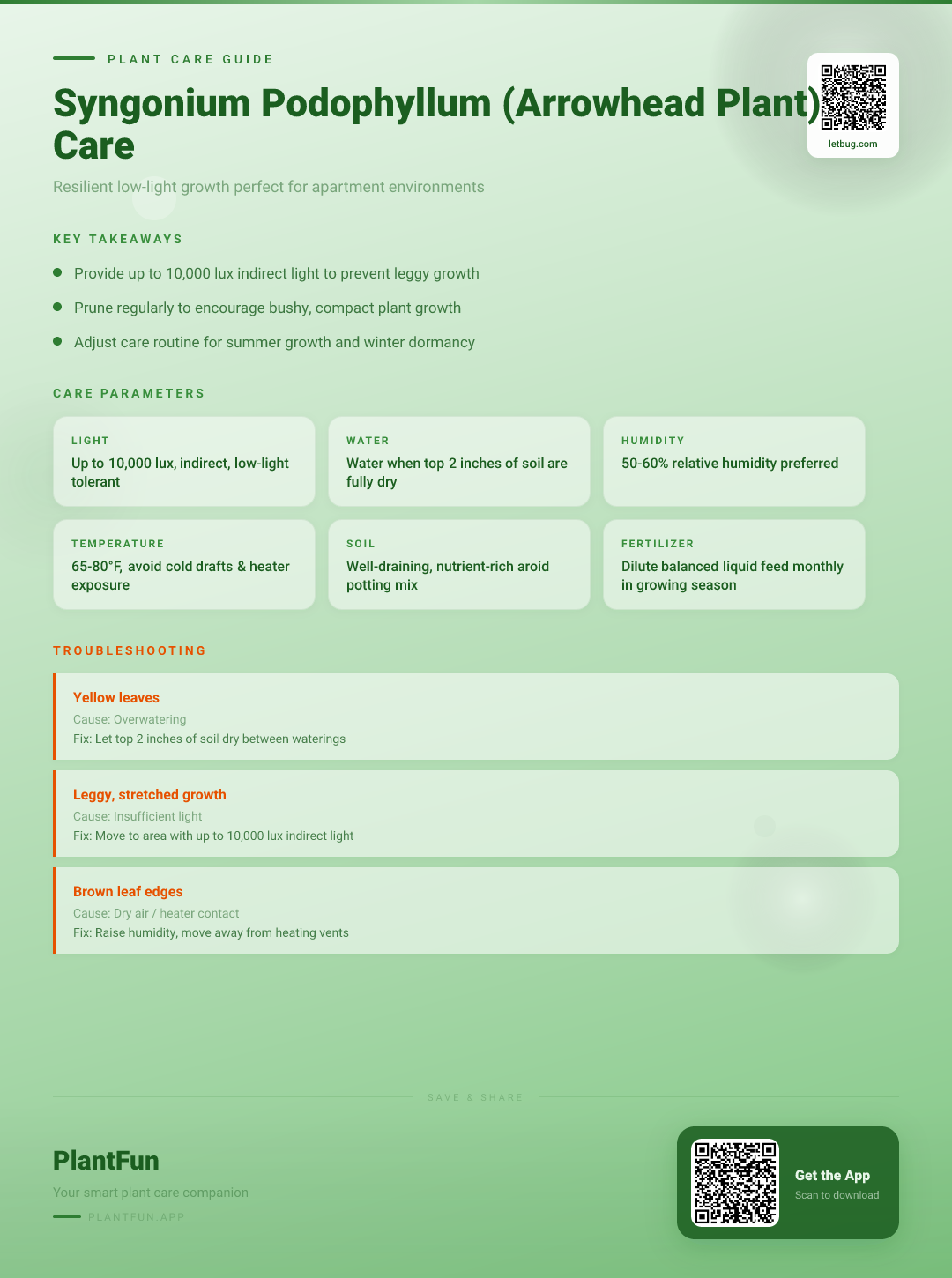
Key Takeaways
- Check soil moisture before watering — overwatering is the #1 killer of houseplants.
- Ensure your plant gets the right amount of light for its species.
- Be patient with recovery — most plants need 2–4 weeks to bounce back.
TL;DR: To keep your Syngonium podophyllum compact in an apartment, prioritize bright, indirect light (aim for 10,000 lux) and consistent moisture. Avoid letting the soil dry out completely, which causes stress. Prune back any “reaching” stems in early spring to force bushier growth. Remember, the ASPCA lists this plant as toxic to pets (ASPCA, 2026), so keep it out of reach of curious cats and dogs.
Quick Care Card: Essential Thresholds for Success
| Requirement | Optimal Threshold |
|---|---|
| Light | 10,000 lux (bright indirect) |
| Water | When top 2 inches of soil are dry |
| Humidity | 50-60% |
| Temperature | 65-80°F (18-27°C) |
| Soil | Well-draining aroid mix |
| Fertilizer | Balanced liquid feed monthly in summer |
| Toxicity | Toxic to cats and dogs (ASPCA, 2026) |
My Experience: Learning to Tame the Reach
When I first brought home my Syngonium podophyllum, I made the mistake of placing it in a dark corner of my studio apartment. Within weeks, it became incredibly “leggy”—the stems stretched out, losing their dense, bushy appearance. I learned that “low light” isn’t a recommendation for growth; it’s a survival mode. By moving it to a spot that receives higher light intensity and mastering my pruning technique, I transformed it from a lanky vine into a thriving, compact specimen.
Why Your Apartment is Actually Perfect for Syngonium
Syngonium podophyllum, commonly known as the Arrowhead plant, is naturally adapted to the forest floor, making it one of the most resilient houseplants for apartments (NC State Extension, 2026). Its ability to tolerate lower light levels compared to sun-loving tropicals makes it a staple for urban dwellers. Unlike high-maintenance exotics, the Syngonium is a hearty survivor that rewards you for understanding its natural growth cycle.
The 10,000 Lux Threshold: How to Measure and Provide Sufficient Indirect Light
Light is the primary driver of compact, bushy growth. While many sources suggest “low light,” 10,000 lux is the sweet spot for maintaining tight internodal spacing (the distance between leaves). I use a simple light meter app to measure my window spots. If you don’t have one, place your hand between the plant and the light source; if you see a soft, fuzzy shadow, you’re in the right zone.
Watering Mastery: Avoiding Root Rot in Apartment Humidity Levels
Understanding how often to water Syngonium is vital. In my apartment, I stick to the “two-inch test”: I push my index finger into the soil. If it’s dry at the second knuckle, it’s time to water. Overwatering is the most common cause of root decline, often exacerbated by poor drainage (NC State Extension, 2026). Ensure your pot has drainage holes to allow excess water to escape.
Seasonal Care Calendar: Adapting Your Routine from Summer Growth to Winter Dormancy
- Spring/Summer: This is the peak houseplant growth cycle. Increase watering frequency and apply a diluted liquid fertilizer once a month.
- Autumn/Winter: As growth slows down, the plant enters a period of reduced activity. Allow the top 3 inches of soil to dry out before watering again. Keep the plant away from cold drafts and dry heat sources.
Training for Resilience: Why Regular Pruning Promotes Bushy, Non-Leggy Growth
If your plant starts reaching, don’t be afraid to snip! Pruning back the longest “vining” stems forces the plant to redirect energy into lateral buds, which creates a fuller, more compact look. I typically prune my Syngonium in early spring to encourage dense foliage throughout the warmer months.
Frequently Asked Questions
Why are the leaves on my Arrowhead plant turning yellow?
Yellowing leaves often indicate overwatering or poor drainage, which can lead to bacterial infections (Chase, 1988). Check the soil moisture levels and ensure your pot isn’t sitting in a saucer of water.
Can I grow my Syngonium in a room without a direct window?
While they are tolerant, strictly windowless rooms will lead to elongated stems and weak growth. If you lack natural light, consider using a high-quality LED grow light to provide the necessary spectrum for healthy development.
How do I know if I’m overwatering my plant?
Beyond yellow leaves, look for soft, mushy stems or a musty smell from the soil, which can indicate the onset of pathogens (Chase, 1988).
Common Apartment Mistakes: Avoiding Drafts and Heater Proximity
- Mistake: Placing the plant near a radiator or heater.
- What happens: The dry air causes crispy brown leaf tips.
- Instead: Keep the plant at least 3-5 feet away from HVAC vents.
- Mistake: Assuming all “bright” spots are equal.
- What happens: Scorching leaves from direct midday sun.
- Instead: Use a sheer curtain to diffuse harsh rays while maintaining high lux levels.
Step-by-Step Recovery: What to do if your plant starts ‘reaching’ for light
- Move the plant closer to a light source, ideally a North or East-facing window.
- Prune stems that have become excessively long by cutting just above a leaf node.
- Propagate the cuttings in water to increase your plant collection!
- Monitor the new growth; it should appear tighter and more vibrant within 4-6 weeks.
References and Botanical Notes
- International Journal of Petrochemistry & Natural Gas. (2022). Study on potential aspect of an ornamental plant - Syngonium podophyllum (Schott) as a phytoremidiator on environmental pollution: A Short Review. https://doi.org/10.33140/ijpng.02.02.02. Accessed 2026-03-16.
- Chase, A. (1988). New Disease of Syngonium podophyllum ‘White Butterfly’ Caused by a Pathovar of Xanthomonas campestris. Plant Disease. https://doi.org/10.1094/pd-72-0074. Accessed 2026-03-16.
- ASPCA. (2026). Toxic and Non-Toxic Plants List — ASPCA. https://www.aspca.org/pet-care/animal-poison-control/toxic-and-non-toxic-plants. Accessed 2026-03-16.
- North Carolina State University Extension. (2026). Syngonium Podophyllum — NC State Extension Gardener Plant Toolbox. https://plants.ces.ncsu.edu/plants/syngonium-podophyllum/. Accessed 2026-03-16.
Optional Helper: Plantfun.App
Plantfun.App identifies your plants by photo, diagnoses pests and diseases with clear fixes, and creates personalised watering and light schedules that adapt to your home conditions — a handy companion for putting this guide into daily practice.
Found an error or have suggestions? We'd love your feedback.
Need help identifying this problem?
Get instant identification, personalized care schedules, and effective pest treatment plans directly on your phone.
Sponsored • We may earn a commission from app downloads
Related Guides
Syngonium Podophyllum Care: Growing Healthy Arrowhead Plants in Compact, Low-Light Apartment Spaces
Transform your leggy Arrowhead Plant into a lush, compact masterpiece. Learn specific light levels, water ratios, and pruning hacks for thriving in small homes.
Care GuideSyngonium Podophyllum in Your Apartment: The Complete Seasonal Care Guide for Resilient Growth
Transform your leggy Syngonium into a lush showpiece. Master precise light, 50%+ humidity levels, and seasonal watering schedules for a healthier Arrowhead plant.
Care GuideArrowhead Plant in a Typical Apartment: The Complete Care Guide for Resilient, Lush Growth
Transform your apartment with a vibrant Arrowhead Plant. Get precise light, watering, and seasonal routines that stop leaf yellowing and ensure steady growth.
Pest ControlAnts on Plants: What They Mean and What to Do
Ants usually aren't eating your plant. They are farming other pests.