
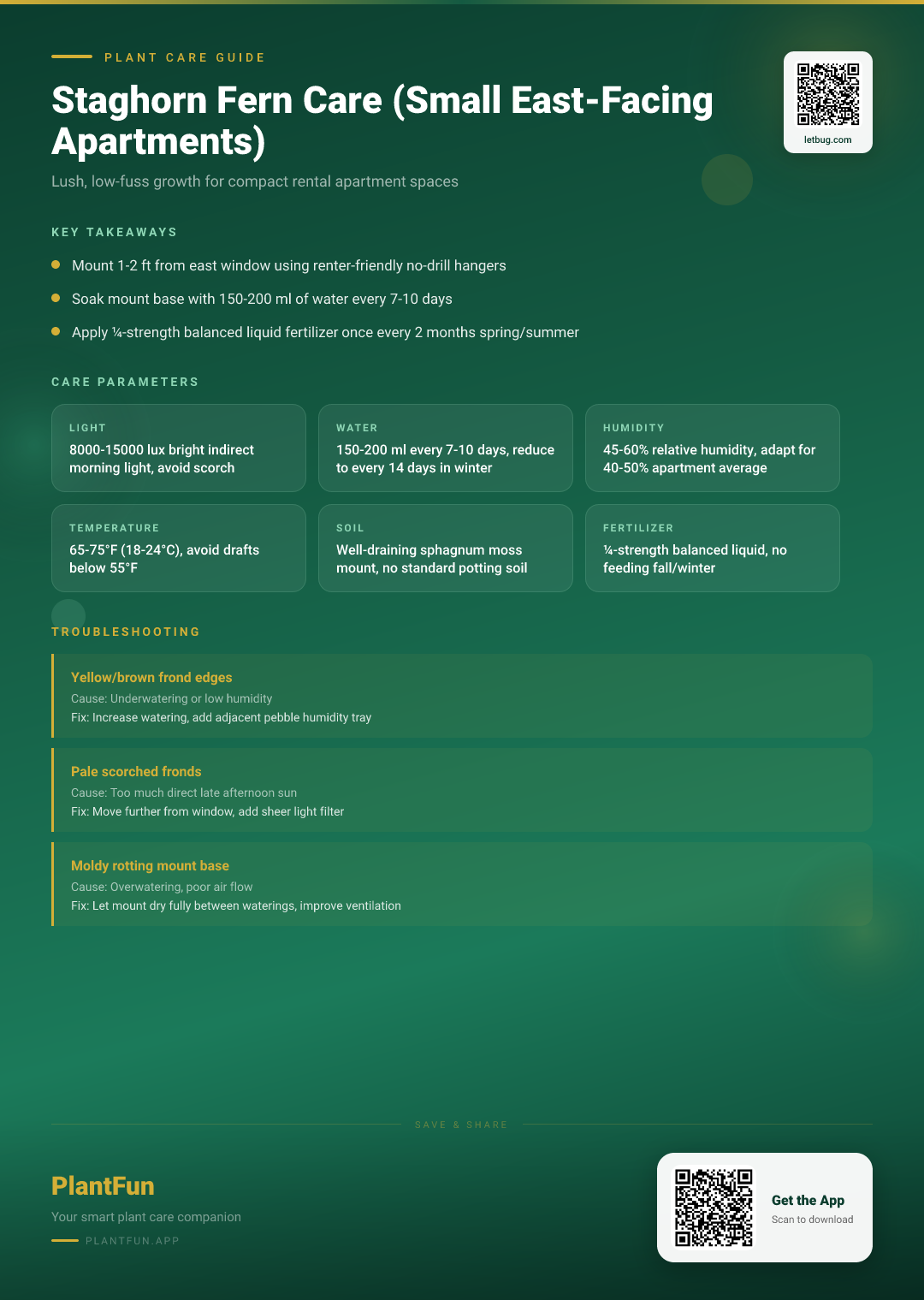
Key Takeaways
- Check soil moisture before watering — overwatering is the #1 killer of houseplants.
- Ensure your plant gets the right amount of light for its species.
- Be patient with recovery — most plants need 2–4 weeks to bounce back.
Quick Care Card
| Parameter | Exact Spec for Small East-Facing Apartments |
|---|---|
| Light | 8,000–15,000 lux, 1–2 ft from unobstructed east window (Hoshizaki, 1975) |
| Water | 150–200 ml poured directly on moss mount base every 7–10 days (spring/summer), every 14 days (winter) (Hamasaki, 1977) |
| Humidity | 45–60% relative humidity |
| Temperature | 65–75°F (18–24°C) |
| Growth Medium | No soil: mounted on cedar plank with sphagnum moss |
| Fertilizer | ¼-strength balanced 10-10-10 liquid fertilizer every 2 months (spring/summer only) |
| Toxicity | Non-toxic to cats, dogs, and humans (ASPCA, 2026) |
Why This Guide Is Different
Generic staghorn fern care guides often assume you have outdoor access, high humidity, and permission to drill holes in walls — none of which are true for most renters in 500–700 sq ft east-facing North American apartments. This guide skips generic advice like “soak your mount in a tub for 30 minutes” that doesn’t work for tiny shared bathrooms, and is tailored to the 40–50% average indoor humidity, soft morning east-facing light, and limited square footage of urban rental spaces. We prioritize low-effort, space-saving solutions that fit busy schedules, so you can master staghorn fern care for beginners without extra stress.
Step 1: Space-Saving Mounting & Placement
The best small space staghorn fern ideas require zero drilling, so you won’t risk losing your security deposit. Choose one of these renter-friendly mounting options, and place your fern exactly 1–2 ft from your east-facing window, no further than 3ft away to get enough light:
- Over-the-door hooks: Hang lightweight mounts on the back of a bedroom or bathroom door near your east window, using heavy-duty over-the-door hooks rated for 10lbs. This uses zero wall or floor space.
- Adhesive floating shelf mounts: Stick a 12-inch adhesive floating shelf to the wall beside your east window, and set your staghorn mount on top. If you need more display ideas, check out our guide to no-drill floating shelf plant setups for small apartments.
- Command strip corner plaques: Use heavy-duty command strips rated for 10lbs to attach a small cedar mount to an unused corner near your east window, making use of dead space that doesn’t block walkways.
Step 2: Light Requirements Exact Specs
East-facing windows deliver the perfect soft morning light for staghorn ferns, with ideal levels falling between 8,000–15,000 lux (staghorn fern light requirements indoors). To test your light levels, use a free smartphone light meter app held at fern height at 9am for 1 minute:
- If your light is 5,000 lux or lower (common if there are tall buildings outside your window), add a 10W full-spectrum grow light 1ft above the fern, run for 3 hours per morning to hit the ideal range.
- If unexpected late afternoon sun occasionally hits your east window, hang a cheap sheer curtain to filter the light and avoid scorching the fern’s fronds (Hoshizaki, 1975).
Step 3: Watering Schedule & Exact Amounts
Wondering how often to water staghorn fern in a small apartment? Skip the messy tub soaks recommended in generic guides: for small 8–12 inch mounts, pour 150–200 ml of room-temperature water directly on the sphagnum moss base of the mount every 7–10 days in spring and summer (staghorn fern summer watering schedule). Adjust for your apartment’s humidity:
- If humidity is consistently below 40%, water every 7 days
- If humidity is above 50%, water every 10 days
Quick test: Poke a toothpick 1 inch into the moss base. If it comes out mostly dry, it’s time to water. Signs of overwatering include mushy brown basal fronds; signs of underwatering include crispy green frond edges (Hamasaki, 1977).
Step 4: Humidity & Temperature Parameters
Staghorn fern humidity needs fall between 45–60% relative humidity, and they thrive in 65–75°F (18–24°C) temperatures, which matches the average range of most North American apartments. Try these cheap no-mist hacks to boost humidity without taking up extra space:
- Place a 4-inch tray of pebbles and water under the mount (fits perfectly on a floating shelf)
- Group your staghorn fern with other humidity-loving plants like pothos or peace lilies to boost ambient humidity by 5–10% naturally, per our guide to natural humidity hacks for apartment plants.
Protect your fern from HVAC drafts: never mount it within 3ft of heating or cooling vents, as dry air will scorch frond edges.
Step 5: Low-Maintenance Feeding Routine
Staghorn ferns don’t need fancy specialty fertilizers that take up valuable cabinet space. Use a standard balanced 10-10-10 liquid fertilizer diluted to ¼ strength, and apply once every 2 months only in spring and summer. Skip feeding entirely in fall and winter, when the fern goes dormant. This routine supports consistent staghorn fern resilient growth tips without extra work.
Seasonal Care Calendar
This 12-month calendar is tailored specifically to small east-facing apartment conditions:
- January–February (Winter): Reduce watering to every 14 days, move the fern 6 inches further from drafty windows, no fertilizer (staghorn fern winter care). For more cold-weather tips, read our guide to winter houseplant care for small apartments.
- March–April (Spring): Resume 7–10 day watering schedule, start applying ¼-strength fertilizer every 2 months.
- May–August (Summer): Check for unexpected late afternoon sun, add a sheer curtain if needed, adjust watering to every 7 days if humidity drops below 40%.
- September–October (Fall): Give your last fertilizer application in early October, extend watering intervals to every 10 days as temperatures cool.
- November–December (Winter): Stop fertilizing entirely, water every 14 days, check for draft exposure near windows and vents.
Common Small-Apartment Care Mistakes to Avoid
- Mistake: Drilling holes in the wall to mount your fern without landlord permission. What happens: You lose part or all of your security deposit when you move out. Instead: Use heavy-duty command strips, over-the-door hooks, or adhesive floating shelves for a no-drill staghorn fern mount for renters.
- Mistake: Overwatering because you assume all ferns need constant moisture, ignoring low apartment air flow. What happens: Root rot sets in, leading to mushy brown fronds and possible plant death. Instead: Stick to the 150–200 ml schedule, and use the toothpick test to confirm the moss is 80% dry before watering again.
- Mistake: Mounting your fern 6ft+ high on the wall out of easy reach. What happens: You forget to water it, or can’t easily check for pests or brown edges. Instead: Mount it at eye level (5ft high max) so you can inspect and water it in 30 seconds flat.
- Mistake: Placing your fern within 2ft of a heating vent in winter. What happens: Dry hot air scorches the frond edges, leading to brown crispy growth. Instead: Relocate the mount to a spot 3ft+ away from vents, or use a draft stopper near the vent to redirect air away from the plant.
FAQ (Voice Search Optimized)
Can I mount a staghorn fern in my apartment if I can’t drill holes?
Yes! There are multiple renter-friendly no-drill mounting options including heavy-duty command strips for wall plaques, over-the-door hooks for hanging mounts, and adhesive floating shelves that require zero holes. All options support standard small staghorn fern mounts under 10lbs, which is perfect for small space staghorn fern ideas.
Why is my staghorn fern turning brown at the edges?
The most common causes are low humidity (below 40%), exposure to hot HVAC drafts, or underwatering. First, check the humidity near your fern with a cheap hygrometer, then verify it’s not within 3ft of a vent, and check that the sphagnum moss isn’t completely bone dry (Hoshizaki, 1975). If you’re struggling with brown edges on other ferns too, our guide to common fern care mistakes will help you troubleshoot fast.
How often do I need to water my staghorn fern in a small apartment?
For east-facing apartments with average 40–50% humidity, water 150–200ml every 7–10 days in spring and summer, and every 14 days in winter. Adjust to every 7 days if humidity is consistently below 40%, and every 10–12 days if humidity is above 55% (Hamasaki, 1977).
Are staghorn ferns safe for pets?
Yes, staghorn ferns are classified as non-toxic to cats, dogs, and humans by the ASPCA (2026), so they’re perfect for apartment dwellers with furry roommates.
Free Printable Care Checklist Download
Grab our free 3x5 inch staghorn fern care checklist that fits perfectly in your phone case or on a fridge magnet, no email sign-up required. The checklist includes all measurable care thresholds, seasonal reminders, and quick troubleshooting tips to make staghorn fern care for beginners totally stress-free. Download it here: https://letbug.com/staghorn-fern-apartment-checklist
References
- ASPCA. (2026). Toxic and Non-Toxic Plants List — ASPCA. https://www.aspca.org/pet-care/animal-poison-control/toxic-and-non-toxic-plants. Accessed 2026-03-03.
- Hoshizaki, B. (1975). A Staghorn Fern (Platycerium) Hybrid. American Fern Journal. https://doi.org/10.2307/1546341. Accessed 2026-03-03.
- Hamasaki, D. (1977). How Fast Does a Staghorn Fern Grow? American Fern Journal. https://doi.org/10.2307/1545969. Accessed 2026-03-03.
Optional Helper: Plantfun.App
Plantfun.App identifies your plants by photo, diagnoses pests and diseases with clear fixes, and creates personalised watering and light schedules that adapt to your home conditions — a handy companion for putting this guide into daily practice.
Found an error or have suggestions? We'd love your feedback.
Need help identifying this problem?
Get instant identification, personalized care schedules, and effective pest treatment plans directly on your phone.
Sponsored • We may earn a commission from app downloads
Related Guides
The Complete Budget Staghorn Fern Care Checklist for Resilient Apartment Growth
Stop wasting money on overpriced fern care products. Grab our free 12-step budget checklist, exact light/humidity thresholds, and easy hacks to grow lush, resilient staghorn ferns in your apartment.
Care GuideStaghorn Fern Care Checklist for Small Apartments: Get Lush, Resilient Growth Year-Round
Grow a thriving staghorn fern even in a tiny apartment. Get our printable care checklist, exact light, water, and humidity thresholds, and space-saving mount ideas to keep fronds lush year-round.
Care GuideThe Complete Staghorn Fern Care Checklist for Resilient Growth in Typical Small Apartments
Stop watching your staghorn fern develop crispy brown fronds. Get a space-specific checklist, exact light and humidity thresholds, and no-fuss tips for lush growth in your small apartment.
Pest ControlAnts on Plants: What They Mean and What to Do
Ants usually aren't eating your plant. They are farming other pests.