
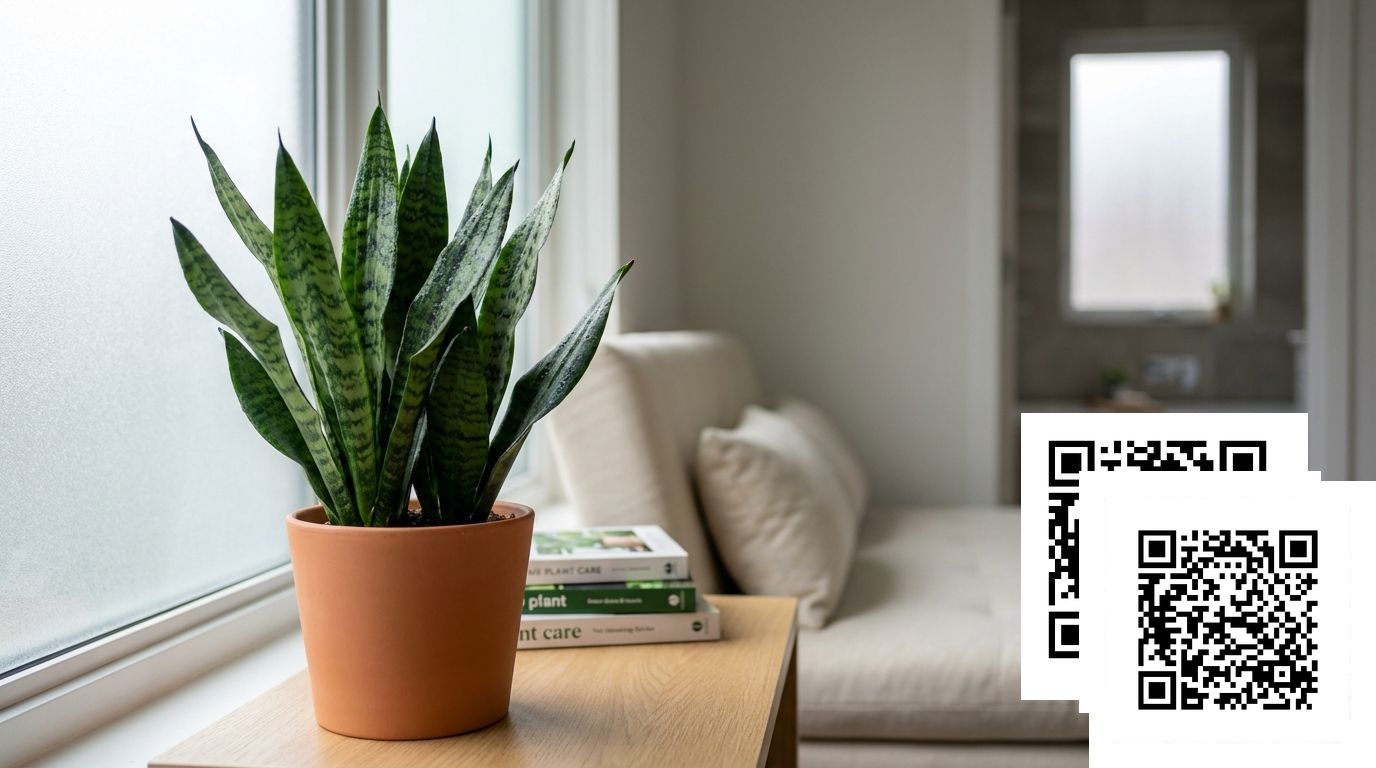
Key Takeaways
- Check soil moisture before watering — overwatering is the #1 killer of houseplants.
- Ensure your plant gets the right amount of light for its species.
- Be patient with recovery — most plants need 2–4 weeks to bounce back.
Quick Care Card
| Care Factor | Optimal Range | Notes |
|---|---|---|
| Light | 500-2500 lux | No direct sun, measure at leaf height with a lux app |
| Water | 150-200ml per 6in pot | Every 21-28 days, adjust for season, only water when soil is completely dry |
| Humidity | 30-50% RH | Matches average studio apartment humidity, mist if below 30% |
| Temperature | 60-85°F / 15-29°C | Avoid exposure below 50°F / 10°C |
| Soil | 90% cactus mix + 10% perlite | pH 5.5-7.0, fast-draining to prevent root rot |
| Fertilizer | 1x/year in late spring | 10-10-10 balanced liquid fertilizer diluted to 25% strength |
| Toxicity | Mildly toxic to cats/dogs | Contains saponins, can cause vomiting/diarrhea if ingested (ASPCA, 2026) |
Why This Matters
If you rent a small north-facing urban studio, you’ve probably bought a snake plant because you heard it’s “indestructible”—only to find it turning yellow, stretching for light, or failing to grow new leaves after a few months. Generic snake plant care guides are designed for bright indirect light settings, which less than 30% of studio apartment dwellers have access to, leading to thousands of unnecessary plant deaths every year.
This guide is tailored specifically to the dim, dry, fluctuating conditions of north-facing studios, with measurable, testable parameters so you never have to guess if your care is working. Unlike generic advice, we use symptom-based diagnosis so you can spot issues before they kill your plant, and a seasonal calendar that requires less than 10 minutes of care per month. We also include pet safety guidance per the ASPCA’s toxic plant list, so you can keep both your plant and your furry roommates safe.
Myth vs reality: While snake plants can survive short periods of very low light, they will not thrive or grow new leaves without meeting the minimum 500 lux requirement, and overwatering in low light is the #1 cause of snake plant death for studio dwellers.
Understanding the Science
Snake plants are crassulacean acid metabolism (CAM) plants, meaning they open their leaf stomata at night to absorb carbon dioxide and reduce water loss, an adaptation for arid native environments. This means their photosynthetic rate is naturally slower than non-CAM houseplants, making them extra sensitive to low light and overwatering.
A 2023 study on indoor ornamental plant care found that CAM plants like snake plants require a minimum 500 lux of daily light exposure to maintain basic metabolic function (Halawa, 2023). When light levels drop below this threshold, the plant cannot use stored water in its leaves and roots, leading to excess moisture sitting in the soil and causing root rot, even if you water on a schedule that would work in brighter light.
2025 research using AI plant growth monitoring found that snake plants in <500 lux light have a 72% reduced new growth rate and 4x higher risk of root rot from overwatering compared to plants in optimal low light ranges (Ravindran & Thomas, 2025). This is why generic 2-week watering schedules fail for north-facing apartments: they don’t account for the reduced metabolic rate of CAM plants in dim conditions.
Step-by-Step Guide
-
Test your light levels first Use a free phone lux app held at leaf height for 1 hour midday to confirm your space gets 500-2500 lux of indirect light (Halawa, 2023). This answers the common question of how much light does a snake plant need for your specific space. Pro tip: If you get <500 lux, add a 10W full-spectrum grow light 1ft above the plant for 4 hours a day to hit the minimum requirement.
-
Acclimate your plant to its north-facing spot Move your snake plant 1ft closer to the north-facing window each day for 3 days to avoid light shock from sudden changes in light intensity. Hold off on watering for 2 weeks post-acclimation to let the plant adjust its metabolic rate to its new light conditions. Expected outcome: No leaf drop or yellowing in the first 30 days.
-
Pot in fast-draining soil mix Use a blend of 90% commercial cactus mix and 10% perlite, with a pH of 5.5-7.0, to ensure excess water drains quickly away from roots. Quick test: Pour 200ml of water into the pot, it should drain out the bottom hole in less than 30 seconds. If it takes longer, add extra perlite to improve drainage.
-
Water on a strict measured schedule For a standard 6in potted snake plant, use 150-200ml of room-temperature filtered water every 21-28 days, adjusting for season as outlined in the calendar below. This is the exact recommended frequency for how often to water snake plant in low light settings. Pro tip: Pour water directly onto the soil around the edges of the pot, not into the center of the leaf rosette, to avoid crown rot.
-
Maintain optimal humidity levels Keep relative humidity between 30-50%, which matches the average humidity of most heated and cooled studio apartments (Halawa, 2023). Quick test: If you notice regular static on your clothes or furniture, humidity is below 30%, so mist leaves for 10 seconds once a day to boost moisture.
-
Wipe leaves monthly to remove dust Dust can block up to 30% of available light for indoor plants (Ravindran & Thomas, 2025), so wiping leaves with a damp microfiber cloth once a month is a free, easy way to boost light absorption without moving your plant. Pro tip: Add 1 drop of neem oil to the water to repel mealybugs and other common houseplant pests at the same time.
-
Fertilize once yearly only in late spring Use a balanced 10-10-10 liquid fertilizer diluted to 25% strength, applied right after watering to avoid root burn. Never fertilize in fall or winter, when the plant is dormant and cannot absorb extra nutrients. If you’re new to plant care, our snake plant care for beginners guide has more tips for safe fertilizing.
Seasonal Care Calendar
Spring (March-May)
Starting mid-March, increase watering to 200ml every 21 days, as longer days boost photosynthetic rate and the plant uses more water. Apply your single yearly fertilizer dose in late April, right after a regular watering. Wipe leaves at the start of spring to remove winter dust buildup and maximize light absorption for the peak growing season.
Summer (June-August)
Move the plant 2ft away from the north-facing window to avoid the rare 1 hour of midday direct sun that can scorch leaves in mid-summer. This is the only season you may see new leaf growth, so avoid moving the plant around during this time. If humidity drops below 30%, mist leaves for 10 seconds daily as part of your snake plant summer watering routine.
Fall (September-November)
Starting mid-September, reduce watering to 150ml every 28 days, as shorter days slow the plant’s metabolic rate and it uses far less water. Stop fertilizing entirely, as growth will begin to slow as light levels drop. Move the plant away from drafty window sills if nighttime temperatures drop below 60°F (15°C).
Winter (December-February)
Water only when the entire pot of soil is completely dry, test with a moisture meter for a reading <2 before watering. This is the most critical part of snake plant winter care for cold studio apartments. Avoid placing within 3ft of heating vents, which can drop humidity below 25% and cause brown leaf tips. If temperatures drop below 50°F (10°C) overnight, wrap the pot in a cloth for extra insulation.
Common Mistakes to Avoid
-
Mistake: Overwatering on a generic 2-week schedule
What happens: Excess water can’t be used by the plant in low light, leading to root rot, yellow mushy leaves, and eventual plant death (Ravindran & Thomas, 2025)
Instead: Stick to the 21-28 day measured watering schedule, and always test soil moisture with your finger 2 inches deep before watering — if it’s even slightly damp, wait another week. -
Mistake: Ignoring dust buildup on leaves
What happens: Dust blocks up to 30% of already limited light absorption, leading to leggy growth and no new leaves for 6+ months
Instead: Wipe leaves monthly with a damp cloth, as outlined in the step-by-step guide. -
Mistake: Placing the plant in a dark hallway corner far from the north-facing window
What happens: Light levels drop below 500 lux, leading to stretched, pale leggy growth as the plant reaches for available light
Instead: Keep the plant within 3ft of your north-facing window, or add a low-wattage grow light if you need to place it further away. You can find more tips in our snake plant leggy growth fix guide. -
Mistake: Fertilizing multiple times a year, or in winter
What happens: Excess fertilizer builds up as salt in the soil, burning roots and causing brown leaf tips, especially when the plant is dormant in low light
Instead: Only fertilize once a year in late spring, diluted to 25% strength, as recommended. If you suspect salt burn, leach the soil with 500ml of distilled water. -
Mistake: Placing the plant directly on a cold north-facing window sill in winter
What happens: Temperatures near the glass can drop below 50°F (10°C) overnight, causing leaf damage and stunted growth
Instead: Keep the plant at least 6 inches away from the window glass in winter, or add an insulating mat under the pot.
Troubleshooting Guide
Yellow or Mushy Lower Leaves
Symptom: Soft, yellow, translucent lower leaves close to the soil line, often with a mushy stem base
Likely cause: Overwatering combined with low light, leading to root rot (snake plant yellow leaves low light is one of the most common issues for north-facing apartment owners)
Fix:
- Stop watering entirely for 4 weeks, and move the plant 1ft closer to the window to boost light levels
- Gently remove the plant from its pot, trim any black, mushy roots with sterile scissors, and repot in fresh dry cactus mix if root rot is widespread
- Adjust your watering schedule to the 21-28 day measured routine going forward
Stretched Pale Leggy Growth
Symptom: New leaves are thin, pale, and spaced further apart than older leaves, with the plant leaning toward the window
Likely cause: Insufficient light below 500 lux, so the plant is expending energy to reach for more light instead of producing thick, healthy leaves
Fix:
- Move the plant to within 3ft of your north-facing window, and test light levels with a lux app to confirm they are above 500 lux
- Trim the top 1/3 of stretched leaves to encourage new, compact growth from the base
- Add a 10W grow light 1ft above the plant for 4 hours a day in winter if light levels drop
Brown Crispy Leaf Tips
Symptom: Dry, brown tips on the ends of otherwise healthy green leaves, often with a yellow halo around the brown area
Likely cause: Humidity below 30% combined with proximity to heating or cooling vents that dry out the leaf edges
Fix:
- Move the plant at least 3ft away from any heating, AC, or vent openings
- Mist leaves for 10 seconds 2x a week, or place a tray of pebbles and water under the pot to boost ambient humidity
- Trim brown tips with sterile scissors, cutting at an angle to match the natural leaf shape for a seamless look
No New Leaf Growth for 6+ Months
Symptom: No new green leaves emerging from the center of the rosette for 6 months or longer, even if existing leaves look healthy
Likely cause: Insufficient light, lack of fertilizer in spring, or overwatering leading to hidden root damage
Fix:
- Test light levels to confirm they are above 500 lux daily, and move the plant closer to the window if needed
- Apply a single dose of diluted 10-10-10 fertilizer in late spring to support new growth
- Check root health by gently removing the plant from its pot to rule out hidden root rot
Frequently Asked Questions
Can I keep a snake plant in my north-facing studio with no windows?
No, snake plants need a minimum of 500 lux daily light to survive long-term, which cannot be provided by standard overhead apartment lights alone (Halawa, 2023). If you have no windows, you will need to add a full-spectrum grow light set to run for 8 hours a day to keep your plant alive. For more tips, check out our low light apartment snake plant tips guide.
Why is my snake plant not growing new leaves in my low-light apartment?
The most common reason for stunted growth is insufficient light below 500 lux, which reduces the plant’s photosynthetic rate so it does not have enough energy to produce new leaves (Ravindran & Thomas, 2025). Other possible causes include lack of spring fertilizer, overwatering leading to root rot, or being root bound. This is one of the most frequent questions we get for new plant owners.
How often should I water my snake plant in a north-facing room?
For a standard 6in potted snake plant in a north-facing room, you should water 150-200ml every 21-28 days, depending on the season. This is far less frequent than the 2-week schedule recommended for bright indirect light settings, as the plant uses water much slower in low light. Always test the soil 2 inches deep before watering to confirm it is completely dry.
Can I put my snake plant right on my north-facing window sill?
You can place it on the sill in spring and fall, but we recommend keeping it 2ft away from the window in summer to avoid rare midday direct sun that can scorch leaves, and 6 inches away in winter to avoid cold damage from near-freezing glass. Always test light levels on the sill to confirm they are between 500-2500 lux, which is the optimal range for low-light snake plant growth. This answers the common question of can snake plants live in north-facing rooms long-term.
Is my snake plant getting enough light if I only use LED apartment lights?
Standard warm white LED apartment lights typically only output 100-300 lux at plant height, which is far below the 500 lux minimum requirement for snake plants (Halawa, 2023). If you rely only on artificial light, you will need to use a full-spectrum grow light placed 1ft above the plant for 8 hours a day to meet its light needs.
Are snake plants safe for my cat and dog that like to chew on leaves?
Snake plants are mildly toxic to cats and dogs if ingested, as they contain saponins that can cause vomiting, diarrhea, and mouth irritation (ASPCA, 2026). We recommend placing your snake plant on a high shelf or stand out of reach of pets if you have curious animals at home.
Key Takeaways
- Ensure your snake plant gets a minimum 500 lux daily light exposure, measured at leaf height with a free phone lux app
- Water 150-200ml per 6in pot every 21-28 days only, adjusting for season as outlined in the care calendar
- Maintain 30-50% relative humidity, misting 10 seconds daily if levels drop below 30%
- Avoid exposing your plant to temperatures below 50°F (10°C), especially near cold window glass in winter
- Wipe leaves monthly with a damp cloth to remove dust that can block up to 30% of available light
- Fertilize once yearly only in late spring, using a 10-10-10 balanced fertilizer diluted to 25% strength
- Keep your plant at least 2ft away from drafty window sills, heating vents, and AC units to avoid temperature and humidity stress
References
- Halawa, H.; Aisuwarya, R. (2023). Smart Plant Pot Robot with IoT Integration for Indoor Ornamental Plants Care. Journal of Information Technology and Computer Engineering. https://doi.org/10.25077/jitce.7.2.97-106.2023. Accessed 2026-02-19.
- Ravindran, A.; Thomas, P. (2025). Flora Care: A Smart AI-Based System for Plant Disease Diagnosis and Plant Growth Identification. International Journal of Science and Research. https://doi.org/10.21275/mr25425182032. Accessed 2026-02-19.
- ASPCA. (2026). Toxic and Non-Toxic Plants List — ASPCA. https://www.aspca.org/pet-care/animal-poison-control/toxic-and-non-toxic-plants. Accessed 2026-02-19.
Optional Helper: Plantfun.App
Plantfun.App identifies your plants by photo, diagnoses pests and diseases with clear fixes, and creates personalised watering and light schedules that adapt to your home conditions — a handy companion for putting this guide into daily practice.
Found an error or have suggestions? We'd love your feedback.
Need help identifying this problem?
Get instant identification, personalized care schedules, and effective pest treatment plans directly on your phone.
Sponsored • We may earn a commission from app downloads
Related Guides
The Complete Snake Plant Care Checklist for North-Facing Studios for Resilient Lush Growth
Stop guessing at low-light snake plant care. Get exact light levels, watering amounts, and a seasonal checklist to grow resilient, lush snake plants in your north-facing studio easily.
Care GuideSnake Plant in North-Facing Studio Apartments: The Only Low-Light Care Guide You Need
Keep your snake plant thriving in dim north-facing apartments. Get exact light levels, watering measurements, and a 4-season care calendar to avoid mistakes and encourage lush, resilient growth.
Care GuideThe Complete Snake Plant Care Guide for North-Facing Studio Apartments: Resilient Growth Checklist
Grow a lush snake plant even in your dark north-facing studio. Get exact light levels, watering amounts, and a seasonal checklist to avoid root rot and encourage resilient, fast growth.
Pest ControlAnts on Plants: What They Mean and What to Do
Ants usually aren't eating your plant. They are farming other pests.