
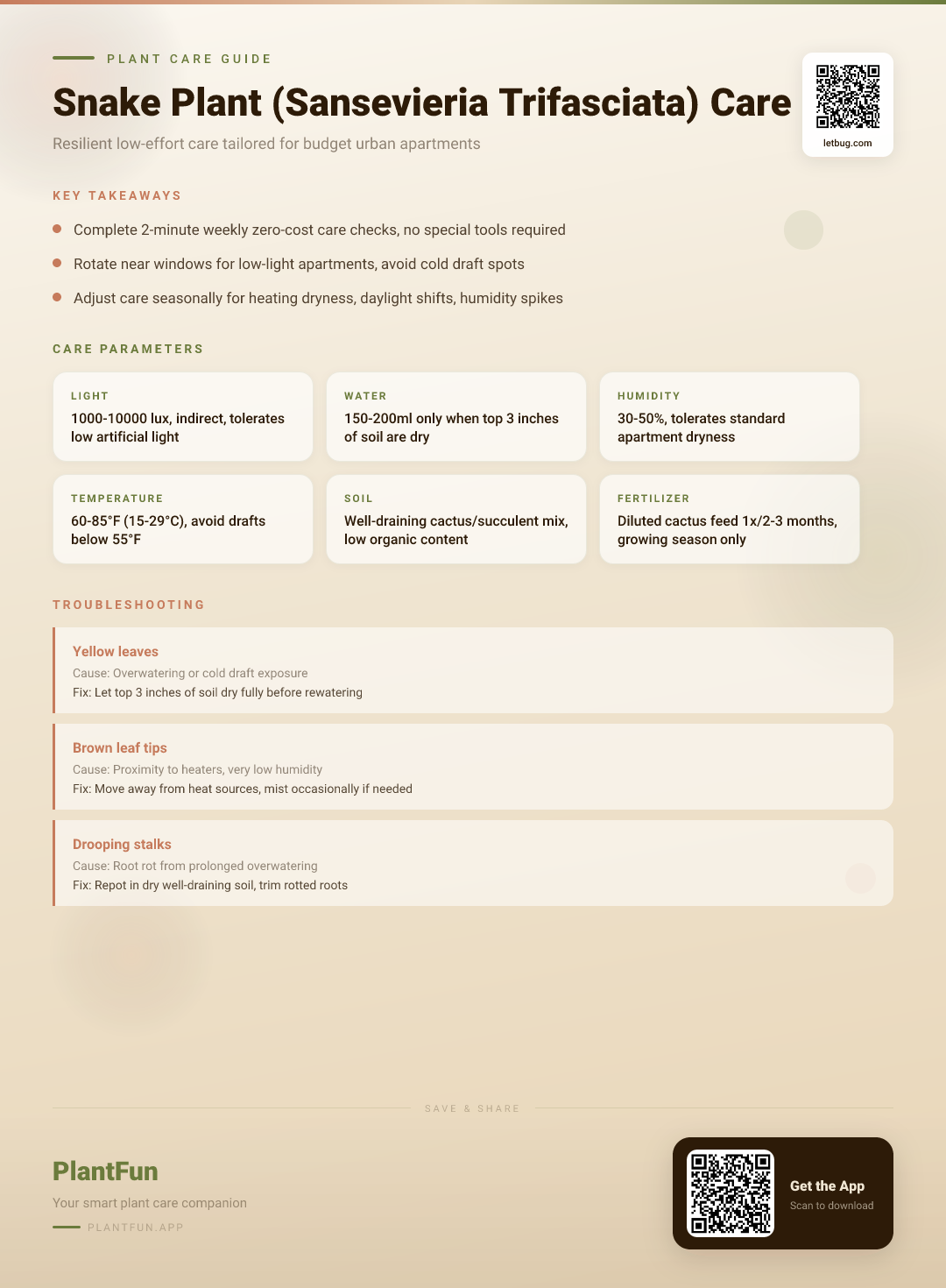
Key Takeaways
- Check soil moisture before watering — overwatering is the #1 killer of houseplants.
- Ensure your plant gets the right amount of light for its species.
- Be patient with recovery — most plants need 2–4 weeks to bounce back.
Quick Care Card
| Care Factor | Measurable Threshold | Apartment-Specific Notes |
|---|---|---|
| Light | 1,000–10,000 lux | Equivalent to 1–2 feet from a north-facing window, no grow lights required (Gautam et al., 2021) |
| Water | 150–200ml only when top 3 inches of soil are dry | Avoid fixed schedules; test soil with your finger first |
| Humidity | 30–50% | Matches average indoor apartment humidity, no extra gadgets needed (Sheeran et al., 2023) |
| Temperature | 60–85°F (15–29°C) | Avoid drops below 50°F to protect against draft damage |
| Soil | Standard potting mix | Mix in crushed leftover styrofoam for drainage if you don’t have perlite; no specialty cactus mix required |
| Fertilizer | None required | Can use diluted leftover houseplant fertilizer once per year max |
| Toxicity | Toxic to cats and dogs | Keep out of reach of pets (ASPCA, 2026) |
Why This Guide Exists
Generic snake plant care advice often recommends bright indirect light, specialty succulent soil, and humidity monitors that don’t fit the reality of 600-800 sq ft urban rental apartments. Most first-time renters deal with north-facing windows, shared wall heating, drafty entryways, and zero extra budget for plant gadgets, making standard care guides irrelevant. A common myth is that snake plants need high light to grow, but 2021 horticultural research confirms they thrive at light levels as low as 1,000 lux, which is standard for most low-light apartment spaces (Gautam et al., 2021). This guide focuses exclusively on zero-cost adjustments to support resilient snake plant growth, no special purchases required.
Step-by-Step Weekly Care Checklist
This 7-step, 2-minute snake plant care checklist requires no tools and works for all apartment constraints:
- Stick your index finger 3 inches into the soil – if completely dry, add 150-200ml of tap water (no filtered water needed).
- Check if leaves are touching cold window panes or AC vents – move the pot 6 inches away if yes to protect snake plant draft tolerance.
- Rotate the pot 1/4 turn to ensure even growth (no lopsided stalks) and maximize light absorption.
- Wipe leaves with a damp paper towel to remove dust that blocks light, which helps make snake plant grow faster without extra light sources.
- Confirm the pot is not sitting in pooled water on your windowsill or counter to prevent root rot.
- If you have baseboard heating, check that the plant is at least 1 foot away from the heat source to avoid dry leaf tips.
- Note any new brown tips or yellow leaves to troubleshoot later if issues persist.
Measurable Care Thresholds Deep Dive
All parameters below are tailored to apartment living and backed by horticultural research:
- Light: 1,000-10,000 lux is the sweet spot for snake plant low light care. Most north-facing windows produce 1,500-3,000 lux on overcast days, which is more than enough for steady growth (Gautam et al., 2021).
- Water: 150-200ml only when the top 3 inches of soil are completely dry. This answers the common question of how often to water snake plant: for most apartments, that’s every 2-3 weeks in warm months, and every 4-6 weeks in cold months.
- Humidity: 30-50% is ideal, which is exactly the average indoor humidity for most US apartments. If you’re wondering do snake plants need humidity, the answer is no – no humidifiers or pebble trays are required (Sheeran et al., 2023).
- Temperature: 60-85°F (15-29°C) is the safe range. Avoid temperatures below 50°F, which can cause permanent leaf damage.
- Snake plant soil for apartments: Standard all-purpose potting mix works perfectly. If you need better drainage, mix in crushed leftover styrofoam from shipping packages instead of buying perlite or specialty cactus mix.
$0 Budget Hack Adjustments for Low-Light Apartments
No cost, no modifications to your rental required:
- Keep the plant within 2 feet of any window sill – light intensity drops by 70% just 3 feet away from a glass pane, so closer placement eliminates the need for grow lights.
- If you love the look of your snake plant in a dark corner, rotate it to the window area for 2 full days per week to get its minimum light requirement.
- Lift the pot 2 inches off cold tile floors near entryways using a leftover cardboard box or decorative book to avoid cold draft damage.
- Wipe leaves weekly to remove dust, which increases light absorption by up to 20% for faster growth with no extra cost.
Seasonal Care Calendar
Adjust your routine to match common apartment seasonal changes:
- Fall (September-November): Reduce watering frequency by 50% as daylight hours shorten, only watering when the top 4 inches of soil are dry.
- Winter (December-February): Follow snake plant winter care rules: keep plants 2 feet away from baseboard heaters, mist leaves once a week with tap water if you notice brown tips from dry heating air, and skip fertilizing entirely.
- Spring (March-May): Return to your regular watering schedule, rotating the pot weekly to take advantage of longer daylight hours for faster new growth.
- Summer (June-August): For snake plant summer watering, only increase volume by 10% max, even during humidity spikes. Move plants 1 foot away from south-facing windows to avoid midday sun scorch.
Common Apartment-Specific Mistakes to Avoid
- Mistake: Placing directly on top of baseboard heaters or next to AC vents. What happens: Dries out leaf tips and damages root systems, reduces snake plant draft tolerance significantly. Instead: Keep at least 1 foot away from all heating and cooling sources.
- Mistake: Overwatering during cold winter months when shared heating is running. What happens: Root rot, the #1 cause of snake plant death in apartments. Instead: Only water once every 4-6 weeks in winter, when the top 4 inches of soil are completely dry.
- Mistake: Adding undiluted leftover coffee grounds directly to the soil. What happens: Raises soil acidity too high, burning leaf tips. Instead: If you want to use coffee grounds as free fertilizer, dilute 1 part grounds with 10 parts water and pour onto soil once every 3 months max.
- Mistake: Keeping the plant more than 3 feet away from any window in a low-light apartment. What happens: Stagnant growth, limp stalks, no new leaves. Instead: Keep within 2 feet of a north-facing window, or 3 feet of an east/west-facing window for minimum light.
- Mistake: Using a pot with no drainage holes to avoid countertop water damage. What happens: Pooled water at the bottom of the pot causes root rot even if you water sparingly. Instead: Place a 1-inch layer of pebbles at the bottom of the pot before adding soil to catch excess water, or drill a small drainage hole if your lease allows.
FAQ
Can I keep my snake plant in a dark apartment closet with only artificial overhead light?
It depends on light intensity. Most standard overhead LED lights produce 500-1,000 lux at 2 feet, which is the minimum threshold for snake plant survival (Gautam et al., 2021). If your closet light is on for at least 10 hours per day, your plant can survive, but growth will be very slow. For faster growth, move it to a window for 2 days per week.
How often do I need to water my snake plant if I only have north-facing windows?
For north-facing apartments, expect to water once every 2-3 weeks in spring and summer, and once every 4-6 weeks in fall and winter. Always test the soil first: only water when the top 3 inches are completely dry, as this is more reliable than a fixed schedule.
Why are the tips of my snake plant turning brown even when I barely water it?
The most common cause in apartments is dry air from shared heating systems, or placement near drafts from entryways or AC vents. Brown tips can also come from overfertilizing, or using water with high chlorine levels (you can leave tap water out for 24 hours before watering to let chlorine evaporate if needed).
Troubleshooting Quick Fixes
Yellow Leaves
Symptom: Soft, mushy yellow leaves near the base of the plant.
Likely cause: Overwatering leading to early root rot.
Fix:
- Stop watering immediately, let the soil dry out completely for 2-3 weeks.
- If the problem persists, remove the plant from the pot, cut off any mushy brown roots, and repot in dry fresh potting mix.
Drooping Stalks
Symptom: Limp, floppy stalks that bend over instead of standing upright.
Likely cause: Too little light, or prolonged exposure to cold drafts.
Fix:
- Move the plant to within 2 feet of a window for 2 weeks to allow it to recover.
- Check for draft sources near the previous placement, and avoid that spot in the future.
Brown Leaf Tips
Symptom: Crispy brown edges or tips on otherwise healthy green leaves.
Likely cause: Dry heating air, draft exposure, or high chlorine in tap water.
Fix:
- Mist the leaves with tap water once a week to add minor humidity.
- Keep the plant at least 1 foot away from heating vents and entryway drafts.
- If you use highly chlorinated tap water, leave it out in an open cup for 24 hours before watering to let chlorine dissipate.
References
- ASPCA. (2026). Toxic and Non-Toxic Plants List — ASPCA. https://www.aspca.org/pet-care/animal-poison-control/toxic-and-non-toxic-plants. Accessed 2026-03-09.
- Gautam, B.; Dubey, R.; Kaur, N. (2021). GROWTH RESPONSE OF INDOOR ORNAMENTAL PLANT SPECIES TO VARIOUS ARTIFICIAL LIGHT INTENSITIES (LED) IN AN INDOOR VERTICAL GARDEN. PLANT ARCHIVES. https://doi.org/10.51470/plantarchives.2021.v21.no1.096. Accessed 2026-03-09.
- Sheeran, L.; Rasmussen, A. (2023). Aerial roots elevate indoor plant health: Physiological and morphological responses of three high‐humidity adapted Araceae species to indoor humidity levels. Plant, Cell & Environment. https://doi.org/10.1111/pce.14568. Accessed 2026-03-09.
Optional Helper: Plantfun.App
Plantfun.App identifies your plants by photo, diagnoses pests and diseases with clear fixes, and creates personalised watering and light schedules that adapt to your home conditions — a handy companion for putting this guide into daily practice.
Found an error or have suggestions? We'd love your feedback.
Need help identifying this problem?
Get instant identification, personalized care schedules, and effective pest treatment plans directly on your phone.
Sponsored • We may earn a commission from app downloads
Related Guides
The Complete Snake Plant Care Guide for North-Facing Studio Apartments: Resilient Growth Checklist
Grow a lush snake plant even in your dark north-facing studio. Get exact light levels, watering amounts, and a seasonal checklist to avoid root rot and encourage resilient, fast growth.
Care GuideThe Complete Snake Plant Care Checklist for Small Urban Apartments: No-Fuss Resilient Growth
Skip generic snake plant care tips. Grab our free budget-friendly 7-point checklist, exact light, water, and soil specs to grow a hardy, resilient snake plant in your small urban apartment.
Care GuideSnake Plant Care for Apartment Living: A Resilient Growth Guide for Low-Light Homes
Master your Snake Plant care with 4 proven benchmarks. Learn exact light levels, watering schedules, and soil hacks to keep your foliage vibrant in any apartment.
Pest ControlAnts on Plants: What They Mean and What to Do
Ants usually aren't eating your plant. They are farming other pests.