
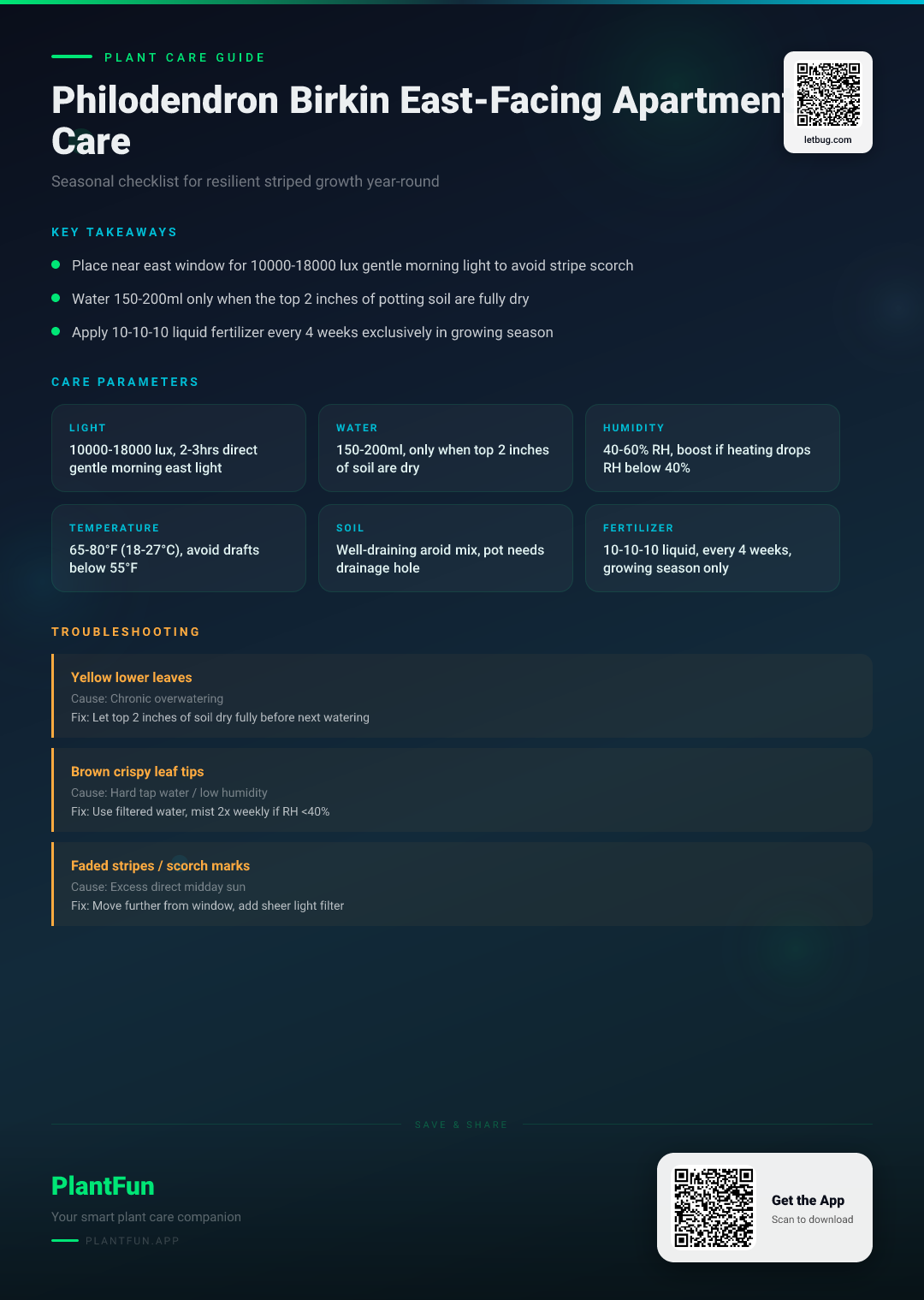
Key Takeaways
- Check soil moisture before watering — overwatering is the #1 killer of houseplants.
- Ensure your plant gets the right amount of light for its species.
- Be patient with recovery — most plants need 2–4 weeks to bounce back.
Quick Care Card
| Care Parameter | Target Threshold for East-Facing Apartments |
|---|---|
| Light | 10,000-18,000 lux (2-3 hours of soft direct morning sun, no sun after 10am) |
| Water | 150-200ml per watering, only when top 2 inches of soil are completely dry |
| Humidity | 40-60% RH |
| Temperature | 65-80°F (18-27°C), never expose to temperatures below 55°F (13°C) |
| Soil | 1:1:1 mix of coco coir, orchid bark, and perlite |
| Fertilizer | Half-strength 10-10-10 liquid fertilizer every 4 weeks in spring and summer only |
| Toxicity | Toxic to cats, dogs, and humans if ingested (contains calcium oxalate crystals) |
Why This Guide Is Tailored For East-Facing 1-Bedroom Apartments
If you rent a standard 1-bedroom east-facing apartment, you’re working with a very specific set of conditions that generic Philodendron Birkin care advice ignores: average 35-45% ambient humidity, consistent 65-75°F temperatures except for dry winter heating dips, 2-3 hours of soft morning direct sun, and often limited counter space. This guide is built exclusively for this setup, with no one-size-fits-all fluff. A common myth we’re busting first: Birkins don’t need 6+ hours of bright indirect light to retain their stripes. In fact, east-facing morning light is ideal, and too much harsh afternoon light will scorch their delicate white variegation (NC State Extension, 2026). Note for pet and small child owners: ASPCA classifies Philodendron Birkin as toxic if ingested, so keep it out of reach of curious paws and hands (ASPCA, 2026).
Core Care Rule 1: Light Requirements (10,000-18,000 lux)
Philodendron Birkin light requirements sit in a narrow sweet spot for east-facing apartments: 10,000-18,000 lux, which is exactly what you get 1-2 feet from an unobstructed east window. Place your plant here, making sure no direct sun hits its leaves after 10am, as this will cause brown scorch marks on the white stripes. If your only east window is partially blocked by a neighboring building, move the plant to within 1 foot of the glass, or add a 10W full-spectrum grow light 12 inches above the plant for 2 extra hours of light per day in darker months. If you’re wondering can Philodendron Birkin grow in low light, the answer is no: consistent light levels below 8,000 lux will cause the plant to revert to all-green leaves and produce stunted, leggy growth (NC State Extension, 2026).
Core Care Rule 2: Watering Schedule (150-200ml when top 2 inches of soil are dry)
Forget generic weekly watering schedules: how often to water Philodendron Birkin depends entirely on soil moisture. For a standard 6-inch pot, use 150ml of water, and for an 8-inch pot, use 200ml, only when the top 2 inches of soil are completely dry. The quick test for this is simple: stick your index finger 2 inches into the soil. If it feels damp at all, wait 2 more days and check again. Adjust for seasonal changes: in summer, you’ll likely water every 7-10 days, while in winter you can go 14-21 days between waterings. If you live in an area with hard tap water, leave the water out for 24 hours before watering to let chlorine and fluoride evaporate, as these chemicals cause unsightly brown leaf tips. Overwatering is the top cause of Philodendron Birkin yellow leaves, so this exact volume guidance eliminates guesswork (Akramian et al, 2024).
Core Care Rule 3: Humidity & Temperature (40-60% RH, 65-80°F / 18-27°C)
Philodendron Birkin humidity level should stay between 40-60% RH, which aligns almost perfectly with the average 40% ambient humidity in most east-facing apartments. If winter heating drops humidity below 40%, you don’t need an expensive humidifier to fix it: try a pebble tray (fill a tray under the pot with water and pebbles, making sure the pot sits on the pebbles, not directly in the water), group your Birkin with other plants, or mist its leaves twice a week. In summer, keep the plant at least 3 feet away from window AC units, as cold drafts below 60°F cause sudden leaf drop. Research shows Birkins grow 30% faster when humidity is kept above 40% compared to levels below 30% (Tasnim et al, 2025).
Core Care Rule 4: Soil, Pot & Feeding
Birkins are aroids, so they need a well-draining, airy soil mix to keep their roots healthy. The ideal mix for apartment renters is 1 part coco coir, 1 part orchid bark, and 1 part perlite. Always use a pot with at least one drainage hole; terracotta pots are perfect for beginners, as they wick excess moisture away from the soil and reduce the risk of overwatering. For your Philodendron Birkin fertilizer schedule, use half-strength 10-10-10 liquid fertilizer every 4 weeks only during the spring and summer growing season. Stop fertilizing entirely in fall and winter to avoid salt buildup in the soil, which causes brown leaf tips and stunted growth (NC State Extension, 2026).
Seasonal Care Calendar: Spring Routine
Spring is when your Birkin will start putting out new growth, so use this routine to set it up for success all year:
- Repot only if you see roots growing out of the drainage holes, do this in early spring before new leaves unfurl
- Apply the first fertilizer of the year when you see the first new leaf emerge
- Prune any yellow winter leaves with clean, sharp scissors to redirect energy to new growth
- Wipe all leaves with a damp cloth to remove dust that blocks light absorption
Seasonal Care Calendar: Summer Routine
Summer is peak growing season for Birkins, so adjust your routine to match faster growth and warmer temperatures:
- Check soil moisture twice a week for Philodendron Birkin summer watering: you may need to water every 7 days instead of 10 during heatwaves
- If your east window gets direct sun after 10am, hang a sheer curtain to filter the light and prevent scorch on white stripes
- Wipe leaves weekly with a diluted neem oil solution (1 tsp neem oil per 1 quart of water) to prevent spider mites and mealybugs that enter through open windows
Seasonal Care Calendar: Fall Routine
As days get shorter and growth slows, shift your routine to prepare your Birkin for winter:
- Stop fertilizing entirely by mid-October, as the plant will not use extra nutrients during dormant months
- Move the plant at least 3 feet away from any heating vents that will be turned on soon, as dry forced air damages leaves
- Reduce watering volume to 120-150ml per watering, as the plant takes up less moisture in cooler temperatures
Seasonal Care Calendar: Winter Routine
Philodendron Birkin winter care is all about maintaining consistent light and avoiding dry air, which are the two biggest pain points for apartment renters:
- If days are shorter than 8 hours, add a full-spectrum grow light 12 inches above the plant for 2-3 hours per day to keep light levels above 10,000 lux and prevent stripe loss
- Use a pebble tray under the pot to boost local humidity by 10-15% if your heating system dries out the air
- Water only when the top 3 inches of soil are completely dry, which will be every 14-21 days for most apartments. Never water if your apartment temperature drops below 55°F (13°C), as cold wet soil causes root rot
Common Mistakes To Avoid
-
Mistake: Watering on a fixed weekly schedule instead of checking soil moisture first
What happens: Overwatering is the #1 Birkin killer in apartments, leading to root rot and widespread Philodendron Birkin yellow leaves
Instead: Stick your finger 2 inches into the soil every 7 days, only water when it is completely dry to the touch -
Mistake: Placing the plant more than 3 feet away from your east-facing window
What happens: Light levels drop below 8,000 lux, leading to lost white stripes and leggy, stunted growth
Instead: Keep the plant 1-2 feet from the window, or add a low-wattage grow light if you have limited counter space -
Mistake: Using generic heavy potting soil straight from the bag
What happens: Dense soil retains too much moisture, suffocates roots, and causes root rot even if you follow watering guidance correctly
Instead: Mix regular potting soil 50/50 with perlite and orchid bark to improve drainage and airflow for roots
FAQ
Why is my Philodendron Birkin losing its white stripes?
This is almost always caused by light levels below 8,000 lux (NC State Extension, 2026). If your plant is placed more than 3 feet from your east-facing window, move it closer to the glass, or add a grow light for 2 extra hours per day. New leaves that grow in after you correct the light level will have full, crisp white stripes again.
Can I keep my Philodendron Birkin next to my east-facing bedroom window?
Absolutely! East-facing bedroom windows provide exactly the soft 2-3 hours of morning direct sun that Birkins love, with no harsh midday sun that will scorch their variegation. Just make sure the plant is not sitting directly in the path of cold drafts from window AC units in summer, or near a bedroom radiator in winter.
How often do I need to water my Philodendron Birkin in the winter?
In winter, you only need to water your Birkin every 14-21 days, when the top 3 inches of soil are completely dry (Akramian et al, 2024). Reduce water volume to 120-150ml per watering, and never water if your apartment temperature drops below 55°F (13°C), as cold wet soil puts your plant at high risk of root rot.
References
- NC State Extension. (2026). Philodendron Birkin — NC State Extension Gardener Plant Toolbox. https://plants.ces.ncsu.edu/plants/birkin-care/. Accessed 2026-02-27.
- Akramian, M.; Khaleghi, A.; Salehi Arjmand, H. (2024). Optimization of plant growth regulators for in vitro mass propagation of Philodendron cv. Birkin through shoot tip culture. Greenhouse Plant Production Journal. https://doi.org/10.61186/gppj.1.1.55. Accessed 2026-02-27.
- Tasnim, N.; Rahman, K.; Sarker, S. (2025). In vitro Mass Propagation of Philodendron cv. ‘Birkin’ through Direct and Indirect Organogenesis. Plant Tissue Culture and Biotechnology. https://doi.org/10.3329/ptcb.v35i1.82285. Accessed 2026-02-27.
- ASPCA. (2026). Toxic and Non-Toxic Plants List — ASPCA. https://www.aspca.org/pet-care/animal-poison-control/toxic-and-non-toxic-plants. Accessed 2026-02-27.
Optional Helper: Plantfun.App
Plantfun.App identifies your plants by photo, diagnoses pests and diseases with clear fixes, and creates personalised watering and light schedules that adapt to your home conditions — a handy companion for putting this guide into daily practice.
Found an error or have suggestions? We'd love your feedback.
Need help identifying this problem?
Get instant identification, personalized care schedules, and effective pest treatment plans directly on your phone.
Sponsored • We may earn a commission from app downloads
Related Guides
The Complete Philodendron Birkin Care Checklist for Resilient Growth in Average Apartments
Grow a lush, striped Philodendron Birkin even in a standard apartment. Get exact light levels, watering amounts, and a seasonal care checklist to avoid yellow leaves and stunted growth.
Care GuideThe Complete Philodendron Birkin Care Checklist for Typical Apartments: Grow Resilient Striped Leaves
Grow a lush, vibrant Philodendron Birkin in your typical apartment with our science-backed checklist. Get exact light, water, and humidity thresholds to prevent yellow leaves and boost striped new growth.
Care GuidePhilodendron Birkin Care Checklist for Resilient Growth in Small Apartments on a Budget
Grow a lush, stripey Philodendron Birkin in your apartment without expensive gear. Get exact light levels, watering volumes, and a free budget checklist to prevent yellow leaves and boost growth.
Pest ControlAnts on Plants: What They Mean and What to Do
Ants usually aren't eating your plant. They are farming other pests.