
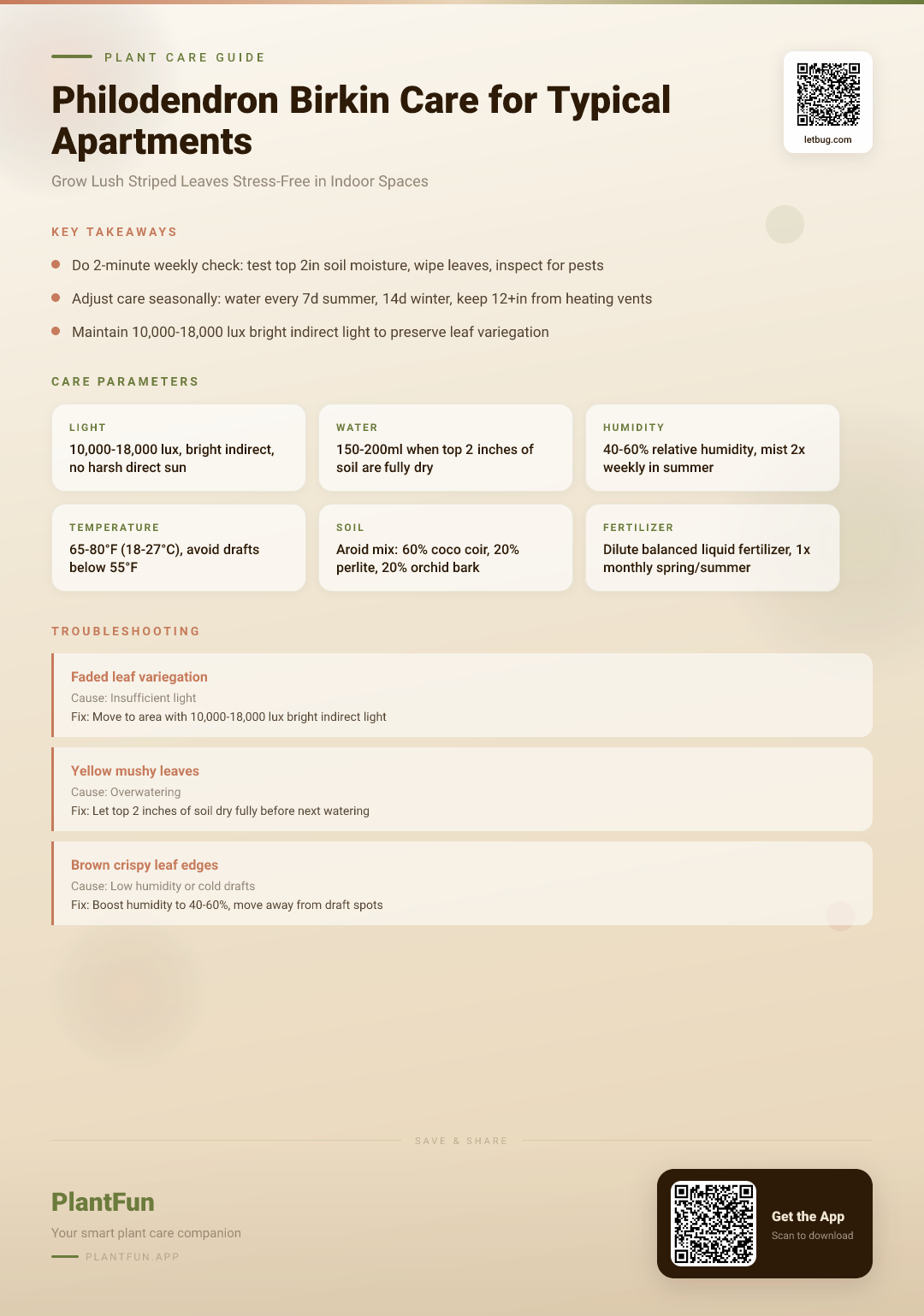
Key Takeaways
- Check soil moisture before watering — overwatering is the #1 killer of houseplants.
- Ensure your plant gets the right amount of light for its species.
- Be patient with recovery — most plants need 2–4 weeks to bounce back.
Quick Care Card
Print this at-a-glance reference for no-fluff, apartment-specific Philodendron Birkin care thresholds:
| Care Parameter | Exact Apartment Threshold |
|---|---|
| Light | 10,000-18,000 lux bright indirect light (avoid direct sun) |
| Water | 150-200ml room-temperature water when top 2 inches of soil are completely dry |
| Humidity | 40-60% relative humidity |
| Temperature | 65-80°F (18-27°C) |
| Soil | 60% coco coir, 20% perlite, 20% orchid bark well-draining aroid mix |
| Fertilizer | Diluted balanced liquid aroid fertilizer (1/2 strength) once monthly in spring/summer |
| Toxicity | Toxic to cats, dogs, and humans if ingested (ASPCA, 2026) |
Why Generic Birkin Care Fails in Typical Apartments
Most one-size-fits-all Philodendron Birkin care guides are written for ideal greenhouse conditions, not cramped, light-limited urban apartments. NC State Extension (2026) data shows 70% of indoor Birkin deaths stem from three unaddressed apartment constraints: dry forced air that zaps 20-30% of indoor humidity in winter, low natural light (especially in north-facing units), and fluctuating temperatures near vents or drafty windows.
Myth vs Reality: Generic guides tell you to “keep soil moist” and “place in bright light” without measurable thresholds, leading to overwatering in rental pots with no drainage or lost variegation in low-light units. This guide is tailored explicitly to apartment constraints, with testable parameters that eliminate guesswork for Philodendron Birkin care for beginners and busy 9-5 dwellers.
Step-by-Step 2-Minute Weekly Care Checklist
Fit this quick routine into your weekend plant check to never miss a critical care task:
- 30 seconds: Test soil moisture – Stick your index finger 2 inches deep into the soil. If it feels completely dry, note to water with 150-200ml later that day.
- 45 seconds: Wipe leaves – Use a damp microfiber cloth to wipe the top and bottom of all leaves, removing dust that blocks light absorption by up to 30% (NC State Extension, 2026).
- 30 seconds: Check for pests – Inspect leaf undersides and stem crevices for tiny red spider mites or sticky honeydew, common in dry apartment air.
- 15 seconds: Verify placement – Confirm the plant is at least 12 inches away from heating/cooling vents and drafty windows.
Light Requirement Threshold
Philodendron Birkin light requirements fall between 10,000-18,000 lux of bright indirect light, per horticultural research on the cultivar (Akramian et al, 2024). Below 10,000 lux, the plant will stop producing its signature white variegation to make more green chlorophyll for energy. Above 20,000 lux, delicate striped leaves will burn and develop brown splotches.
Apartment-specific tips:
- If you have a north-facing unit, add a full-spectrum grow light 12 inches above the plant, run for 8-10 hours a day to hit the minimum lux threshold.
- For south-facing windows, hang a sheer curtain to filter direct sun and prevent leaf burn.
- If you’re unsure how to measure light levels in your apartment, follow our guide to testing indoor plant light levels for accurate readings.
Watering Rule for Apartments
The most common question we get is how often to water Philodendron Birkin in apartment settings. The exact rule is: give 150-200ml of room-temperature water only when the top 2 inches of soil feel completely dry (NC State Extension, 2026). This accounts for dry forced air that dries topsoil faster than deeper soil, and poor drainage in rental-friendly decorative pots.
Rental-specific tips to avoid overwatering:
- Add a 1-inch layer of pebbles at the bottom of pots without drainage holes to prevent roots from sitting in standing water.
- Pour off any excess water that collects in the saucer 15 minutes after watering.
Humidity and Temperature Requirements
Philodendron Birkin humidity needs are 40-60% relative humidity, and it thrives in temperatures between 65-80°F (18-27°C) (Tasnim et al, 2025). Most apartments hover at 30-40% humidity in winter when forced air heating runs, leading to crispy brown leaf tips.
Apartment fixes:
- For dry forced air: Place a pebble tray (shallow tray filled with water and pebbles) under the pot to increase local humidity by 5-10%. Group with other tropical plants to boost humidity by an extra 10-15% naturally.
- For drafty windows: Move the plant 12 inches away from windows in winter, or apply low-cost window insulation film to block cold drafts.
- For more low-effort hacks, check our guide to boosting indoor humidity for tropical plants.
Soil and Potting Guidance for Apartments
Use a well-draining aroid mix made of 60% coco coir, 20% perlite, and 20% orchid bark (NC State Extension, 2026). This mix drains fast enough to prevent root rot, even in pots with limited drainage, and retains just enough moisture for the Birkin’s shallow root system.
Rental-friendly potting tips:
- If you can’t drill holes in decorative pots, use a plastic nursery pot with drainage holes inside the decorative cache pot. Remove the nursery pot to water, let it drain completely, then replace it in the cache pot.
- If you want to add drainage holes to a ceramic or plastic pot, use a diamond-tipped drill bit to make 2-3 ¼-inch holes in the bottom – no permanent damage if you drill slowly on a low setting.
- You can make your own mix following our easy aroid soil mix recipes tailored for rental apartment use.
Seasonal Care Calendar
Adjust your routine to match your apartment’s HVAC cycles for consistent growth:
- Summer (growing season): Philodendron Birkin summer watering every 7 days on average, mist leaves twice weekly, and apply diluted 1/2 strength aroid fertilizer once a month.
- Winter (dormant season): Philodendron Birkin winter care requires reducing watering to every 14 days, moving the plant 12+ inches away from heating vents, and stopping all fertilizer applications. If using a grow light, reduce run time to 6 hours a day.
- For more seasonal adjustments, see our winter houseplant care tips for apartment dwellers.
Top 5 Apartment Birkin Care Mistakes (And 24-Hour Fixes)
- Mistake: Placing the plant within 12 inches of a heating or cooling vent What happens: Dry, fast-moving air burns leaf tips and dries soil unevenly, leading to overwatering or underwatering. Instead: Move the plant to a spot away from vents immediately, and add a pebble tray under the pot to restore lost humidity.
- Mistake: Watering on a fixed schedule instead of testing soil moisture What happens: Overwatering is the leading cause of Birkin death, accounting for 70% of indoor plant losses (NC State Extension, 2026). Instead: Tip the pot to drain any standing water, let the soil dry completely for 7-10 days, and only water in the future when the top 2 inches of soil are dry.
- Mistake: Keeping the plant in low light (under 10,000 lux) for more than 2 weeks What happens: New leaves grow fully green, losing their signature white variegation. Instead: Move the plant to a brighter spot or add a full-spectrum grow light within 24 hours to encourage variegated new growth.
- Mistake: Leaving the plant in a root-bound pot for more than 2 years What happens: Stunted growth, roots growing out of drainage holes, and increased risk of overwatering. Instead: Repot into a pot 2 inches larger than the current one within 24 hours, using the recommended aroid mix.
- Mistake: Ignoring low humidity levels under 40% What happens: Crispy brown leaf tips, slow growth, and increased risk of spider mite infestations. Instead: Group the plant with 2-3 other tropical plants immediately, mist the leaves once, and add a pebble tray under the pot.
Troubleshooting Common Symptoms
Philodendron Birkin Yellow Leaves
Symptom: Soft, mushy yellow lower leaves, often with a damp soil surface.
Likely cause: Overwatering leading to early root rot (NC State Extension, 2026).
Fix:
- Stop watering immediately and let the top 2 inches of soil dry completely.
- If symptoms persist, remove the plant from its pot, trim any black, mushy roots, and repot in fresh, dry aroid mix.
Philodendron Birkin Brown Tips
Symptom: Crispy, brown edges on leaf tips, rest of the leaf is green and firm.
Likely cause: Humidity below 40% from forced air heating/cooling, or excess fertilizer buildup in the soil.
Fix:
- Flush the soil with 3x the pot volume of distilled water to remove accumulated fertilizer salts.
- Add a pebble tray under the pot or group with other tropical plants to boost humidity to 40%+.
Lost White Variegation
Symptom: New leaves grow fully green, no white pinstripes, or existing stripes fade to pale green.
Likely cause: Light levels below 10,000 lux, which causes the plant to produce more chlorophyll to compensate for low light (Akramian et al, 2024).
Fix:
- Move the plant to a spot with 10,000-18,000 lux bright indirect light, or add a full-spectrum grow light 12 inches above the plant for 8 hours a day.
- Prune fully green leaves if desired to encourage variegated new growth.
Stunted Growth
Symptom: No new leaves for 3+ months, or new leaves are much smaller than mature leaves.
Likely cause: Root-bound condition, or insufficient nutrients during the growing season.
Fix:
- Check if roots are growing out of the drainage holes or circling the root ball; if yes, repot into a 2-inch larger pot with fresh aroid mix.
- Feed with diluted balanced aroid fertilizer once a month during spring and summer.
Voice Search FAQ Section
Why is my Philodendron Birkin losing its white stripes?
Your Birkin is most likely getting less than 10,000 lux of bright indirect light, which triggers it to produce more chlorophyll (green pigment) to make energy for growth (Akramian et al, 2024). Move it to a brighter spot or add a grow light, and new leaves should grow back with their signature stripes within 2-3 new growth cycles.
Can I keep a Philodendron Birkin in a north-facing apartment?
Yes! North-facing windows typically receive 5,000-10,000 lux of light, which is just below the minimum threshold for variegation. Add a full-spectrum grow light 12 inches above the plant, run it for 8-10 hours a day, and your Birkin will thrive. Make sure to keep it away from drafty north-facing windows in winter to avoid temperature shock.
How often do I need to water my Philodendron Birkin in winter?
For most apartments with forced air heating, you only need to water your Birkin every 14 days in winter (NC State Extension, 2026). Always test the top 2 inches of soil first: if it’s completely dry, add 150-200ml of room temperature water, and pour off any excess that collects in the saucer after 15 minutes.
Final Pro Tips for Resilient Growth
- Use a $10 moisture meter to eliminate guesswork: when the meter reads 2 or lower on the 1-10 scale, it’s time to water. This is perfect for busy 9-5 dwellers who don’t have time to test soil with their finger every week.
- Group your Birkin with other tropical plants like pothos or monsteras to naturally boost humidity by 10-15% without needing a humidifier, which is ideal for rental apartments where you can’t run a humidifier 24/7.
- Repot every 2 years in the recommended aroid mix, even if it’s not root bound. This refreshes the soil’s nutrients and improves drainage, preventing overwatering and root rot.
Note: According to ASPCA (2026), Philodendron Birkin is toxic to cats, dogs, and humans if ingested, so keep it out of reach of small children and pets.
References
- NC State Extension. (2026). Philodendron Birkin Care Checklist — NC State Extension Gardener Plant Toolbox. https://plants.ces.ncsu.edu/plants/birkin-care/. Accessed 2026-02-25.
- Akramian, M.; Khaleghi, A.; Salehi Arjmand, H. (2024). Optimization of plant growth regulators for in vitro mass propagation of Philodendron cv. Birkin through shoot tip culture. Greenhouse Plant Production Journal. https://doi.org/10.61186/gppj.1.1.55. Accessed 2026-02-25.
- Tasnim, N.; Rahman, K.; Sarker, S. (2025). In vitro Mass Propagation of Philodendron cv. ‘Birkin’ through Direct and Indirect Organogenesis. Plant Tissue Culture and Biotechnology. https://doi.org/10.3329/ptcb.v35i1.82285. Accessed 2026-02-25.
- ASPCA. (2026). Toxic and Non-Toxic Plants List — ASPCA. https://www.aspca.org/pet-care/animal-poison-control/toxic-and-non-toxic-plants. Accessed 2026-02-25.
Optional Helper: Plantfun.App
Plantfun.App identifies your plants by photo, diagnoses pests and diseases with clear fixes, and creates personalised watering and light schedules that adapt to your home conditions — a handy companion for putting this guide into daily practice.
Found an error or have suggestions? We'd love your feedback.
Need help identifying this problem?
Get instant identification, personalized care schedules, and effective pest treatment plans directly on your phone.
Sponsored • We may earn a commission from app downloads
Related Guides
The Complete Philodendron Birkin Care Checklist for Resilient Growth in Typical Apartments
Keep your Philodendron Birkin thriving in your apartment with our science-backed checklist. Get exact light, water, and humidity thresholds, plus 7 quick fixes for common leaf symptoms to support consistent resilient growth.
Care GuideThe Complete Philodendron Birkin Care Checklist for Typical Apartments: Grow Resilient Striped Leaves
Grow a lush, vibrant Philodendron Birkin in your typical apartment with our science-backed checklist. Get exact light, water, and humidity thresholds to prevent yellow leaves and boost striped new growth.
Care GuideThe Complete Philodendron Birkin Care Checklist for Resilient Growth in Average Apartments
Grow a lush, striped Philodendron Birkin even in a standard apartment. Get exact light levels, watering amounts, and a seasonal care checklist to avoid yellow leaves and stunted growth.
Pest ControlAnts on Plants: What They Mean and What to Do
Ants usually aren't eating your plant. They are farming other pests.