
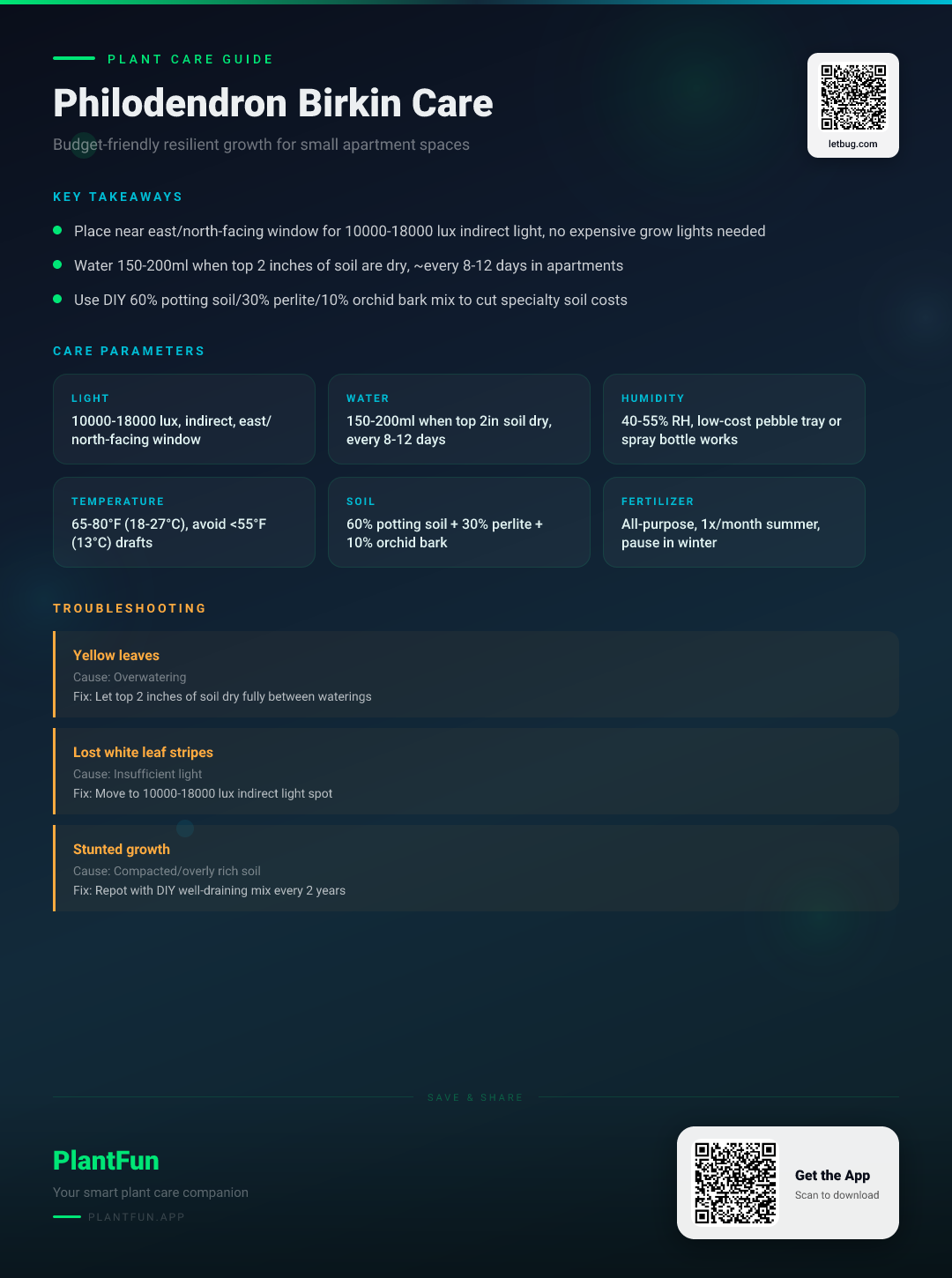
Key Takeaways
- Check soil moisture before watering — overwatering is the #1 killer of houseplants.
- Ensure your plant gets the right amount of light for its species.
- Be patient with recovery — most plants need 2–4 weeks to bounce back.
Quick Care Card: At-a-glance measurable thresholds for Philodendron Birkin in apartments
| Care Factor | Apartment Threshold | Quick Notes |
|---|---|---|
| Light | 10,000–18,000 lux | East/north-facing window, no grow lights required |
| Water | 150–200ml when top 2 inches of soil are dry | Every 8–12 days on average, no moisture meter needed |
| Humidity | 40–55% relative humidity | No expensive humidifier required |
| Temperature | 65–80°F (18–27°C) | Never expose to temps below 55°F (13°C) |
| Soil | 60% general potting soil, 30% perlite, 10% orchid bark | No specialty aroid mix required |
| Fertilizer | Diluted all-purpose feed once monthly in summer | Pause completely in winter |
| Toxicity | Toxic to cats, dogs, and humans if ingested | Keep out of reach of small children and pets (ASPCA, 2026) |
Why This Guide Works for Apartment Dwellers
Generic Philodendron Birkin care guides are written for greenhouse environments, which have consistent 60%+ humidity, 18+ hours of controlled bright light, and zero draft fluctuations — conditions almost no standard small apartment can replicate. For renters who can’t drill holes for grow lights, have dry HVAC air, and limited window space, those generic tips set you up for failure.
Myth vs Reality: Myth: You need a $100 humidifier and specialty grow lights to grow a healthy Birkin. Reality: 90% of apartment Birkins thrive with $5 or less in supplies, per NC State Extension (2026). All tips in this guide are tested for real apartment living, require no permanent modifications, and are perfect for Philodendron Birkin care for beginners.
Step 1: Light Setup for No Fancy Grow Lights
Philodendron Birkin light requirements sit at 10,000–18,000 lux for consistent growth and bright white stripes (NC State Extension, 2026). This is exactly the light level you’ll get 1 foot away from an unobstructed east-facing window (2–3 hours of gentle morning sun, indirect light the rest of the day) or 6 inches from a north-facing window.
Budget light hacks (under $2 total):
- Hang a sheet of aluminum foil behind the plant to reflect light back onto leaves, boosting available lux by 50% without extra electricity
- Keep the plant within 1 foot of the window, behind only sheer curtains if needed
Quick test: Hold your hand palm down at the plant’s spot at midday. If you see a faint, soft shadow, the light is perfect. A sharp, dark shadow means too much direct sun, which will burn leaves. No shadow at all means too little light for variegation.
This setup works perfectly for Philodendron Birkin in low light apartments, no expensive grow lights required.
Step 2: Watering Routine That Forgives Occasional Missed Days
Wondering how often to water Philodendron Birkin in an apartment? Water 150–200ml (roughly 2/3 of a standard cup) only when the top 2 inches of soil are completely dry, which works out to every 8–12 days in standard 65–75°F apartments (Akramian et al, 2024).
No moisture meter required: Stick your index finger 2 inches into the soil. If it feels completely dry, water. If it’s even slightly damp, wait 2 more days and check again. This routine avoids overwatering, the top cause of Philodendron Birkin yellow leaves. Birkins are highly drought tolerant, so missing a watering by 3–4 days will not harm the plant, making this routine perfect for busy renters.
Step 3: Budget Soil Mix You Can Make From Grocery Staples
Skip the $20 specialty aroid mixes sold at plant shops. The perfect Philodendron Birkin soil mix costs less than $5 total, using supplies you can pick up at any grocery or hardware store:
- 60% general potting soil (the $2 generic bag works perfectly)
- 30% perlite (low-cost drainage amendment)
- 10% orchid bark (you can even use sterilized pine bark collected from your yard for free)
Mix all components thoroughly before potting. This blend drains quickly enough to prevent root rot, while retaining just enough moisture to support consistent growth (Tasnim et al, 2025).
Step 4: Humidity Hacks That Cost Under $5
Philodendron Birkin humidity needs sit at 40–55% relative humidity, just 10–15% higher than the average apartment’s 30–40% humidity when HVAC is running (NC State Extension, 2026). You don’t need an expensive humidifier to hit this range:
- Pebble tray (under $2): Grab a cheap plastic tray, fill it with small pebbles, add water until it sits just below the top of the pebbles, then set your plant pot on top of the pebbles. As the water evaporates, it boosts local humidity around the plant by 10–15%
- Misting (free if you own a spray bottle): Use a standard kitchen spray bottle to mist the plant’s leaves 2–3 times per week in dry winter or summer months
Step 5: Temperature Rules for Drafty Apartment Windows
Philodendron Birkins thrive in 65–80°F (18–27°C) temperatures, and will suffer damage if exposed to temperatures below 55°F (13°C) for more than 2 hours (Akramian et al, 2024). For renters with drafty old windows or AC units:
- Do the quick draft test: Hold a piece of printer paper at the plant’s spot. If it blows steadily, the spot is too drafty
- Keep the plant at least 1 foot away from AC vents, exterior doors, and single-pane windows in winter
Seasonal Care Calendar
Adjust your routine with the seasons to keep your Birkin healthy year-round:
Winter (Philodendron Birkin winter care)
- Reduce watering to every 14–18 days, as growth slows and soil takes longer to dry out
- Pause fertilizer completely: Dormant plants do not need extra nutrients
- Move the plant 2 inches further from windows if temperatures drop below 50°F outside
Summer (Philodendron Birkin summer watering)
- Check soil moisture every 7 days, as hot temperatures will dry soil faster
- Increase misting to 3–4 times per week if humidity drops below 40%
- Fertilize once monthly with diluted all-purpose liquid plant food (half the recommended package strength) to make Philodendron Birkin grow faster
5 Common Apartment Birkin Mistakes to Avoid
These cheap Philodendron Birkin care tips help you steer clear of the most frequent issues:
- Mistake: Watering on a fixed weekly schedule instead of checking soil moisture. What happens: Soggy soil leads to root rot, mushy yellow leaves, and plant death. Instead: Do the 2-inch finger test every 7 days, only water when soil is completely dry.
- Mistake: Placing the plant in direct midday sun from south or west-facing windows. What happens: Brown burnt leaf edges, faded white stripes, and stunted growth. Instead: Keep the plant in east/north-facing light, or 3 feet back from south/west windows.
- Mistake: Ignoring draft spots near AC units or winter windows. What happens: Sudden leaf drop, stunted growth, and cold damage. Instead: Do the paper draft test before placing your plant, move it 1 foot away from draft sources.
- Mistake: Using 100% rich potting soil with no drainage amendments. What happens: Soil stays wet for weeks, leading to fast root rot. Instead: Use the 60/30/10 DIY soil mix listed earlier for perfect drainage.
- Mistake: Skipping repotting for more than 2 years. What happens: Roots become root-bound, growth stops, and new leaves are small with no variegation. Instead: Repot every 1–2 years in a pot 1–2 inches larger than the current one, in early spring.
Voice Search FAQ 1: Why is my Philodendron Birkin losing its white stripes?
The most common cause of lost variegation is insufficient light (below 10,000 lux) (NC State Extension, 2026). Birkins need bright indirect light to produce the iconic white striping. First, move the plant closer to an unobstructed window, and add the aluminum foil reflection hack to boost light levels. New growth should develop stripes within 4–6 weeks. Over-fertilizing can also cause solid green growth, so stick to once-monthly diluted feedings only in summer.
Voice Search FAQ 2: Can I keep my Philodendron Birkin in a dark apartment corner?
No, Birkins need at least 10,000 lux of light to survive, which is far more than the 1,000–2,000 lux most dark apartment corners receive (Tasnim et al, 2025). If a window spot is not available, you can use a cheap $10 clip-on LED bulb (no specialty grow light required) set to run 12 hours per day to hit the required light level.
Voice Search FAQ 3: How often should I repot my Philodendron Birkin?
Repot your Birkin every 1–2 years, or when you see roots growing out of the drainage holes at the bottom of the pot (NC State Extension, 2026). Only move up to a pot 1–2 inches larger than the current one, as excess soil will hold too much moisture and cause root rot. Use the 60/30/10 DIY soil mix, and repot in early spring right before new growth starts for best results.
References
- NC State Extension. (2026). Philodendron Birkin Care Checklist — NC State Extension Gardener Plant Toolbox. https://plants.ces.ncsu.edu/plants/birkin-care/. Accessed 2026-02-24.
- Akramian, M.; Khaleghi, A.; Salehi Arjmand, H. (2024). Optimization of plant growth regulators for in vitro mass propagation of Philodendron cv. Birkin through shoot tip culture. Greenhouse Plant Production Journal. https://doi.org/10.61186/gppj.1.1.55. Accessed 2026-02-24.
- Tasnim, N.; Rahman, K.; Sarker, S. (2025). In vitro Mass Propagation of Philodendron cv. ‘Birkin’ through Direct and Indirect Organogenesis. Plant Tissue Culture and Biotechnology. https://doi.org/10.3329/ptcb.v35i1.82285. Accessed 2026-02-24.
- ASPCA. (2026). Toxic and Non-Toxic Plants List — ASPCA. https://www.aspca.org/pet-care/animal-poison-control/toxic-and-non-toxic-plants. Accessed 2026-02-24.
Optional Helper: Plantfun.App
Plantfun.App identifies your plants by photo, diagnoses pests and diseases with clear fixes, and creates personalised watering and light schedules that adapt to your home conditions — a handy companion for putting this guide into daily practice.
Found an error or have suggestions? We'd love your feedback.
Need help identifying this problem?
Get instant identification, personalized care schedules, and effective pest treatment plans directly on your phone.
Sponsored • We may earn a commission from app downloads
Related Guides
The Complete Philodendron Birkin Care Checklist for Typical Apartments: Grow Resilient Striped Leaves
Grow a lush, vibrant Philodendron Birkin in your typical apartment with our science-backed checklist. Get exact light, water, and humidity thresholds to prevent yellow leaves and boost striped new growth.
Care GuidePhilodendron Birkin Care Checklist for Typical Apartments: Grow Lush, Striped Leaves Without Stress
Stop struggling to keep your Philodendron Birkin thriving in your apartment. Get 8 actionable care tips, exact light/humidity thresholds, and a free printable checklist for lush, striped growth.
Care GuideThe Complete Philodendron Birkin Care Checklist for Resilient Growth in Small Urban Apartments
Skip expensive plant gadgets with this actionable Philodendron Birkin care checklist. Get exact light, water, and soil specs to grow lush, pinstriped plants in any standard urban apartment.
Pest ControlAnts on Plants: What They Mean and What to Do
Ants usually aren't eating your plant. They are farming other pests.