
Key Takeaways
- Check soil moisture before watering — overwatering is the #1 killer of houseplants.
- Ensure your plant gets the right amount of light for its species.
- Be patient with recovery — most plants need 2–4 weeks to bounce back.
TL;DR: The Essentials
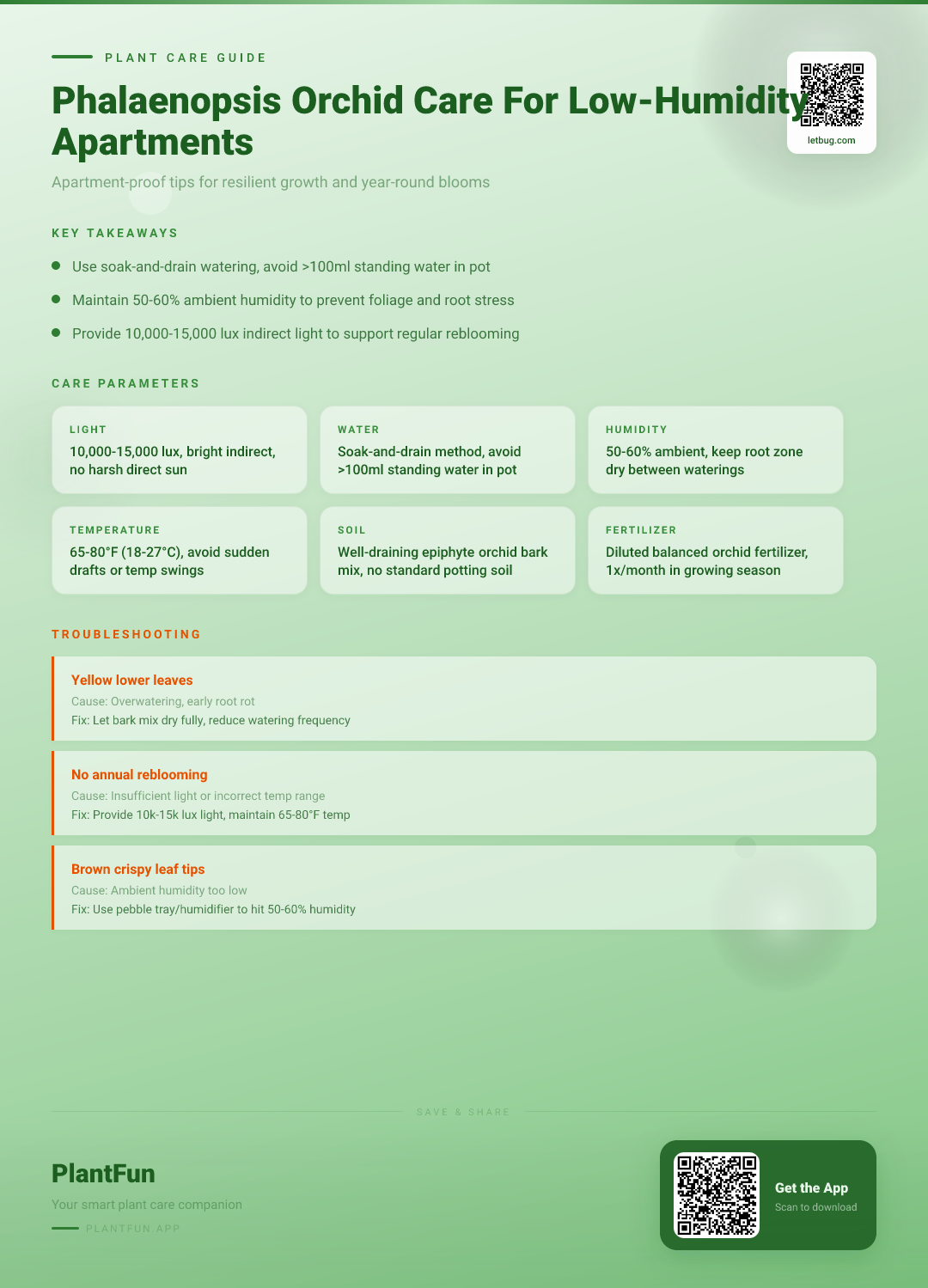
To keep your Phalaenopsis healthy, mimic its natural epiphytic life: provide bright, indirect light (10,000–15,000 lux), water only when roots turn silver, and maintain 50–60% humidity. Avoid “wet feet” at all costs by using a bark-based, well-draining medium and never letting the pot sit in standing water. These plants are non-toxic to pets (ASPCA, 2026).
Quick Care Card: Essential Metrics for Resilient Growth
| Metric | Requirement |
|---|---|
| Light | 10,000–15,000 lux (Bright, indirect) |
| Water | Soak when roots turn silver/gray |
| Humidity | 50–60% (Use pebble trays or humidifiers) |
| Temperature | 65–80°F (18–27°C) |
| Soil | Chunky bark or specialized orchid mix |
| Fertilizer | Balanced orchid-specific (diluted) |
| Toxicity | Non-toxic to cats and dogs (ASPCA, 2026) |
My Experience: The “Failed Bloom” Cycle
When I first brought home my grocery store Phalaenopsis, I made the classic mistake of placing it in a low-light corner and watering it on a “weekly schedule” regardless of the substrate moisture. Within a month, the leaves puckered, and the roots turned mushy. I learned that my apartment’s dry winter air was the enemy. By shifting to a “see-through” pot strategy and monitoring root color rather than the calendar, I successfully moved from a plant-killer to a perennial bloomer.
Why Phalaenopsis Orchids Struggle in Typical Apartments
Many of us treat orchids like terrestrial houseplants, but Phalaenopsis are epiphytes—they grow on trees, not in soil (NC State Extension, 2026). When we shove them into tight, moisture-retaining potting soil, we suffocate their roots. The low-humidity environment of modern heating systems further dehydrates the plant, leading to stunted foliage and premature flower drop.
Understanding the Habitat: Epiphytic Needs vs. Living Room Realities
In their natural canopy habitat, these orchids experience high airflow and filtered light. The roots are designed to absorb moisture rapidly during rain and dry out just as quickly (Babůrek, 2009). When we force them into stagnant, wet indoor conditions, we invite bacterial rot. Proper genomic understanding of the species has shown that nutrient and moisture management is key to sustained vigor (Ko, 2018).
Step 1: Light Requirements – Achieving 10,000–15,000 Lux for Foliage Health
Orchids do not want “deep shade.” They need bright, indirect light. If you can read a book comfortably without a lamp, the light level is likely sufficient. In terms of intensity, aim for 10,000 to 15,000 lux. A north or east-facing window is usually ideal. If you notice dark green leaves, your plant needs more light; if the leaves look bleached or have red tinges, pull it back from the glass.
Step 2: Mastering the Soak-and-Drain Method
Do not water based on a calendar. Instead, look at the roots:
- Silver/Gray roots: The plant is thirsty. Take the inner nursery pot to your sink.
- Soak: Run room-temperature water through the bark for 30 seconds. Do not exceed 100ml unless the pot is large, ensuring all bark is damp.
- Drain: Let the pot sit for 15 minutes. Ensure no water remains at the base of the cachepot. Wet feet will kill your orchid faster than neglect.
Step 3: Humidity Hacks: Keeping Ambient Levels at 50–60%
Dry apartment air causes the buds to wither. To improve ambient moisture:
- Pebble Trays: Fill a tray with pebbles and water, placing the pot on top. Ensure the base of the pot never touches the water surface.
- Grouped Plants: Clustering your orchids with other tropicals creates a “micro-climate” that raises local humidity.
Step 4: Temperature Control: The 65–80°F (18–27°C) Sweet Spot
Phalaenopsis prefer the same temperatures as humans (NC State Extension, 2026). However, they need a slight night-time dip in temperature (about 10 degrees) to trigger the hormonal shift required for reblooming.
Seasonal Care Calendar: From Active Growth to Winter Dormancy
- Spring/Summer: Active growth. Fertilize every other watering with a diluted 20-20-20 orchid fertilizer.
- Autumn/Winter: The cooling period. Reduce fertilizer and slightly increase the night-time temperature drop to stimulate new flower spikes.
Common Mistakes: Stop the Root Rot Before It Starts
- Mistake: Leaving the plant in original sphagnum moss plugs from the store.
- What happens: The center stays wet, rotting the core roots while the exterior looks dry.
- Instead: Gently remove the old plug and repot in fresh, airy bark chips.
Troubleshooting Guide
[Root Rot]
Symptom: Mushy, brown roots and yellowing, limp leaves.
Likely cause: Overwatering or poor drainage.
Fix:
- Trim away dead roots with sterilized scissors.
- Repot in a chunky, bark-based mix.
[Dehydrated Leaves]
Symptom: Wrinkled, leathery foliage despite frequent watering.
Likely cause: Root damage preventing water uptake.
Fix:
- Inspect roots; if dead, re-root the plant in high humidity.
- Check for high-salt buildup in the soil.
Voice Search FAQ
- Why is my orchid leaf turning yellow? It is often a sign of either natural senescence (an old leaf) or chronic overwatering leading to root issues (NC State Extension, 2026).
- How do I get my Phalaenopsis to rebloom? Ensure the plant is receiving adequate light and provide a sustained night-time temperature drop for 2–4 weeks.
- Can I use tap water for my indoor orchids? Yes, but let it sit out for 24 hours to allow chlorine to dissipate, or use filtered water to prevent mineral crusting.
Expert Troubleshooting: When to Repot and When to Wait
Only repot every 1–2 years or when the media has decomposed into fine silt. If the plant is currently in full bloom, wait. The energy cost of adjusting to new media can cause the orchid to “blast” (drop) its flowers prematurely.
References
- Babůrek, I. (2009). Frowine, S.A.: Moth orchid. The complete guide to Phalaenopsis. Biologia plantarum. https://doi.org/10.1007/s10535-009-0040-0. Accessed 2026-03-11.
- Ko, R. (2018). Phalaenopsis aphrodite (moth orchid): Functional genomics and biotechnology. Journal of Plant Pathology & Microbiology. https://doi.org/10.4172/2157-7471-c2-010. Accessed 2026-03-11.
- ASPCA. (2026). Toxic and Non-Toxic Plants List — ASPCA. https://www.aspca.org/pet-care/animal-poison-control/toxic-and-non-toxic-plants. Accessed 2026-03-11.
- NC State Extension. (2026). Phalaenopsis Orchid Care — NC State Extension Gardener Plant Toolbox. https://plants.ces.ncsu.edu/plants/phalaenopsis-orchid/. Accessed 2026-03-11.
Optional Helper: Plantfun.App
Plantfun.App identifies your plants by photo, diagnoses pests and diseases with clear fixes, and creates personalised watering and light schedules that adapt to your home conditions — a handy companion for putting this guide into daily practice.
Found an error or have suggestions? We'd love your feedback.
Need help identifying this problem?
Get instant identification, personalized care schedules, and effective pest treatment plans directly on your phone.
Sponsored • We may earn a commission from app downloads
Related Guides
Phalaenopsis Orchid Care in Low-Humidity Apartments: A Budget-Friendly Blueprint for Resilient Blooms
Revive your Phalaenopsis orchid with our 3-step budget care plan. Get exact lux levels and watering cycles to ensure vibrant, lasting blooms in any apartment.
Care GuidePhalaenopsis Orchid Care in Apartment Living: The 5-Step Path to Reliable Annual Reblooming
Stop discarding your Phalaenopsis orchid after the flowers fade. Master 5 essential care steps for consistent reblooming in your apartment all year round today.
Care GuidePhalaenopsis Orchid Care Checklist For Small East-Facing Apartments: Grow Resilient Blooms Year-Round
Grow thriving, blooming Phalaenopsis orchids even in tiny east-facing apartments. Get our 8-step printable checklist, exact lux levels, and space-saving care hacks for beginners.
Pest ControlAnts on Plants: What They Mean and What to Do
Ants usually aren't eating your plant. They are farming other pests.