
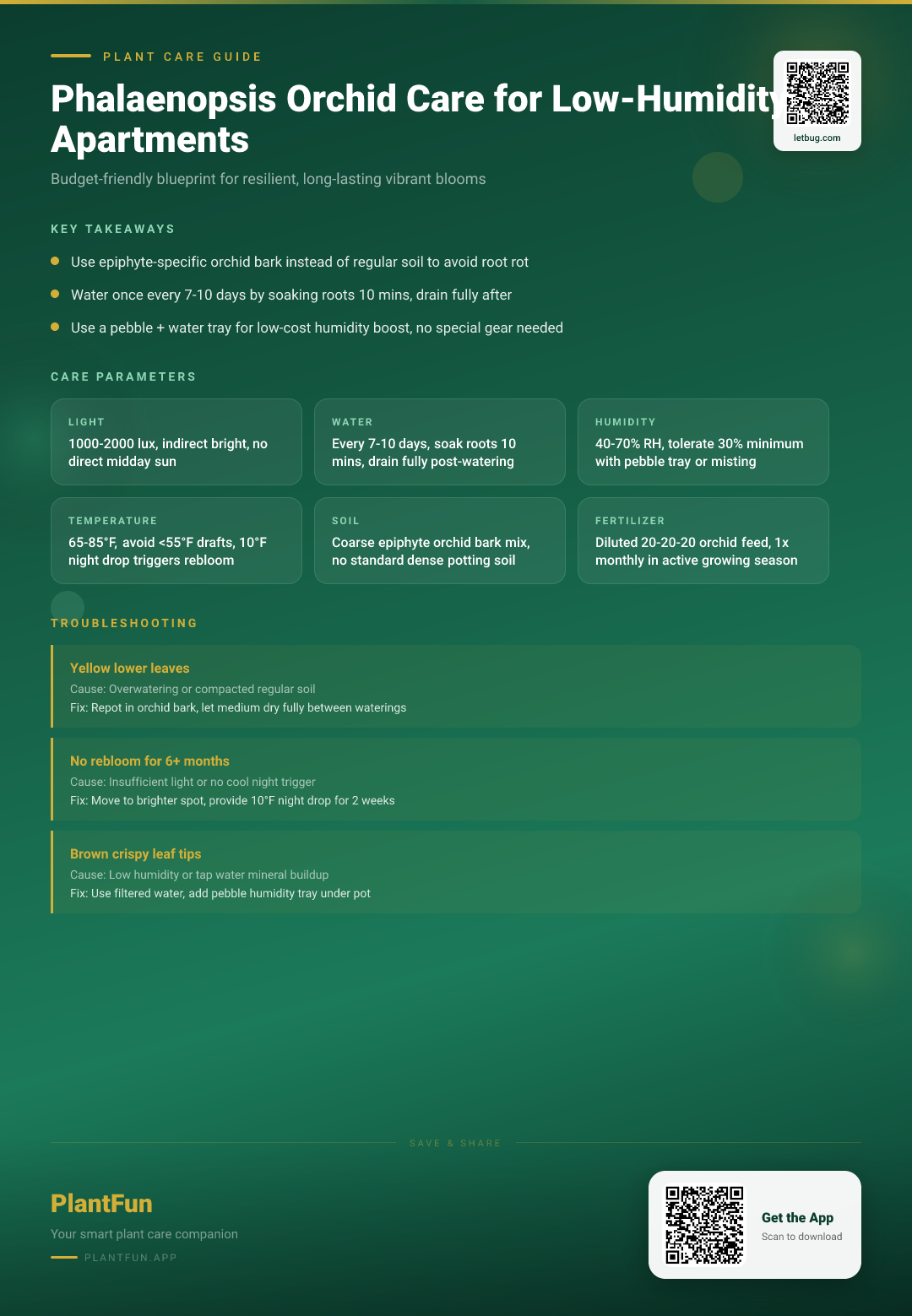
Key Takeaways
- Check soil moisture before watering — overwatering is the #1 killer of houseplants.
- Ensure your plant gets the right amount of light for its species.
- Be patient with recovery — most plants need 2–4 weeks to bounce back.
TL;DR: Keep your Phalaenopsis happy by treating it as an epiphyte, not a soil plant. Use chunky bark media for aeration, water only when roots turn silvery-grey, and provide bright, indirect light (1,000–1,500 lux). Avoid direct sun, soggy media, and specialized chemicals—simple tap water and patience are all you need for annual blooms.
My Experience: Lessons from the Window Sill
When I first started collecting orchids in my studio apartment, I made the common mistake of treating my Phalaenopsis like a standard Pothos. I kept it in a heavy soil mix and watered it every time the surface felt dry. Within a month, I had lost half the root system to rot. It wasn’t until I pivoted to an ‘epiphyte-first’ mindset—mimicking the airflow they receive in the wild—that I finally saw the consistent, vibrant blooms I had been chasing. My goal here is to help you bypass those expensive mistakes.
Quick Care Card: Essential Thresholds for Apartment Orchids
| Feature | Requirement |
|---|---|
| Light | 1,000–1,500 lux (Bright, indirect) |
| Watering | Only when roots turn silvery-grey |
| Humidity | 40–60% (Acceptable for apartments) |
| Temperature | 65°F–80°F (18°C–27°C) |
| Soil | Orchid bark (No peat/potting soil) |
| Fertilizer | Balanced orchid food (half-strength, monthly) |
| Toxicity | Non-toxic to cats and dogs (ASPCA, 2026) |
Why Your Apartment is an Unexpectedly Great Orchid Greenhouse
Many beginners fear that their apartments are too dry or dim. However, modern living spaces often mimic the temperature stability these orchids prefer. By utilizing your window sill correctly, you can provide the consistent day-night temperature shifts (often a 10-degree drop at night) that naturally trigger flower spikes (Ko, 2018).
Understanding Phalaenopsis Epiphytic Biology: Why Standard Soil Kills Them
In nature, Phalaenopsis are epiphytes, meaning they grow on tree branches rather than in the ground. Their roots are specialized to absorb moisture from the air and rain while remaining highly oxygenated (Babůrek, 2009). When you place them in dense potting soil, you suffocate the root system, leading to rapid decay. Always use a proper orchid potting medium that allows for maximum drainage (NC State Extension, 2026).
Step-by-Step Care Guide: From Weekly Watering to Budget Humidity Hacks
- The Root Check: Do not use a schedule. Look at the roots. Green roots are hydrated; silver-grey roots need water (NC State Extension, 2026).
- The Soak Method: Submerge the inner pot in a bowl of room-temperature water for 10 minutes. Let it drain completely. Never leave the plant sitting in standing water.
- Humidity Hack: If your apartment humidity dips below 40%, place the pot on a tray filled with pebbles and a small amount of water. Ensure the pot sits on the pebbles, not in the water.
Seasonal Care Calendar: Timing Your Nutrient Cycles for Better Blooms
- Spring/Summer (Growth): Feed with half-strength, balanced fertilizer once every 3-4 weeks. Keep temperatures steady.
- Autumn (The Trigger): Gradually introduce cooler night temperatures (approx. 60°F) for 2-4 weeks to encourage spike initiation (Ko, 2018).
- Winter (Maintenance): Reduce watering as the plant enters a slower metabolic state. Keep out of cold drafts from windows.
The 5-Minute Maintenance Audit: Identifying Stress Symptoms Early
Root Rot
Symptom: Mushy, brown, or hollow roots visible through the plastic liner.
Likely cause: Overwatering or lack of pot drainage.
Fix:
- Trim dead roots with sterilized scissors.
- Repot into fresh, dry orchid bark.
Dehydrated Leaves
Symptom: Leaves appear wrinkled or leathery like a prune.
Likely cause: Damaged roots cannot absorb moisture.
Fix:
- Check root health.
- Increase ambient humidity with a pebble tray.
Budget-Friendly Setup: Using Everyday Household Items for Proper Aeration
Instead of buying expensive orchid pots, I recycle clear plastic fruit containers by poking extra holes in the bottom and sides. This provides the essential airflow required for healthy Phalaenopsis root respiration (NC State Extension, 2026).
Common Mistakes to Avoid
-
Mistake: Using standard potting soil.
What happens: Root rot and eventual plant collapse.
Instead: Use only specialized orchid bark mix. -
Mistake: Cutting the flower spike while it is still green.
What happens: Missed opportunity for secondary blooms.
Instead: Wait until the spike turns brown before trimming.
FAQ: Why is my orchid leaf turning yellow in my apartment?
Yellowing leaves typically indicate overwatering or direct sun exposure. If the bottom-most leaf yellows slowly, it is natural aging. If multiple leaves yellow, check your roots immediately for rot (NC State Extension, 2026).
FAQ: How do I get my orchid to re-bloom without specialized plant lights?
Place your orchid in a bright, east-facing window. The combination of natural daylight and the natural temperature drop at night during autumn is often enough to trigger blooming (Ko, 2018).
FAQ: Can I use tap water for my Phalaenopsis?
Yes, provided you live in an area with decent water quality. If your water is heavily chlorinated, let it sit in an open container for 24 hours before watering to allow the chlorine to dissipate.
References
- ASPCA. (2026). Toxic and Non-Toxic Plants List — ASPCA. https://www.aspca.org/pet-care/animal-poison-control/toxic-and-non-toxic-plants. Accessed 2026-03-10.
- Babůrek, I. (2009). Frowine, S.A.: Moth orchid. The complete guide to Phalaenopsis. Biologia plantarum. https://doi.org/10.1007/s10535-009-0040-0. Accessed 2026-03-10.
- Ko, R. (2018). Phalaenopsis aphrodite (moth orchid): Functional genomics and biotechnology. Journal of Plant Pathology & Microbiology. https://doi.org/10.4172/2157-7471-c2-010. Accessed 2026-03-10.
- NC State Extension. (2026). Phalaenopsis Orchid Care — NC State Extension Gardener Plant Toolbox. https://plants.ces.ncsu.edu/plants/phalaenopsis-orchid/. Accessed 2026-03-10.
Optional Helper: Plantfun.App
Plantfun.App identifies your plants by photo, diagnoses pests and diseases with clear fixes, and creates personalised watering and light schedules that adapt to your home conditions — a handy companion for putting this guide into daily practice.
Found an error or have suggestions? We'd love your feedback.
Need help identifying this problem?
Get instant identification, personalized care schedules, and effective pest treatment plans directly on your phone.
Sponsored • We may earn a commission from app downloads
Related Guides
Phalaenopsis Orchid Care in Low-Humidity Apartments: A 5-Step Resilient Growth Guide
Revive your wilting Phalaenopsis orchid with our apartment-proof care guide. Master precise humidity, light, and watering thresholds for year-round blooms.
Care GuidePhalaenopsis Orchid Care in Apartment Living: A Budget-Friendly Guide to Resilient Year-Round Blooms
Master Phalaenopsis orchid care in your apartment with this 5-step resilient growth plan. Get exact light levels, budget watering hacks, and bloom-boosting tips.
Care GuidePhalaenopsis Orchid Care in Low-Humidity Apartments: The Complete Rescue and Growth Guide
Revive your Phalaenopsis orchid with our apartment-proof care guide. Master precise light, 50-60% humidity hacks, and watering routines for year-round blooms.
Pest ControlAnts on Plants: What They Mean and What to Do
Ants usually aren't eating your plant. They are farming other pests.