
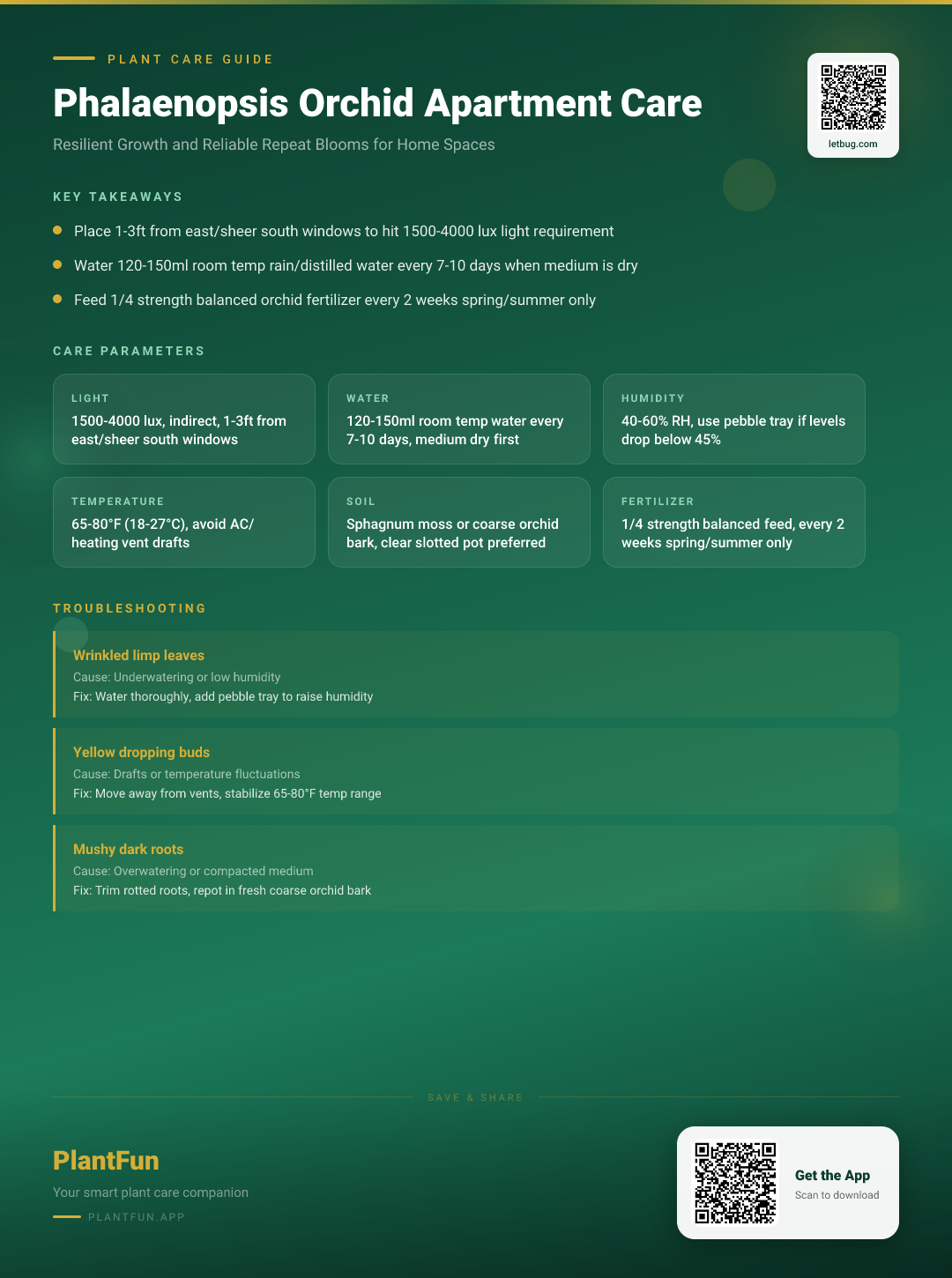
Key Takeaways
- Check soil moisture before watering — overwatering is the #1 killer of houseplants.
- Ensure your plant gets the right amount of light for its species.
- Be patient with recovery — most plants need 2–4 weeks to bounce back.
Quick Care Card
| Category | Measurable Threshold for Apartments |
|---|---|
| Light | 1,500–4,000 lux, 1–3 feet from east or sheer south-facing window |
| Water | 120–150ml room-temperature rain/distilled water every 7–10 days, only when medium is fully dry |
| Humidity | 40–60% relative humidity, use pebble tray if below 45% |
| Temperature | 65–80°F (18–27°C), avoid AC/heating vent and draft placement |
| Soil | Coarse orchid bark or sphagnum moss mix |
| Fertilizer | 1/4 strength balanced orchid fertilizer every 2 weeks spring/summer, no feeding fall/winter |
| Toxicity | Non-toxic to cats, dogs, and humans (ASPCA, 2026) |
Grab our free printable 2-minute weekly checklist here to stick on your fridge for quick, no-guess reference.
Why Phalaenopsis Orchids Struggle In Typical Apartments
Phalaenopsis orchids are epiphytes native to tropical forest understories, where they evolved for stable warm temperatures, dappled light, and consistent 50-70% humidity (Babůrek, 2009). Typical urban apartments hit these plants with three stressors that trigger 90% of common orchid issues (NC State Extension, 2026): dry forced air that drops humidity to 20-30% in winter, inconsistent light levels as seasons shift, and cold drafts from leaky window frames or AC/heating vents.
Myth vs Reality: You don’t need a humidifier or greenhouse to grow healthy Phalaenopsis. These plants are highly adaptable, and simple renter-friendly adjustments are enough to support resilient growth and repeat blooms even in low-humidity spaces.
30-Second Symptom Pre-Check
Scan your orchid for these early warning signs every week to catch issues before they become irreversible:
Wrinkled, Limp Leaves
Symptom: Thin, puckered leaves that don’t bounce back when gently squeezed.
Likely cause: Underwatering or root damage from overwatering.
Fix:
- Gently lift the inner slotted pot out of its decorative cover to inspect roots
- If roots are gray and shriveled, water immediately; if brown and mushy, trim rotted roots before watering
Yellow Dropping Buds
Symptom: Unopened buds turn yellow and fall off the spike before blooming.
Likely cause: Sudden temperature swings, low humidity, or draft exposure.
Fix:
- Move the orchid at least 3 feet away from AC/heating vents and drafty exterior doors
- Set up a pebble tray under the pot to boost humidity by 5-10% within 24 hours
Mushy, Brown Roots
Symptom: Roots feel soft to the touch, turn dark brown/black, and easily fall off when handled.
Likely cause: Overwatering or poorly draining growing medium.
Fix:
- Trim all rotted roots with sterilized scissors
- Repot into fresh coarse orchid bark mix if the existing medium is holding excess moisture
Checklist Step 1: Light Setup for Apartments
Phalaenopsis orchid light requirements indoors fall exactly between 1,500–4,000 lux (NC State Extension, 2026). You can test light levels for free using a basic light meter app on your smartphone, no specialized equipment needed.
Ideal placement is 1–3 feet from an east-facing window (for gentle morning sun) or a sheer-curtained south-facing window. West-facing windows get too much hot midday sun that burns leaves, while north-facing windows rarely hit the minimum 1,500 lux threshold for consistent growth and blooming. If light levels exceed 4,000 lux, hang a cheap sheer curtain to filter direct sun.
Checklist Step 2: Apartment Watering Rules
Wondering how often to water Phalaenopsis orchid in apartment settings? Follow these exact rules: Water with 120–150ml of room-temperature rain or distilled water every 7–10 days, only when the growing medium is completely dry (NC State Extension, 2026).
Quick dryness test: Stick a wooden skewer 1 inch into the medium; if it comes out completely clean and dry, it’s time to water. Always pour water directly onto the growing medium, avoiding the crown (the center where leaves meet) to prevent rot. Avoid tap water if possible, as chlorine, fluoride, and mineral salts build up on roots over time and cause leaf wrinkling.
Checklist Step 3: Humidity & Temperature Adjustments
Phalaenopsis orchid humidity for apartments should stay between 40–60% relative humidity (Babůrek, 2009). If your apartment humidity drops below 45%, use a pebble tray (learn more easy humidity hacks for your apartment in our guide to raising indoor humidity without a humidifier) by filling a shallow tray with pebbles and water, then setting the orchid pot on top of the pebbles so roots never sit directly in standing water.
Keep temperatures between 65–80°F (18–27°C) year-round, and never place your orchid within 2 feet of AC/heating vents or drafty window frames. Even a 10°F sudden temperature swing can trigger bud drop.
Checklist Step 4: Renter-Friendly Potting & Soil Rules
The right Phalaenopsis orchid soil mix for apartments is either coarse orchid bark or long-fiber sphagnum moss, both of which drain quickly and allow air to reach epiphyte roots (NC State Extension, 2026). Use a clear slotted plastic inner pot to easily monitor root health without disturbing the plant; you can tuck this inner pot into a decorative cache pot to match your decor, no drainage holes needed in the outer pot.
Do not repot your orchid for 12 months post-purchase unless you spot root rot; nurseries use high-quality medium that supports healthy growth for 1–2 years. If you need to repot, follow our renter-friendly repotting guide to avoid mess and damage to your plant.
Checklist Step 5: Feeding Schedule for Consistent Growth
To support resilient growth and learn how to get Phalaenopsis orchid to rebloom in apartment settings, follow this simple feeding schedule: Feed with 1/4 strength balanced orchid fertilizer every 2 weeks only in spring and summer. Skip all feeding entirely in fall and winter, when the plant goes dormant and stores energy for future blooms.
Always dilute fertilizer more than the package recommends; overfertilizing burns orchid roots and prevents blooming. For more tips on choosing safe, gentle fertilizers for your houseplants, check out our complete guide to indoor plant feeding.
Seasonal Apartment Care Calendar
Adjust your care routine with these simple monthly changes for winter and summer:
- Winter (Phalaenopsis orchid winter care): Reduce watering volume by 30% (use 85–105ml per watering) and extend the watering interval to every 10–14 days. Move the orchid 6 inches further from drafty windows to avoid cold glass damage.
- Summer (Phalaenopsis orchid summer watering): Check medium dryness every 5–7 days, as hot temperatures dry out medium faster. If humidity drops below 40%, mist the orchid’s leaves once weekly in the morning so moisture evaporates before nightfall to prevent rot.
Common Apartment Orchid Mistakes to Avoid
- Mistake: Watering on a fixed schedule regardless of medium dryness What happens: Overwatering causes root rot, which kills 70% of house Phalaenopsis orchids (NC State Extension, 2026) Instead: Only water when the medium is completely dry, tested with a skewer or by lifting the pot to feel if it is light weight
- Mistake: Placing the orchid directly on a drafty windowsill or near exterior doors What happens: Sudden temperature swings cause bud drop and stunted growth Instead: Keep orchids 1–3 feet away from drafty openings, or place an insulating buffer like a stack of books between the pot and window in winter
- Mistake: Watering with unfiltered tap water with high mineral or chlorine content What happens: Salt buildup on roots leads to wrinkled leaves and no reblooming Instead: Use collected rainwater, distilled water, or tap water left out open for 24 hours to let chlorine evaporate
- Mistake: Cutting off aerial roots that grow above the potting medium What happens: Aerial roots absorb moisture and light for the orchid, cutting them reduces the plant’s access to nutrients Instead: Tuck loose aerial roots into the pot if they get unruly, or leave them as is
- Mistake: Using artificial bloom boosters to force out-of-season blooms What happens: The plant uses all its energy for blooms, leading to weak growth and no blooms the following year Instead: Let the orchid go dormant in fall/winter, reduce watering and stop feeding to let it store energy for spring blooms
Voice Search Optimized FAQ
Why is my Phalaenopsis orchid dropping buds in my apartment?
Bud drop is almost always triggered by sudden environmental changes, including cold drafts from windows/AC vents, humidity below 40%, or a recent move to a new spot with different light levels (NC State Extension, 2026). First, move the orchid away from any draft sources, set up a pebble tray to boost humidity, and avoid moving it again until buds open.
Can I keep a Phalaenopsis orchid in my east-facing bedroom?
Yes! East-facing windows get 2–3 hours of gentle morning sun, which falls perfectly within the 1500–4000 lux Phalaenopsis orchid light requirement indoors (Babůrek, 2009). Place the orchid 1–3 feet away from the window to avoid any cold draft exposure in winter, and note that Phalaenopsis orchids are non-toxic to cats, dogs, and humans per the ASPCA (2026), so they’re safe for bedrooms with pets or kids.
How often do Phalaenopsis orchids bloom in apartments?
With proper care, healthy Phalaenopsis orchids will bloom 1–2 times per year, with blooms lasting 2–3 months each time (NC State Extension, 2026). To encourage reblooming, cut the flower spike 1 inch above the third node from the base after blooms fall off, and keep the plant in consistent light and humidity conditions.
What is the easiest Phalaenopsis orchid care for beginners?
Start with the basics: place it 1–3 feet from an east-facing window, water 120–150ml every 7–10 days only when the medium is dry, use a pebble tray to keep humidity above 40%, and avoid overfertilizing. Our printable checklist makes it easy to stick to these steps with no guesswork.
Final 2-Minute Weekly Care Checklist
These quick Sunday tasks take less than 2 minutes total and keep your orchid healthy year-round, no fancy tools required:
- Light check (30 seconds): Use your phone light meter app to confirm light levels are between 1500–4000 lux, adjust placement if needed
- Dryness test (45 seconds): Stick a skewer 1 inch into the growing medium; if dry, add 120–150ml of room-temperature rain/distilled water, avoiding the crown
- Symptom scan (30 seconds): Check for wrinkled leaves, yellow buds, or mushy roots peeking out of the slotted pot; address any issues immediately
- Humidity check (15 seconds): If your apartment humidity is below 45%, refill the pebble tray under the pot
Print this checklist and stick it to your fridge to never miss a step.
References
- NC State Extension. (2026). Phalaenopsis Orchid Care Checklist — NC State Extension Gardener Plant Toolbox. https://plants.ces.ncsu.edu/plants/phalaenopsis-orchid/. Accessed 2026-03-08.
- Babůrek, I. (2009). Frowine, S.A.: Moth orchid. The complete guide to Phalaenopsis. Biologia plantarum. https://doi.org/10.1007/s10535-009-0040-0. Accessed 2026-03-08.
- Ko, R. (2018). Phalaenopsis aphrodite (moth orchid): Functional genomics and biotechnology. Journal of Plant Pathology & Microbiology. https://doi.org/10.4172/2157-7471-c2-010. Accessed 2026-03-08.
- ASPCA. (2026). Toxic and Non-Toxic Plants List — ASPCA. https://www.aspca.org/pet-care/animal-poison-control/toxic-and-non-toxic-plants. Accessed 2026-03-08.
Optional Helper: Plantfun.App
Plantfun.App identifies your plants by photo, diagnoses pests and diseases with clear fixes, and creates personalised watering and light schedules that adapt to your home conditions — a handy companion for putting this guide into daily practice.
Found an error or have suggestions? We'd love your feedback.
Need help identifying this problem?
Get instant identification, personalized care schedules, and effective pest treatment plans directly on your phone.
Sponsored • We may earn a commission from app downloads
Related Guides
Phalaenopsis Orchid Care Checklist for East-Facing Apartments: Resilient Growth & Consistent Blooms
Stop struggling to keep your Phalaenopsis orchid alive. Grab our 12-point actionable checklist, exact light, water, and humidity thresholds for east-facing apartments, plus fixes for 7 common mistakes to get consistent yearly blooms.
Care GuideThe Complete Phalaenopsis Orchid Care Guide for Small Urban Apartments: Checklist for Resilient Growth
Stop wasting money on fancy orchid care products. Get our free 7-step budget checklist for Phalaenopsis orchids in small apartments, with exact thresholds for resilient, repeat blooms.
Care GuideThe Phalaenopsis Orchid Care Checklist For Resilient Growth In Typical Urban Apartments
Stop losing your orchid to avoidable care mistakes. Get exact light, water, humidity and seasonal care thresholds to grow resilient, regularly blooming Phalaenopsis orchids in any typical apartment.
Pest ControlAnts on Plants: What They Mean and What to Do
Ants usually aren't eating your plant. They are farming other pests.