
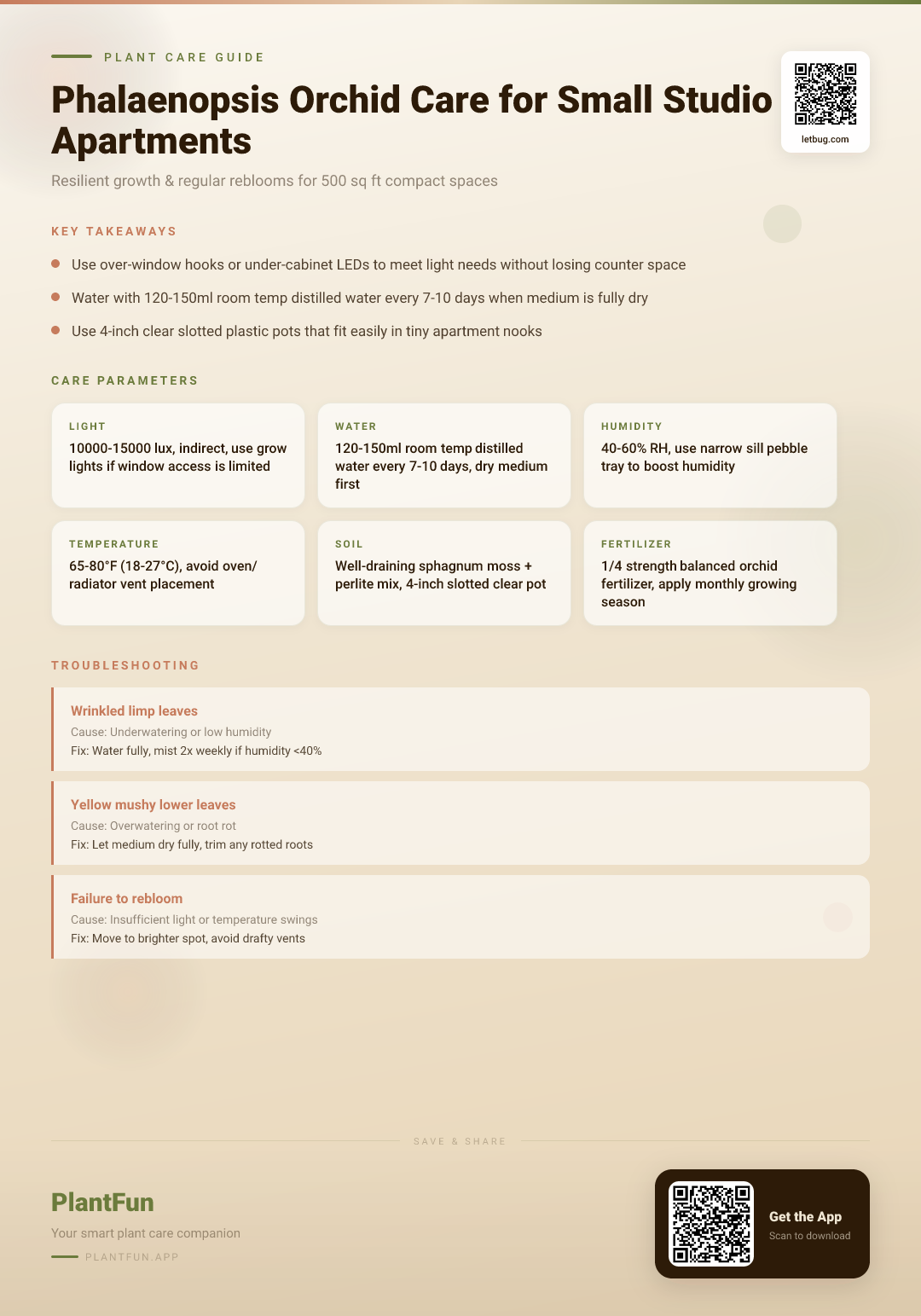
Key Takeaways
- Check soil moisture before watering — overwatering is the #1 killer of houseplants.
- Ensure your plant gets the right amount of light for its species.
- Be patient with recovery — most plants need 2–4 weeks to bounce back.
Quick Care Card
| Parameter | Studio-Optimized Value |
|---|---|
| Light | 10,000-15,000 lux of indirect light daily (NC State Extension, 2026) |
| Water | 120-150ml room-temperature distilled water every 7-10 days, only when medium is fully dry (Babůrek, 2009) |
| Humidity | 40-60% relative humidity (Ko, 2018) |
| Temperature | 65-80°F (18-27°C), avoid sudden swings greater than 10°F (5°C) (NC State Extension, 2026) |
| Soil/Pot | 4-inch clear slotted plastic pot, 1:1 sphagnum moss + perlite mix (Babůrek, 2009) |
| Fertilizer | 1/4 strength balanced orchid fertilizer once per month in spring/summer (Ko, 2018) |
| Toxicity | Non-toxic to cats, dogs, and humans (ASPCA, 2026) |
Why Small Studio Apartments Pose Unique Challenges for Phalaenopsis Orchids
Generic phalaenopsis orchid care guides assume you have large, dedicated plant nooks with consistent environmental control, but 500 sq ft studios come with unique stressors that often lead to struggling plants:
- Limited window access: Most studios only have 1-2 windows, often partially obstructed by buildings or furniture, making it hard to hit required light levels.
- Dry forced air: Heating and AC systems cycle more frequently in compact spaces, dropping humidity well below the 40% minimum orchids need (Babůrek, 2009).
- Extreme temperature swings: Adjacent kitchen ovens, bathroom shower steam, and radiators placed near windows create sudden temperature shifts that shock orchids.
- Scarce surface space: You can’t sacrifice limited counter or shelf space for large humidity trays, grow light stands, or oversized pots.
A common myth you can ignore: you need a full sunny windowsill to grow reblooming orchids. The small space hacks we cover below deliver the exact environmental parameters orchids need without wasting square footage. For more low-fuss plant ideas for your studio, check out our guide to the best low-maintenance indoor plants for small spaces on LetBug.com.
Free Printable 10-Step Weekly Phalaenopsis Care Checklist
This wallet-sized checklist takes 2 minutes to complete, tailored for busy studio dwellers to fit into your weekly routine. Print it out and tuck it in your wallet or stick it to your fridge for easy access:
- Check light levels at leaf height with a free phone lux meter app, confirm it falls between 10,000-15,000 lux.
- Stick a wooden toothpick 1 inch into the potting medium: if it comes out completely dry, proceed to water, if damp, skip this week.
- If watering, pour 120-150ml of room-temperature distilled water evenly over the medium, avoiding the center crown of the plant.
- Check humidity near the orchid with a mini hygrometer, confirm it is between 40-60% RH.
- Check ambient temperature: ensure it stays between 65-80°F (18-27°C), with no nearby vents or drafts.
- Inspect leaves for yellowing, dark spots, or wrinkling (common signs of stress).
- Inspect roots through the clear pot: white or bright green roots are healthy, brown/mushy roots indicate rot.
- Wipe dust off leaves with a damp microfiber cloth to improve light absorption.
- If it is spring or summer (growing season), add 1/4 strength orchid fertilizer if you haven’t in the last 30 days.
- If flower spikes are present, confirm they are secured to a small stake to avoid breaking on tight shelves.
Light Optimization for Small Studios
Phalaenopsis orchid light requirements sit at 10,000-15,000 lux of indirect light daily (NC State Extension, 2026), which is easy to achieve even with limited window space using these zero-counter-space hacks:
- Over-the-window hanging hooks: Use clear adhesive hooks on the top of your window frame to hang the orchid in a low-profile plastic hanger. It gets perfect indirect light without taking up any sill or shelf space.
- Under-cabinet LED grow lights: If you have no accessible window space, mount 10W full-spectrum LED strips under upper kitchen cabinets or desk shelves, 12 inches above the orchid. Run the lights for 12 hours per day to hit the required lux level.
- Narrow sill extenders: Use adjustable 4-inch wide sill extenders to fit the small orchid pot without taking up space you need for other items like your coffee mug or phone charger.
Quick test: Hold your hand at the orchid’s leaf height at midday. If you feel a hot, sharp sun on your skin, the light is too intense, add a sheer curtain to avoid leaf burn. If you can barely see your shadow, the light is too low, add a grow light.
Watering Guide for Studio Dwellers
The most common question from new growers is how often to water phalaenopsis orchid plants in small spaces. The studio-optimized rule is: 120-150ml of room-temperature distilled water every 7-10 days, only when the potting medium is completely dry (Babůrek, 2009).
Skip the messy soak sessions recommended in generic guides, which take up valuable sink space and create unnecessary mess in small apartments. This targeted pour method delivers exactly the right amount of water without waste.
Quick test: Stick a toothpick 1 inch into the sphagnum moss mix. If it comes out with any damp moss clinging to it, wait 2 more days before watering. Overwatering is the number one cause of orchid death in studio apartments, so it is always safer to wait an extra day. If you struggle with overwatering, check out our guide to preventing root rot in houseplants on LetBug.com.
Humidity & Temperature Adjustments for Compact Spaces
Phalaenopsis orchid humidity needs are 40-60% RH, with a stable temperature range of 65-80°F (18-27°C) (Ko, 2018). These space-saving hacks help you hit these ranges without bulky equipment:
- Low-profile pebble tray: Use a 4-inch wide plastic tray (the same width as your orchid pot) filled with pebbles and a small amount of water. Set the pot on top of the pebbles, making sure the base of the pot is not sitting in water. This fits on even the narrowest window sill or shelf and boosts local humidity by 10-15%.
- Small plant grouping: If you have 2-3 other small plants like pothos or succulents on a shelf, place the orchid 2 inches away from them. Plants naturally release moisture through their leaves, raising local humidity without extra equipment.
- Draft avoidance: Keep the orchid at least 1 foot away from AC vents, oven vents, radiators, and bathroom doors that open to hot showers. These cause sudden temperature and humidity swings that shock the plant and cause bud drop.
Soil & Potting Tips for Small Spaces
Stick to 4-inch clear plastic slotted pots for your orchid: they are small enough to fit in any 5-inch nook, hanging hook, or narrow shelf, and the clear plastic lets you check root health without unpotting the plant (NC State Extension, 2026). You don’t need a large decorative outer pot: if you want a cleaner look, wrap the clear pot in a small piece of decorative fabric, which adds zero extra width.
For potting mix, use a 1:1 ratio of long-fiber sphagnum moss and perlite. This mix drains extremely fast, preventing root rot even in the stagnant, low-air-flow environment common in studio apartments, and holds just enough moisture for the orchid’s shallow root system.
Seasonal Care Calendar for Studio Apartment Orchids
Adjust your care routine with the seasons to keep your orchid healthy year-round:
- Winter (Phalaenopsis orchid winter care): Reduce watering to every 12-14 days, as cooler temperatures and slower growth mean the plant uses less water (Babůrek, 2009). Move the orchid 1 foot away from radiators and heating vents to avoid dry, hot air damage. If you run your heater 24/7, add the low-profile pebble tray under the pot to boost humidity.
- Summer (Phalaenopsis orchid summer watering): Stick to the 7-10 day watering schedule, but check the medium with a toothpick every 6 days if you run your AC frequently, as dry AC air can dry out the medium faster. If AC drops humidity below 40%, mist the leaves twice per week with distilled water. Add a sheer curtain to your window if direct afternoon sun hits the orchid to avoid leaf burn.
Common Small-Space Orchid Care Mistakes to Avoid
- Mistake: Placing your orchid near oven vents or next to your stove to save counter space. What happens: Hot dry air from the oven and sudden temperature swings when cooking cause leaf wilt and flower bud drop (Ko, 2018). Instead: Hang the orchid above your kitchen window using adhesive hooks, or place it on the far end of the counter at least 3 feet away from the stove.
- Mistake: Overcrowding your orchid with 5+ other small plants on a single floating shelf to save space. What happens: Air flow is blocked, humidity gets too high, and you increase risk of root rot and fungal leaf growth. Instead: Leave at least 2 inches of empty space on each side of the orchid, or hang it separately to get adequate air flow.
- Mistake: Forgetting to adjust your watering schedule when you turn on your heater in winter or AC in summer. What happens: You either overwater in winter (slow growth, dry air) or underwater in summer (dry AC air), leading to stressed plants that won’t rebloom. Instead: Follow the seasonal care calendar, and check the medium with a toothpick every 7 days to adjust your watering frequency as needed.
- Mistake: Using a large decorative pot that takes up extra counter space. What happens: Extra potting medium holds too much moisture, leading to root rot, and wastes precious square footage. Instead: Stick to the 4-inch slotted clear pot, and wrap it in a small fabric sleeve if you want a more decorative look.
FAQ: How do I keep my phalaenopsis orchid alive in a studio with no south-facing windows?
Use an under-cabinet full-spectrum 10W LED grow light, mounted 12 inches above the orchid, run for 12 hours per day. This delivers exactly the 10,000-15,000 lux the orchid needs (NC State Extension, 2026), no window space required. You can mount the light under your desk, kitchen upper cabinets, or a floating shelf, so it doesn’t take up any usable surface space. For more grow light tips for small spaces, check out our guide to choosing budget grow lights for apartments on LetBug.com.
FAQ: Can I keep my orchid on my kitchen counter next to my coffee maker?
Only if it is at least 3 feet away from the coffee maker. Steam from hot coffee and boiling water causes sudden humidity and temperature swings that can make flower buds drop (Babůrek, 2009). If your counter is too small for this, hang the orchid above the counter using adhesive hooks, it gets the same light without the risk of steam damage.
FAQ: Why is my studio apartment orchid not reblooming?
This is one of the most common questions from new growers, and for studio dwellers, the causes are almost always easy to fix:
- You are not hitting the required 10,000-15,000 lux of light daily. Test with a lux meter app, and add a grow light if levels are too low (Ko, 2018).
- You are not giving it a 10°F (5°C) temperature drop at night for 2 weeks in fall to trigger bloom spikes. You can do this by moving it 1 foot closer to the window at night (make sure it’s not near a draft) to get the cooler temperature it needs, no extra room required.
- You are overfertilizing. Stick to 1/4 strength fertilizer once a month only during spring and summer growing season.
These simple phalaenopsis orchid rebloom tips work for even the smallest studios, and will help you get annual blooms without extra space.
References
- NC State Extension. (2026). Phalaenopsis Orchid Care Checklist — NC State Extension Gardener Plant Toolbox. https://plants.ces.ncsu.edu/plants/phalaenopsis-orchid/. Accessed 2026-03-05.
- Babůrek, I. (2009). Frowine, S.A.: Moth orchid. The complete guide to Phalaenopsis. Biologia plantarum. https://doi.org/10.1007/s10535-009-0040-0. Accessed 2026-03-05.
- Ko, R. (2018). Phalaenopsis aphrodite (moth orchid): Functional genomics and biotechnology. Journal of Plant Pathology & Microbiology. https://doi.org/10.4172/2157-7471-c2-010. Accessed 2026-03-05.
- ASPCA. (2026). Toxic and Non-Toxic Plants List — ASPCA. https://www.aspca.org/pet-care/animal-poison-control/toxic-and-non-toxic-plants. Accessed 2026-03-05.
Optional Helper: Plantfun.App
Plantfun.App identifies your plants by photo, diagnoses pests and diseases with clear fixes, and creates personalised watering and light schedules that adapt to your home conditions — a handy companion for putting this guide into daily practice.
Found an error or have suggestions? We'd love your feedback.
Need help identifying this problem?
Get instant identification, personalized care schedules, and effective pest treatment plans directly on your phone.
Sponsored • We may earn a commission from app downloads
Related Guides
The Complete Phalaenopsis Orchid Care Checklist for Thriving in Typical Urban Apartments
Get a simple, actionable care checklist to grow resilient, repeat-blooming Phalaenopsis orchids even in low-light, dry typical apartments with no fancy equipment required. Follow our science-backed steps for consistent results.
Care GuideThe Complete Phalaenopsis Orchid Care Guide for Small Urban Apartments: Checklist for Resilient Growth
Stop wasting money on fancy orchid care products. Get our free 7-step budget checklist for Phalaenopsis orchids in small apartments, with exact thresholds for resilient, repeat blooms.
Care GuideThe Phalaenopsis Orchid Care Checklist For Resilient Growth In Typical Urban Apartments
Stop losing your orchid to avoidable care mistakes. Get exact light, water, humidity and seasonal care thresholds to grow resilient, regularly blooming Phalaenopsis orchids in any typical apartment.
Pest ControlAnts on Plants: What They Mean and What to Do
Ants usually aren't eating your plant. They are farming other pests.