
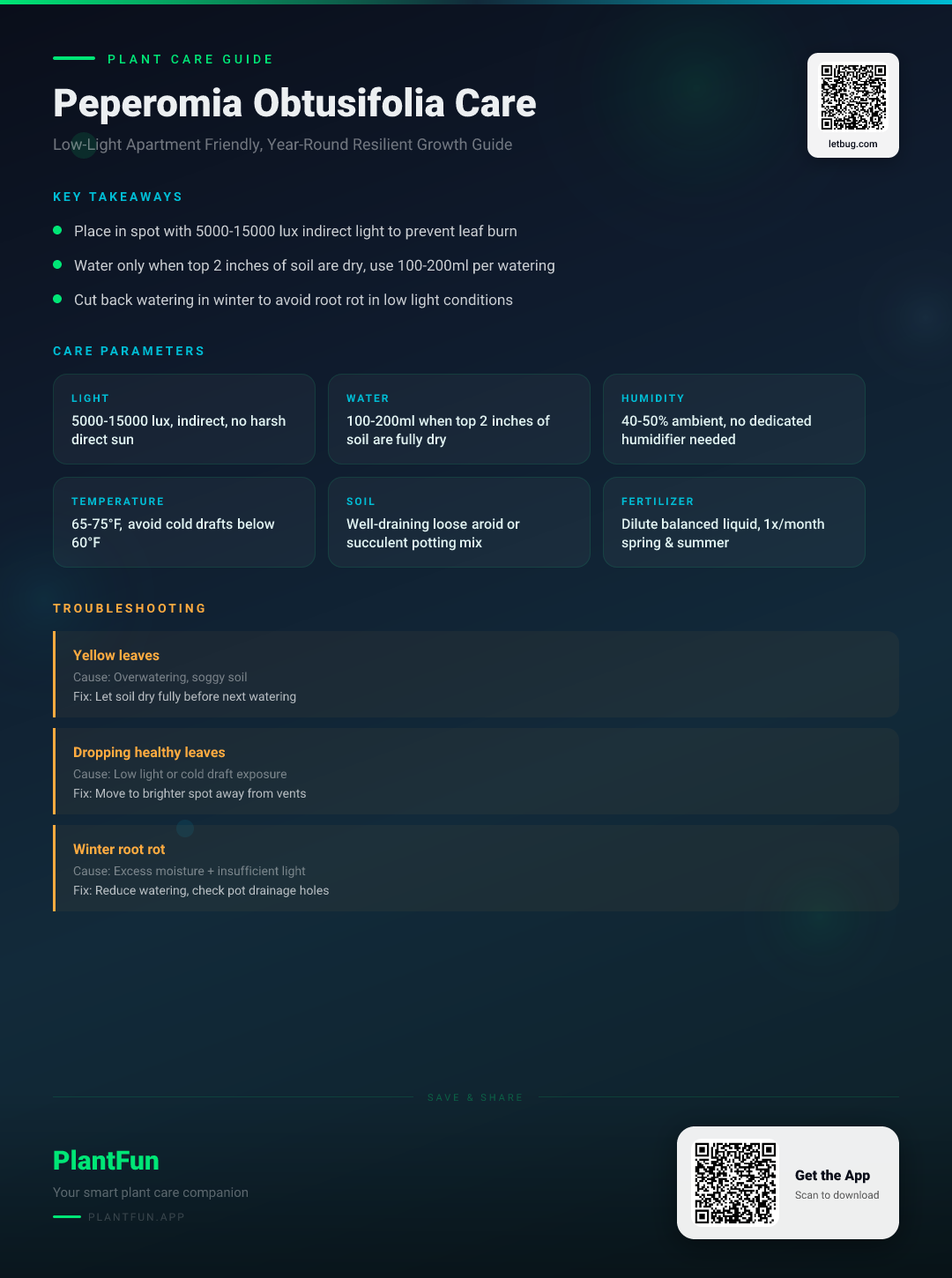
Key Takeaways
- Check soil moisture before watering — overwatering is the #1 killer of houseplants.
- Ensure your plant gets the right amount of light for its species.
- Be patient with recovery — most plants need 2–4 weeks to bounce back.
Quick Care Card: Measuring Success
| Feature | Requirement |
|---|---|
| Light | 5,000–15,000 Lux (Bright, indirect) |
| Water | Allow top 2 inches of soil to dry out |
| Humidity | 40–50% (Standard home levels) |
| Temperature | 65–75°F (18–24°C) |
| Soil | Well-draining, chunky peat-perlite mix |
| Fertilizer | Balanced liquid feed, monthly (Spring/Summer) |
| Toxicity | Non-toxic to cats and dogs (ASPCA, 2026) |
TL;DR: The Essential Takeaway
For apartment dwellers, the secret to Peperomia obtusifolia care is treating it as a tropical understory plant, not a desert succulent. Keep it in a bright spot, wait until the top two inches of soil are dry before watering, and strictly reduce irrigation during the low-light winter months to prevent root rot.
Why Peperomia Obtusifolia Struggles in Standard Apartment Corners
When I first started collecting plants, I treated my Baby Rubber Plant like a cactus because of its thick, glossy leaves. I soon learned that this is a classic mistake. Peperomia obtusifolia originates from tropical forests where it grows in the filtered light of the canopy (NC State Extension, 2026). In a dark apartment corner, it doesn’t just “grow slowly”—it stretches, loses color, and eventually becomes prone to crown rot. Transitioning it from “succulent care” to “tropical care” is the turning point for most owners.
Seasonal Care Calendar
- Spring (Growth Phase): Increase water as light returns. If you notice slow growth, a light liquid fertilizer helps (Henny, 1985). Check soil dryness weekly.
- Summer (Peak Growth): High light levels demand more water. Ensure drainage holes are clear. If your apartment gets over 80°F, increase airflow.
- Autumn (Transition): Growth slows. Taper off fertilizer and shift to a bi-weekly watering check.
- Winter (Maintenance): Keep the plant in the brightest spot possible. With lower light, the plant uses less energy, meaning it needs significantly less water.
Mastering the Light: Positioning for 5,000–15,000 Lux
In a standard apartment, finding the right “bright indirect light” is about distance. I suggest placing your Peperomia within 2–3 feet of an east-facing window. If you only have north-facing light, keep it right on the windowsill to ensure it receives at least 5,000 lux. Using a light meter app can help you verify these levels, as the human eye is poor at judging indoor light intensity.
The Watering Science: Measuring Irrigation
Overwatering is the primary killer of Peperomias (Gilman, 2007). Instead of a set schedule, use the “finger test”: push your finger into the soil up to the second knuckle. If the soil is still moist, wait. When you do water, apply roughly 100-200ml of water, or until you see moisture emerge from the drainage holes. Never let the pot sit in a saucer of standing water.
Humidity Hack: Keeping Your Plant Hydrated
While Peperomias appreciate 40-50% humidity, you don’t need a bulky humidifier. I group mine with other plants on a tray filled with pebbles and a thin layer of water. The ambient moisture created by the plant community is usually enough to mimic their native environment.
Why is my Peperomia dropping healthy leaves? Troubleshooting Common Apartment Stressors
Overwatering Rot
Symptom: Lower leaves turn yellow and mushy.
Likely cause: Roots are suffocating in dense, wet soil.
Fix:
- Stop watering immediately.
- Repot into a fresh, airy mix with extra perlite.
- Trim away blackened, soft roots.
Light Shock
Symptom: Leaves dropping while still firm.
Likely cause: Sudden move from a dark corner to direct sun.
Fix:
- Move back to a shaded spot.
- Gradually introduce light over 2 weeks.
Can I keep my Peperomia in a windowless bathroom?
Unfortunately, no. While the humidity is ideal, Peperomia obtusifolia requires a minimum of 5,000 lux to maintain cellular health (Gilman, 2007). A bathroom without natural light will cause the plant to etiolate and eventually succumb to fungal issues.
How do I know if my apartment is too dark for this plant?
If the distance between leaves on the stem (internodes) becomes longer than an inch, or if the leaves start leaning heavily toward the window, your plant is begging for more light. If your living space doesn’t have a bright window, consider choosing a different, low-light tolerant plant instead.
Step-by-Step: Preventing Rot During Winter
- Assess the light: If your apartment dimness increases in winter, reduce watering frequency by 50%.
- Check the soil: Ensure your mix contains at least 30% perlite or pumice to allow oxygen flow.
- Monitor the pot: Use terracotta if you are prone to overwatering; it helps wick moisture away from the roots.
- The “Tilt Test”: If the pot feels significantly heavy 3 days after watering, it is likely holding too much water.
References
- Gilman, E. (2007). Peperomia obtusifolia Peperomia, Baby Rubber Plant. EDIS. https://doi.org/10.32473/edis-fp466-1999. Accessed 2026-03-16.
- Henny, R. (1985). BA Induces Lateral Branching of Peperomia obtusifolia. HortScience. https://doi.org/10.21273/hortsci.20.1.115. Accessed 2026-03-16.
- ASPCA. (2026). Toxic and Non-Toxic Plants List — ASPCA. https://www.aspca.org/pet-care/animal-poison-control/toxic-and-non-toxic-plants. Accessed 2026-03-16.
- NC State Extension. (2026). Peperomia Obtusifolia — NC State Extension Gardener Plant Toolbox. https://plants.ces.ncsu.edu/plants/peperomia-obtusifolia/. Accessed 2026-03-16.
Optional Helper: Plantfun.App
Plantfun.App identifies your plants by photo, diagnoses pests and diseases with clear fixes, and creates personalised watering and light schedules that adapt to your home conditions — a handy companion for putting this guide into daily practice.
Found an error or have suggestions? We'd love your feedback.
Need help identifying this problem?
Get instant identification, personalized care schedules, and effective pest treatment plans directly on your phone.
Sponsored • We may earn a commission from app downloads
Related Guides
The Complete Peperomia Obtusifolia Care Checklist for Resilient Growth in Typical Urban Apartments
Keep your peperomia thriving even in a small, low-humidity urban apartment. Grab our printable care checklist, exact light/water thresholds, and stress-fixing tips for resilient growth all year.
Care GuideThe Complete Peperomia Obtusifolia Care Guide for Urban Apartments: Resilient Growth Made Easy
Get a step-by-step peperomia care checklist tailored for small urban apartments, with exact light, water, and humidity thresholds to grow lush, resilient plants with zero guesswork.
Care GuidePeperomia obtusifolia in a Low-Light Apartment: The Ultimate Seasonal Growth and Care Guide
Transform your dim apartment into a thriving indoor jungle. Get specific lux, precise watering ml, and a 4-season care calendar to keep your Peperomia vibrant.
Safety GuidePeperomia Obtusifolia Placement Guide for Family Living Rooms: Pet & Child Safe Substitutions Included
Keep your family and pets safe while growing beautiful indoor greenery. Get exact Peperomia obtusifolia placement tips, care thresholds, and 3 non-toxic substitutions for common toxic living room plants.