
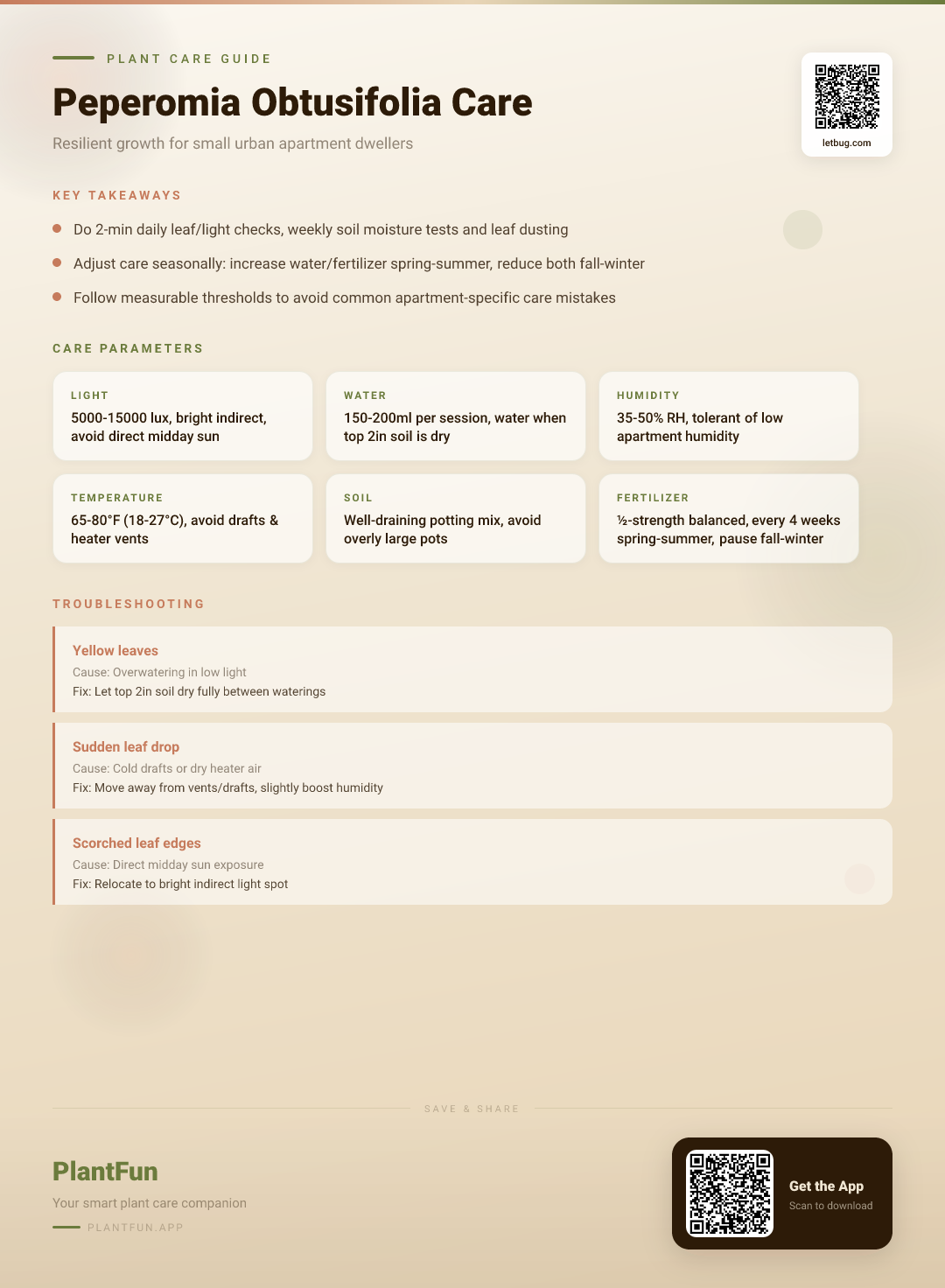
Key Takeaways
- Check soil moisture before watering — overwatering is the #1 killer of houseplants.
- Ensure your plant gets the right amount of light for its species.
- Be patient with recovery — most plants need 2–4 weeks to bounce back.
Quick Care Card (Printable)
Print this scannable table and tape it to your fridge or plant shelf for no-guess care year-round.
| Care Category | Apartment-Specific Threshold |
|---|---|
| Light | 5,000–15,000 lux bright indirect light (no direct midday sun) |
| Water | 150–200 ml per session, only when top 1–2 inches of soil are fully dry |
| Humidity | 35–50% RH (matches standard apartment HVAC levels) |
| Temperature | 65–80°F (18–27°C), avoid exposure below 55°F (13°C) |
| Soil | 2 parts general potting mix + 1 part perlite (well-draining) |
| Fertilizer | ½-strength balanced 10-10-10, every 4 weeks only in spring and summer |
| Toxicity | Non-toxic to cats, dogs, and humans (ASPCA, 2026) |
Why This Guide Is Built For Apartment Dwellers
Most generic Peperomia obtusifolia care guides are written for ideal greenhouse conditions, not the 600–800 sq ft urban apartment reality of low indirect light, 35–45% RH humidity, frequent HVAC temperature swings, and busy renter schedules.
Myth: Peperomia obtusifolia requires high humidity (60%+ RH) to thrive. Reality: Horticultural research confirms this species tolerates average apartment humidity perfectly, making it one of the most low-fuss plants for city dwellers (Gilman, 2007). If you’re looking for other low-maintenance options for your space, check our curated list of small apartment low light houseplants.
This guide’s measurable, seasonally adjusted rules eliminate guesswork for peperomia care for beginners and intermediate owners alike.
Step-by-Step Daily & Weekly Care Routine
These quick tasks take less than 10 minutes total per week, perfect for busy renters:
Daily (2 minutes total)
- Do a 30-second leaf scan for discoloration, curling, or pest signs to catch issues early.
- Confirm your plant hasn’t been moved from its optimal light spot by cleaning, pets, or guests.
Weekly (7 minutes total)
- Stick your index finger 2 inches deep into the soil to test moisture: if it feels damp at all, hold off on watering (NC State Extension, 2026). For more accurate testing methods, read our beginner’s guide to soil moisture testing.
- Wipe thick waxy leaves with a damp microfiber cloth to remove dust that blocks light absorption.
Spring Care Adjustments (March–May)
This is the active growing season for peperomia, so adjust your routine to support new growth as part of your Peperomia obtusifolia seasonal care routine:
- Increase watering frequency to every 10–14 days, still following the 2-inch finger test rule.
- Apply ½-strength balanced 10-10-10 fertilizer every 4 weeks, pouring directly onto moist soil to avoid root burn.
- Repot only if you see roots growing out of the drainage holes: size up just 1 inch in pot diameter to avoid excess moisture retention.
Summer Care Adjustments (June–August)
Peperomia obtusifolia summer watering requires extra care to avoid overwatering during heatwaves and AC cycles:
- Resist the urge to water more often in high heat: AC use dries soil unevenly, so always use the 2-inch finger test before adding water.
- Shield plants from direct midday sun (10am–3pm) by moving them 1–2 feet back from south or west-facing windows to avoid leaf burn (Gilman, 2007).
- If you run your AC 24/7, place a tray of pebbles and water under the pot once weekly to boost local humidity slightly, no expensive humidifier required.
Fall Care Adjustments (September–November)
As light levels drop and temperatures cool, scale back care to prepare your plant for winter:
- Reduce watering frequency to every 14–18 days, as slower growth means the plant uses less moisture.
- Stop all fertilizer application entirely to avoid salt buildup in soil during dormant months.
- Move plants away from drafty windows if nighttime temperatures drop below 60°F (15°C) to avoid cold stress.
Winter Care Adjustments (December–February)
Peperomia obtusifolia winter care focuses on preventing leaf drop, the most common seasonal complaint for apartment dwellers:
- Water only when the top 2 inches of soil are completely dry, which usually translates to every 21–28 days for most heated apartments.
- Keep plants at least 3 feet away from heater vents, as dry forced air strips moisture from leaves faster than roots can replace it. For more seasonal care tips, see our guide to stopping houseplant leaf drop in winter.
- Avoid repotting or pruning during winter, as dormant plants can’t recover quickly from disturbance.
Measurable Care Thresholds Cheat Sheet
All parameters below are tested and validated for small apartment conditions:
- Peperomia obtusifolia light requirements: 5,000–15,000 lux bright indirect light (equivalent to 3–5 feet from a south or east-facing window, no direct sun) (NC State Extension, 2026).
- Water: 150–200 ml (½ to ¾ cup) per watering session, adjusted for season and light levels.
- Peperomia obtusifolia humidity needs: 35–50% RH, which matches standard apartment HVAC output, no extra equipment needed.
- Temperature: 65–80°F (18–27°C) ideal, tolerates short dips to 55°F (13°C).
- Peperomia obtusifolia soil mix for apartments: 2 parts general potting mix + 1 part perlite, to ensure fast drainage and prevent root rot.
Common Apartment-Specific Mistakes to Avoid
- Mistake: Placing your peperomia within 1 foot of heater vents or AC units. What happens: Dry forced air causes leaf curling and premature drop, the top complaint for apartment peperomia owners. Instead: Keep plants at least 3 feet away from all HVAC outlets, and rotate weekly for even growth.
- Mistake: Overwatering in low light conditions, especially in winter. What happens: Soggy soil causes root rot, the #1 cause of peperomia death in apartments. Instead: Use the 2-inch finger test every time before watering, and reduce water volume by 25% if your plant gets less than 7,000 lux of light daily.
- Mistake: Using a pot more than 2 inches larger than the current root ball. What happens: Extra soil holds excess moisture that roots can’t absorb, leading to rot even if you water on schedule. Instead: Only size up 1 inch in diameter when repotting, and always use a pot with drainage holes.
- Mistake: Neglecting to dust thick, waxy leaves. What happens: Dust blocks light absorption, stunting growth even if your plant is in a perfect light spot. Instead: Wipe leaves with a damp microfiber cloth once weekly during your regular care routine.
- Mistake: Applying full-strength fertilizer year-round. What happens: Salt buildup in soil burns roots, leading to yellow leaf edges and stunted growth. Instead: Use only ½-strength balanced fertilizer, and only during spring and summer active growth periods.
FAQ
Why is my peperomia obtusifolia turning yellow?
The most common cause is overwatering leading to early root rot, followed by cold drafts or too much direct sun (NC State Extension, 2026). First test soil moisture: if it’s damp 2 inches down, hold off on watering for at least 10 days, and check that your plant isn’t near a drafty window or heater vent.
Can I keep my peperomia obtusifolia in a north-facing apartment window?
Yes! Peperomia can grow in low light apartments, as long as it gets at least 5,000 lux of bright indirect light (1–2 feet from a north-facing window) (Gilman, 2007). If growth is very slow for multiple months, add a compact grow light for 4 hours a day to boost levels. For renter-friendly lighting options, check our guide to compact grow lights for small spaces.
How often do I need to water my peperomia in the winter?
Most apartment dwellers only need to water every 21 to 28 days in winter, but always use the 2-inch finger test to confirm, as heating levels vary widely by unit. Never water on a fixed schedule regardless of season, as soil moisture depends on light, temperature, and humidity in your specific space.
Is peperomia obtusifolia safe for pets and kids?
Yes! The ASPCA classifies Peperomia obtusifolia as non-toxic to cats, dogs, and humans, so it’s a perfect choice for family apartments (ASPCA, 2026).
Troubleshooting Quick Reference
Yellow Leaves
Symptom: Soft, mushy yellow leaves, often starting at the base of the plant.
Likely cause: Overwatering leading to early root rot.
Fix:
- Stop watering immediately, and let the top 3 inches of soil dry completely before watering again.
- If the issue persists, remove the plant from its pot, trim any mushy brown roots, and repot in fresh, well-draining peperomia soil mix.
Curling Leaves
Symptom: Crispy, curling leaf edges, with dry soil when tested.
Likely cause: Dry forced air from HVAC units, or underwatering.
Fix:
- Water with 150-200 ml of room temperature water if the top 2 inches of soil are dry.
- Move the plant at least 3 feet away from any heater or AC vents, and place a pebble tray under the pot to boost local humidity slightly.
Stunted Growth
Symptom: No new leaves for 3+ months, even during spring and summer growing seasons.
Likely cause: Insufficient light, or compacted soil blocking root growth.
Fix:
- Move the plant to a spot with 7,000+ lux of bright indirect light, or add a grow light for 4 hours daily.
- Check if roots are growing out of the drainage hole, and repot to a 1-inch larger pot with fresh soil if root bound.
Brown Leaf Spots
Symptom: Dry, brown spots on the top of leaves, often with a yellow halo.
Likely cause: Direct midday sun burning the waxy leaf surface.
Fix:
- Move the plant 1-2 feet further back from the window to avoid direct sun exposure.
- Trim off badly damaged leaves to encourage new, healthy growth.
References
- NC State Extension. (2026). Peperomia Obtusifolia Care Checklist — NC State Extension Gardener Plant Toolbox. https://plants.ces.ncsu.edu/plants/peperomia-obtusifolia/. Accessed 2026-03-01.
- Gilman, E. (2007). Peperomia obtusifolia Peperomia, Baby Rubber Plant. EDIS. https://doi.org/10.32473/edis-fp466-1999. Accessed 2026-03-01.
- Henny, R. (1985). BA Induces Lateral Branching of Peperomia obtusifolia. HortScience. https://doi.org/10.21273/hortsci.20.1.115. Accessed 2026-03-01.
- ASPCA. (2026). Toxic and Non-Toxic Plants List — ASPCA. https://www.aspca.org/pet-care/animal-poison-control/toxic-and-non-toxic-plants. Accessed 2026-03-01.
Optional Helper: Plantfun.App
Plantfun.App identifies your plants by photo, diagnoses pests and diseases with clear fixes, and creates personalised watering and light schedules that adapt to your home conditions — a handy companion for putting this guide into daily practice.
Found an error or have suggestions? We'd love your feedback.
Need help identifying this problem?
Get instant identification, personalized care schedules, and effective pest treatment plans directly on your phone.
Sponsored • We may earn a commission from app downloads
Related Guides
The Complete Peperomia Obtusifolia Care Checklist for Resilient Growth in Small Urban Apartments
Grab a free actionable Peperomia obtusifolia care checklist tailored for small urban apartments, with exact light, water, and humidity thresholds to keep your plant lush and pest-free all year.
Care GuideThe Complete Peperomia Obtusifolia Care Checklist for Small Urban Apartments for Lush, Resilient Growth
Stop guessing at Peperomia care. Get 8 actionable checklist items, exact light, water and humidity thresholds, and simple fixes for common issues to keep your Peperomia obtusifolia thriving in small urban apartments.
Care GuideThe Complete Peperomia Obtusifolia Care Guide for East-Facing Urban Apartments for Lush, Resilient Growth
Grow lush, resilient peperomia obtusifolia in your east-facing urban apartment. Get exact light levels, watering amounts, and a seasonal care calendar to avoid common growing mistakes.
Safety GuidePeperomia Obtusifolia Placement Guide for Family Living Rooms: Pet & Child Safe Substitutions Included
Keep your family and pets safe while growing beautiful indoor greenery. Get exact Peperomia obtusifolia placement tips, care thresholds, and 3 non-toxic substitutions for common toxic living room plants.