
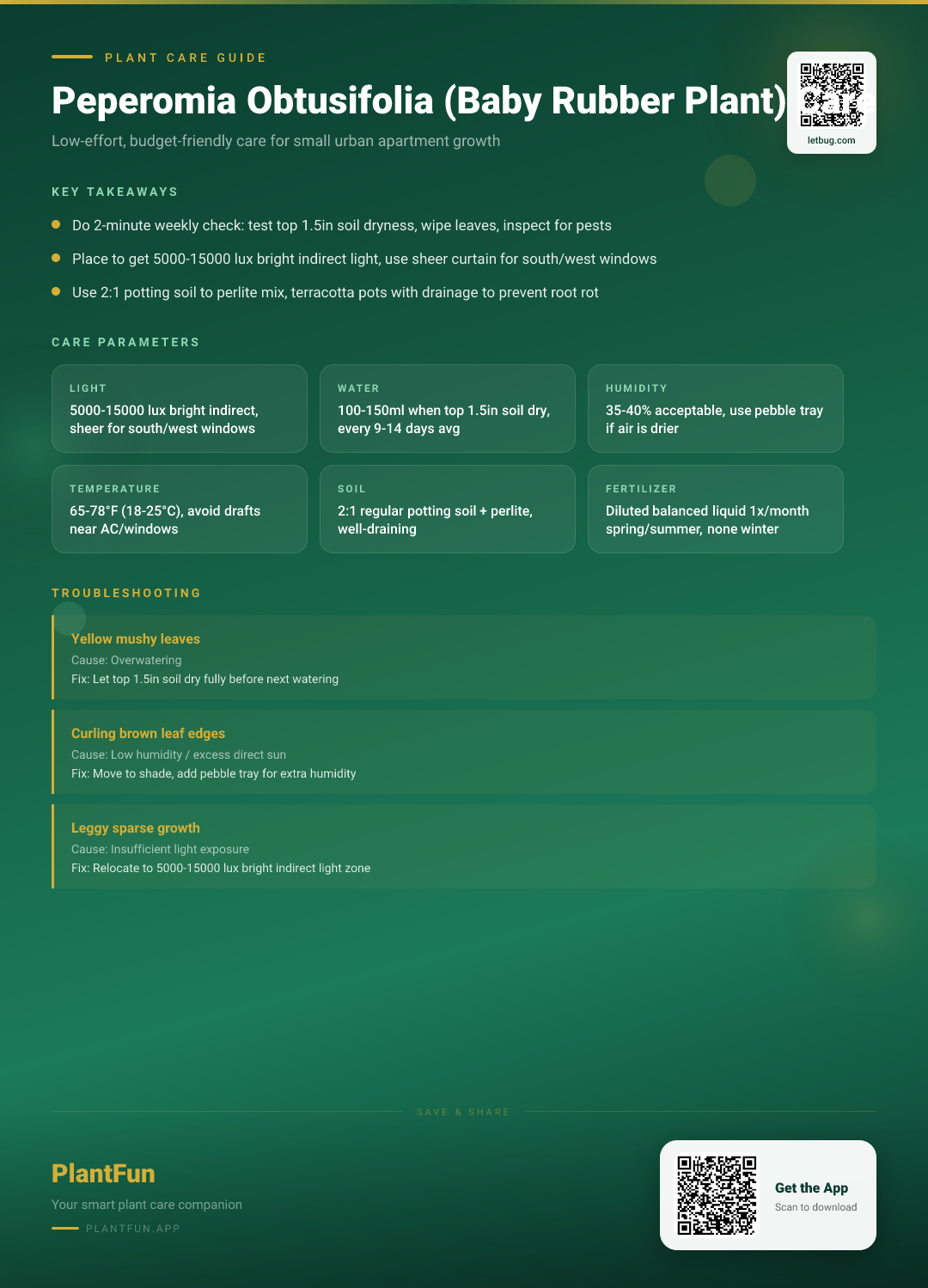
Key Takeaways
- Check soil moisture before watering — overwatering is the #1 killer of houseplants.
- Ensure your plant gets the right amount of light for its species.
- Be patient with recovery — most plants need 2–4 weeks to bounce back.
Quick Care Card
Print this 10-second reference table and stick it on your fridge for fast, no-guess care:
| Care Factor | Exact Apartment Threshold |
|---|---|
| Light | 5,000-15,000 lux bright indirect |
| Water | 100-150ml when top 1.5 inches of soil are fully dry (every 9-14 days average) |
| Humidity | 35-40% (average apartment humidity works, no humidifier needed) |
| Temperature | 65-78°F (18-25°C), avoid temps below 55°F (13°C) |
| Soil | 2:1 mix of regular potting soil + perlite, no specialty soil required |
| Fertilizer | Diluted all-purpose houseplant fertilizer (50% strength) once every 3 months in growing season |
| Toxicity | Non-toxic to cats, dogs, and humans (ASPCA, 2026) |
Why This Guide Is Built For Urban Apartments
Generic peperomia care guides often assume you have perfect light, controlled humidity, and unlimited space — none of which are true for most small urban apartment renters. This peperomia care checklist for apartments is calibrated specifically to common constraints: drafty window sills, 35-40% average indoor humidity, inconsistent heating and cooling, and limited natural light.
Myth vs reality: You don’t need a $50 humidifier or specialty soil to grow a healthy baby rubber plant. Peperomia obtusifolia is naturally adapted to low-humidity, low-light understory environments, so it thrives in typical apartment conditions with minimal adjustments (Gilman, 2007). This guide is perfect for baby rubber plant care for beginners, renters who can’t make permanent home modifications, and busy people who don’t have time for fussy plant routines.
2-Minute Weekly Care Checklist
This quick routine takes less time than making a cup of coffee, and will keep your peperomia healthy all year:
- Soil check: Stick your index finger 1.5 inches into the soil. If no soil sticks to your finger (it’s fully dry), add 100-150ml of room temperature water directly to the base of the plant. If the soil is damp, skip watering.
- Leaf wipe: Grab a damp paper towel and wipe the top and bottom of 5-10 leaves to remove dust that blocks photosynthesis. No expensive leaf shine products needed.
- Pest check: Inspect the undersides of leaves and stem joints for tiny white mealybugs or green aphids. If you see none, move on.
- Placement check: If the plant is leaning heavily toward the window, rotate it 180 degrees to encourage even growth. If the leaves feel cool to the touch from a draft, move it 6 inches further from the window.
Exact Apartment Light Requirements
Peperomia light requirements indoor fall between 5,000 and 15,000 lux of bright indirect light (Gilman, 2007). You don’t need a fancy light meter to test this — use a free light meter app on your smartphone, held at leaf level facing the light source, to get an accurate reading.
These window positions work perfectly for small apartments:
- East-facing window: 3ft from the sill, no curtain needed (soft morning sun won’t burn leaves)
- North-facing window: 1ft from the sill, ideal for peperomia obtusifolia low light care (no direct sun exposure ever)
- West or south-facing window: 2ft from the sill behind a sheer white curtain to block harsh midday sun that causes leaf burn
If you only have access to 2,000-4,000 lux, your peperomia will grow slower, but it will stay perfectly healthy — no expensive grow lights required.
No-Fuss Watering Rules For Forgetful Owners
Wondering how often to water peperomia obtusifolia? For average apartment conditions, you’ll only need to water every 9-14 days, but always check soil dryness first instead of following a fixed schedule. Peperomia stores water in its thick, fleshy leaves, so it’s far more tolerant of underwatering than overwatering.
Follow these exact rules:
- Only water when the top 1.5 inches of soil are fully dry (use the finger test, no moisture meter needed)
- Add exactly 100-150ml of water per watering for 4-6 inch pots, enough to moisten the soil without saturating it
- Signs of overwatering: soft, mushy yellow leaves, soggy soil that stays wet for more than 7 days
- Signs of underwatering: crispy brown leaf edges, drooping stems that perk up within 2 hours of watering
Budget Soil & Potting Tips Under $5
You don’t need specialty peperomia soil for healthy growth — this cheap peperomia care tips routine costs less than $5 total:
- Soil mix: Combine 2 parts regular all-purpose potting soil (available for $2 at dollar stores or local garden centers) and 1 part perlite ($2 for a small bag) to improve drainage and prevent root rot.
- Pot choice: Use a 4-6 inch terracotta pot with drainage holes ($1-$3) — terracotta wicks away excess moisture, which is perfect for cool apartment conditions where soil takes longer to dry.
- Repotting rule: Don’t repot your peperomia for 2-3 years after bringing it home. Peperomia prefers being root-bound, and repotting too often can lead to excess moisture buildup.
Temperature & Humidity Hacks Using Household Items
Peperomia grows best in temperatures between 65-78°F (18-25°C) (Gilman, 2007). Is peperomia good for drafty apartments? It tolerates occasional short drafts, but consistent exposure to cold air below 55°F (13°C) will damage leaves. Follow these simple rules:
- Keep your peperomia 1ft away from AC units, exterior doors, and drafty window sills in winter to avoid temperature shocks.
- Keep it 2ft away from radiators and heat vents in winter, which dry out leaves quickly.
For peperomia humidity needs apartment, 35-40% average indoor humidity is perfectly sufficient (Gilman, 2007). No expensive humidifier needed! If you want to boost growth, use one of these free DIY hacks:
- Pebble tray: Fill a saucer with small pebbles and water, set your pot on top of the pebbles (make sure the pot isn’t sitting directly in water) — this raises local humidity by 5-10% for free.
- Group your peperomia with 2-3 other houseplants to create a humid microclimate as plants release moisture through their leaves.
12-Month Seasonal Care Calendar
Adjust your routine for seasonal apartment temperature and light changes with this simple calendar:
Winter (October-March, Northern Hemisphere: peperomia winter care apartment)
- Reduce watering by 50%: Only water every 18-28 days, when the top 2 inches of soil are fully dry (plants grow slower in low winter light, so they use less water).
- Keep your peperomia 2ft away from radiators and heat vents to prevent leaf drying.
- Never expose it to temperatures below 55°F (13°C): If your window sill gets cold at night, move the plant 1ft away from the glass.
Summer (April-September, Northern Hemisphere: peperomia summer watering tips)
- Increase watering frequency by 30%: Check soil dryness every 6-10 days, as warmer temperatures dry out soil faster.
- Add a sheer curtain to west/south-facing windows to block midday sun that causes leaf burn.
- Wipe leaves weekly to remove dust, as plants photosynthesize faster in the growing season.
3 Most Common Apartment Peperomia Mistakes To Avoid
-
Mistake: Overwatering on a fixed schedule without checking soil dryness What happens: Root rot, the #1 cause of peperomia death in apartments (Gilman, 2007) Instead: Only water when the top 1.5 inches of soil are fully dry, use 100-150ml per watering. For peperomia root rot fix for renters: If you notice mushy stems, repot immediately into fresh dry 2:1 soil mix, cutting off any brown, mushy roots with clean scissors.
-
Mistake: Placing directly on a hot west-facing window sill without a curtain What happens: Permanent brown sunburn spots on leaves that never heal Instead: Place 2ft back from west/south windows behind a sheer curtain, or position it near a north or east-facing window.
-
Mistake: Repotting every year into a much larger pot What happens: Excess soil holds moisture for weeks, leading to root rot even if you water correctly Instead: Repot only once every 2-3 years, when you see roots growing out of the drainage holes, and only go up one pot size (1 inch larger diameter maximum).
Voice Search FAQ
We’ve answered the most common natural-language questions peperomia owners ask their smart assistants:
- Can I keep peperomia in a small apartment? Absolutely! Peperomia obtusifolia only grows to 12-18 inches tall and wide at maturity, so it fits perfectly on desks, shelves, and small window sills. It tolerates low light and average apartment conditions, making it ideal for small spaces.
- How often do I need to water my peperomia obtusifolia? For most apartment conditions, every 9-14 days, but always check the top 1.5 inches of soil first — only water if it’s fully dry. Reduce to every 18-28 days in winter when growth slows.
- Why is my peperomia leaves turning yellow? The most common cause is overwatering — check if the soil is soggy, and if so, hold off on watering until it dries out fully. Other causes include consistent cold drafts or placement too close to a radiator.
- Can my peperomia survive in a low light north-facing apartment? Yes! Peperomia obtusifolia low light care is simple: place it 1ft away from the north-facing window, and it will grow slowly but stay perfectly healthy, no grow light required (Gilman, 2007).
- Is peperomia safe for my cat and dog? Yes, peperomia obtusifolia is classified as non-toxic to cats, dogs, and humans by the ASPCA (2026), so it’s perfect for pet owners and families with small kids.
Troubleshooting Quick Reference
Yellow Mushy Leaves
Symptom: Soft, yellow leaves that fall off easily, often accompanied by soggy soil.
Likely cause: Overwatering leading to early root rot.
Fix:
- Stop watering immediately, and let the top 2 inches of soil dry out fully before watering again.
- If the problem persists, repot into fresh dry 2:1 potting soil and perlite mix, cutting off any brown mushy roots with clean scissors.
Curling Crispy Leaves
Symptom: Leaves curl inward and have dry brown edges, soil is dry to the touch.
Likely cause: Underwatering, or exposure to consistent dry heat from radiators.
Fix:
- Add 100-150ml of room temperature water directly to the soil, avoiding wetting the leaves.
- Move the plant 2ft away from any heat vents or radiators, and add a pebble tray under the pot to boost local humidity.
Drooping Stems
Symptom: Stems look limp and droop downward, even if you watered recently.
Likely cause: Cold draft exposure, or severe root rot from overwatering.
Fix:
- First, move the plant to a spot away from drafty windows, AC units, or exterior doors, and check the temperature to make sure it’s above 60°F.
- If the soil is soggy, follow the root rot fix steps above.
Brown Sunburn Spots
Symptom: Dry, brown, circular spots on the tops of leaves that face the window.
Likely cause: Exposure to direct midday sun from west or south-facing windows.
Fix:
- Cut off any badly damaged leaves with clean scissors, as the spots won’t heal.
- Move the plant 2ft back from the window, or hang a sheer white curtain to block harsh direct sun.
References
- Gilman, E. (2007). Peperomia obtusifolia Peperomia, Baby Rubber Plant. EDIS. https://doi.org/10.32473/edis-fp466-1999. Accessed 2026-03-04.
- Henny, R. (1985). BA Induces Lateral Branching of Peperomia obtusifolia. HortScience. https://doi.org/10.21273/hortsci.20.1.115. Accessed 2026-03-04.
- ASPCA. (2026). Toxic and Non-Toxic Plants List. American Society for the Prevention of Cruelty to Animals. https://www.aspca.org/pet-care/animal-poison-control/toxic-and-non-toxic-plants. Accessed 2026-03-04.
Optional Helper: Plantfun.App
Plantfun.App identifies your plants by photo, diagnoses pests and diseases with clear fixes, and creates personalised watering and light schedules that adapt to your home conditions — a handy companion for putting this guide into daily practice.
Found an error or have suggestions? We'd love your feedback.
Need help identifying this problem?
Get instant identification, personalized care schedules, and effective pest treatment plans directly on your phone.
Sponsored • We may earn a commission from app downloads
Related Guides
Peperomia obtusifolia in Apartment Living: The Only Care Guide You’ll Ever Need for Resilient Growth
Revive your struggling Peperomia obtusifolia with our expert care guide. Learn exact light, water, and humidity thresholds for lush, upright leaves in any apartment.
Safety GuideNon-Toxic Peperomia Obtusifolia Placement Guide for Toddler & Cat Accessible Living Rooms
Keep your toddlers and cats safe while adding vibrant greenery to your living room. Get non-toxic Peperomia obtusifolia placement tips, science-backed care rules, and easy swaps for common toxic side table plants like pothos, ZZ, and snake plants.
Safety GuidePeperomia Obtusifolia Care for Low-Light Playrooms: Pet & Child Safe Placement Tips
Keep curious toddlers and cats safe while adding greenery to your low-light playroom. Get exact Peperomia obtusifolia care specs, non-toxic placement hacks, and no-fuss seasonal tips to avoid tradeoffs between home greenery and family safety.
Safety GuidePeperomia Obtusifolia Care for Pet & Toddler Accessible Low-Light Coffee Tables
Skip toxic coffee table houseplants like Ficus elastica or ZZ plants that harm curious pets and toddlers. Get exact, science-backed care parameters for non-toxic Peperomia obtusifolia that thrives in low-light living rooms with zero safety risks, no harmful sprays or barriers required.