
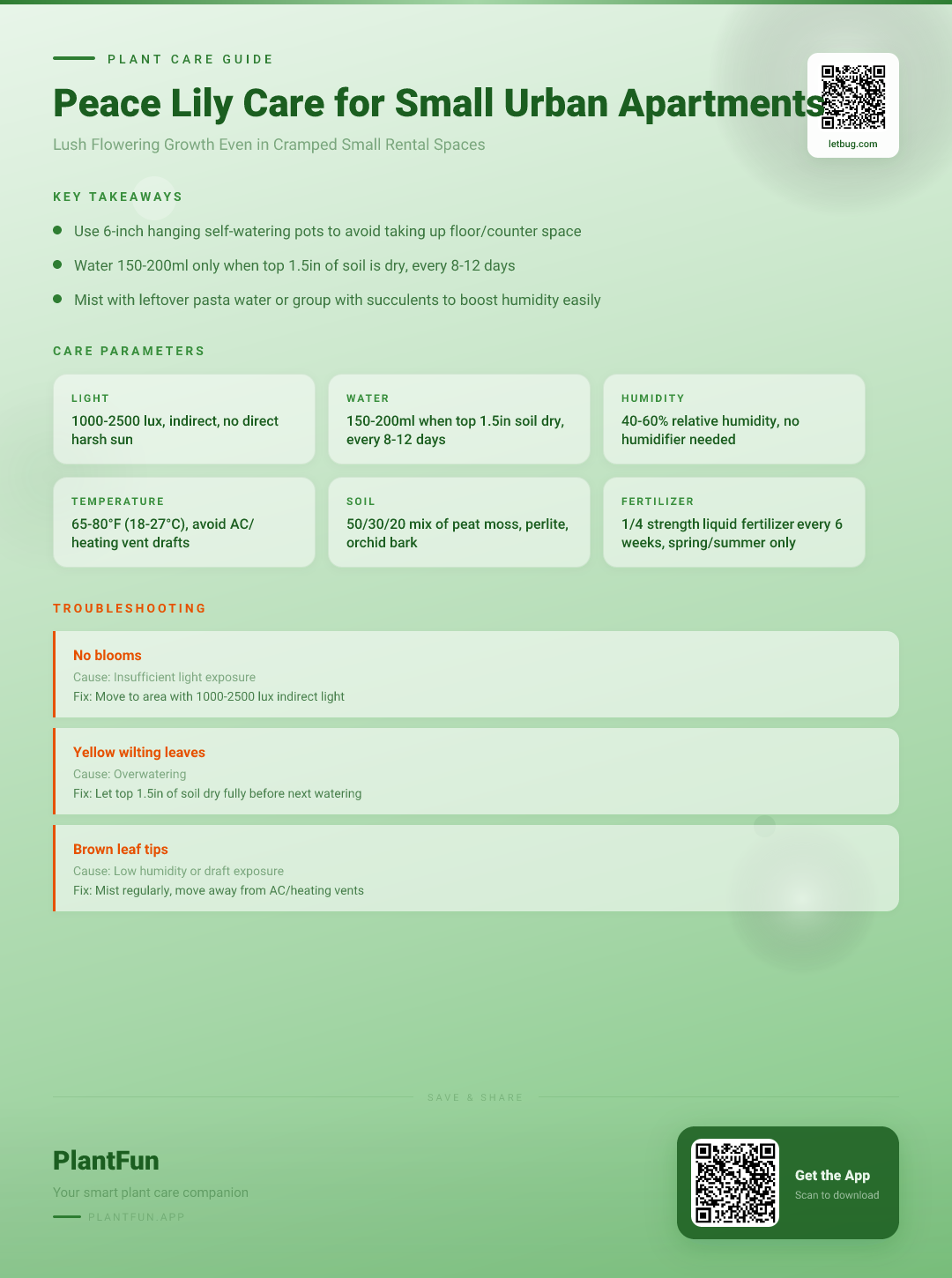
Key Takeaways
- Check soil moisture before watering — overwatering is the #1 killer of houseplants.
- Ensure your plant gets the right amount of light for its species.
- Be patient with recovery — most plants need 2–4 weeks to bounce back.
Quick Care Card
Print this 3x5 inch table to stick on your fridge for fast, no-fuss reference:
| Care Factor | Measurable Threshold | Small Apartment Notes |
|---|---|---|
| Light | 1,000–2,500 lux (indirect medium-low) | No grow lights required; fits on narrow sills or wall shelves |
| Water | 150–200ml room-temperature water when top 1.5 inches of soil is dry (every 8–12 days average) | No fancy watering cans needed; use a leftover drinking glass for measuring |
| Humidity | 40–60% relative humidity | No humidifier required; use leftover pasta water for misting |
| Temperature | 65–80°F (18–27°C) | Avoid placement near drafty AC/heating vents |
| Soil | 50/30/20 mix of peat moss, perlite, orchid bark | Fast draining prevents root rot in small compact pots |
| Fertilizer | ¼ strength balanced liquid fertilizer every 6 weeks (spring/summer only) | No bulky slow-release pellets required |
| Toxicity | Toxic to cats, dogs, and humans if ingested (ASPCA, 2026) | Hang pots out of reach of pets/children to save floor space |
Why Peace Lilies Are Perfect for Small Apartments
Peace lilies (Spathiphyllum spp.) are made for 500–700 sq ft rental apartments, even for total new owners learning peace lily care for beginners. Myth: Peace lilies need large pots and bright direct sunlight to thrive. Reality: They naturally prefer being root-bound and tolerate low indirect light, making them uniquely suited for cramped spaces (Karzai, 2023). A 2005 study also found they remove up to 70% of common indoor air pollutants like formaldehyde, a common issue in small, poorly ventilated urban apartments (Oyabu et al, 2005). They only need repotting every 2–3 years, and their compact growth habit means they never take over limited living space.
Step 1: Space-Optimized Placement Guide
Peace lily light requirements fall exactly in the 1,000–2,500 lux range found in most apartment spaces, no special grow lights needed (Karzai, 2023). For zero floor or counter space use, prioritize these renter-friendly small space peace lily placement spots:
- Command hook-mounted wall shelves 6–12 inches from north or east-facing windows
- Narrow window sills (a 6-inch pot fits easily on most 4-inch wide sills)
- Above kitchen cabinets or fridge tops, which get consistent indirect light Quick light test: Hold your hand at the placement spot at midday. If you see a faint, soft shadow (no sharp edges), you’re within the ideal light range.
Step 2: Watering Routine for Busy Renters
If you’re wondering how often to water peace lily plants in apartment conditions, follow this measurable rule: Pour 150–200ml of room-temperature water only when the top 1.5 inches of soil feel completely dry (Karzai, 2023). On average, this equals every 8–12 days in standard 68°F apartment conditions. Adjust for seasons: 7–10 days for peace lily summer watering, and 12–16 days during winter when heating slows soil evaporation. Quick test: Stick your index finger 1.5 inches into the soil; if no moisture sticks to your skin, it’s time to water.
Step 3: Potting & Soil Hack for Small Spaces
The ideal peace lily pot size for small spaces is 6 inches, which fits perfectly in hanging self-watering planters that mount to walls or ceilings with no drilling required (Karzai, 2023). Use this soil mix for optimal drainage in compact pots: 50% peat moss, 30% perlite, 20% orchid bark. This mix prevents root rot even if you occasionally overwater, and the small pot supports the peace lily’s natural preference for being root-bound, so you won’t need to repot for 2–3 years.
Step 4: Humidity & Temperature Tweaks Without Bulky Equipment
Peace lily humidity needs fall right in the 40–60% range of standard apartment air, so no large humidifiers are required (Karzai, 2023). If you notice brown leaf tips, use these zero-space hacks to boost local humidity:
- Mist leaves once a week with cooled, unsalted leftover pasta water
- Group your peace lily with 2–3 small succulents on a narrow windowsill to trap moisture
- Place the pot on a 4-inch tray of pebbles and water (fits easily on even the smallest sill) Keep temperatures between 65–80°F (18–27°C), and avoid placing plants within 3 feet of AC or heating vents.
Step 5: Low-Effort Fertilizing Routine
This low-fuss routine works for even the busiest renters, and doubles as one of the most reliable peace lily flowering tips: Apply ¼ strength balanced (10-10-10) liquid fertilizer once every 6 weeks only in spring and summer. Skip all fertilizing in fall and winter when the plant is dormant. If you’re curious how to get peace lily to bloom indoors, add an extra week of cooler 60°F (15°C) nights in late winter to trigger bud formation.
12-Month Seasonal Care Calendar
Tailored to typical urban apartment heating and cooling cycles, this calendar includes specific peace lily winter care and summer growth guidance:
- January–March (Winter): Reduce watering to every 12–16 days, skip all fertilizer, keep plants 3+ feet away from heating vents to avoid dry leaf burn.
- April–June (Spring): Resume ¼ strength fertilizing every 6 weeks, check light levels as days lengthen to avoid excess direct sun, mist weekly to boost humidity as AC turns on.
- July–September (Summer): Adjust watering to every 7–10 days for peace lily summer watering, move plants away from west-facing windows to avoid scorching, trim spent blooms to encourage new growth.
- October–December (Fall): Stop all fertilizing, gradually reduce watering frequency, keep plants away from drafty windows and holiday heating units.
Common Small-Space Care Mistakes to Avoid
- Mistake: Placing your peace lily near AC or heating vents to save shelf space. What happens: Constant dry or cold drafts cause leaf browning and drooping, even if you’re watering correctly. Instead: Use command hooks to hang pots 3+ feet away from vents, or place them on top of your fridge which maintains consistent temperature.
- Mistake: Overpotting your peace lily in a 10+ inch pot to avoid repotting for several years. What happens: Excess unused soil holds excess moisture, leading to root rot that kills the plant in 2–4 weeks. Instead: Stick to a 6-inch pot, only repot when roots are growing out of the drainage holes (every 2–3 years on average).
- Mistake: Skipping leaf cleaning because your peace lily is on a high shelf that’s hard to reach. What happens: Dust builds up on leaf surfaces, blocking light absorption and slowing growth to a halt. Instead: Wipe leaves with a damp paper towel once a month when you dust your high shelves, no special cleaning products needed.
FAQ
Can I keep a peace lily in my studio apartment without a balcony?
Yes! Peace lilies are perfectly suited for indoor-only studio apartments, as they only need 1,000–2,500 lux of indirect light and no outdoor exposure (Karzai, 2023). Hang a 6-inch pot from a command hook near a north or east-facing window, and it will thrive without taking up any valuable floor or counter space. This is one of the biggest benefits of choosing a peace lily in small apartment settings.
Why is my peace lily drooping even when I water it regularly?
Drooping despite regular watering is almost always caused by one of three small-apartment specific issues: overwatering leading to soggy soil and root rot, placement near drafty AC or heating vents, or exposure to direct sun above 3,000 lux. First, check the top 1.5 inches of soil: if it’s soggy, stop watering until it’s completely dry. If the soil is dry, move the plant away from vents and out of direct sun, and it will perk up in 24–48 hours.
How do I fit a peace lily in my tiny apartment kitchen?
Kitchens are actually ideal for peace lilies thanks to naturally higher humidity from cooking and dishwashing. Use a command hook to hang a 6-inch self-watering pot above your sink, or place it on a narrow floating shelf above your fridge. Just make sure it gets 1,000–2,500 lux of indirect light (no direct sun from south-facing windows) to avoid leaf scorch.
Free Printable Checklist Download
No email required to access our 10-point peace lily care checklist, formatted to fit 3x5 inch fridge magnets or your phone lock screen for quick, on-the-go reference. The checklist includes all measurable care thresholds, seasonal reminders, and common mistake alerts to keep your peace lily thriving even in the smallest rental apartments.
Understanding the Science
Peace lilies’ tolerance for low light and small pots is well-documented in horticultural research. A 2023 analysis of indoor peace lily care found they can survive for up to 2 years in a 6-inch root-bound pot with no negative health effects (Karzai, 2023). A 2005 study also confirmed their air purification benefits, which are particularly valuable in small, enclosed urban apartments with limited ventilation (Oyabu et al, 2005). ASPCA confirms peace lilies are toxic to cats, dogs, and humans if ingested, so hanging planters are the safest placement option for households with pets or small children (ASPCA, 2026).
References
- ASPCA. (2026). Toxic and Non-Toxic Plants List — ASPCA. https://www.aspca.org/pet-care/animal-poison-control/toxic-and-non-toxic-plants. Accessed 2026-02-25.
- Karzai, S. (2023). In Care of a Peace Lily. The Massachusetts Review. https://doi.org/10.1353/mar.2023.a900402. Accessed 2026-02-25.
- OYABU, T.; SAWADA, A.; KURODA, H. (2005). Purification Capabilities of Golden Pothos and Peace Lily for Indoor Air Pollutants and Its Application to a Relaxation Space. Journal of Agricultural Meteorology. https://doi.org/10.2480/agrmet.1145. Accessed 2026-02-25.
Optional Helper: Plantfun.App
Plantfun.App identifies your plants by photo, diagnoses pests and diseases with clear fixes, and creates personalised watering and light schedules that adapt to your home conditions — a handy companion for putting this guide into daily practice.
Found an error or have suggestions? We'd love your feedback.
Need help identifying this problem?
Get instant identification, personalized care schedules, and effective pest treatment plans directly on your phone.
Sponsored • We may earn a commission from app downloads
Related Guides
The Complete Peace Lily Care Checklist for Resilient Growth in Typical Urban Apartments
Stop dealing with yellow peace lily leaves and missed blooms. Get 12 actionable checklist steps, exact light/water thresholds, and tips to keep your plant thriving in any standard apartment.
Care GuideThe Budget Peace Lily Care Checklist for Resilient Growth in Small Urban Apartments
Grow a lush, flowering peace lily on a $5 monthly budget with our apartment-specific checklist. Get exact light, water, and humidity thresholds to avoid yellow leaves and boost blooms.
Care GuideThe Complete Peace Lily Care Checklist for Thriving Growth in Small Urban Apartments
Stop your peace lily from wilting every other week. Get 7 actionable checklist steps, exact light, water, and humidity parameters to keep it thriving year-round in your apartment.
Pest ControlAnts on Plants: What They Mean and What to Do
Ants usually aren't eating your plant. They are farming other pests.