
Key Takeaways
- Check soil moisture before watering — overwatering is the #1 killer of houseplants.
- Ensure your plant gets the right amount of light for its species.
- Be patient with recovery — most plants need 2–4 weeks to bounce back.
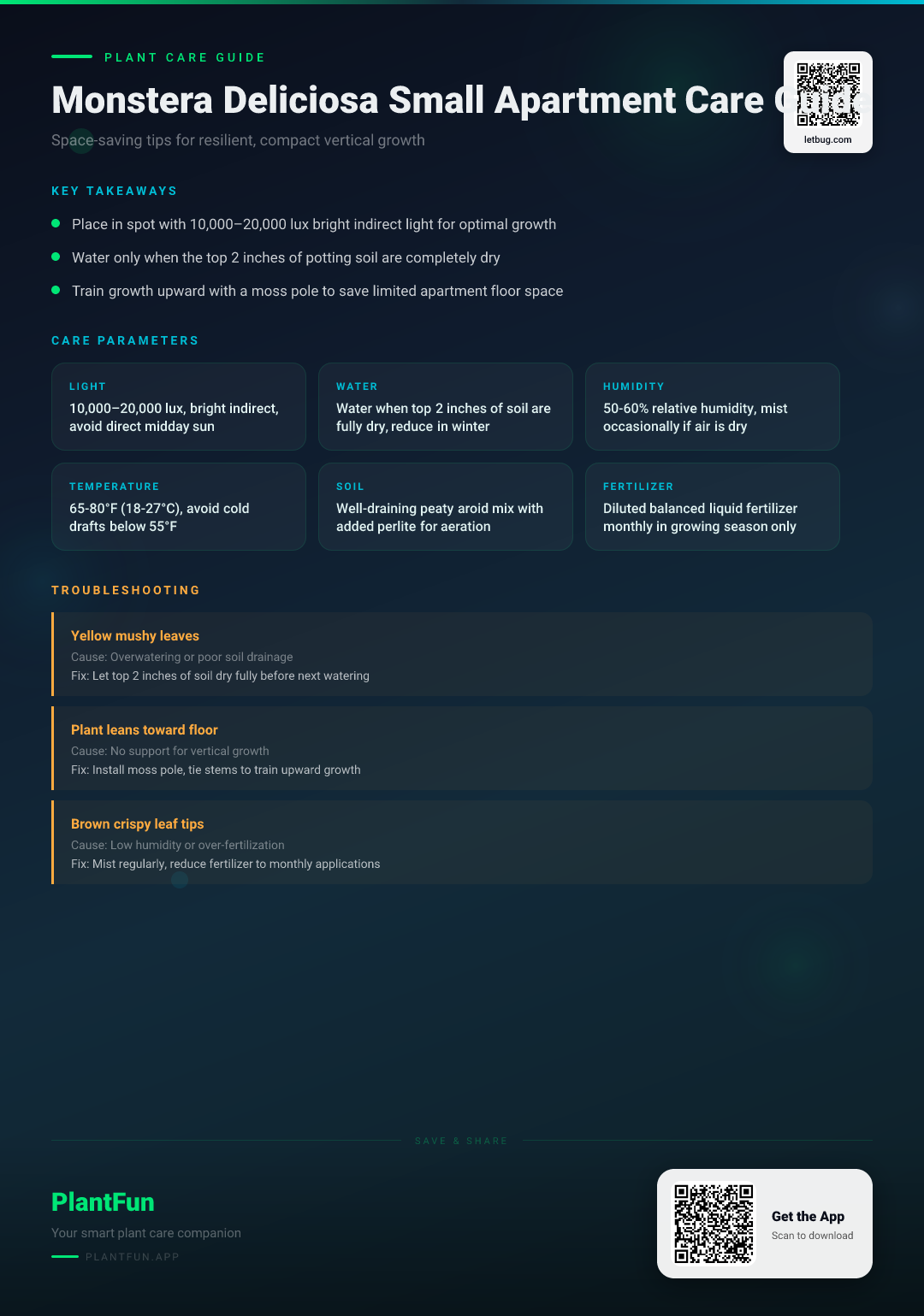
TL;DR: You don’t need a greenhouse to grow a thriving Monstera deliciosa. By training your plant to climb a moss pole, you can direct its energy vertically rather than horizontally, saving precious floor space. Keep your plant in bright, indirect light (10,000–20,000 lux), water only when the top 2 inches of soil are dry, and monitor for common pests. With these strategies, you can enjoy lush, fenestrated foliage even in a studio apartment.
Quick Care Card: Essential Thresholds for Apartment Monstera
| Feature | Optimal Range |
|---|---|
| Light | 10,000–20,000 lux (Bright, indirect) |
| Watering | When top 2 inches of soil are dry |
| Humidity | 50–60% Relative Humidity |
| Temperature | 65–80°F (18–27°C) |
| Soil | Well-draining aroid mix (perlite/bark/peat) |
| Fertilizer | Balanced liquid feed, monthly in spring/summer |
| Toxicity | Toxic to cats and dogs (ASPCA, 2026) |
My Experience: The “Spread” Panic
When I first brought home my Monstera, I didn’t realize how much it loved to sprawl. Within six months, it had taken over my tiny living room, its petioles (leaf stalks) knocking over my coffee table. I made the mistake of simply letting it grow outward, which made it impossible to walk around. It wasn’t until I pivoted to vertical training that I realized the plant isn’t naturally “messy”; it’s a climber that just needs a clear directive.
Why Your Apartment is Actually Perfect for Monstera Deliciosa
Apartments provide consistent indoor temperatures, which this tropical native craves. Unlike outdoor gardens, your climate-controlled space removes the risk of sudden frost. As noted by the (NC State Extension, 2026), these plants are remarkably adaptable to indoor environments, provided you respect their need for vertical support.
Light Positioning: Achieving 10,000–20,000 lux in a Small Living Space
In a small apartment, placement is everything. You want to aim for 10,000–20,000 lux. Place your plant within 3 feet of a south or west-facing window, using a sheer curtain to diffuse harsh rays. If you find your plant is stretching for light, it is likely not hitting this threshold.
Watering Mastery: Using the 2-inch Topsoil Rule for Container Health
Overwatering is the number one killer of apartment Monsteras. My golden rule: stick your index finger 2 inches into the soil. If it feels damp, wait. If it is dry, water until excess drains from the bottom. Never let the pot sit in standing water, as this leads to root rot in poorly ventilated spaces.
Humidity & Temperature: Maintaining 50-60% Relative Humidity and 65-80°F (18-27°C)
Apartments often have dry air due to HVAC systems. I use a simple room humidifier to maintain 50–60% humidity. If you cannot maintain this, a pebble tray under the pot can help locally increase moisture levels.
Small-Space Verticality: Training Your Monstera to Grow Up, Not Out
This is the secret to reclaiming your space. Invest in a sturdy moss pole. As your plant produces aerial roots—those brown, wire-like appendages—gently tuck them toward the pole using soft garden twine. This mimics the plant’s natural forest habit and encourages larger, more heavily fenestrated leaves.
FAQ: Common Questions
Can I keep my Monstera in a small corner away from the window?
While they can tolerate lower light, you will likely see smaller leaves and less fenestration (the signature holes). For a healthy, compact plant, try to keep it as close to the light source as possible.
Why is my Monstera leaning toward the floor instead of the ceiling?
This is a sign of “searching” behavior. The plant is trying to find a structure to climb. It needs a moss pole immediately to stabilize its growth.
How do I prevent root rot in a low-ventilation studio apartment?
Use a chunky, well-draining soil mix (bark and perlite) and ensure your pot has adequate drainage holes. Proper aeration is as vital as the water itself.
Seasonal Care Calendar: Adjusting for Winter Heating and Summer Growth
- Spring/Summer: The growth phase. Increase light exposure and begin monthly fertilization. Rotate the pot 90 degrees every week to ensure even growth.
- Fall/Winter: Growth slows. Reduce watering frequency by 30-50%. Monitor for heat vents—avoid placing your plant near hot air ducts, as this desiccates foliage.
Common Mistakes: Avoiding Over-Fertilizing and Potting Overcrowding
- Mistake: Using large, deep pots. What happens: The soil stays wet too long, leading to rot. Instead: Only up-pot by 1–2 inches in diameter.
- Mistake: Over-fertilizing. What happens: Salt buildup, which causes brown, crispy leaf edges. Instead: Follow the instructions on a balanced, water-soluble fertilizer specifically designed for houseplants.
Expert Troubleshooting: When to Prune Aerial Roots and Leaf Stems
Yellowing Leaves
Symptom: Lower leaves turning yellow and mushy.
Likely cause: Overwatering leading to root suffocation.
Fix:
- Withhold water until the soil dries out significantly.
- Check for drainage obstruction in the pot base.
Leaf Curling
Symptom: Leaves look like they are folding inward.
Likely cause: Low humidity or underwatering.
Fix:
- Check the soil moisture.
- Increase ambient humidity through grouping plants or using a humidifier.
Excessive Aerial Roots
Symptom: Long, woody roots growing in every direction.
Likely cause: The plant is looking for a host to climb.
Fix:
- Gently wrap them around a moss pole.
- Trim only if they become an eyesore, though they are beneficial for nutrient uptake.
References
- Haydon, G.; Shaw, D. (1991). Zinc Accumulation in Monstera Deliciosa Near Brisbane. Australasian Plant Pathology. https://doi.org/10.1071/app9910125. Accessed 2026-03-17.
- Shaw, D. (1992). Abnormal Internal Sori of Puccinia Paullula F.sp. Monsterae on Monstera Deliciosa. Australasian Plant Pathology. https://doi.org/10.1071/app9920123. Accessed 2026-03-17.
- ASPCA. (2026). Toxic and Non-Toxic Plants List — ASPCA. https://www.aspca.org/pet-care/animal-poison-control/toxic-and-non-toxic-plants. Accessed 2026-03-17.
- NC State Extension. (2026). Monstera Deliciosa — NC State Extension Gardener Plant Toolbox. https://plants.ces.ncsu.edu/plants/monstera-deliciosa/. Accessed 2026-03-17.
Optional Helper: Plantfun.App
Plantfun.App identifies your plants by photo, diagnoses pests and diseases with clear fixes, and creates personalised watering and light schedules that adapt to your home conditions — a handy companion for putting this guide into daily practice.
Found an error or have suggestions? We'd love your feedback.
Need help identifying this problem?
Get instant identification, personalized care schedules, and effective pest treatment plans directly on your phone.
Sponsored • We may earn a commission from app downloads
Related Guides
Monstera Deliciosa Care Checklist: Grow Lush Leaves in Typical Small Urban Apartments
Grow lush, holey Monstera deliciosa leaves even in a small urban apartment. Get exact light, water, humidity thresholds plus a symptom-to-action checklist for stress-free resilient growth.
Care GuideSwiss Cheese Plant Care in Low-Light Apartments: A Resilient Growth Strategy for Monstera deliciosa
Transform your dim apartment into a lush jungle. Follow these 5 proven steps to keep your Monstera deliciosa thriving, fenestrated, and vibrant all year long.
Care GuideMonstera Deliciosa in a Low-Humidity Apartment: The Ultimate Care Guide for Resilient Foliage
Transform your Monstera Deliciosa into a thriving center-piece. Get specific humidity targets, seasonal watering cycles, and 4 proven tips for apartment growth.
Pest ControlHow to Spot Early Pest Signs on Your Monstera Deliciosa: A Weekly Inspection & Rescue Plan
Catch Monstera deliciosa pest infestations before they permanently damage your prized fenestrated leaves. Get a 5-minute weekly inspection routine, easy-to-spot early warning signs, and non-toxic rescue steps you can implement today to stop spread to other houseplants.