
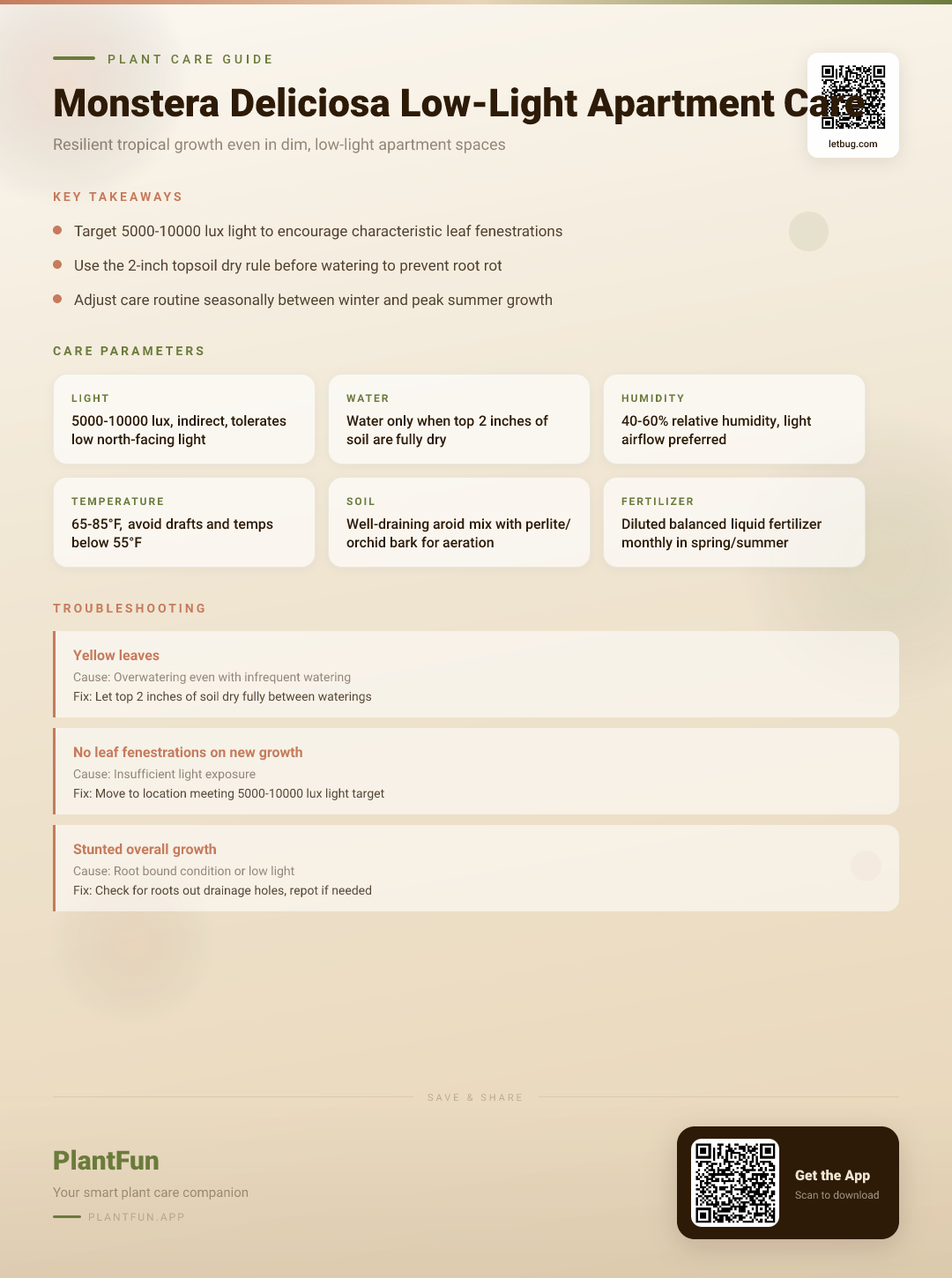
Key Takeaways
- Check soil moisture before watering — overwatering is the #1 killer of houseplants.
- Ensure your plant gets the right amount of light for its species.
- Be patient with recovery — most plants need 2–4 weeks to bounce back.
Quick Care Card: Essential Thresholds for Monstera Success
| Feature | Requirement |
|---|---|
| Light | 5,000–10,000 Lux (Bright, indirect) |
| Water | When top 2 inches of soil are dry |
| Humidity | 50%–60% Ideal |
| Temperature | 65°F–85°F (18°C–29°C) |
| Soil | Chunky, well-draining aroid mix |
| Fertilizer | Balanced liquid (10-10-10) monthly in summer |
| Toxicity | Toxic to cats and dogs (ASPCA, 2026) |
TL;DR: The Low-Light Reality Check for Monstera Deliciosa
Yes, you can keep a Monstera deliciosa in an apartment, but don’t expect rapid growth in a dark corner. These plants need bright, indirect light to produce their iconic fenestrated leaves. If your space is dim, prioritize consistent watering based on soil moisture, not a calendar, and invest in a basic LED grow light to bridge the gap. Keep them away from drafty windows during winter to ensure long-term health.
Why Your Monstera Struggles in Apartment Lighting (And How to Fix It)
When I first brought home my Monstera deliciosa, I made the mistake of placing it in a deep corner of my living room. I assumed because it was a popular “indoor plant,” it would adapt. It didn’t. It sat dormant, the leaves lost their deep luster, and I saw zero new growth for six months.
The reality is that Monstera deliciosa evolved as an understory climber in tropical forests (NC State Extension, 2026). In an apartment, your “dim” corner is often significantly darker than the brightest forest floor. Without enough light, the plant cannot perform the photosynthesis required to “pay” for the energy needed to create its signature fenestrations (the holes in the leaves). If you see long, “leggy” stems reaching toward the window, your plant is begging for more intensity.
Measuring Your Light: How to Hit the 5,000–10,000 Lux Target
Light intensity is the single most important factor for Monstera apartment care. To move from survival to thriving, you need to measure your light. Using a simple light meter app on your phone, aim for 5,000 to 10,000 lux.
- 5,000 lux: Maintenance-only mode; growth will be slow.
- 10,000 lux: Sweet spot for consistent, healthy, fenestrated leaf production.
If you lack a south or east-facing window, do not despair. A small, full-spectrum LED clip-on lamp positioned 12 inches above the canopy can easily provide the necessary light boost, allowing your plant to thrive even in north-facing setups.
Watering Mastery: Why the 2-Inch Rule Prevents Root Rot in Containers
One of the most common ways I see hobbyists kill their Monstera is by watering on a strict schedule (e.g., “every Monday”). In low-light apartments, the soil stays wet longer.
The 2-Inch Rule: Stick your index finger 2 inches into the soil. If it feels damp or cool, wait three days. If it is dry to the touch, water thoroughly until you see liquid exiting the drainage holes. According to standard horticultural practices, proper drainage is vital to avoid root rot, which can lead to structural decay (Haydon & Shaw, 1991).
Humidity and Airflow: Replicating Tropical Conditions on a Budget
Apartments are notoriously dry, especially in winter. While Monstera can tolerate 40% humidity, they truly thrive at 50%–60%. Instead of buying an expensive humidifier, I group my tropicals together to create a microclimate. The transpiration from several plants in one area creates a localized humidity bubble that benefits all of them.
Seasonal Growth Calendar: Adjusting Care from Winter to Peak Summer
- Spring/Summer (Growth Season): Water every 7–10 days; feed with a balanced fertilizer monthly. This is when your plant will develop new leaves.
- Autumn/Winter (Dormancy/Slow Phase): Reduce watering frequency by 50%. The plant’s metabolism slows down, and overwatering during this time is the fastest route to root issues (Shaw, 1992).
FAQ: Common Questions
Can I keep my Monstera in a room with only one small north-facing window?
Yes, but you will likely need to supplement with a grow light. Without supplemental light, the plant will likely survive but remain stunted without developing new fenestrations.
Why are my Monstera leaves turning yellow even when I don’t water often?
Yellowing leaves are often a sign of “wet feet.” Even if you think you aren’t overwatering, if the soil remains dense or lacks aeration, the roots may be struggling with oxygen deprivation.
How do I know if my Monstera needs a bigger pot or just more light?
If the roots are circling the bottom of the pot (pot-bound), move it up one size. If the roots are healthy but the plant is “stretching” toward a light source, it needs more intensity, not a bigger pot.
Common Mistakes: Stop These 3 Habits That Kill Apartment Monsteras
- Mistake: Using standard garden soil. What happens: It compacts and suffocates roots. Instead: Use a mix of coco coir, orchid bark, and perlite.
- Mistake: Letting the plant sit in a saucer of water. What happens: Root rot and fungal pathogens. Instead: Always empty the saucer 15 minutes after watering.
- Mistake: Ignoring leaf dust. What happens: Photosynthesis is blocked by a layer of apartment dust. Instead: Wipe leaves with a damp cloth every two weeks.
References: Botanical Standards for Aroid Health
- ASPCA. (2026). Toxic and Non-Toxic Plants List — ASPCA. https://www.aspca.org/pet-care/animal-poison-control/toxic-and-non-toxic-plants. Accessed 2026-03-13.
- Haydon, G.; Shaw, D. (1991). Zinc Accumulation in Monstera Deliciosa Near Brisbane. Australasian Plant Pathology. https://doi.org/10.1071/app9910125. Accessed 2026-03-13.
- NC State Extension. (2026). Monstera Deliciosa — NC State Extension Gardener Plant Toolbox. https://plants.ces.ncsu.edu/plants/monstera-deliciosa/. Accessed 2026-03-13.
- Shaw, D. (1992). Abnormal Internal Sori of Puccinia Paullula F.sp. Monsterae on Monstera Deliciosa. Australasian Plant Pathology. https://doi.org/10.1071/app9920123. Accessed 2026-03-13.
Optional Helper: Plantfun.App
Plantfun.App identifies your plants by photo, diagnoses pests and diseases with clear fixes, and creates personalised watering and light schedules that adapt to your home conditions — a handy companion for putting this guide into daily practice.
Found an error or have suggestions? We'd love your feedback.
Need help identifying this problem?
Get instant identification, personalized care schedules, and effective pest treatment plans directly on your phone.
Sponsored • We may earn a commission from app downloads
Related Guides
Swiss Cheese Plant Care in Low-Light Apartments: A Resilient Growth Strategy for Monstera deliciosa
Transform your dim apartment into a lush jungle. Follow these 5 proven steps to keep your Monstera deliciosa thriving, fenestrated, and vibrant all year long.
Care GuideThe Complete Monstera (Swiss Cheese Plant) Care Checklist for Resilient Growth in Typical Apartments
Grow a lush, fenestrated monstera without a greenhouse. Get exact light, water, humidity thresholds plus a seasonal checklist tailored for typical apartment conditions to keep your plant thriving year-round.
Care GuideMonstera Deliciosa Care Checklist: Grow Lush Leaves in Typical Small Urban Apartments
Grow lush, holey Monstera deliciosa leaves even in a small urban apartment. Get exact light, water, humidity thresholds plus a symptom-to-action checklist for stress-free resilient growth.
Pest ControlHow to Spot Early Pest Signs on Your Monstera Deliciosa: A Weekly Inspection & Rescue Plan
Catch Monstera deliciosa pest infestations before they permanently damage your prized fenestrated leaves. Get a 5-minute weekly inspection routine, easy-to-spot early warning signs, and non-toxic rescue steps you can implement today to stop spread to other houseplants.