
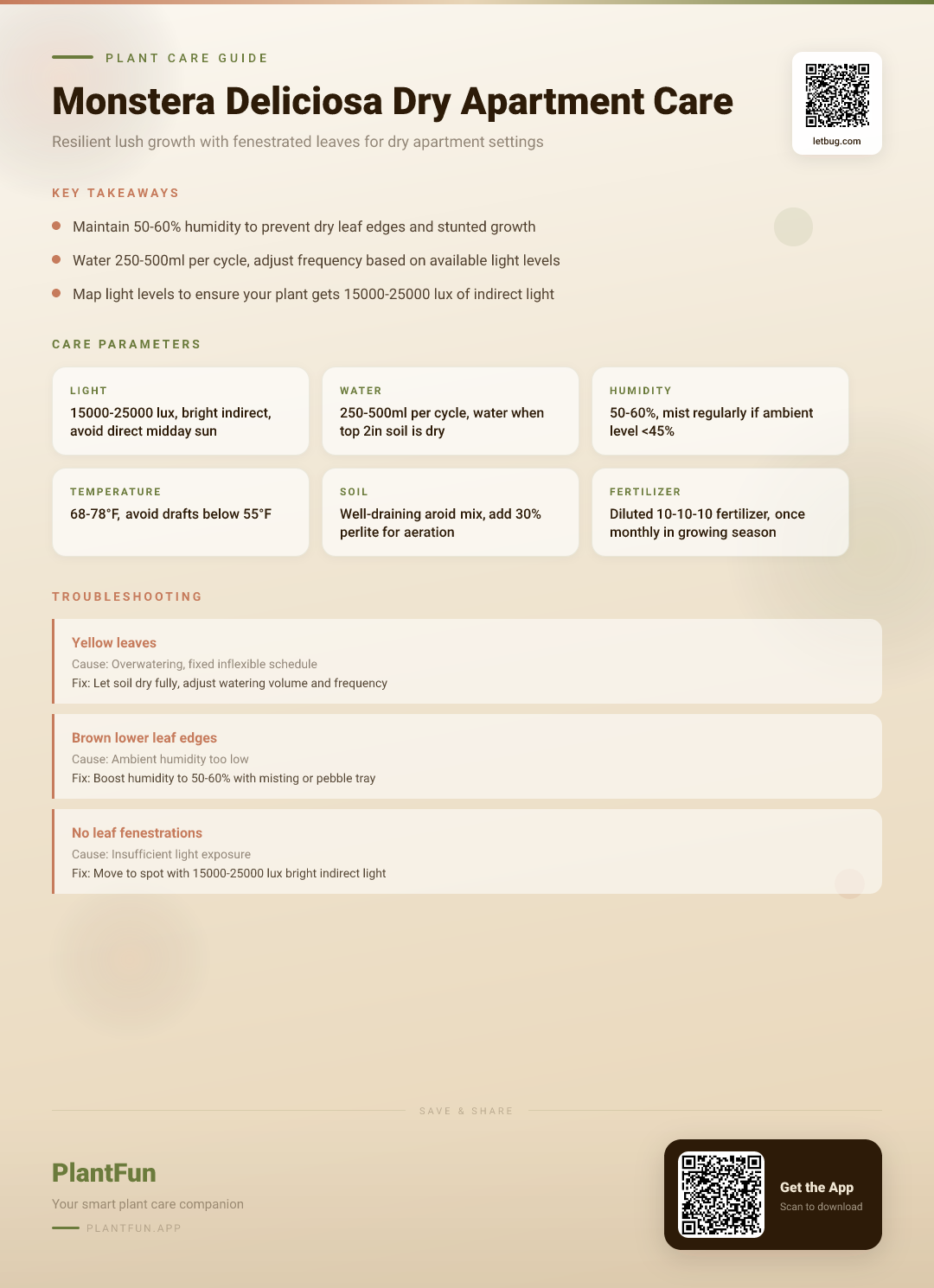
Key Takeaways
- Check soil moisture before watering — overwatering is the #1 killer of houseplants.
- Ensure your plant gets the right amount of light for its species.
- Be patient with recovery — most plants need 2–4 weeks to bounce back.
Quick Care Card: Essential Data
| Feature | Requirement |
|---|---|
| Light | 15,000–25,000 lux (Bright, indirect) |
| Humidity | 50–60% constant |
| Temperature | 68–78°F (20–25°C) |
| Water | 250–500ml per cycle (when top 2 inches are dry) |
| Soil | Chunky, well-draining aroid mix |
| Fertilizer | Balanced liquid feed, monthly (Spring/Summer) |
| Toxicity | Toxic to cats and dogs (ASPCA, 2026) |
TL;DR: The Apartment Reality Check
In a typical dry apartment, your Monstera Deliciosa isn’t dying; it is starving for moisture. Stop watering on a calendar schedule and start measuring your light. If your humidity is below 40%, you must use a humidifier or pebble tray to prevent crispy brown edges. The secret to those legendary fenestrations (the holes in the leaves) is strictly maximizing light and consistent ambient moisture.
My Experience: The Apartment Trap
When I first brought home my Monstera, I assumed it would thrive in any sunny corner. I followed the “water every Sunday” rule and watched, confused, as the lower leaves yellowed while the new growth remained small and un-fenestrated. I realized my mistake: I was treating a tropical jungle inhabitant like a desert cactus. My apartment’s HVAC system was sucking the life out of the air. Once I shifted to a diagnostic, light-based watering cycle and invested in a simple hygrometer, the plant finally started pushing out the large, split leaves I bought it for.
Why Your Monstera Struggles in Average Apartment Humidity
In their natural habitat, these plants thrive in high-moisture environments. Modern apartments, especially during winter heating seasons, often drop below 30% relative humidity. This causes the plant to lose water through its leaves faster than its roots can pull it from the soil, leading to the dreaded brown, crispy edges on healthy foliage (NC State Extension, 2026).
Diagnostic Step 1: Evaluating Your Light Quality (Lux mapping for apartments)
Monstera Deliciosa needs high-intensity, indirect light to develop its signature leaf splits. I recommend using a light meter app or a dedicated sensor to check your space.
- Low Light (<10,000 lux): Stunted, small leaves with no splits.
- Optimal Light (15,000–25,000 lux): This is where you get those massive, fenestrated leaves.
- Too Much Light (>40,000 lux): Direct sun will cause bleaching or scorching.
The Watering Science: Why ‘Every Sunday’ is Killing Your Plant
Watering should never be a calendar event. Use the “two-inch test”: insert your finger into the soil. If it feels dry up to your second knuckle, use 250–500ml of filtered, room-temperature water. Pour slowly to ensure even saturation. Never let the pot sit in standing water, as this invites root rot (NC State Extension, 2026).
Setting Up Your Indoor Microclimate: Humidity Hacks for Modern Homes
To maintain the 50–60% range, you have a few options:
- The Humidifier Method: The most reliable way to boost ambient air.
- Pebble Trays: Place the pot on a tray filled with pebbles and water (ensure the pot base isn’t touching the water to prevent rot).
- Grouping: Cluster your plants together to create a localized humid microclimate.
Step-by-Step Rescue Plan for Yellowing Leaves
If you see yellowing, follow this triage plan:
- Inspect for Pests: Use a magnifying glass to check the undersides of leaves for spider mites.
- Check Drainage: Ensure the pot has holes. If it’s heavy and soggy, repot into a chunky, bark-based mix.
- Assess Light: Is the plant too far from the window? Move it within 3 feet of a south- or east-facing exposure.
- Hydration Calibration: If the soil is bone-dry and the leaves are drooping, increase your water volume to 500ml, ensuring it drains freely.
Seasonal Care Calendar: Adjusting for Winter Heating and Summer Growth
- Spring/Summer: This is the growth phase. Increase light if possible and fertilize monthly.
- Autumn/Winter: Growth slows down. Reduce watering frequency, but do not stop. Keep the plant away from cold drafts and heating vents, which sap humidity.
Voice Search FAQ
- How do I know if my Monstera is thirsty? Check if the leaves look “wilted” or if the soil has pulled away from the sides of the pot.
- Why are the lower leaves on my Swiss Cheese Plant turning brown? This is often a sign of uneven moisture or low humidity (NC State Extension, 2026).
- Can I put my Monstera in the bathroom? Yes, if there is a window; the extra humidity is perfect for them.
Common Apartment Mistakes: The Over-Potting Trap
- Mistake: Using a pot that is too large.
- What happens: Excess soil stays wet too long, leading to root rot.
- Instead: Only move up one pot size (1–2 inches wider) at a time.
References and Botanical Resources
- Haydon, G.; Shaw, D. (1991). Zinc Accumulation in Monstera Deliciosa Near Brisbane. Australasian Plant Pathology. https://doi.org/10.1071/app9910125. Accessed 2026-03-12.
- Shaw, D. (1992). Abnormal Internal Sori of Puccinia Paullula F.sp. Monsterae on Monstera Deliciosa. Australasian Plant Pathology. https://doi.org/10.1071/app9920123. Accessed 2026-03-12.
- ASPCA. (2026). Toxic and Non-Toxic Plants List — ASPCA. https://www.aspca.org/pet-care/animal-poison-control/toxic-and-non-toxic-plants. Accessed 2026-03-12.
- NC State Extension. (2026). Monstera Deliciosa — NC State Extension Gardener Plant Toolbox. https://plants.ces.ncsu.edu/plants/deliciosa-care/. Accessed 2026-03-12.
Optional Helper: Plantfun.App
Plantfun.App identifies your plants by photo, diagnoses pests and diseases with clear fixes, and creates personalised watering and light schedules that adapt to your home conditions — a handy companion for putting this guide into daily practice.
Found an error or have suggestions? We'd love your feedback.
Need help identifying this problem?
Get instant identification, personalized care schedules, and effective pest treatment plans directly on your phone.
Sponsored • We may earn a commission from app downloads
Related Guides
Swiss Cheese Plant in a Low-Light Apartment: The Complete Care Guide for Resilient Growth
Transform your dim apartment into a lush oasis. Master your Swiss Cheese plant care with 4 precise light measurements, watering schedules, and humidity hacks.
Care GuideMonstera Deliciosa in a Studio Apartment: The Ultimate Care Guide for Resilient Growth
Master Monstera Deliciosa care in your small apartment. Get exact lux, humidity, and pruning secrets to keep your plant healthy, compact, and perfectly shaped.
Care GuideMonstera Deliciosa in a Studio Apartment: The Ultimate Budget-Friendly Resilient Growth Care Plan
Boost your Monstera Deliciosa growth with this zero-cost apartment care plan. Learn the exact lux, water volumes, and seasonal shifts needed for big, fenestrated leaves.
Pest ControlHow to Spot Early Pest Warning Signs on Your Monstera Deliciosa & Stop Infestations Fast
Catch pest infestations before they ruin your east-facing dining room Monstera deliciosa. Get a 5-minute weekly inspection checklist, early warning signs, and step-by-step rescue plans you can use today to avoid full-blown outbreaks.