
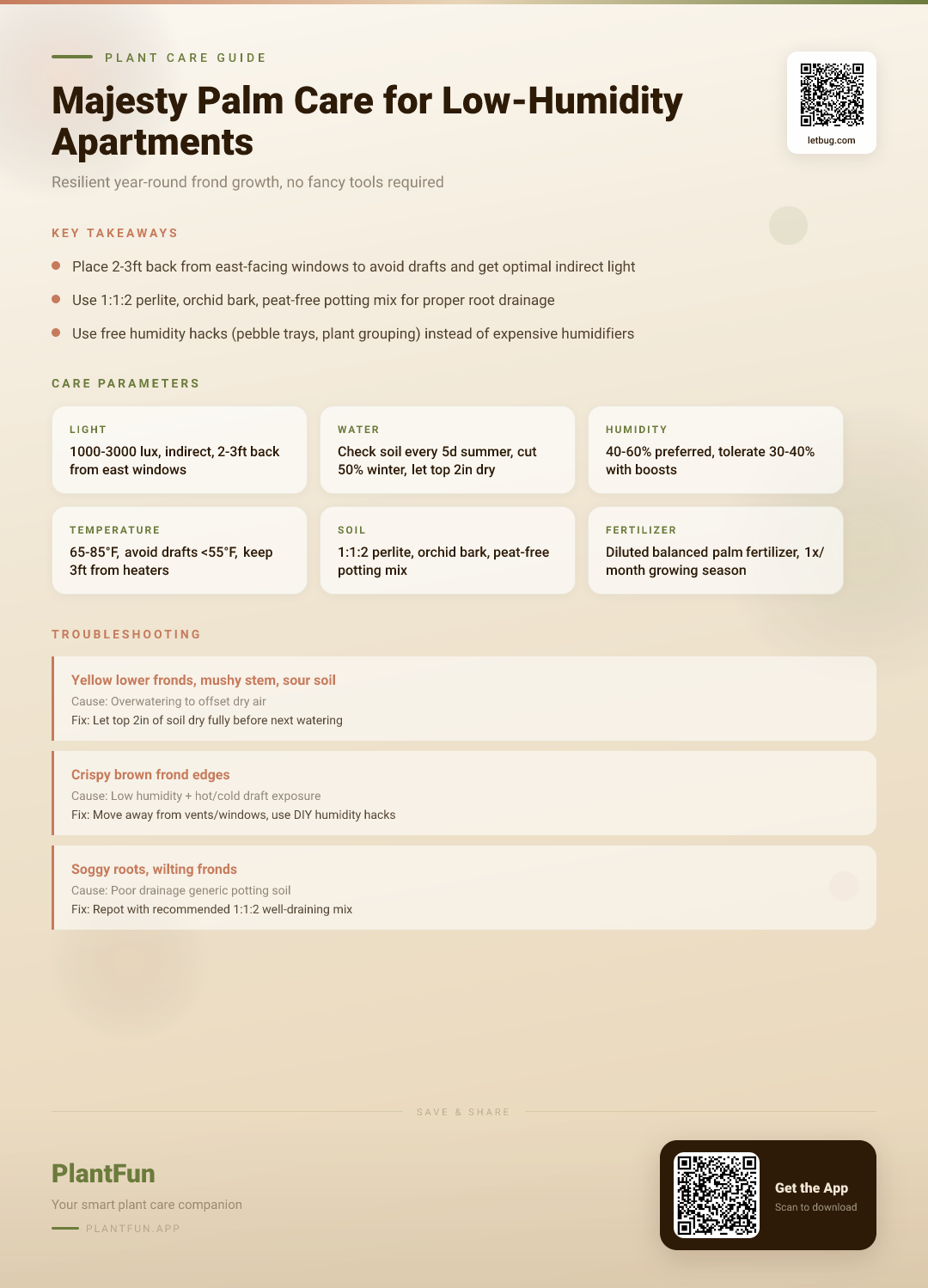
Key Takeaways
- Check soil moisture before watering — overwatering is the #1 killer of houseplants.
- Ensure your plant gets the right amount of light for its species.
- Be patient with recovery — most plants need 2–4 weeks to bounce back.
Quick Care Card
| Parameter | Measurable Threshold |
|---|---|
| Light | 10,000-20,000 lux indirect daily, 2-3ft back from east-facing windows |
| Water | 1 cup per 6 inches of pot diameter, only when top 2 inches of soil is completely dry |
| Humidity | 40-50% minimum |
| Temperature | 65-85°F (18-29°C), avoid swings over 10°F |
| Soil | 1 part perlite, 1 part orchid bark, 2 parts peat-free potting mix |
| Fertilizer | 1/2 strength balanced liquid palm fertilizer every 2 months (March-September only) |
| Toxicity | Non-toxic to cats, dogs, and humans (ASPCA, 2026) |
Why Typical Apartments Are So Hard for Majesty Palms
Native to Madagascar’s riparian zones, majesty palms (Ravenea rivularis) evolved in consistent 60-70% humidity, warm stable temperatures, and fast-draining, consistently moist root conditions. Standard North American apartments fail to meet these needs on nearly every front: forced air heating drops winter humidity to 30-40%, AC units dry summer air, and temperature swings near windows or vents can reach 20°F in a single day. Most generic majesty palm care advice assumes greenhouse growing conditions, making it irrelevant for renters. A common myth we’re busting today: overwatering compensates for dry air. In reality, overwatering is the leading cause of indoor majesty palm death (Polizzi et al, 2003). Note: Majesty palms are safe for homes with pets and kids (ASPCA, 2026), so they’re a great choice for apartment dwellers if you follow the care steps below.
The 8-Step Resilient Growth Checklist (Core Section)
Follow these priority-ordered steps for consistent growth without fancy tools:
- Test light levels with a low-cost lux meter, and place your palm to receive 10,000-20,000 lux of indirect light daily to meet standard majesty palm light requirements indoors.
- Mix your potting soil to the exact ratio of 1 part perlite, 1 part fine orchid bark, and 2 parts peat-free all-purpose potting mix (the best soil for majesty palm drainage and aeration).
- Use a pot with 2+ drainage holes, sized 2 inches larger than the palm’s root ball to prevent standing water.
- Water with 1 cup of room-temperature filtered water per 6 inches of pot diameter only when the top 2 inches of soil is completely dry to the touch (this answers how often to water majesty palm in low-humidity conditions without overwatering).
- Add one free humidity-boosting hack (listed later in this guide) to raise local humidity by 10-15% and hit the 40% minimum majesty palm humidity level.
- Keep the plant at least 2-3 feet away from heating vents, AC units, and drafty window sills to avoid temperature stress.
- Fertilize with 1/2 strength balanced liquid palm fertilizer every 2 months from March to September only.
- Prune only fully brown fronds at the base with sterilized shears to avoid spreading fungal blight (Polizzi, 2002).
Common Mistake 1: Overwatering to Compensate for Dry Air
Mistake: Watering more frequently when you see brown tips to “make up for dry air”. What happens: Soggy soil cuts off oxygen supply to roots, leading to Fusarium root rot (Polizzi et al, 2003). Visible signs you’re making this error include yellow lower fronds, a mushy stem base, and a sour, rotten smell coming from the soil. Instead: Do the 2-inch finger test: stick your index finger 2 inches deep into the soil. If it’s even slightly damp, hold off on watering. Fix low humidity with the hacks listed later instead of adding extra water. If you suspect early root rot, follow our guide on how to revive a dying houseplant for step-by-step rescue steps.
Common Mistake 2: Placing Palms Directly in Drafty Window Sills
Mistake: Setting your palm right on a window sill to get more light, exposing it to cold winter drafts or hot midday summer sun scorch. What happens: Temperature swings over 10°F cause immediate frond stress, leading to brown tip burn and leaf drop. Instead: Position the plant 2-3 feet back from east-facing windows for optimal gentle morning light without draft exposure. This placement aligns with best practices for east facing window plant care for tropical species.
Common Mistake 3: Using Generic Potting Soil That Retains Too Much Moisture
Mistake: Planting your majesty palm in standard all-purpose potting mix that holds water for 7+ days. What happens: Dense, moisture-retentive soil creates ideal conditions for fungal leaf blight and root rot (Polizzi, 2002), even if you water on a proper schedule. Instead: Mix your own soil to the exact ratio listed in the quick care card for fast drainage and consistent root aeration.
Seasonal Care Calendar
Adjust your routine based on seasonal apartment conditions:
Winter (October-February, Majesty Palm Winter Care)
- Reduce watering volume by 50%, only water when the top 3 inches of soil is completely dry
- Keep the plant at least 3 feet away from forced air heater vents
- Stop fertilizing completely
- Mist fronds once per week if local humidity drops below 35%
Summer (March-September, Majesty Palm Summer Watering)
- Check soil moisture every 5 days, as warmer temperatures speed up evaporation
- Mist fronds 2-3 times per week to boost humidity
- Fertilize every 2 months at 1/2 strength
- Move 1 foot further back from west-facing windows if midday sun causes frond scorch
How to Boost Humidity for Free (No Expensive Humidifier Required)
These 3 DIY hacks raise local humidity around your palm by 10-15% at no cost:
- Pebble tray: Fill a shallow tray with 1 inch of clean pebbles, add water to just below the top of the pebbles, and set your palm pot on top of the pebbles. Evaporation from the tray adds consistent ambient humidity without wetting the soil.
- Group with tropical plants: Place your palm within 1 foot of other tropical species like pothos, monstera, or ferns. Transpiration from neighboring plants raises local humidity naturally. Check our list of low maintenance tropical houseplants for apartments for compatible species.
- Place near a frequently used bathroom door: Leave the bathroom door open after showering to let humid air flow to the adjacent space where your palm is located.
Troubleshooting Common Frond Issues
Brown Tip Burn
Symptom: Dry, crispy brown tips on otherwise healthy green fronds, no yellowing on lower leaves.
Likely cause: Humidity below 40% or exposure to hot/cold drafts.
Fix:
- Test local humidity with a $10 hygrometer, add one of the free humidity hacks listed above if levels are below 40%
- Move the plant at least 3 feet away from heater vents, AC units, or drafty window frames
Yellow Lower Fronds
Symptom: Yellow, mushy fronds closest to the soil, often accompanied by a sour smell from the pot.
Likely cause: Overwatering leading to early root rot.
Fix:
- Stop watering immediately, tip the pot to drain any excess standing water from the saucer
- If root rot is advanced, repot into fresh, well-draining soil mix and trim any black, mushy roots with sterilized shears
Stunted New Growth
Symptom: No new fronds unfurling for 3+ months in growing season, or new fronds are small and pale.
Likely cause: Insufficient light or lack of nutrients.
Fix:
- Test light levels to ensure you are hitting the 10,000 lux minimum for 4+ hours per day
- Apply 1/2 strength balanced palm fertilizer if you have not fed the plant in 3+ months
Spider Mite Infestation
Symptom: Fine webbing on the undersides of fronds, small yellow speckles across leaf surfaces, common in dry air.
Likely cause: Low humidity creates ideal breeding conditions for spider mites.
Fix:
- Wipe fronds down with a damp microfiber cloth to remove mites and webbing
- Increase local humidity to above 45% to prevent future infestations
Voice Search FAQ
Why is my majesty palm getting brown tips even when I water it regularly?
Brown tips on a regularly watered majesty palm are almost always caused by low humidity (below 40%) or exposure to drafts from heating/cooling systems, not underwatering. Test your local humidity and adjust placement away from vents before increasing watering frequency to avoid root rot.
Can I keep my majesty palm in my east-facing apartment living room?
Absolutely! East-facing windows provide gentle morning light that is ideal for majesty palms, as long as you place the plant 2-3 feet back from the window sill to avoid cold winter drafts or hot summer sun scorch. This placement meets the standard majesty palm light requirements indoors for consistent growth.
How often should I fertilize my majesty palm in a dry apartment?
Fertilize your majesty palm once every 2 months during the growing season (March to September) with a 1/2 strength balanced liquid palm fertilizer. Stop fertilizing completely in winter when growth slows, as excess fertilizer can build up in soil and burn fronds in dry conditions.
Printable Checklist Download Link
Download High-Res Printable 8-Step Majesty Palm Care Checklist — this 8.5x11 inch printable fits perfectly on your fridge or plant shelf, with fillable checkboxes for weekly care tasks and quick reference thresholds for light, water, and humidity.
References
- ASPCA. (2026). Toxic and Non-Toxic Plants List — ASPCA. https://www.aspca.org/pet-care/animal-poison-control/toxic-and-non-toxic-plants. Accessed 2026-02-27.
- Polizzi, G.; Vitale, A. (2003). First Report of Fusarium Blight on Majesty Palm Caused by <i>Fusarium proliferatum</i> in Italy. Plant Disease. https://doi.org/10.1094/pdis.2003.87.9.1149a. Accessed 2026-02-27.
- Polizzi, G. (2002). Severe Outbreak of Leaf Spot and Blight Caused by <i>Botrytis cinerea</i> on Majesty Palm in Southern Italy. Plant Disease. https://doi.org/10.1094/pdis.2002.86.7.815b. Accessed 2026-02-27.
Optional Helper: Plantfun.App
Plantfun.App identifies your plants by photo, diagnoses pests and diseases with clear fixes, and creates personalised watering and light schedules that adapt to your home conditions — a handy companion for putting this guide into daily practice.
Found an error or have suggestions? We'd love your feedback.
Need help identifying this problem?
Get instant identification, personalized care schedules, and effective pest treatment plans directly on your phone.
Sponsored • We may earn a commission from app downloads
Related Guides
The Complete Majesty Palm Care Checklist for Resilient Growth in Typical Apartments
Stop watching your majesty palm wilt or develop brown tips in your apartment. Get exact light levels, humidity targets, and a printable 10-step checklist for lush, resilient growth all year long.
Care GuideThe Complete Majesty Palm Care Guide for Typical Apartments: Grow Lush, Resilient Fronds
Keep your Majesty Palm thriving even in dry, low-light apartments. Get exact light levels, watering amounts, and humidity hacks to avoid brown tips and grow lush, full fronds all year long.
Care GuideMajesty Palm in a Low-Humidity Apartment: The Only Care Guide You’ll Ever Need
Stop the brown tips on your Majesty Palm. Master exact lux requirements, specific watering schedules, and humidity hacks for dry apartments. Grow lush palms today.
Pest ControlAnts on Plants: What They Mean and What to Do
Ants usually aren't eating your plant. They are farming other pests.