
Key Takeaways
- Check soil moisture before watering — overwatering is the #1 killer of houseplants.
- Ensure your plant gets the right amount of light for its species.
- Be patient with recovery — most plants need 2–4 weeks to bounce back.
Quick Care Card
Print this 1-page, no-fluff checklist for easy reference:
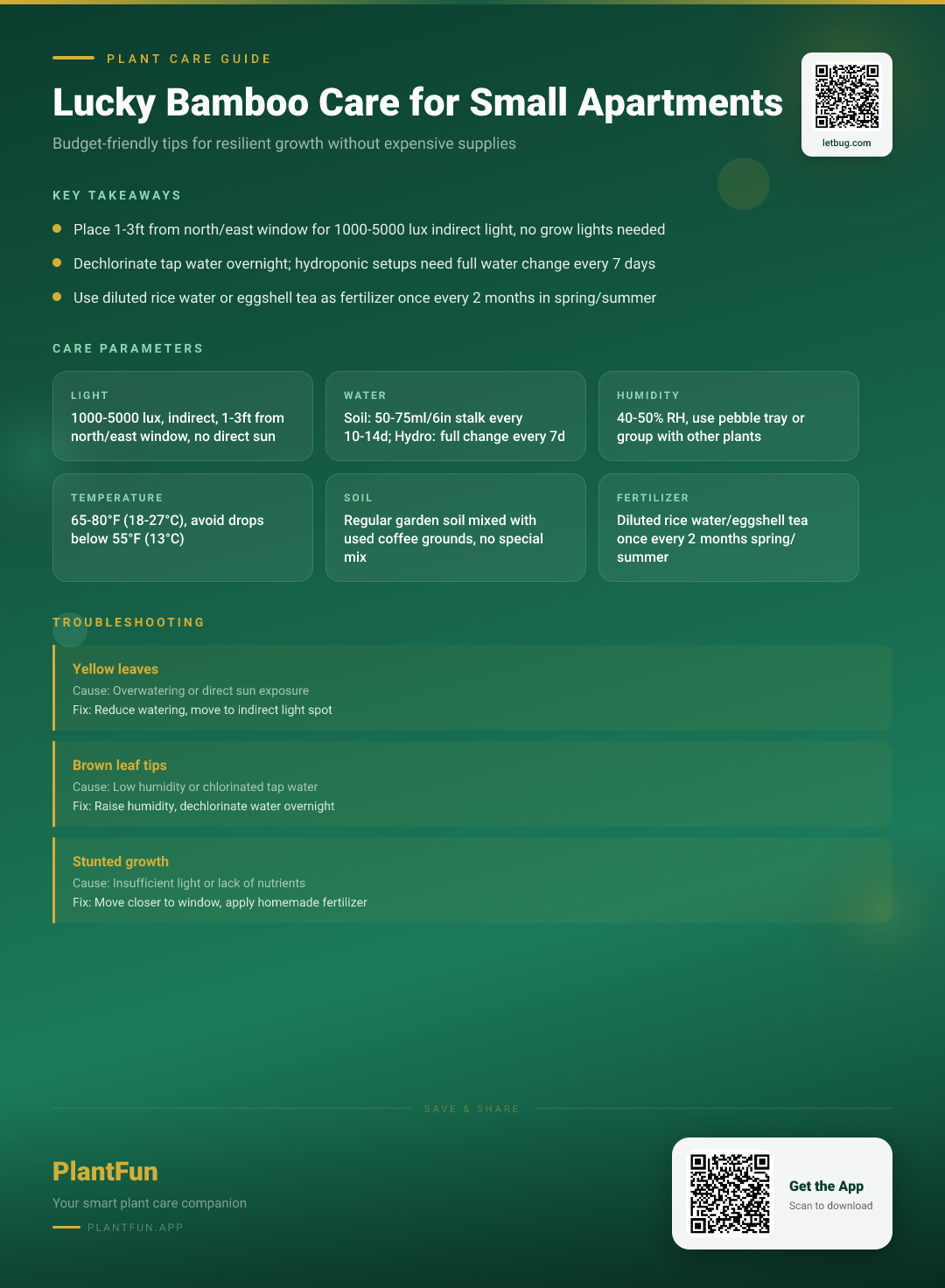
| Care Category | Exact Parameter for Small Apartments |
|---|---|
| Light | 1000-5000 lux, 1-3ft from north/east window, no direct sun |
| Water (Soil-Grown) | 50-75ml per 6in stalk every 10-14 days, dechlorinated tap water |
| Water (Hydroponic) | 100% water change every 7 days, keep roots submerged 1-2in |
| Humidity | 40-50% relative humidity |
| Temperature | 65-80°F (18-27°C), minimum 55°F (13°C) |
| Soil | Free garden soil mixed with 20% used coffee grounds for drainage |
| Fertilizer | Diluted rice water or eggshell tea, once every 2 months spring/summer |
| Toxicity | Toxic to cats and dogs (ASPCA, 2026) |
Why Lucky Bamboo Thrives (or Fails) in Typical Apartments
Lucky bamboo (Dracaena sanderiana) is naturally adapted to tropical understory environments, making it inherently suited to the low light of most urban apartments (NC State Extension, 2026). That said, common apartment conditions like dry forced air, frequent temperature fluctuations, and extremely dark corners can trigger stress, yellow leaves, or stunted growth if unaddressed.
Myth vs Reality: Many new owners assume lucky bamboo needs bright, direct sun to grow. In reality, it evolved for dappled, low light, so it will burn if placed in direct south-facing window sun. For more low-light plant tips, check out our guide to the best low-maintenance houseplants for small spaces on LetBug.com.
Step 1: Light Placement (No Grow Lights Required)
Lucky bamboo requires a consistent 1000-5000 lux of light to grow, with no need for expensive grow lights (NC State Extension, 2026). This is core to accessible Lucky Bamboo low light care for renters.
Best spots:
- 1-3ft from a north or east-facing window, where it gets soft, indirect light for 4-6 hours per day
- High shelves away from pet reach, as long as they fall in the lux range
Spots to skip entirely:
- Within 3ft of AC or heat vents
- Next to hot electronics like TVs or gaming consoles that radiate heat
- Directly in south-facing window sun, which will burn leaf tips
Quick test: Hold your hand in the spot at midday. A faint, blurry shadow means you’re in the perfect lux range. A sharp, dark shadow means too much sun, and no shadow at all means too little light.
Step 2: Watering Routine for Tap Water Users
Stop guessing how often to water Lucky Bamboo with these measurable, budget-friendly rules (P. & D., 2024):
- For soil-grown plants: 50-75ml of water per 6in stalk every 10-14 days. Test soil moisture first by sticking your finger 2 inches deep — only water if it is completely dry.
- For hydroponic Lucky Bamboo care: Do a 100% water change every 7 days, and keep roots submerged 1-2 inches deep at all times.
Free dechlorination hack: Pour tap water into an open cup and let it sit on your counter overnight. Chlorine will evaporate completely, no expensive filtered water required. For more zero-cost plant hacks, read our guide to repurposing household items for plant care on LetBug.com.
Step 3: Humidity Hacks Using Household Items
Lucky Bamboo humidity requirements fall between 40-50% relative humidity, a range that is often lower in apartments with forced air heating or cooling (NC State Extension, 2026). No expensive humidifiers needed — use these free hacks:
- Pebble tray: Fill a repurposed takeout container with clean pebbles and cooled leftover pasta or rice cooking water, then set your plant pot on top of the pebbles (make sure the pot base is not sitting in standing water).
- Group your lucky bamboo with 2-3 other houseplants: Transpiration from adjacent plants will naturally raise humidity around all of them.
- Place it in your bathroom if the space gets 1000-5000 lux of light: Shower steam will cover your humidity needs for free.
Step 4: Temperature Regulation for Renters
The ideal Lucky Bamboo temperature range is 65-80°F (18-27°C), and it should never be exposed to temperatures below 55°F (13°C) (NC State Extension, 2026). As a renter, you don’t need to adjust your entire apartment thermostat — use these free protections:
- In winter, if your plant sits near a drafty window, tuck a folded old towel between the window sill and the pot base to block cold air, or move it behind a thick curtain overnight.
- Keep plants at least 3ft away from exterior doors that are opened frequently in cold or very hot weather.
Step 5: Zero-Cost Fertilizing Routine
Skip expensive commercial fertilizers entirely — these free options give your plant all the nutrients it needs, and work perfectly if you want to know how to make Lucky Bamboo grow faster (P. & D., 2024):
- Diluted rice water: Mix 1 part leftover unseasoned rice water with 3 parts plain dechlorinated water
- Crushed eggshell tea: Steep 5 crushed, rinsed eggshells in 1L of water for 24 hours, strain, and use to water
Apply either option once every 2 months only in spring and summer, when the plant is actively growing.
Step 6: Pruning & Repotting on a Budget
Prune yellow leaves at the base of the leaf stem using clean kitchen scissors (wipe the blades with rubbing alcohol first to avoid spreading bacteria).
When you see roots growing out of the drainage holes of your pot, repot for free using:
- Free garden soil from a friend’s garden, community plot, or local plant swap
- 20% used, dried coffee grounds mixed into the soil to improve drainage (no special potting mix required)
- Repurposed plastic food containers as pots: Just poke 2-3 ¼ inch drainage holes in the bottom using a hot nail (ask your building maintenance team for help if you don’t have tools).
Seasonal Care Calendar
Adjust your routine to match seasonal apartment condition changes:
- Lucky Bamboo winter care: Reduce watering volume by 50%, move plants 1ft further away from cold exterior windows, and stop fertilizing entirely until spring.
- Lucky Bamboo summer watering: If your apartment regularly hits 75°F+ in summer, check soil moisture 2 days earlier than your usual schedule, and increase humidity checks to twice per week. Move plants 1ft further back from east windows to avoid harsh midday sun exposure. For more seasonal plant care tips, check our complete winter houseplant care guide for renters on LetBug.com.
5 Common Budget Care Mistakes to Avoid
- Mistake: Overwatering to try to speed up growth What happens: Root rot, which is the top cause of why is my Lucky Bamboo turning yellow Instead: Stick to the 10-14 day watering schedule, and test soil moisture with your finger before watering.
- Mistake: Using commercial fertilizer more than once per month, or at full strength What happens: Salt buildup in soil or hydroponic water, leading to burnt leaf tips and yellow stalks Instead: Use only diluted rice water or eggshell tea once every 2 months in the growing season.
- Mistake: Placing your plant near drafty AC/heat vents or hot electronics What happens: Rapid moisture loss, leaf drop, and temperature stress that stunts growth Instead: Stick to the 1-3ft north/east window spot, at least 3ft away from all vents and electronics.
- Mistake: Using cold tap water straight from the faucet What happens: Root shock that triggers yellow lower leaves Instead: Let tap water sit overnight to dechlorinate and warm to room temperature before use.
- Mistake: Ignoring dust buildup on leaves What happens: Reduced light absorption, leading to stunted growth even if your plant is in the correct light spot Instead: Wipe leaves down with a damp old t-shirt once every 2 weeks for free.
Voice Search FAQ
Can I keep lucky bamboo in my windowless apartment office?
Yes! As long as you have overhead fluorescent lights that are turned on for 8-10 hours per day, that provides the 1000 lux minimum it needs to thrive (NC State Extension, 2026). Rotate the plant ¼ turn once per week so all sides get equal light exposure.
Why is my lucky bamboo turning yellow even though I water it?
The most common cause is overwatering leading to root rot, or using cold, chlorinated tap water that shocks the root system (P. & D., 2024). First, check if the soil is soggy: if yes, let it dry out completely before watering again, and use dechlorinated room-temperature water for all future waterings.
How do I make my lucky bamboo grow faster for free?
Wipe dust off leaves every 2 weeks to maximize light absorption, feed with diluted rice water once every 2 months in spring and summer, and keep it in the 1000-5000 lux light sweet spot. With these steps, you can expect 2-4 inches of new growth per year, no expensive supplies required.
References
- NC State Extension. (2026). Lucky Bamboo Care Checklist — NC State Extension Gardener Plant Toolbox. https://plants.ces.ncsu.edu/plants/bamboo-care/. Accessed 2026-03-02.
- P., -, & D., -. (2024). Exploring The Potential of Lucky Bamboo Plant : A Coliform Perspective. International Journal For Multidisciplinary Research. https://doi.org/10.36948/ijfmr.2024.v06i03.22635. Accessed 2026-03-02.
- ASPCA. (2026). Toxic and Non-Toxic Plants List — ASPCA. https://www.aspca.org/pet-care/animal-poison-control/toxic-and-non-toxic-plants. Accessed 2026-03-02.
- Elderly Care. (1985). Checklist for care. Elderly Care. https://doi.org/10.7748/eldc.5.4.6.s8. Accessed 2026-03-02.
Optional Helper: Plantfun.App
Plantfun.App identifies your plants by photo, diagnoses pests and diseases with clear fixes, and creates personalised watering and light schedules that adapt to your home conditions — a handy companion for putting this guide into daily practice.
Found an error or have suggestions? We'd love your feedback.
Need help identifying this problem?
Get instant identification, personalized care schedules, and effective pest treatment plans directly on your phone.
Sponsored • We may earn a commission from app downloads
Related Guides
Lucky Bamboo in Low-Light Apartments: The 7-Step Budget Care Checklist for Resilient Growth
Skip overpriced plant products and grow lush lucky bamboo in your apartment. Get 7 budget-friendly care steps, exact light/water thresholds, and a free printable checklist for no-fuss growth.
Care GuideThe Complete Lucky Bamboo Care Checklist for Resilient Growth in Small Urban Apartments
Grow lush, resilient Lucky Bamboo in your urban apartment with our seasonal care checklist, exact light/water thresholds, and easy fixes for common issues like yellow leaves. Stop guessing and get consistent, long-term growth.
Care GuideLucky Bamboo in Small Urban Apartments: The Only Resilient Growth Checklist You Need
Stop watching your lucky bamboo turn yellow in your small urban apartment. Grab our science-backed checklist with exact light, water, and humidity thresholds for lush, resilient growth all year.
Pest ControlAnts on Plants: What They Mean and What to Do
Ants usually aren't eating your plant. They are farming other pests.