
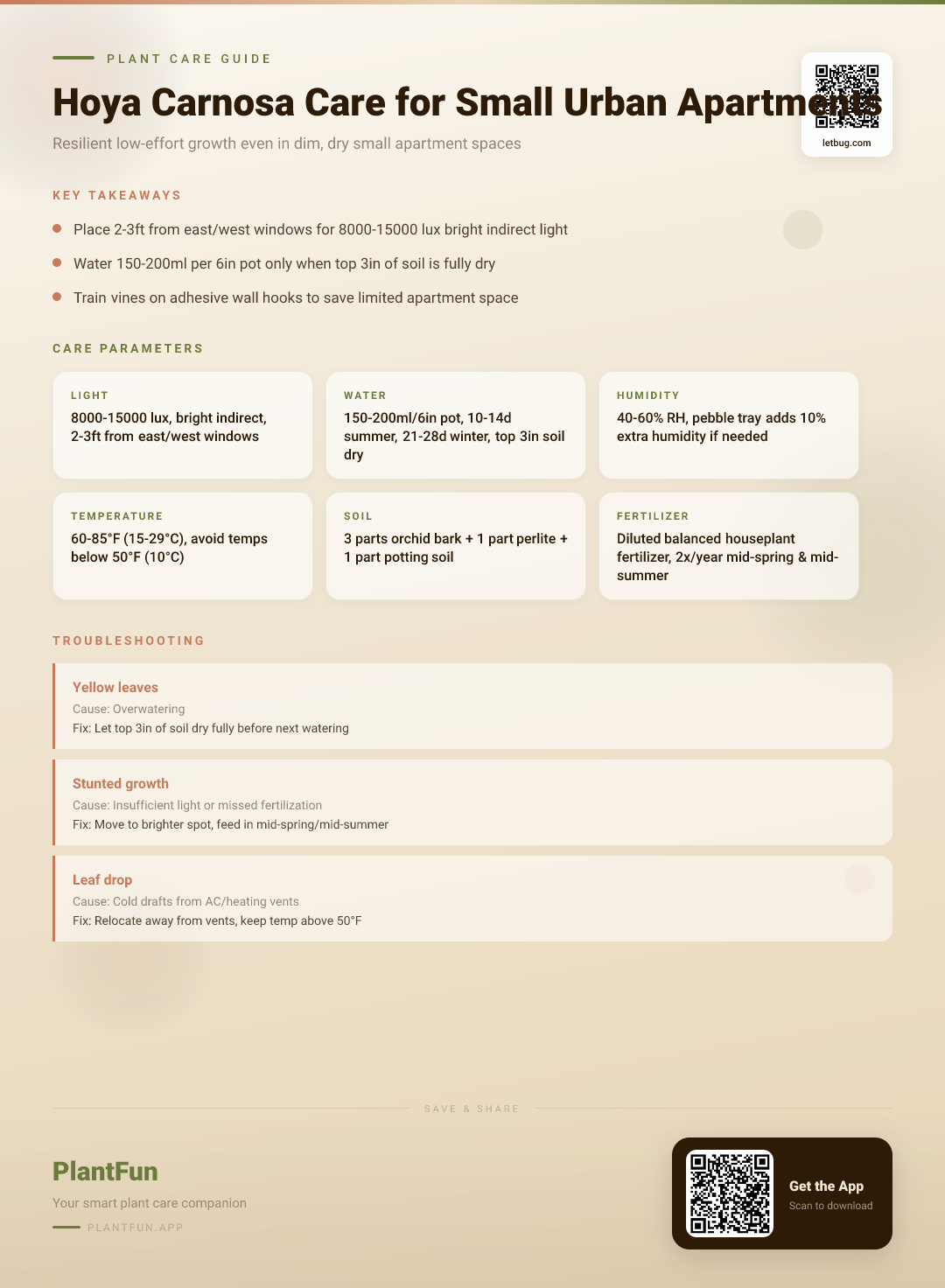
Key Takeaways
- Check soil moisture before watering — overwatering is the #1 killer of houseplants.
- Ensure your plant gets the right amount of light for its species.
- Be patient with recovery — most plants need 2–4 weeks to bounce back.
Quick Care Card
| Care Category | Measurable Threshold |
|---|---|
| Light | 8,000-15,000 lux bright indirect light, 2-3ft from east or west-facing windows (NC State Extension, 2026) |
| Water | 150-200ml per 6-inch pot, only when top 3 inches of soil are fully dry (NC State Extension, 2026) |
| Humidity | 40-60% relative humidity, no humidifier required (NC State Extension, 2026) |
| Temperature | 60-85°F (15-29°C), never exposed to temperatures below 50°F (10°C) (NC State Extension, 2026) |
| Soil | 3 parts orchid bark + 1 part perlite + 1 part standard potting soil, well-draining (NC State Extension, 2026) |
| Fertilizer | Diluted balanced houseplant fertilizer, 2x per year only in mid-spring and mid-summer (NC State Extension, 2026) |
| Toxicity | Non-toxic to cats, dogs, and humans (ASPCA, 2026) |
Why Hoya Carnosa Is Ideal for Small Urban Apartments
Hoya carnosa is perfectly suited for 600-800 sq ft studio and 1-bedroom apartments for three key reasons. First, it uses crassulacean acid metabolism (CAM) photosynthesis, which allows it to store water in its thick waxy leaves for weeks at a time, making it highly drought-tolerant for busy renters with irregular schedules (Singh et al, 1984). Second, it adapts well to the low and variable light levels common in urban apartment buildings, so it will survive even in spaces without unobstructed south-facing windows. Third, its compact trailing growth habit fits easily on high shelves, windowsills, or trained up walls without taking up limited counter or floor space. It is also non-toxic for households with pets and small children (ASPCA, 2026), making it a low-risk choice for all renters.
Pre-Check: Diagnose Your Current Hoya Health
Before implementing the checklist, answer these 3 quick yes/no questions to identify existing stress:
- Are your Hoya carnosa leaves yellowing, soft, or translucent around the edges?
- Have you seen no new leaf or vine growth for 6 months or longer?
- Are leaves dropping suddenly, even if you have kept a consistent watering routine?
Scoring:
- 0 “Yes” answers = Your Hoya is healthy, use the checklist to maintain growth and encourage flowering
- 1 “Yes” answer = Minor adjustments needed, focus on the relevant step in the checklist
- 2+ “Yes” answers = Follow the full checklist closely to reverse stress and restore health
Resilient Growth Checklist for Small Urban Apartments
All steps are renter-friendly, require no permanent space modifications, and take less than 10 minutes per month to complete.
Step 1: Apartment-Friendly Light Setup
Hoya carnosa light requirements for apartments fall between 8,000-15,000 lux of bright indirect light (NC State Extension, 2026). The ideal placement is 2-3ft away from an east or west-facing window, where it gets 4-6 hours of gentle morning or late afternoon sun without being exposed to harsh midday rays that can scorch leaves. If you only have a north-facing window, position the plant directly on the windowsill for maximum light exposure. Keep the plant at least 3ft away from all AC and heating vents to avoid draft damage that causes leaf drop.
Step 2: Exact Watering Schedule for Irregular Renter Routines
Wondering how often to water Hoya carnosa in an apartment? Stick your index finger 3 inches into the soil — if it is completely dry, add 150-200ml of room-temperature water directly to the soil (avoid wetting the leaves) for a 6-inch pot, or 75-100ml for a 4-inch pot. This typically translates to every 10-14 days for Hoya carnosa summer watering, and 21-28 days for Hoya carnosa winter care when light levels are lower and growth slows (NC State Extension, 2026). This schedule eliminates the risk of overwatering, which is the top cause of Hoya carnosa yellow leaves and root rot in apartments.
Step 3: Humidity & Temperature Tweaks No Humidifier Required
Hoya carnosa humidity needs fall between 40-60% relative humidity, which aligns with the average indoor humidity level in most apartments (NC State Extension, 2026). If your home runs extra dry in winter due to heating, use the 2-minute pebble tray trick: fill a shallow tray with pebbles and water, set your Hoya pot on top of the pebbles (make sure the pot is not sitting directly in the water) to boost local humidity by up to 10% with no extra equipment needed. Keep temperatures between 60-85°F (15-29°C) at all times, and never expose the plant to temperatures below 50°F (10°C), which can cause permanent leaf damage.
Step 4: Renter-Friendly Soil & Potting Rules
The ideal Hoya carnosa soil mix is 3 parts orchid bark + 1 part perlite + 1 part standard potting soil, which provides the fast drainage and air flow that Hoya roots need to thrive (NC State Extension, 2026). Choose an unglazed terracotta pot with drainage holes that is only 1-2 inches larger than the existing root ball — terracotta wicks away excess moisture to prevent overwatering, and Hoyas prefer tight root systems that encourage flowering. Avoid decorative pots without drainage holes, as they trap moisture and increase the risk of root rot.
Step 5: Low-Effort Fertilizing for Steady Growth
You only need to fertilize your Hoya twice per year for steady growth: once in mid-spring when new growth starts, and once in mid-summer. Use a balanced 10-10-10 houseplant fertilizer diluted to 50% strength, and apply it directly to damp soil to avoid burning the roots. Skip fertilizing entirely in fall and winter, when the plant enters dormancy and does not need extra nutrients (NC State Extension, 2026). This low-effort schedule is perfect for busy renters who don’t have time for monthly fertilizing routines.
Step 6: Pruning & Training to Save Apartment Space
Trim leggy stems back by up to 1/3 once per spring to encourage bushy, compact growth that doesn’t take up excess space. Train trailing vines up walls or around window frames using damage-free adhesive wall hooks, which leave no residue when you move and eliminate the need for bulky freestanding trellises that take up floor or counter space. Avoid cutting off old flower stalks (peduncles), as the plant will produce new blooms on the same stalks year after year.
Common Apartment Hoya Mistakes to Avoid
- Mistake: Placing your Hoya within 1ft of heating or AC vents What happens: Rapid temperature fluctuations and dry air cause sudden leaf drop and stunted growth Instead: Keep your Hoya at least 3ft away from all HVAC vents, and check for drafty window gaps in winter
- Mistake: Overwatering in winter, following the same schedule as summer What happens: Soggy soil leads to root rot, which is the top cause of Hoya carnosa death in apartments Instead: Extend watering intervals to 21-28 days in winter, and only water if the top 3 inches of soil are bone dry
- Mistake: Repotting your Hoya every year, even if it shows no signs of being root bound What happens: Hoyas prefer tight root systems, and unnecessary repotting causes stress that can stop growth for 6+ months Instead: Only repot when roots are growing out of the drainage holes, and choose a pot just 1-2 inches larger than the existing root ball
- Mistake: Using standard heavy potting soil with no added drainage amendments What happens: Moisture gets trapped around the roots, leading to yellow leaves and root rot Instead: Use the recommended 3:1:1 orchid bark, perlite, and potting soil mix to ensure fast drainage
Voice Search FAQ
Why is my Hoya carnosa dropping leaves in my apartment?
The most common cause of sudden leaf drop in apartment Hoyas is exposure to hot or cold drafts from heating/AC vents, or overwatering in low-light winter months (NC State Extension, 2026). First move your plant 3ft away from all HVAC vents, then check the soil moisture — if the top 3 inches are still wet, hold off on watering for at least 7 days.
Can I keep my Hoya carnosa in a north-facing apartment window?
Yes, Hoya carnosa is highly adaptable to low light conditions, making it perfect for north-facing apartments (NC State Extension, 2026). Expect slower trailing growth and no flowering under 5,000 lux of light; if you want to encourage blooms, add a low-wattage LED grow light positioned 1ft above the plant for 4 hours per day.
How do I get my Hoya to flower in a small apartment?
Hoya carnosa requires 3 key conditions to bloom indoors: 8,000+ lux of bright indirect light for 6+ hours per day, a slightly root-bound pot, and minimal movement once flower buds start to form (Kuang et al, 2023). Avoid repotting once you see small peduncles (flower stalks) forming, and do not move the plant to a new location while buds are developing, as this can cause them to drop prematurely.
Seasonal Care Adjustment Cheat Sheet
- Winter: Cut watering frequency to every 21-28 days, and move plants 1ft away from radiators to prevent leaf scorch from dry heating air.
- Summer: Check soil moisture every 7 days, and move plants 1ft away from AC vents to avoid cold draft damage.
- Spring: Prune leggy stems back by up to 1/3 to encourage bushy growth, and apply your first annual diluted fertilizer feed.
- Fall: Stop all fertilizing entirely, and gradually extend watering intervals as daylight hours shorten to prepare for dormancy.
References
- NC State Extension. (2026). Hoya Carnosa — NC State Extension Gardener Plant Toolbox. https://plants.ces.ncsu.edu/plants/hoya-carnosa/. Accessed 2026-03-01.
- Singh, B.; Greenberg, E.; Preiss, J. (1984). ADPglucose Pyrophosphorylase from the CAM Plants Hoya carnosa and Xerosicyos danguyi. Plant Physiology. https://doi.org/10.1104/pp.74.3.711. Accessed 2026-03-01.
- Kuang, Y.; Jia, R.; Balslev, H. (2023). Ontogeny of the pollinium in Hoya carnosa provides new insights into microsporogenesis. Plant Reproduction. https://doi.org/10.1007/s00497-023-00460-z. Accessed 2026-03-01.
- ASPCA. (2026). Toxic and Non-Toxic Plants List — ASPCA. https://www.aspca.org/pet-care/animal-poison-control/toxic-and-non-toxic-plants. Accessed 2026-03-01.
Optional Helper: Plantfun.App
Plantfun.App identifies your plants by photo, diagnoses pests and diseases with clear fixes, and creates personalised watering and light schedules that adapt to your home conditions — a handy companion for putting this guide into daily practice.
Found an error or have suggestions? We'd love your feedback.
Need help identifying this problem?
Get instant identification, personalized care schedules, and effective pest treatment plans directly on your phone.
Sponsored • We may earn a commission from app downloads
Related Guides
Hoya Carnosa in Drafty North-Facing Entryways: The Only Care Guide You’ll Ever Need
Stop losing leaves on your entryway Hoya carnosa. Get exact lux levels, humidity targets, and a 4-season care routine to keep your wax plant blooming even in cold, drafty, low-light entry spaces.
Care GuideThe Complete Hoya Carnosa Care Guide for Small Apartments: Budget Tips for Resilient Growth
Grow a thriving Hoya carnosa even in a tiny, low-light apartment without splurging on expensive plant gear. Get a free printable care checklist, exact light/water thresholds, and zero-fuss budget tips for steady resilient growth.
Care GuideThe Complete Hoya Carnosa Care Guide for Small Apartments: Resilient Growth Tips That Work
Grow a lush, blooming Hoya carnosa even in a cramped urban apartment. Get exact light levels, water amounts, and small-space placement tips to boost resilient growth with zero fancy equipment.
Pest ControlAnts on Plants: What They Mean and What to Do
Ants usually aren't eating your plant. They are farming other pests.