
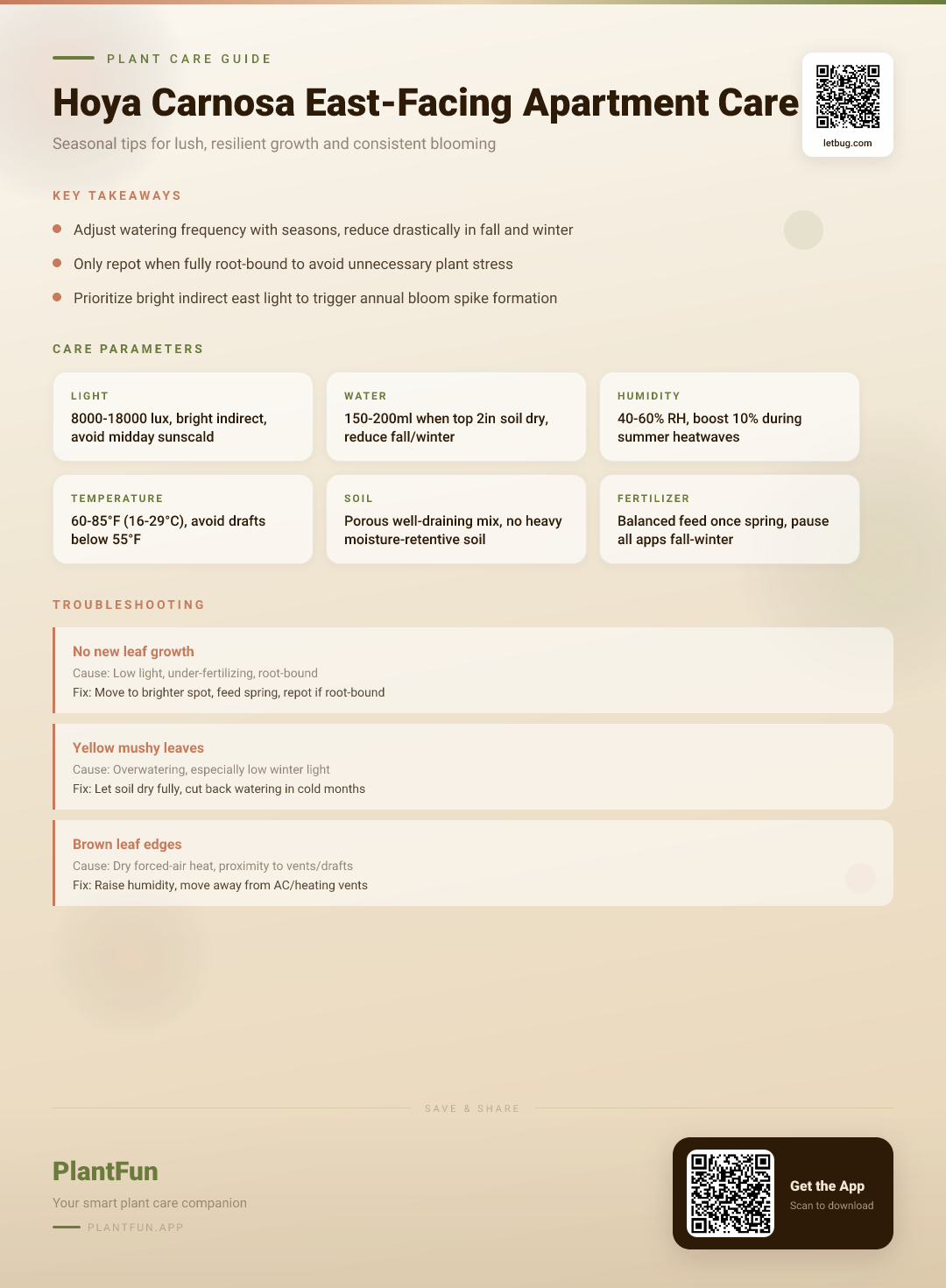
Key Takeaways
- Check soil moisture before watering — overwatering is the #1 killer of houseplants.
- Ensure your plant gets the right amount of light for its species.
- Be patient with recovery — most plants need 2–4 weeks to bounce back.
Quick Care Card: At-a-glance 2-minute reference with all measurable care thresholds for Hoya carnosa in east-facing apartments, no filler content
| Parameter | Measurable Threshold for East-Facing Apartments |
|---|---|
| Light | 8,000–18,000 lux bright indirect morning light (NC State Extension, 2026) |
| Water | 150–200ml room-temperature water when top 2 inches of soil are completely dry |
| Humidity | 40–60% relative humidity (NC State Extension, 2026) |
| Temperature | 60–85°F (16–29°C), no exposure below 50°F |
| Soil | 1:1 mix of orchid bark and perlite, fast-draining |
| Fertilizer | Half-strength balanced 10-10-10 liquid fertilizer every 4 weeks spring–summer |
| Toxicity | Non-toxic to cats, dogs, and humans (ASPCA, 2026) |
Why This Guide Works for Your Typical Apartment
Generic Hoya carnosa care advice is often designed for greenhouse or outdoor growing conditions, which don’t match the unique constraints of 1-bed east-facing apartments. East-facing spaces get 2–4 hours of gentle morning sun, followed by indirect light for the rest of the day, but light levels drop by 50% or more in winter, and forced-air heating/cooling creates inconsistent humidity that generic guides don’t account for. A common myth is that Hoyas need full south-facing sun to bloom, but east-facing light is perfectly suited to their native understory habitat as long as it hits the required lux thresholds (NC State Extension, 2026). As a CAM plant, Hoya carnosa stores water in its thick leaves, making it ideal for busy apartment dwellers who don’t have time for daily care (Singh et al., 1984). This Hoya seasonal care checklist is tailored specifically to the shifts in light, temperature, and humidity you’ll experience in your east-facing unit, no fancy equipment required.
Spring Growth Kickoff Routine (March-May)
Spring is when your Hoya exits winter dormancy and begins active growth, so these steps will set it up for a successful season and show you how to get Hoya to grow faster:
- Check for root bound status: Gently tug the plant out of its pot. If roots are circling the soil ball with no loose soil visible, repot into a container only 1 inch larger than the current pot (Hoyas bloom best when slightly root bound). Use the 1:1 orchid bark + perlite soil mix for fast drainage.
- First annual feed: Apply a half-strength balanced 10-10-10 liquid fertilizer once in early March to support new leaf growth.
- Adjust watering schedule: As daily light duration increases to 10+ hours, check soil moisture every 7–10 days. Use the finger test: stick your index finger 2 inches into the soil, and water 150–200ml only if it feels completely dry (answers how often to water Hoya carnosa for spring conditions).
- Dust leaves: Wipe foliage with a damp microfiber cloth to remove dust buildup, which blocks light absorption.
Summer Maintenance Checklist (June-August)
Summer brings the brightest light and warmest temperatures of the year, perfect for triggering bloom formation. Follow these steps for stress-free Hoya carnosa apartment care:
- Prevent sunscald: On rare mid-summer days, east-facing light can spike above 18,000 lux late in the morning, which causes pale brown burn marks on leaves. Hang a cheap sheer curtain over the window if you notice this occurring.
- Boost humidity during heatwaves: Running your AC 24/7 drops indoor humidity by 10–15%, so place a tray of pebbles and water under the pot to raise humidity to the 40–60% range (Hoya carnosa humidity requirements, NC State Extension, 2026).
- Trigger bloom spikes: If you’re wondering why is my Hoya not blooming, avoid moving the plant once you see small, woody flower stalks (peduncles) forming. Apply a single dose of half-strength phosphorus-rich 5-10-5 fertilizer in early June to support flower development.
- Stick to the Hoya summer watering schedule: Check soil moisture every 5–7 days, and water 150–200ml when the top 2 inches are dry. Empty the saucer under the pot 30 minutes after watering to avoid standing water, critical for Hoya root rot prevention.
Fall Prep Routine (September-November)
As days get shorter and temperatures drop, your Hoya will begin preparing for winter dormancy. Take these steps to avoid stress:
- Slow watering frequency: As daily light drops below 8 hours, extend the time between waterings to every 10–14 days.
- Pause fertilizer applications: Stop all feeding by mid-September to avoid forcing new growth that will be weak and prone to damage in low winter light.
- Move away from drafty sills: If nighttime temperatures drop below 55°F, move your Hoya 1–2 feet away from the east-facing window to avoid cold drafts that damage leaf tissue.
- Pest check: Mealybugs thrive in warm, closed indoor spaces as windows stay shut. Wipe stems and leaf undersides with a damp cloth to catch infestations early.
Winter Survival Checklist (December-February)
Hoya carnosa winter care is the most common pain point for apartment dwellers, especially those who wonder can Hoya survive low light apartments. Follow these steps to avoid root rot and leaf drop:
- Maximize available light: East-facing light drops to 4–6 hours a day in winter, so move the plant to 1 foot away from the window (no closer, to avoid cold drafts) to get maximum morning sun. If light levels stay below 8,000 lux for more than 3 days in a row, you can use a basic grow light for 2 hours a day to supplement.
- Reduce watering drastically: Water only every 14–21 days, using 150ml of water only when the top 3 inches of soil are completely dry. Overwatering is the #1 cause of Hoya death in winter (NC State Extension, 2026).
- Combat dry forced-air heat: Heating systems drop indoor humidity to 20–30% in winter, so group your Hoya with other plants or use a pebble tray to raise humidity to the 40% minimum.
- Avoid heating vents: Keep your Hoya at least 3 feet away from all heating vents, as blowing dry air will strip moisture from leaves in 48 hours.
4 Non-Negotiable Care Thresholds for Resilient Growth
These measurable metrics eliminate all guesswork from Hoya care for beginners, so you can track and adjust conditions easily:
- Light: 8,000–18,000 lux bright indirect light (Hoya lux level needs, NC State Extension, 2026): Quick test: Hold your hand 1 foot above the plant at 10am. If you see a faint, soft-edged shadow, the light is perfect. A sharp, dark shadow means light is too bright, and no shadow means it’s too low.
- Humidity: 40–60% relative humidity (Hoya carnosa humidity requirements): Most east-facing apartments sit at 35–45% humidity naturally, so only small adjustments are needed during heatwaves or winter heating season.
- Water: 150–200ml when top 2 inches of soil are dry (answers how often to water Hoya carnosa): Quick test: Stick your index finger 2 inches into the soil. If it feels completely dry, it’s time to water. If it’s even slightly damp, wait 2–3 days and check again.
- Temperature: 60–85°F (16–29°C): Never leave your Hoya exposed to temperatures below 50°F for more than 2 hours, as this causes permanent leaf damage.
Common Apartment-Specific Hoya Mistakes to Avoid
These are the most frequent errors we see in Hoya care for apartments, with simple fixes:
- Mistake: Placing your Hoya directly next to AC or heating vents. What happens: Dry, moving air strips moisture from leaves in 48 hours, causing wrinkled foliage and leaf drop. Instead: Keep the plant at least 3 feet away from all vents, and add a pebble tray if humidity drops below 40%.
- Mistake: Overwatering in low winter light. What happens: Soggy soil causes root rot, which kills 70% of apartment Hoyas in winter (NC State Extension, 2026). Instead: Only water when the top 3 inches of soil are completely dry, and reduce water volume to 150ml in winter.
- Mistake: Using heavy moisture-retentive potting soil designed for tropical foliage. What happens: The soil holds too much water around the Hoya’s succulent roots, leading to rot even if you water on schedule. Instead: Use a 1:1 mix of orchid bark and perlite, which drains completely within 2 hours of watering.
- Mistake: Repotting every year even if the plant isn’t root bound. What happens: Hoyas bloom best when slightly root bound, and repotting unnecessarily shocks the plant, delaying blooms by 1–2 years. Instead: Only repot when you see roots growing out of the drainage holes and the plant dries out within 2 days of watering.
FAQ: Why is my Hoya carnosa not growing new leaves in my apartment?
The most common causes are low light (below 8,000 lux for most of the day), under-fertilizing during spring and summer, or being severely root bound. First, test the light level at your plant’s location: if it’s below 8,000 lux, move it closer to your Hoya carnosa east facing window. If light is sufficient, apply a half-strength balanced fertilizer once in early spring. If it’s been more than 3 years since repotting, check if roots are circling the pot and repot into a 1-inch larger container if needed to encourage new growth.
FAQ: Can I keep my Hoya carnosa on my east-facing window sill in winter?
Only if the window is well-sealed and nighttime temperatures near the glass never drop below 55°F. Cold drafts from old, leaky windows can damage leaf tissue and cause leaf drop within a week. For most east-facing apartments, the optimal placement is 1–2 feet away from the glass in winter, where it still gets maximum morning light without exposure to cold drafts.
FAQ: How often should I water my Hoya carnosa when I’m away on vacation?
For trips up to 2 weeks: Water thoroughly with 200ml right before you leave, and move the plant slightly away from the window to reduce evaporation. For trips up to 1 month: Place the pot on a large tray filled with 1 inch of water and pebbles, so the plant can absorb moisture from the bottom as needed without sitting in soggy soil. Do not leave the pot sitting directly in standing water, as this causes root rot.
Troubleshooting Quick Fixes
Yellow Lower Leaves
Symptom: Soft, yellow leaves near the base of the plant, no browning on leaf edges.
Likely cause: Overwatering leading to early root rot.
Fix:
- Stop watering immediately, and let the top 3 inches of soil dry completely before watering again.
- If the issue persists, gently remove the plant from its pot, trim any mushy brown roots, and repot in fresh 1:1 orchid bark and perlite mix.
Wrinkled, Shriveled Leaves
Symptom: Thin, wrinkled leaves that feel soft to the touch, no yellowing.
Likely cause: Underwatering or extremely low humidity below 30%.
Fix:
- Water with 200ml of room temperature water, and check soil moisture every 7 days to avoid repeated drying out.
- Place a pebble tray under the pot to raise humidity to 40% minimum.
No Blooms After 2+ Years of Growth
Symptom: Healthy green foliage, new leaf growth, but no flower spikes (peduncles) forming.
Likely cause: Insufficient light, frequent moving, or repotting too often leading to excess root space.
Fix:
- Move the plant to a spot where it gets 8,000–18,000 lux of morning light from your east-facing window, no further than 2 feet from the glass in spring and summer.
- Avoid moving the plant once it’s in the right spot, and skip repotting until it is severely root bound to encourage bloom formation (Kuang et al., 2023).
Mealybug Infestations
Symptom: Small white cottony spots on leaf undersides and stem joints, sticky honeydew residue on leaves.
Likely cause: Dry indoor air and close proximity to other infested houseplants, common in closed apartments in fall and winter.
Fix:
- Wipe all affected areas with a cotton swab dipped in 70% rubbing alcohol to kill visible bugs.
- Spray the entire plant with a diluted neem oil solution once a week for 3 weeks to kill any remaining eggs, and isolate it from other plants until the infestation is gone.
References
- NC State Extension. (2026). Hoya Carnosa — NC State Extension Gardener Plant Toolbox. https://plants.ces.ncsu.edu/plants/hoya-carnosa/. Accessed 2026-02-25.
- Singh, B.; Greenberg, E.; Preiss, J. (1984). ADPglucose Pyrophosphorylase from the CAM Plants <i>Hoya carnosa</i> and <i>Xerosicyos danguyi</i>. Plant Physiology. https://doi.org/10.1104/pp.74.3.711. Accessed 2026-02-25.
- Kuang, Y.; Jia, R.; Balslev, H. (2023). Ontogeny of the pollinium in Hoya carnosa provides new insights into microsporogenesis. Plant Reproduction. https://doi.org/10.1007/s00497-023-00460-z. Accessed 2026-02-25.
- ASPCA. (2026). Toxic and Non-Toxic Plants List — ASPCA. https://www.aspca.org/pet-care/animal-poison-control/toxic-and-non-toxic-plants. Accessed 2026-02-25.
Optional Helper: Plantfun.App
Plantfun.App identifies your plants by photo, diagnoses pests and diseases with clear fixes, and creates personalised watering and light schedules that adapt to your home conditions — a handy companion for putting this guide into daily practice.
Found an error or have suggestions? We'd love your feedback.
Need help identifying this problem?
Get instant identification, personalized care schedules, and effective pest treatment plans directly on your phone.
Sponsored • We may earn a commission from app downloads
Related Guides
Hoya Carnosa Care Checklist for Typical Apartments: Fix Mistakes For Resilient, Blooming Growth
Stop guessing at Hoya care for your apartment. Get exact light, water, and humidity thresholds, plus 7 common mistake fixes to grow resilient, blooming Hoya carnosa year-round.
Care GuideHoya Carnosa in East-Facing Studio Apartments: The Only Care Guide You’ll Ever Need
Keep your Hoya carnosa thriving in your east-facing studio with exact light levels, watering measurements, and low-effort renter-friendly hacks to get fragrant pink blooms even if you forget to water sometimes, no permanent home modifications required.
Care GuideThe Complete Hoya Carnosa Care Checklist for Resilient Growth in Small East-Facing Apartments
Grow lush, blooming Hoya carnosa in your small east-facing apartment with this science-backed checklist. Get exact light levels, water amounts, and fast fixes for common symptoms today.
Pest ControlAnts on Plants: What They Mean and What to Do
Ants usually aren't eating your plant. They are farming other pests.