
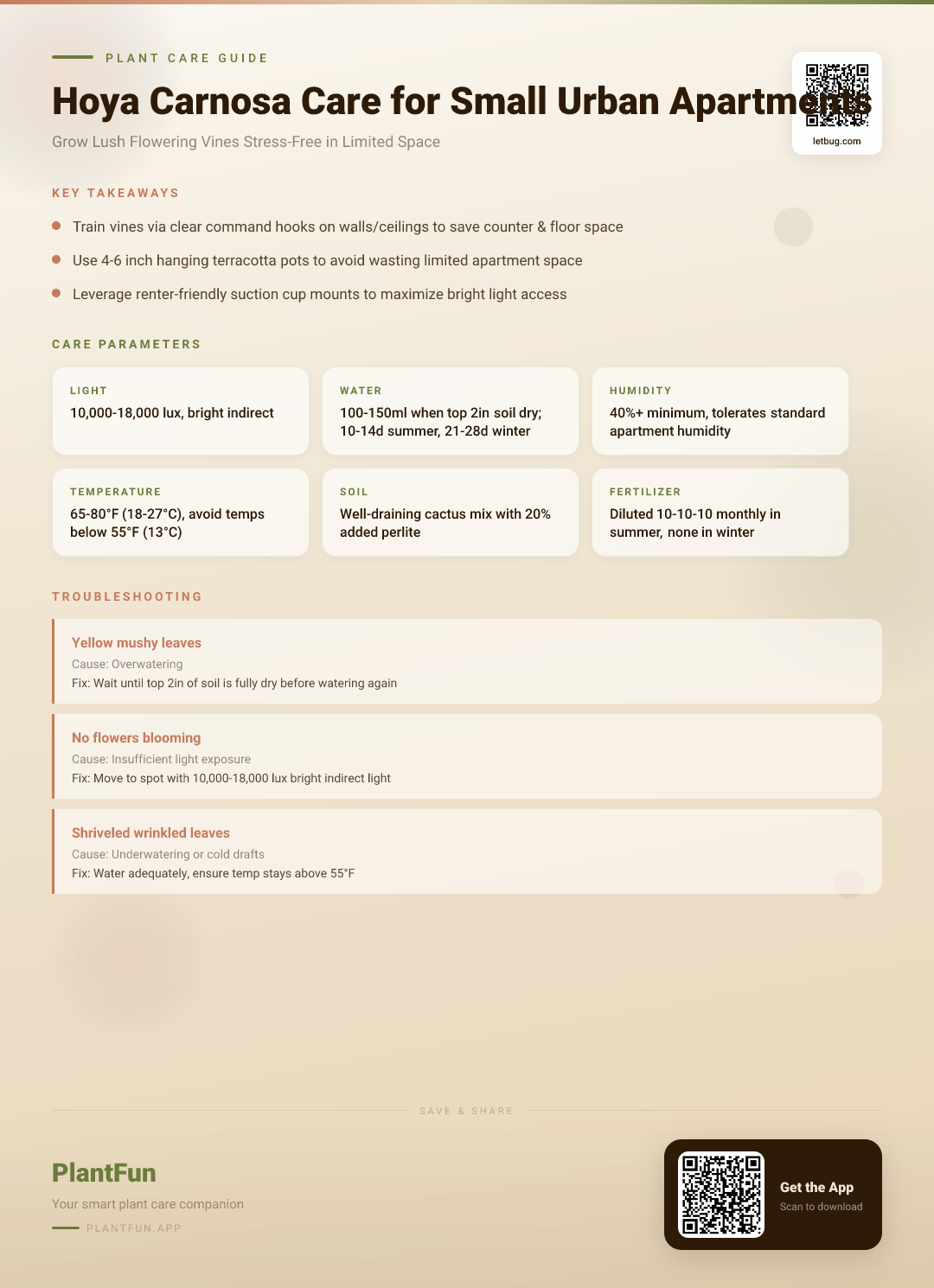
Key Takeaways
- Check soil moisture before watering — overwatering is the #1 killer of houseplants.
- Ensure your plant gets the right amount of light for its species.
- Be patient with recovery — most plants need 2–4 weeks to bounce back.
Quick Care Card
| Category | Exact Threshold for Small Apartments |
|---|---|
| Light | 10,000–18,000 lux bright indirect light (NC State Extension, 2026) |
| Water | 100–150 ml only when top 2 inches of soil are fully dry; 10–14 days summer, 21–28 days winter |
| Humidity | 40%+ (no extra humidifier required for typical apartments) |
| Temperature | 65–80°F (18–27°C); never below 55°F (13°C) |
| Soil | Cactus mix + 20% perlite for fast drainage |
| Fertilizer | Monthly diluted 10-10-10 NPK, summer only |
| Toxicity | Non-toxic to cats, dogs, and humans (ASPCA, 2026) |
Why Hoya Carnosa Is Ideal for Small Urban Apartments
Hoya carnosa is perfectly suited for 400–600 sqft urban studio apartments, with traits that eliminate many common small-space plant care pain points. As a crassulacean acid metabolism (CAM) plant, it stores water in its thick waxy leaves, making it extremely drought tolerant for busy renters who forget to water (Singh et al., 1984). Its compact root system prefers being slightly root bound, so it never needs large, space-hogging planters. Its trailing growth habit lets you use unused vertical space instead of taking up limited counter or floor real estate. It is also non-toxic to pets and kids, per the ASPCA’s 2026 non-toxic plants list, so it’s safe for shared studio spaces.
Myth vs Reality: Myth: Hoyas need large floor planters and lots of space to grow lush vines. Reality: Their compact root system thrives in 4–6 inch pots that can be hung completely out of the way, making Hoya carnosa care for beginners extremely low-stress for small-space dwellers.
Step 1: Optimal Light Placement for Limited Window Space
Hoya carnosa light requirements are 10,000–18,000 lux of bright indirect light to grow and flower consistently (NC State Extension, 2026). If you’re wondering can Hoya grow in low light apartments, the short answer is no: light levels below 8,000 lux will lead to leggy, sparse growth and no annual blooms. For renters with only one south-facing window, use these renter-friendly hacks to maximize light access without taking up valuable sill space:
- Suction cup window mounts that attach directly to glass 1–2ft away from direct midday sun to avoid leaf burn
- Narrow 4-inch shelf risers on your windowsill to elevate your Hoya above mugs, decor, or other small items that block light
If you only have north-facing windows and don’t want to use a grow light, check out our guide to low-light studio plants for better suited options.
Step 2: Exact Watering Routine for Typical Apartment Humidity
Most urban apartments have 40–50% relative humidity, which is perfectly suited for Hoya carnosa. Overwatering is the #1 cause of Hoya death for new growers, so follow these exact, measurable rules: Water with 100–150 ml of room temperature water only when the top 2 inches of soil are completely dry (NC State Extension, 2026). Quick test: Stick your index finger 2 inches into the soil; if no moisture sticks to your skin, it’s time to water. In summer (AC season), this is usually every 10–14 days, while in winter (heating season) it drops to every 21–28 days.
If you’re still unsure how often to water Hoya carnosa, set a phone reminder to check soil moisture on the 10th and 20th of each month, so you never water on a fixed schedule that doesn’t account for your apartment’s unique conditions. For more seasonal guidance, see our Hoya carnosa summer watering guide.
Step 3: Space-Saving Potting & Soil Setup
Hoya carnosa pot size for apartments is strictly 4–6 inches; their compact root system prefers being slightly root bound, so overpotting is both a waste of space and bad for plant health. We recommend unglazed hanging terracotta pots, which are lightweight, wick away excess moisture, and hang from ceiling hooks so they don’t take up any counter or floor space. For soil, use a standard cactus mix blended with 20% perlite to ensure fast drainage; learn more about making the right mix for succulents and hoyas in our well-draining soil guide. Only repot once every 2–3 years, when roots are growing out of the drainage holes at the bottom of the pot.
Step 4: Temperature & Humidity Adjustments for Apartment Heating/Cooling
Hoya carnosa humidity requirements are only 40% or higher, which means you won’t need to buy a bulky humidifier for most urban apartments (NC State Extension, 2026). The ideal temperature range is 65–80°F (18–27°C), and you should never expose your Hoya to temperatures below 55°F (13°C). Keep your Hoya at least 3ft away from radiators in winter and AC vents in summer to avoid draft damage. If you have forced air heating that drops humidity below 40%, you can mist the leaves once a week, but this is rarely required for most renters.
Step 5: Low-Clutter Vine Training Hacks
One of the best parts of Hoya carnosa is its long trailing vines, but these can quickly clutter small studio spaces if left unmanaged. These renter-friendly Hoya carnosa space saving hacks let you enjoy lush vines without losing usable surface space: Use clear, damage-free command hooks to train vines along ceiling trim, window frames, or the top edge of your wall, so they drape along unused vertical space instead of hanging over your desk or couch. Avoid using nails or screws that will damage rental walls, and space hooks 12 inches apart to support the weight of mature vines. For more no-drill mounting ideas, check our renter-friendly plant mount guide. If you’re new to training trailing plants, our guide on how to train Hoya vines in small spaces has step-by-step tutorials.
Seasonal Care Calendar for Apartment Renters
Winter (Heating Season: October–March for most US zones)
- Hoya carnosa winter care for apartments: Reduce watering to every 21–28 days, only when top 2 inches of soil are bone dry
- No fertilizer: Hoya is dormant during this period
- Keep at least 3ft away from radiators to avoid leaf burn
Summer (AC Season: April–September for most US zones)
- Water every 10–14 days with 100–150 ml of water
- Feed monthly with ½ strength diluted 10-10-10 NPK fertilizer
- Lightly prune leggy growth to keep vines tidy and encourage bushier growth
- If you open windows often, keep Hoya away from cold drafty areas
5 Common Small-Space Hoya Carnosa Mistakes to Avoid
- Mistake: Placing your Hoya on crowded kitchen or desk counters where it is blocked from light by other items What happens: Light levels drop below the 10,000 lux threshold, leading to leggy growth and no flowers Instead: Hang it from a suction cup window mount above your counter, or use a 6-inch shelf riser to elevate it above other items
- Mistake: Overpotting in a pot larger than 6 inches to “give it room to grow” What happens: The extra soil holds excess moisture, leading to root rot, and the large pot takes up valuable limited space Instead: Stick to 4–6 inch pots, and only repot once every 2–3 years when roots grow out of the drainage holes
- Mistake: Watering on a fixed schedule without checking soil moisture, especially in small apartments with poor air flow What happens: Overwatering leads to yellow leaves, root rot, and plant death Instead: Do a 2-inch finger test before every watering, and set reminders to check moisture levels instead of watering on a fixed date
- Mistake: Letting vines drape over work surfaces, couches, or walking paths What happens: Vines get knocked over, leaves get damaged, and you lose valuable usable living space in your small studio Instead: Train vines along ceiling trim or window frames using clear command hooks to use unused vertical space
- Mistake: Fertilizing your Hoya in winter when it is dormant What happens: Salt builds up in the soil, leading to burnt leaf tips and stunted growth Instead: Only fertilize once a month in summer with diluted 10-10-10 fertilizer, per our beginner fertilizer guide
Voice Search FAQ
Can I keep my Hoya carnosa on my studio apartment windowsill?
Yes, as long as it gets the required 10,000–18,000 lux of bright indirect light (NC State Extension, 2026). If your windowsill is used for coffee mugs, decor, or other small items, use a suction cup window mount to hang it directly on the glass above the sill to save space. For south-facing windows, keep it 1ft away from direct midday sun to avoid scorching the thick waxy leaves.
Why is my Hoya carnosa not flowering in my small apartment?
The three most common causes for Hoya carnosa in studio apartment not flowering are insufficient light (below 10,000 lux), repotting too often so the plant is not root bound, or lack of summer fertilizer (NC State Extension, 2026). First, use an inexpensive light meter to check light levels, and move it closer to your south-facing window if needed. Avoid repotting unless roots are growing out of the drainage holes, and feed monthly with diluted 10-10-10 fertilizer in summer. Hoya flowers grow on old spurs, so don’t prune off old flower stems to encourage future blooms.
How often do I need to water my Hoya carnosa in a dry heated apartment?
In dry heated winter apartments with 40% or lower humidity, you will only need to water your Hoya every 21–28 days, using 100–150 ml of room temperature water, only when the top 2 inches of soil are completely dry (NC State Extension, 2026). Do the 2-inch finger test before every watering to avoid overwatering, and keep your Hoya at least 3ft away from radiators to prevent leaf desiccation.
Understanding the Science of Hoya Carnosa Growth
Hoya carnosa uses crassulacean acid metabolism (CAM) photosynthesis, which allows it to open its stomata at night to reduce water loss, making it extremely drought tolerant for forgetful apartment growers (Singh et al., 1984). The waxy, sweet-smelling flowers develop from specialized pollinia structures, which require consistent bright light exposure to form fully (Kuang et al., 2023).
References
- ASPCA. (2026). Toxic and Non-Toxic Plants List — ASPCA. https://www.aspca.org/pet-care/animal-poison-control/toxic-and-non-toxic-plants. Accessed 2026-03-05.
- NC State Extension. (2026). Hoya Carnosa Care Guide — NC State Extension Gardener Plant Toolbox. https://plants.ces.ncsu.edu/plants/hoya-carnosa/. Accessed 2026-03-05.
- Singh, B.; Greenberg, E.; Preiss, J. (1984). ADPglucose Pyrophosphorylase from the CAM Plants <i>Hoya carnosa</i> and <i>Xerosicyos danguyi</i>. Plant Physiology. https://doi.org/10.1104/pp.74.3.711. Accessed 2026-03-05.
- Kuang, Y.; Jia, R.; Balslev, H. (2023). Ontogeny of the pollinium in Hoya carnosa provides new insights into microsporogenesis. Plant Reproduction. https://doi.org/10.1007/s00497-023-00460-z. Accessed 2026-03-05.
Optional Helper: Plantfun.App
Plantfun.App identifies your plants by photo, diagnoses pests and diseases with clear fixes, and creates personalised watering and light schedules that adapt to your home conditions — a handy companion for putting this guide into daily practice.
Found an error or have suggestions? We'd love your feedback.
Need help identifying this problem?
Get instant identification, personalized care schedules, and effective pest treatment plans directly on your phone.
Sponsored • We may earn a commission from app downloads
Related Guides
The Complete Hoya Carnosa Care Guide for Small Apartments: Resilient Growth Tips That Work
Grow a lush, blooming Hoya carnosa even in a cramped urban apartment. Get exact light levels, water amounts, and small-space placement tips to boost resilient growth with zero fancy equipment.
Care GuideHoya Carnosa in East-Facing Studio Apartments: The Only Care Guide You’ll Ever Need
Keep your Hoya carnosa thriving in your east-facing studio with exact light levels, watering measurements, and low-effort renter-friendly hacks to get fragrant pink blooms even if you forget to water sometimes, no permanent home modifications required.
Care GuideThe Complete Hoya Carnosa Care Checklist for Resilient Growth in Small East-Facing Apartments
Grow lush, blooming Hoya carnosa in your small east-facing apartment with this science-backed checklist. Get exact light levels, water amounts, and fast fixes for common symptoms today.
Pest ControlAnts on Plants: What They Mean and What to Do
Ants usually aren't eating your plant. They are farming other pests.