
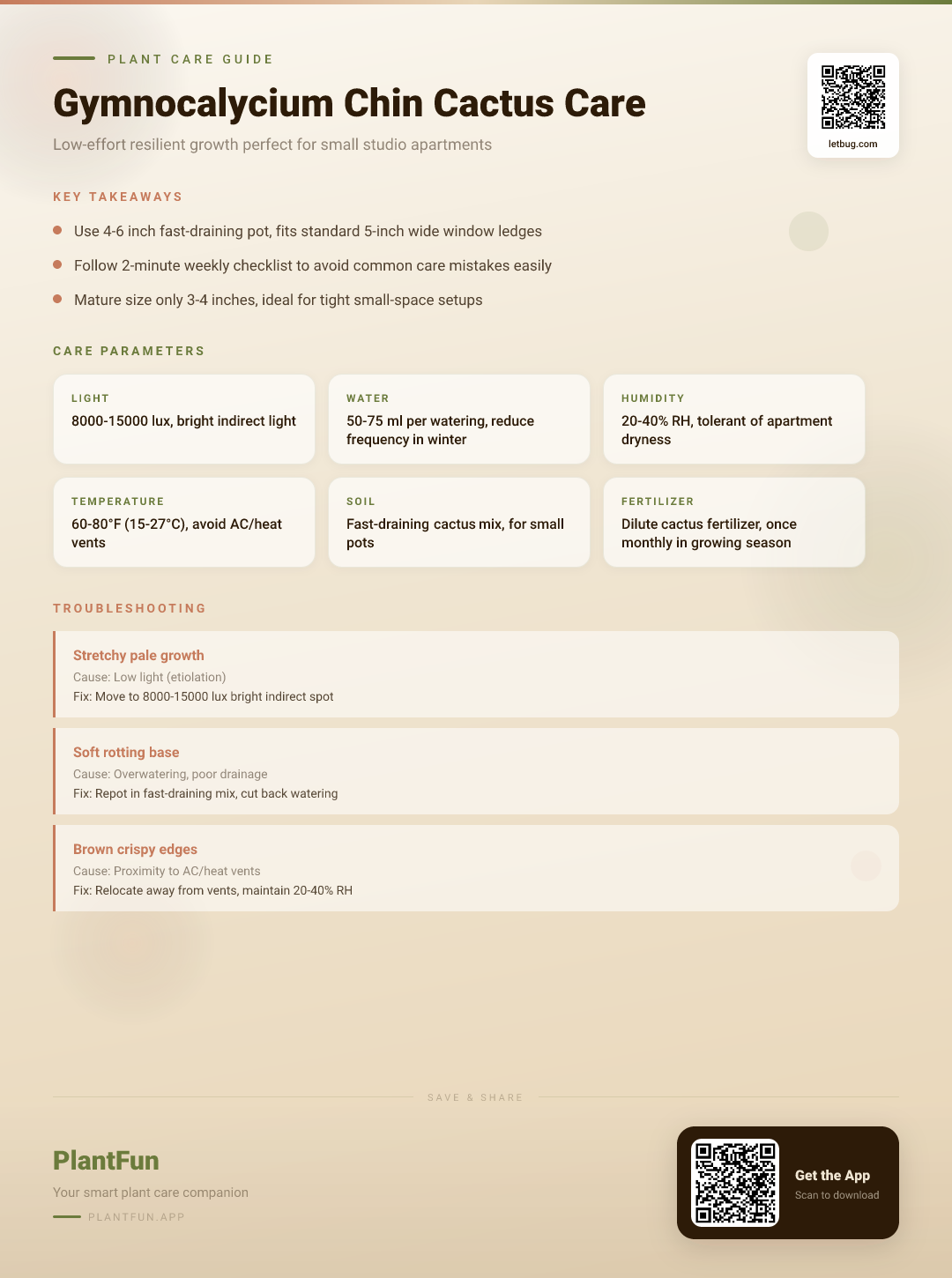
Key Takeaways
- Check soil moisture before watering — overwatering is the #1 killer of houseplants.
- Ensure your plant gets the right amount of light for its species.
- Be patient with recovery — most plants need 2–4 weeks to bounce back.
Quick Care Card
| Parameter | Measurable Threshold for Studio Apartments |
|---|---|
| Light | 8,000-15,000 lux, 3-4 hours of direct morning east-facing sun; avoid midday west-facing sun (Cactus and Succulent Journal, 2019) |
| Water | 50-75 ml (1/4 cup) per watering, only when top 2 inches of soil are completely dry |
| Humidity | 20-40% RH, no extra misting required |
| Temperature | 60-80°F (15-27°C); avoid drops below 50°F (10°C) |
| Soil | 3 parts coarse perlite + 2 parts cactus potting mix + 1 part crushed granite, optimized for small pots |
| Fertilizer | 1/4 strength cactus fertilizer once every 2 months, only in spring and summer |
| Toxicity | Non-toxic to cats, dogs, and humans (ASPCA, 2026) |
Why Gymnocalycium Chin Cacti Are Ideal for Small Studio Apartments
If you’re wondering can I grow a cactus in a studio apartment, the Gymnocalycium chin cactus is the perfect answer. This compact desert native maxes out at 3-4 inches wide at maturity (NC State Extension, 2026), so it fits even the narrowest windowsills without taking up valuable counter or shelf space. It’s a top pick for low maintenance apartment cactus, and ideal for chin cactus care for beginners, as it tolerates common environmental swings of urban living: temperature fluctuations from heating and AC, low humidity, and occasional missed waterings.
Myth vs Reality: Myth: All cacti require full south-facing sun and large pots to thrive. Reality: Chin cacti are adapted to partial shade in their native South American habitats, so they handle lower indoor light levels far better than most desert cactus varieties (Cactus and Succulent Journal, 2019). They also produce delicate pink or white blooms when mature, adding a pop of color to your space with zero extra effort.
Step-by-Step Small-Space Setup for Your Chin Cactus
- Pick a 4-6 inch unglazed terracotta pot with at least 1 drainage hole. Unglazed terracotta wicks away excess moisture faster than plastic, preventing root rot in small containers, and a 4-inch pot fits easily on 5-inch wide windowsills.
- Mix your chin cactus soil mix for small pots using a 3:2:1 ratio: 3 parts coarse perlite, 2 parts organic cactus potting mix, and 1 part crushed granite (NC State Extension, 2026). This blend drains 2x faster than standard cactus mix, which is critical for small pots that hold moisture longer.
- Choose a space-saving mounting option if you want to free up windowsill space: Adhesive no-drill pot holders attach directly to your window frame, or mini tiered windowsill shelves add vertical storage for multiple small plants without taking extra width.
- Place your potted cactus 2-3 inches away from window glass to avoid cold tissue damage in winter from frosty glass, or sunburn in summer from magnified sunlight through glass.
Core Measurable Care Parameters for Apartment Chin Cacti
Light
Chin cactus light requirements indoors fall between 8,000 and 15,000 lux (Cactus and Succulent Journal, 2019). Quick test: Hold your hand 6 inches above the cactus at midday. If you see a soft, clear shadow, your light levels are ideal. East-facing windows that get 3-4 hours of gentle morning sun are perfect, as midday west or south sun can exceed 20,000 lux and cause sunburn.
Water
If you’re unsure how much water does a chin cactus need, stick to 50-75 ml (1/4 cup) per watering session, only when the top 2 inches of soil are completely dry. Stick your finger deep into the soil to test: if it’s even slightly damp, hold off on watering. This calibrated amount is perfect for small 4-6 inch pots, avoiding the overwatering that plagues most new cactus owners.
Humidity
Chin cacti thrive in 20-40% RH, which is exactly the average humidity of heated or cooled urban apartments. No humidifier or misting is required, making them extremely low-fuss for apartment living.
Temperature
Keep your cactus in temperatures between 60-80°F (15-27°C) (NC State Extension, 2026). Avoid placing it within 1 foot of heating vents, AC units, or drafty window cracks, as sudden temperature swings can cause tissue damage.
Seasonal Care Calendar for Urban Apartments
Adjust your care routine to match typical apartment heating and cooling cycles:
- March-May (Spring): Water every 2-3 weeks with 50-75 ml of water. Apply 1/4 strength cactus fertilizer once in April, and rotate the pot 1/4 turn weekly for even growth.
- June-August (Summer): Follow the chin cactus summer watering schedule: water every 10-14 days, using 75 ml of water if indoor temperatures stay above 75°F (24°C). Move the cactus back from west-facing windows if midday sun is too intense to avoid sunburn.
- September-November (Fall): Reduce watering to every 3-4 weeks, and stop fertilizing entirely. Move the cactus closer to your window as daylight hours shorten to maintain ideal light levels.
- December-February (Winter): For chin cactus winter care for apartments, only water 50 ml once every 6-8 weeks, and only if the top 3 inches of soil are completely dry. Even if your apartment is very dry from heating, dormant cacti use very little water, so overwatering is far more risky than underwatering.
5 Small-Space Storage Hacks for Cactus Care Supplies
Keep your care supplies tucked away without wasting precious apartment space:
- Store extra soil, perlite, and crushed granite in 1-quart stackable plastic bins under your kitchen sink, labeled for easy access.
- Keep a mini moisture meter, small fertilizer bottle, and pruning tweezers in a 4-inch wide magnetic bin attached to your fridge, so they’re always within reach without taking counter space.
- Use empty mint tins to store small amounts of decorative top dressing or extra perlite, tucking them into a tiny windowsill ledge bin.
- Hang a small mesh organizer on the inside of your under-sink cabinet door to hold repotting gloves and small tools.
- Save the printable care checklist to your phone lockscreen instead of printing a physical copy, eliminating the need for extra storage.
Common Mistakes Apartment Dwellers Make With Chin Cacti
Avoid these common pitfalls that can harm your cactus:
- Mistake: Overwatering small pots without checking soil moisture first. What happens: Root rot, the leading cause of death for indoor chin cacti, as small pots hold moisture 2x longer than larger containers (NC State Extension, 2026). Instead: Stick your finger 2 inches into the soil before watering, only adding 50-75 ml if the soil is completely crumbly and dry.
- Mistake: Using standard cactus potting mix for small pots. What happens: Standard mix retains too much moisture in compact containers, leading to soggy roots even if you water infrequently. Instead: Use the 3:2:1 perlite, cactus mix, crushed granite blend optimized for small pots.
- Mistake: Providing less than 8,000 lux of light, or only rotating the pot once every few months. What happens: Etiolation, or stretchy, pale new growth that is permanent. This is one of the most common questions we get about why is my chin cactus turning pale. Instead: Place the cactus within 3 inches of an east-facing window, rotate 1/4 turn weekly, and use a small grow light if natural light is limited. This is the most reliable method for how to stop cactus stretching indoors.
- Mistake: Placing the cactus within 1 foot of a heating vent or AC unit. What happens: Sudden temperature swings cause wilted spines, bud drop, or permanent tissue damage. Instead: Pick a spot away from direct airflow, or use a window frame mount if your only available space is near a vent.
FAQ: Can I keep my chin cactus on a window ledge that’s only 5 inches wide?
Yes! A 4-inch unglazed terracotta pot has a base width of only 4 inches, so it fits perfectly on a 5-inch wide ledge with room to spare. If you want to free up even more ledge space for other items, use a no-drill adhesive pot mount attached directly to your window frame. This makes small cactus care on windowsills extremely accessible even for the tiniest studio apartments.
FAQ: Why is my chin cactus getting stretchy and pale even though it’s on my windowsill?
This stretchy, pale growth is called etiolation, and it happens when light levels fall below 8,000 lux, even if the cactus is near a window. This is common if your window faces north, or if tall buildings block most direct sunlight. To fix it:
- Move the cactus to an east-facing window that gets 3-4 hours of direct morning sun, or place a small low-wattage grow light 6 inches above the cactus for 4 hours a day.
- The existing stretchy growth can’t be repaired, but new growth will come in compact, dark green, and healthy once light levels are corrected (NC State Extension, 2026).
FAQ: How often do I need to water my chin cactus in the winter when my apartment is super dry?
Even if your apartment humidity drops below 20% RH from indoor heating, chin cacti go dormant in winter and use very little water. Stick to watering 50 ml once every 6-8 weeks, only when the top 3 inches of soil are completely dry. Overwatering in winter causes far more damage than underwatering, even in dry apartments (Cactus and Succulent Journal, 2019). If you’re still unsure how often to water chin cactus in winter, err on the side of skipping a watering session.
Printable 2-Minute Weekly Chin Cactus Care Checklist
This quick checklist is optimized for busy apartment dwellers, taking only 2 minutes to complete each week:
- Check soil moisture: Stick your finger 2 inches deep into the soil, note if it’s completely dry or damp (30 seconds)
- Inspect growth: Look for pale, stretchy new growth or brown sunburn spots on the cactus body (30 seconds)
- Rotate the pot 1/4 turn to ensure even light exposure across all sides of the cactus (10 seconds)
- Check placement: Confirm the cactus is not touching cold window glass or sitting in direct airflow from vents/AC (20 seconds)
- Water only if needed: Add 50-75 ml of water if the soil is completely dry (30 seconds)
You can save a digital copy of this checklist to your phone lockscreen, or print a mini version to tape to your fridge for quick reference.
References
- NC State Extension. (2026). Gymnocalycium Chin Cactus Care — NC State Extension Gardener Plant Toolbox. https://plants.ces.ncsu.edu/plants/gymnocalycium-chin/. Accessed 2026-02-28.
- ASPCA. (2026). Toxic and Non-Toxic Plants List — ASPCA. https://www.aspca.org/pet-care/animal-poison-control/toxic-and-non-toxic-plants. Accessed 2026-02-28.
- Cactus and Succulent Journal. (2019). Variegated Gymnocalycium Hybrids Cultivation in Thailand. Cactus and Succulent Journal. https://doi.org/10.2985/015.091.0207. Accessed 2026-02-28.
- Spaete, P. (2010). Succulents On Stamps. Cactus and Succulent Journal. https://doi.org/10.2985/015.082.0111. Accessed 2026-02-28.
Optional Helper: Plantfun.App
Plantfun.App identifies your plants by photo, diagnoses pests and diseases with clear fixes, and creates personalised watering and light schedules that adapt to your home conditions — a handy companion for putting this guide into daily practice.
Found an error or have suggestions? We'd love your feedback.
Need help identifying this problem?
Get instant identification, personalized care schedules, and effective pest treatment plans directly on your phone.
Sponsored • We may earn a commission from app downloads
Related Guides
Anthurium andraeanum in Small Urban Apartments: The Complete Resilient Growth Checklist for Year-Round Blooms
Stop watching your Anthurium wilt and drop blooms. Get exact light, water, and humidity thresholds, plus a 12-point checklist to keep it thriving in your apartment year-round.
Care GuideBunny Ear Cactus Apartment Care Checklist: Budget Tips for Resilient Year-Round Growth
Keep your bunny ear cactus thriving in your apartment for under $10 a year. Get exact light, water, and soil thresholds plus a printable care checklist to avoid common growing mistakes.
Care GuideBunny Ear Cactus Care Guide for Small Low-Light Apartments: Resilient Growth On A Budget
Grow a thriving bunny ear cactus in your small low-light apartment without expensive supplies. Get exact light, water, and soil specs, plus a free weekly checklist for resilient, low-fuss growth.
Pest ControlAnts on Plants: What They Mean and What to Do
Ants usually aren't eating your plant. They are farming other pests.