
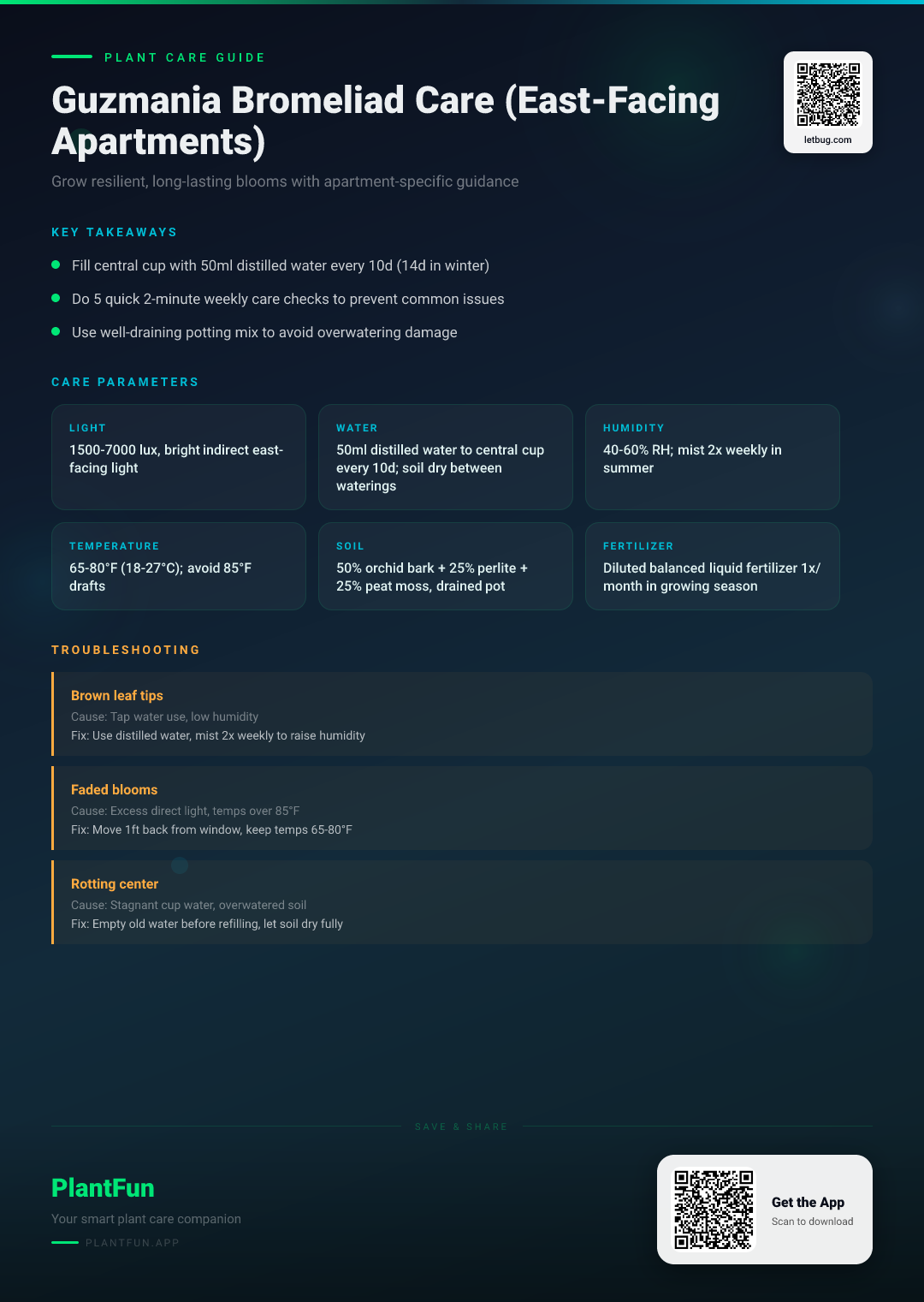
Key Takeaways
- Check soil moisture before watering — overwatering is the #1 killer of houseplants.
- Ensure your plant gets the right amount of light for its species.
- Be patient with recovery — most plants need 2–4 weeks to bounce back.
Quick Care Card
| Category | Exact Threshold for East-Facing Apartments |
|---|---|
| Light | 1500-7000 lux, up to 2 hours soft morning direct sun (1-2ft from unobstructed east window) (NC State Extension, 2026) |
| Water | 50ml distilled/rainwater in central cup every 10 days; water soil only when top 2 inches are fully dry (Abreu et al., 2018) |
| Humidity | 40-60% relative humidity (NC State Extension, 2026) |
| Temperature | 65-80°F (18-27°C) (Issarakraisila et al., 2017) |
| Soil | 50% orchid bark + 25% perlite + 25% peat moss (NC State Extension, 2026) |
| Fertilizer | 1/4 strength balanced liquid fertilizer, poured into central cup once every 2 months during growing season |
| Toxicity | Non-toxic to cats, dogs, and humans (ASPCA, 2026) |
Why This Guide Is Different
Generic Guzmania bromeliad care advice often calls for 6+ hours of bright light and 60%+ greenhouse-level humidity, which is completely unrealistic for most east-facing apartment living rooms that only get 2 hours of soft morning sun and average 40% year-round humidity. This guide skips generic tropical plant filler to deliver calibrated, actionable advice tailored exactly to your apartment’s conditions.
Myth vs Reality: Myth: Guzmanias need high humidity to thrive. Reality: East-facing apartment dwellers can grow healthy, blooming Guzmanias at 40% humidity with simple adjustments (NC State Extension, 2026). If you’re just starting your apartment plant collection, read our beginner’s guide to east-facing apartment plant care for more tailored tips.
Symptom-to-Action Cheat Sheet
Brown Leaf Tips
Symptom: Dry, crispy brown edges on leaf tips, with the rest of the leaf remaining green and firm.
Likely cause: Tap water mineral buildup or low humidity from forced air heating/cooling.
Fix:
- Flush the central cup with 100ml distilled water to remove mineral deposits
- Mist the air around the plant 2x weekly if humidity drops below 40%
- Switch to only distilled or rainwater for all future watering
Faded Blooms
Symptom: Bright red/orange/yellow bracts (the visible “flower” structure) turn pale or yellow before 3 months have passed.
Likely cause: Too much direct sun exposure, especially if the plant is placed less than 1 foot from the east window in summer.
Fix:
- Move the plant 2 feet back from the window to filter excess light
- Avoid exposure to midday sun that creeps in during summer months
Rotting Center
Symptom: Central cup is mushy, smells foul, and leaves fall off easily when touched.
Likely cause: Overfilling the central cup or stagnant water left for more than 2 weeks.
Fix:
- Empty all water from the central cup immediately with a turkey baster
- Wipe the inside of the cup with a dry paper towel to remove mold or slime
- Wait 3 full days before refilling with 50ml fresh distilled water
Yellow Lower Leaves
Symptom: Older leaves at the base of the plant turn pale yellow and soft, while new growth remains healthy.
Likely cause: Overwatered soil, a common mistake when growers water the soil instead of the central cup.
Fix:
- Tip the pot to drain any excess water from the saucer
- Wait until the top 2 inches of soil are completely crumbly dry before watering the soil again
- Prioritize filling the central cup over watering the soil for future care
No New Growth After Bloom Dies
Symptom: The main bract has died and fallen off, with no new pups (baby plants) growing at the base after 2 months.
Likely cause: Insufficient light or lack of mild fertilizer to support pup growth.
Fix:
- Move the plant to within 1 foot of the east window to get maximum morning light
- Add 1/4 strength balanced liquid fertilizer to the central cup once to support new growth
Wilting Leaves
Symptom: Leaves are limp and droopy (not crispy), even if the central cup has water.
Likely cause: Cold drafts from AC vents or drafty windows, common in winter in east-facing apartments.
Fix:
- Move the plant at least 3 feet away from any AC or heating vents
- If placed near a window in winter, move it back 1 foot to avoid contact with cold glass
Brown Spots on Leaves
Symptom: Small, circular brown spots on the top of leaves that are not crispy at the edges.
Likely cause: Fungal growth from water left sitting on leaves in low air flow, common in small enclosed apartments.
Fix:
- Wipe affected leaves with a damp paper towel to remove fungal spots
- Increase air flow around the plant by running a small fan on low 2-3 hours a day
- Avoid misting directly onto leaves, mist only the air around the plant
Step-by-Step Weekly Care Routine
Each check takes less than 2 minutes, so you can complete the full routine in 10 minutes total:
- Check central cup water level: If the cup is less than half full, wait until your scheduled 10-day refill date to avoid overfilling (Abreu et al., 2018). If you see slime or mold, empty and clean the cup immediately. This is core to proper Guzmania central cup care.
- Test soil moisture: Stick your index finger 2 inches into the soil. If it is completely dry, add 100ml of distilled water to the soil, otherwise skip. For accurate soil moisture testing tips, check out our guide to preventing overwatering in indoor plants.
- Inspect for brown leaf tips or spots: If you notice any early signs of damage, reference the symptom-to-action cheat sheet above to fix issues before they worsen.
- Check ambient humidity: Use a cheap hygrometer to measure humidity near the plant. If it is below 40%, mist the air around the plant for 10 seconds.
- Adjust placement if needed: If summer temperatures have risen above 85°F, move the plant 1 foot back from the east window to avoid scorching.
Exact Environmental Thresholds to Follow
These non-negotiable metrics are calibrated specifically for east-facing apartment conditions, no guesswork required:
- Light: 1500-7000 lux bright indirect light, with up to 2 hours of soft morning direct sun allowed (NC State Extension, 2026). This is the exact Guzmania bromeliad light levels for apartments found 1-2 feet from an unobstructed east window. Quick test: Hold your hand 1 foot above the plant at 10am. If you see a faint, soft shadow, you have the right light level.
- Humidity: 40-60% relative humidity (NC State Extension, 2026). This matches the average Guzmania bromeliad humidity requirements for most east-facing apartments, so you only need to mist if you run forced air heating or cooling regularly.
- Temperature: 65-80°F (18-27°C) (Issarakraisila et al., 2017). Avoid temperatures below 60°F or above 85°F, which can stress the plant and cause bloom drop.
- Central cup water: 50ml distilled water every 10 days (Abreu et al., 2018). This answers the common question of how often to water Guzmania bromeliad in apartment conditions, preventing stagnation while giving the plant enough moisture to absorb through its leaf scales.
Soil & Potting Requirements for Apartment Growers
The right soil and pot setup eliminates 90% of overwatering risks for beginner growers:
- Soil mix: Use the recommended Guzmania soil mix for indoor growing: 50% orchid bark, 25% perlite, 25% peat moss (NC State Extension, 2026). This mix drains extremely fast, so you don’t get root rot even if you accidentally overwater the soil.
- Pot: Use a 4-6 inch terracotta pot with 1-2 drainage holes. Terracotta wicks away excess moisture, which is perfect for small apartment growers who are prone to overwatering. For more on choosing the right pot for your tropical plants, read our terracotta pot care guide for indoor plants.
Seasonal Care Calendar
Adjust your routine to match seasonal changes in your east-facing apartment:
- Winter (October to February) (Guzmania bromeliad winter care):
- Reduce central cup refills to every 14 days, as cooler temperatures slow water evaporation
- Keep the plant at least 1 foot away from drafty east-facing windows to avoid cold damage
- Skip fertilizer entirely during winter months
- Summer (June to August) (Guzmania summer watering schedule):
- Follow the standard 10-day central cup refill schedule, but check water levels more often if temperatures are above 80°F
- Increase humidity with 2x weekly misting if humidity drops below 40%
- Move the plant 1 foot back from the east window if midday temperatures hit 85°F+ to avoid leaf scorch
Common Mistakes to Avoid In Small Apartments
- Mistake: Overwatering the soil instead of filling the central cup What happens: Soggy soil causes root rot, which kills the majority of indoor Guzmanias according to NC State Extension data Instead: Prioritize filling the central cup with 50ml distilled water every 10 days, and only water the soil when the top 2 inches are completely dry
- Mistake: Placing the plant near AC or heating vents What happens: Constant air flow drops humidity below 40% and causes Guzmania bromeliad brown leaf tips within 2 weeks Instead: Keep the plant at least 3 feet away from all vents, and mist 2x weekly if you run your HVAC system regularly
- Mistake: Using tap water to fill the central cup What happens: Chlorine, fluoride, and mineral deposits in tap water build up in the cup and cause brown leaf tips and faded blooms Instead: Only use distilled, rainwater, or reverse osmosis water for all Guzmania watering
- Mistake: Leaving the central cup full of stagnant water for more than 2 weeks What happens: Stagnant water grows mold and bacteria, leading to a rotting center that can kill the plant quickly Instead: Empty and clean the central cup if you notice slime or a foul smell, and stick to the 10-day refill schedule
FAQ (Voice Search Optimized)
Can I keep my Guzmania bromeliad in my east-facing apartment living room if I only have 40% humidity?
Yes! Guzmanias are adapted to tolerate moderate humidity levels, and 40% is the minimum threshold for healthy growth (NC State Extension, 2026). If your humidity drops below 40% in winter when running heating, simply mist the air around the plant 2x weekly to maintain ideal conditions. This is one of the reasons Guzmania bromeliad care for apartments is so accessible for beginners.
Why is my Guzmania bromeliad turning brown even though I water it every week?
The most common cause of browning in regularly watered Guzmanias is overwatering the soil or stagnant water in the central cup (Abreu et al., 2018). First, check if the soil is soggy: if it is, stop watering the soil until it is completely dry. Next, empty the central cup and clean it out to remove any mold or slime, then wait 3 days before refilling with 50ml distilled water.
How do I get my Guzmania to bloom again after the first flower dies?
Guzmania mother plants die after blooming, but they produce small pups (baby plants) at their base that can be grown to bloom in 1-2 years (Issarakraisila et al., 2017). Once the pups are 1/3 the size of the mother plant, cut them away and repot them in the recommended Guzmania soil mix for indoor growing. Keep them in 1500-7000 lux light near your east window, and follow the care routine in this guide to encourage blooming once they reach mature size.
Printable Weekly Care Checklist
Download our free 1-page bromeliad care checklist for apartments to stick on your fridge, so you never miss a care task. The checklist includes:
- All 5 weekly 2-minute care checks
- Scheduled 10-day central cup refill reminders
- Bi-monthly fertilizer reminders for growing season
- Quick symptom reference for 3 most common Guzmania issues
References
- NC State Extension. (2026). Guzmania Bromeliad Care Checklist — NC State Extension Gardener Plant Toolbox. https://plants.ces.ncsu.edu/plants/guzmania-bromeliad/. Accessed 2026-03-02.
- Issarakraisila, M.; Rundon, P.; Nuanla-ong, S. (2017). Effect of ethephon and urea mixtures on flowering and plant quality of bromeliad (<i>Guzmania lingulata</i>). Acta Horticulturae. https://doi.org/10.17660/actahortic.2017.1167.51. Accessed 2026-03-02.
- Abreu, M.; Carvalho, V.; Mercier, H. (2018). Antioxidant capacity along the leaf blade of the C3-CAM facultative bromeliad Guzmania monostachia under water deficit conditions. Functional Plant Biology. https://doi.org/10.1071/fp17162. Accessed 2026-03-02.
- ASPCA. (2026). Toxic and Non-Toxic Plants List — ASPCA. https://www.aspca.org/pet-care/animal-poison-control/toxic-and-non-toxic-plants. Accessed 2026-03-02.
Optional Helper: Plantfun.App
Plantfun.App identifies your plants by photo, diagnoses pests and diseases with clear fixes, and creates personalised watering and light schedules that adapt to your home conditions — a handy companion for putting this guide into daily practice.
Found an error or have suggestions? We'd love your feedback.
Need help identifying this problem?
Get instant identification, personalized care schedules, and effective pest treatment plans directly on your phone.
Sponsored • We may earn a commission from app downloads
Related Guides
Guzmania Bromeliad Care Checklist for Resilient Growth in Typical East-Facing Apartments
Stop guessing at bromeliad care and get a tailored checklist for your Guzmania in an east-facing apartment. Follow exact light, water, and humidity rules for vibrant blooms and resilient, long-lasting growth.
Care GuideThe Complete Guzmania Bromeliad Care Checklist for Resilient Growth in Typical Urban Apartments
Keep your Guzmania bromeliad thriving even in dry, low-light urban apartments. Get a free printable checklist, exact light, water, and humidity thresholds for zero-fuss, resilient growth.
Care GuideGuzmania Bromeliad Care Checklist for Small Urban Apartments: Grow Resilient, Long-Lasting Blooms
Grow vibrant, long-blooming Guzmania bromeliads even in tiny apartments with this science-backed checklist. Get exact light, water, humidity thresholds plus 5 space-saving hacks for small spaces.
Pest ControlAnts on Plants: What They Mean and What to Do
Ants usually aren't eating your plant. They are farming other pests.