
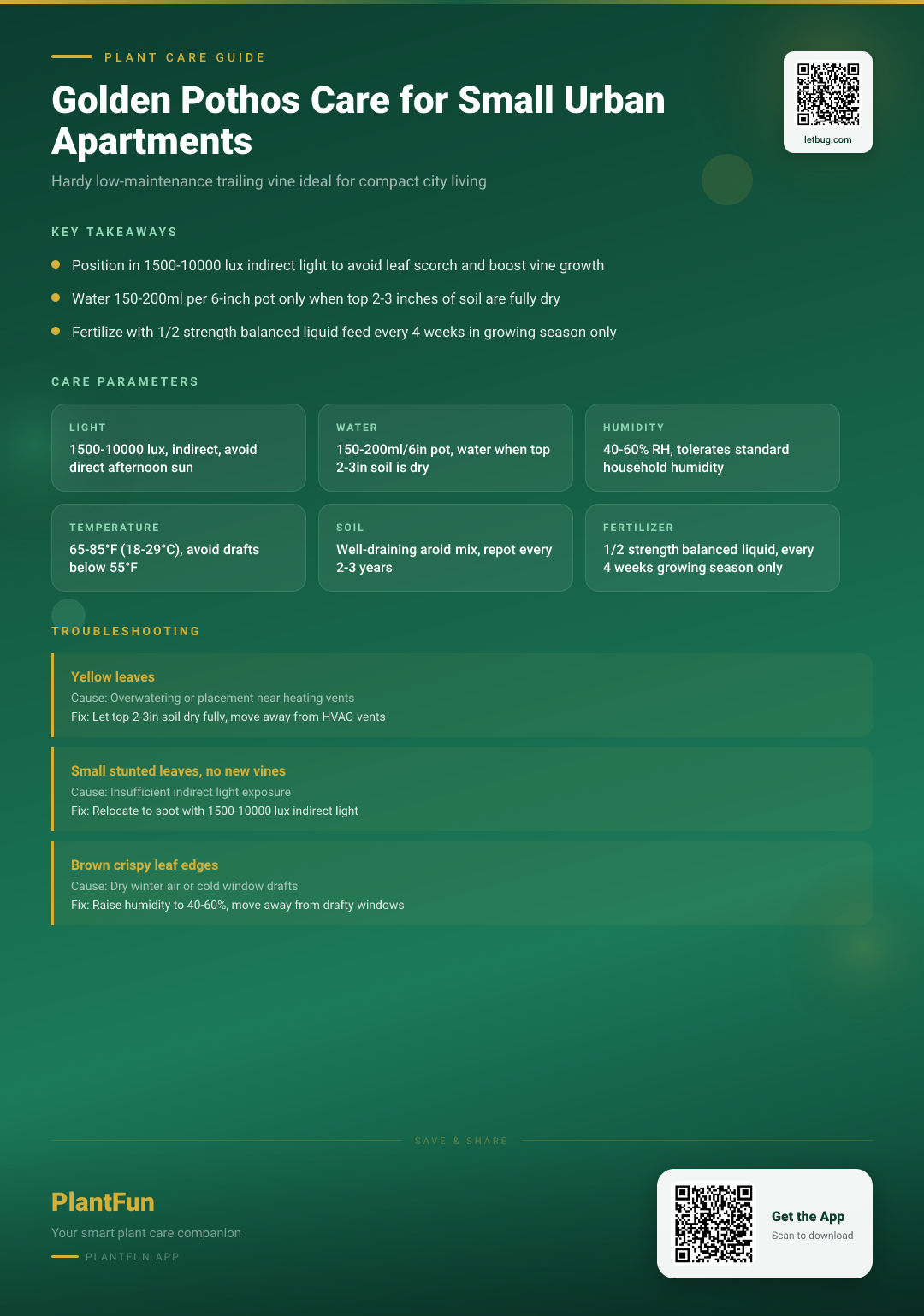
Key Takeaways
- Check soil moisture before watering — overwatering is the #1 killer of houseplants.
- Ensure your plant gets the right amount of light for its species.
- Be patient with recovery — most plants need 2–4 weeks to bounce back.
Quick Care Card: Printable Golden Pothos Apartment Care Checklist
| Care Factor | Measurable Threshold for Small Urban Apartments |
|---|---|
| Light | 1,500–10,000 lux (bright indirect light, no direct midday sun) |
| Water | 2–3 inches of topsoil completely dry; 150–200ml per 6-inch pot |
| Humidity | 40–60% relative humidity |
| Temperature | 65–85°F (18–29°C) |
| Soil | Well-draining aroid mix (60% potting soil, 20% perlite, 20% orchid bark) |
| Fertilizer | ½ strength balanced liquid NPK, every 4 weeks in growing season only |
| Toxicity | Toxic to cats, dogs, and humans if ingested (ASPCA, 2026) |
| Print this table and tape it near your plant for no-guess reference year-round |
Why Golden Pothos Thrive in Small Urban Apartments
Golden pothos (Epipremnum aureum) is made for city living. Native to tropical understories, it evolved to tolerate fluctuating light, inconsistent water, and variable temperatures—exactly the conditions common in small urban apartments with drafty windows, forced air heating, and limited floor space. Its trailing growth habit works perfectly for hanging planters, wall mounts, or high shelves, so you don’t waste valuable square footage. It also filters common indoor air pollutants like formaldehyde (EL Sayed, 2020), making it a functional addition to poorly ventilated city units. This guide is perfect for golden pothos care for beginners, as it eliminates all the guesswork of generic care tips.
Step 1: Perfect Light Placement for Your Apartment Layout
Golden pothos light requirements sit between 1,500–10,000 lux (Current Science International, 2019), a wide range that fits most apartment lighting setups. Use this placement guide based on your window direction:
- North-facing windows: Place 2–3 feet from the sill for consistent, gentle light year-round
- East-facing windows: Place 1–2 feet from the sill to get soft morning sun without scorch
- South-facing windows: Place 5+ feet away, or behind a sheer curtain, to avoid midday sun that exceeds 10,000 lux and burns leaves
- West-facing windows: Place 4+ feet away to avoid harsh afternoon sun Quick test: If you can read a book in the spot without turning on a light during the day, it has enough light for your pothos.
Step 2: No-Guesswork Watering Routine
Wondering how often to water golden pothos in your apartment? Skip strict schedules—they don’t account for variable heating, cooling, and light levels in small units. Follow these measurable rules:
- Stick your index finger 2–3 inches into the topsoil. If no moisture sticks to your finger, it’s time to water
- Add 150–200ml of room-temperature water per 6-inch pot, until water just starts to drain out the bottom
- Empty the saucer under the pot after 10 minutes to avoid standing water Adjust frequency based on season: golden pothos summer watering runs every 5–10 days, while winter watering with forced heat can drop to every 14–21 days. Myth vs reality: Myth: Pothos need weekly watering no matter what. Reality: Overwatering is the #1 cause of pothos death in apartments, so always test soil first.
Step 3: Humidity & Temperature Optimization
Golden pothos humidity needs fall between 40–60% relative humidity, and ideal temperatures are 65–85°F (18–29°C) (Current Science International, 2019). Most apartments fall in this range, but you may need cheap fixes for common issues:
- Dry winter heated air: Group your pothos with other plants to raise ambient humidity, or set it on a tray of pebbles filled with water (make sure the pot isn’t sitting directly in the water)
- Drafty windows: Move your pothos 3+ feet away from drafty sills in fall and winter, or apply low-cost window insulation film to block cold air
Step 4: Soil & Pot Setup for Apartment Living
Avoid messy leaks and root rot with these apartment-friendly setup tips:
- Use a well-draining aroid mix: 60% standard potting soil, 20% perlite, 20% orchid bark to prevent water from pooling around roots
- Always use a pot with a drainage hole: If you want to use a decorative pot without holes, place the plastic nursery pot inside it, and remove it to water so excess water doesn’t leak on your floors
- Repot only every 2–3 years: Wait until you see roots growing out of the drainage holes, and use a pot that’s only 1–2 inches wider than the current one to avoid overwatering
Seasonal Care Calendar
Follow this golden pothos seasonal care routine tailored to apartment conditions:
Spring (March–May)
- Water every 7–10 days, testing soil first
- Start applying ½ strength balanced liquid fertilizer every 4 weeks (Current Science International, 2019)
- Prune dead or yellow leaves, and train trailing vines on wall hooks or shelf edges for golden pothos trailing growth tips
Summer (June–August)
- Water every 5–7 days, check soil more often during heatwaves
- Wipe leaves with a damp cloth once a month to remove dust that blocks light absorption
- Keep away from direct midday sun to avoid leaf scorch
Fall (September–November)
- Water every 10–14 days as light levels drop
- Stop fertilizing as growth slows
- Move away from windows as temperatures drop to avoid cold drafts
Winter (December–February)
- Follow golden pothos winter care rules: water every 14–21 days, no fertilizer
- Keep 3+ feet away from heating vents to avoid dry leaf tips
- Add a pebble tray if your heating system dries out air below 40% RH
Common Mistakes Urban Apartment Dwellers Make With Pothos
Avoid these common errors that keep your pothos from thriving:
- Mistake: Overwatering on a strict schedule without testing soil What happens: Root rot, yellow leaves (the top answer to why is my golden pothos leaves turning yellow) Instead: Test soil 2 inches deep every 7 days, only water when completely dry
- Mistake: Placing pothos right next to heating vents or AC units What happens: Dry, crispy brown leaf tips, stunted growth Instead: Keep pothos at least 3 feet away from all HVAC outlets
- Mistake: Skipping leaf dusting and ignoring yellow leaves What happens: Dust blocks light absorption, leading to slower growth, and unaddressed stress can kill the plant over time Instead: Wipe leaves with a damp cloth once a month, prune yellow leaves at the base as soon as you spot them
- Mistake: Repotting too often in an oversized pot What happens: Excess soil holds too much moisture, leading to root rot Instead: Only repot when roots emerge from drainage holes, use a pot 1–2 inches wider than the current one
Frequently Asked Questions
Why is my golden pothos growing small leaves with no new vines?
This is almost always caused by low light deficiency, which is extremely common in dark city apartments. If your pothos is getting less than 1,500 lux of light daily, it will put out small, sparse leaves to conserve energy (Current Science International, 2019). Move it closer to a bright window, or add a low-cost full-spectrum grow light, and you should see larger, lusher growth within 4–6 weeks—this is the easiest answer to how to make golden pothos grow faster in low-light units.
Can I keep my pothos in my apartment’s windowless office nook?
Yes! Golden pothos can survive in low light apartments with no natural light, as long as you provide supplemental light. A 10W full-spectrum grow light placed 1–2 feet above the plant, run for 8–10 hours a day, will give it enough light to grow steadily. Avoid keeping it in total darkness for more than 2 weeks at a time, as this will cause leaf drop.
How often should I fertilize my pothos in a winter-heated apartment?
You should not fertilize your pothos at all during the winter, even if your apartment stays warm 24/7. Pothos enter a period of slow or dormant growth in the shorter, darker winter months, and adding fertilizer will cause salt buildup in the soil, which burns roots and leads to brown leaf tips. Wait to resume fertilizing until early spring, when you see new leaf growth start to appear.
Troubleshooting Quick Reference
Yellow Leaves
Symptom: Soft, yellow lower leaves, often with mushy stems near the soil line.
Likely cause: Overwatering leading to early root rot.
Fix:
- Let soil dry completely 3–4 inches deep before watering again
- If roots are visible and mushy, repot in fresh, dry aroid mix immediately
Brown Leaf Tips
Symptom: Dry, crispy brown tips on otherwise healthy green leaves.
Likely cause: Low humidity or proximity to heating/AC vents.
Fix:
- Move plant 3+ feet away from all HVAC outlets
- Add a pebble tray with water under the pot to boost ambient humidity by 10–15%
Root Rot
Symptom: Widespread yellowing, mushy stems, foul rotten smell coming from the soil.
Likely cause: Prolonged overwatering, or a pot without a drainage hole.
Fix:
- Remove the plant from its pot, trim all black, mushy roots with sterile scissors
- Repot in fresh aroid mix in a pot with a working drainage hole
Stunted Growth
Symptom: No new vine growth for 3+ months, small pale new leaves.
Likely cause: Insufficient light or lack of fertilizer during the growing season.
Fix:
- Move plant to a spot with 2,000+ lux of bright indirect light
- Apply ½ strength balanced liquid fertilizer every 4 weeks during spring and summer
References
- ASPCA. (2026). Toxic and Non-Toxic Plants List — ASPCA. https://www.aspca.org/pet-care/animal-poison-control/toxic-and-non-toxic-plants. Accessed 2026-02-25.
- EL Sayed, N. (2020). Spray Golden Pothos and Croton Plants with Glutathione and Bilirubin to Purify the Indoor Air from Pollutants. Journal of Plant Production. https://doi.org/10.21608/jpp.2020.102766. Accessed 2026-02-25.
- Current Science International. (2019). Growth of Golden Pothos (Epipremnum aureum) Plant as Affected by NPK Formula and rate. Current Science International. https://doi.org/10.36632/csi/2019.8.4.1. Accessed 2026-02-25.
Optional Helper: Plantfun.App
Plantfun.App identifies your plants by photo, diagnoses pests and diseases with clear fixes, and creates personalised watering and light schedules that adapt to your home conditions — a handy companion for putting this guide into daily practice.
Found an error or have suggestions? We'd love your feedback.
Need help identifying this problem?
Get instant identification, personalized care schedules, and effective pest treatment plans directly on your phone.
Sponsored • We may earn a commission from app downloads
Related Guides
The Complete Golden Pothos Care Checklist for Typical Apartments: Resilient Year-Round Growth
Stop guessing at golden pothos care. Get our printable seasonal checklist with exact light, water, and humidity thresholds to keep your apartment pothos lush and growing fast all year.
Care GuideThe Budget Golden Pothos Care Checklist for Resilient Growth in Small Urban Apartments
Grow a lush, trailing golden pothos even in a tiny, low-light urban apartment with this free budget checklist of exact light, water, and soil parameters that cost nothing to implement.
Care GuideGolden Pothos in Low-Light Studio Apartments: Your $5 No-Fuss Budget Care Guide
Stop wasting money on unnecessary plant products for your golden pothos. Get our $5 low-light studio-specific care plan, exact measurements, and seasonal tweaks to keep vines trailing lush all year, no expensive gadgets required.
Pest ControlHow to Spot Pests on Golden Pothos in Low-Light Entryways: A Weekly Inspection & Rescue Plan
Catch pest infestations on your low-light entryway golden pothos early with our 5-minute weekly inspection plan, plus step-by-step non-toxic rescue steps to fix spider mites, mealybugs and gnats before foliage damage becomes irreversible.