
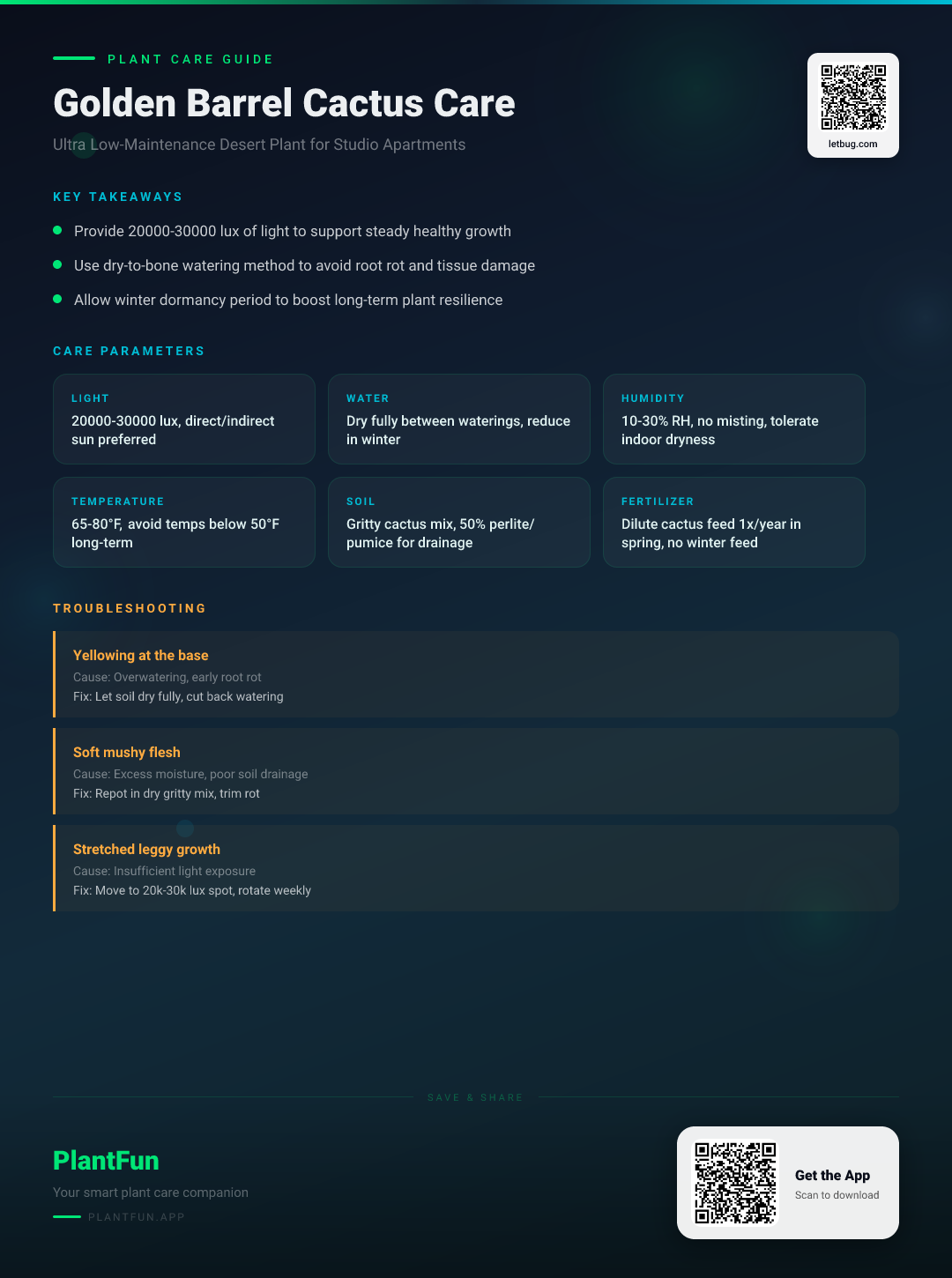
Key Takeaways
- Check soil moisture before watering — overwatering is the #1 killer of houseplants.
- Ensure your plant gets the right amount of light for its species.
- Be patient with recovery — most plants need 2–4 weeks to bounce back.
Quick Care Card: Essential Thresholds for Your Golden Barrel
| Feature | Requirement |
|---|---|
| Light | High light, 20,000–30,000 lux |
| Water | Dry-to-bone; monthly in summer |
| Temperature | 65°F–80°F (18°C–27°C) |
| Humidity | Low (30–40%) |
| Soil | Inorganic, fast-draining cactus mix |
| Fertilizer | Low-nitrogen, once in early summer |
| Toxicity | Toxic to pets (ASPCA, 2026) |
TL;DR: The Minimalist Approach to Cactus Success
To keep your Echinocactus grusonii thriving in a small space, prioritize three things: maximum sunlight, infrequent watering, and an inorganic soil structure. Stop worrying about misting or frequent feeding; this desert native prefers to be left alone. If your cactus is in a room that feels “bright enough” to read by, it likely needs more light to prevent etiolation (stretching). When in doubt, don’t water it.
Why Your Apartment is Actually a Great Home for Echinocactus grusonii
Living in a studio apartment often means dealing with dry, stable indoor air—conditions that would kill a delicate tropical fern but act as a paradise for a Golden Barrel. Because these plants are slow-growing, they won’t outgrow your windowsill for years, making them ideal for vertical, space-constrained gardening. Their sculptural, spherical form brings a structural elegance to urban interiors that few other plants can match.
Step-by-Step: The Zero-Budget Repotting & Soil Mix Method
When I first brought home my Golden Barrel, I was terrified of its spines. I quickly learned that “benign neglect” is the key to repotting without injury.
- Prepare the gear: Use thick leather gardening gloves and a folded newspaper as a “clamp” to handle the cactus body.
- The Soil Ratio: Mix 50% standard potting soil with 50% inorganic drainage material like perlite or pumice. This prevents the stagnant moisture that leads to stem rot (Polizzi & Vitale, 2004).
- Pot Choice: Always select a terracotta pot. It is porous and wicks moisture away from the roots, acting as a natural safeguard against overwatering.
- Placement: Ensure the cactus sits at the same depth it occupied in its previous container to prevent surface decay.
Light Requirements: Hitting the 20,000-30,000 Lux Sweet Spot
Golden Barrel cacti are not “low light” plants. In my experience, even the brightest window in a typical apartment is often just barely enough. These plants require direct, unfiltered sunlight to maintain their dense, golden spine color (NC State Extension, 2026). If you notice the cactus tilting toward the light or the skin turning a pale, sickly green, it is starving for photons. If you lack a south-facing window, consider a supplemental full-spectrum LED light placed within 6 inches of the plant.
Watering Mastery: Avoiding Rot with the ‘Dry-to-Bone’ Technique
I cannot stress this enough: more cacti are killed by kindness than by drought. Before you even touch the watering can, use a wooden chopstick as a dipstick. Push it 3 inches into the soil; if it comes out damp or dark, wait another week. During the active growing season (May–September), a “soak and dry” method is safest—water until it drains from the bottom, then wait until the entire pot is bone-dry before repeating (Roberts, 2010).
Temperature & Humidity: Keeping it Consistent Between 65-80°F
Your apartment’s natural climate is perfect. Cacti prefer consistent temperatures and low humidity. Avoid placing your Golden Barrel near drafty AC vents or radiator heaters, which can cause extreme fluctuations. Stability is more important than achieving a specific temperature peak.
Seasonal Shifts: Why Your Cactus Needs a Winter Dormancy Period
In winter, your cactus enters a period of dormancy. Growth slows significantly, and metabolic processes shift. During this time, stop fertilizing and reduce water to almost nothing—perhaps a tiny sip once every 6–8 weeks to prevent shriveling. This “cool down” period is essential for future health and mimicking their native desert cycles (NC State Extension, 2026).
FAQ: Why is my Golden Barrel Cactus turning yellow at the base?
Symptom: The bottom of the stem is soft, mushy, or discolored yellow-brown.
Likely cause: This is a classic sign of fungal infection or moisture-induced rot, often exacerbated by poorly aerated soil (Polizzi & Vitale, 2004).
Fix:
- Stop watering immediately.
- Remove the plant from the soil and inspect the root system for black, slimy areas.
- Use a sterilized blade to cut away affected sections if the rot is localized.
- Re-pot into fresh, sterile, fast-draining substrate.
FAQ: How do I safely move or repot a prickly Golden Barrel cactus?
Symptom: You want to move your plant but are worried about spines.
Likely cause: The spines are needle-sharp and defense-oriented.
Fix:
- Never use bare hands; use folded heavy-duty cardboard or thick leather gloves.
- If the plant is large, use a “sling” made of a folded towel to lift the cactus from its pot.
- Never press down on the top of the cactus, as this can damage the sensitive growth point.
Common Mistakes: The Perils of Misting and Frequent Fertilizer
- Mistake: Misting your cactus for “humidity.” What happens: The water droplets sit on the skin and can lead to fungal spotting or rot. Instead: Keep the plant dry and provide airflow.
- Mistake: Fertilizing year-round. What happens: You force soft, weak growth that is susceptible to pests. Instead: Use a low-nitrogen fertilizer only once in late spring (Roberts, 2010).
References
- Polizzi, G.; Vitale, A. (2004). First Report of Basal Stem Rot of Golden Barrel Cactus Caused by Fusarium oxysporum f. sp. opuntiarum in Italy. Plant Disease. https://doi.org/10.1094/pdis.2004.88.1.85a. Accessed 2026-03-14.
- Roberts, E. (2010). Cactus Tips from a Master Grower. Cactus and Succulent Journal. https://doi.org/10.2985/015.082.0109. Accessed 2026-03-14.
- American Society for the Prevention of Cruelty to Animals. (2026). Toxic and Non-Toxic Plants List — ASPCA. https://www.aspca.org/pet-care/animal-poison-control/toxic-and-non-toxic-plants. Accessed 2026-03-14.
- North Carolina State University Extension. (2026). Golden Barrel Cactus — NC State Extension Gardener Plant Toolbox. https://plants.ces.ncsu.edu/plants/cactus-care/. Accessed 2026-03-14.
Optional Helper: Plantfun.App
Plantfun.App identifies your plants by photo, diagnoses pests and diseases with clear fixes, and creates personalised watering and light schedules that adapt to your home conditions — a handy companion for putting this guide into daily practice.
Found an error or have suggestions? We'd love your feedback.
Need help identifying this problem?
Get instant identification, personalized care schedules, and effective pest treatment plans directly on your phone.
Sponsored • We may earn a commission from app downloads
Related Guides
Echinocactus Grusonii in a Low-Light Apartment: The Complete Resilient Growth Care Plan
Revive your Golden Barrel cactus with this science-backed growth plan. Learn exact light, soil, and water thresholds to prevent stretching in your apartment.
Care GuideGolden Barrel Cactus in a South-Facing Apartment: The Only Care Guide You’ll Ever Need
Master Golden Barrel cactus care with our precise 3-step watering schedule and light mapping. Keep your desert jewel thriving with 20,000+ lux and expert tips.
Care GuideGolden Barrel Cactus in a Low-Light Apartment: The Definitive Guide to Resilient Indoor Growth
Revive your Golden Barrel Cactus with precise light calibration and watering cycles. Master the 4 key metrics for resilient growth in any apartment setting today.
Pest ControlAnts on Plants: What They Mean and What to Do
Ants usually aren't eating your plant. They are farming other pests.