
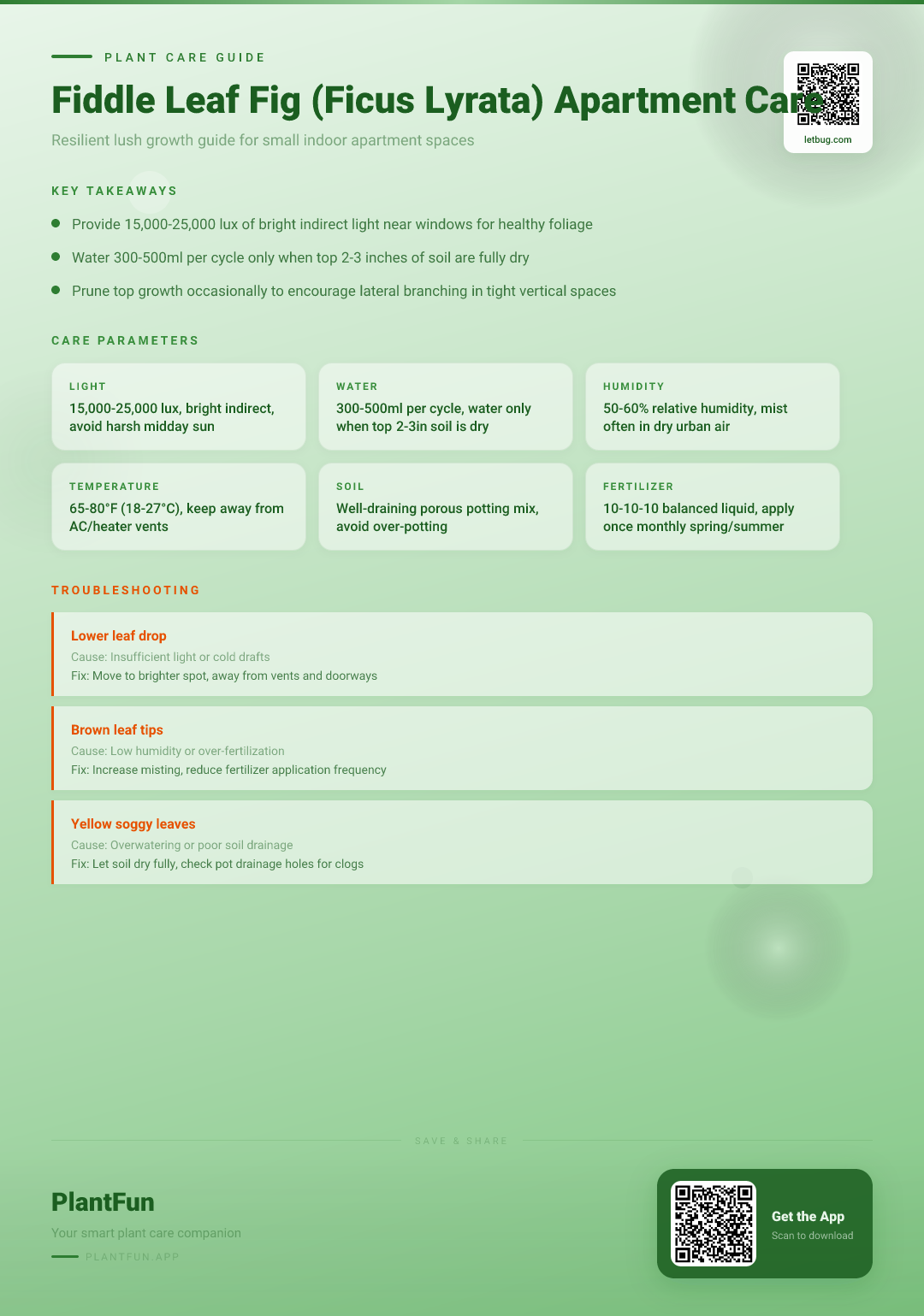
Key Takeaways
- Check soil moisture before watering — overwatering is the #1 killer of houseplants.
- Ensure your plant gets the right amount of light for its species.
- Be patient with recovery — most plants need 2–4 weeks to bounce back.
Quick Care Card: Essential Thresholds for Apartment Resiliency
| Feature | Requirement |
|---|---|
| Light | 15,000–25,000 Lux (Bright, indirect) |
| Water | 300-500ml when top 2 inches of soil are dry |
| Humidity | 50-60% (Use a pebble tray or humidifier) |
| Temperature | 65-80°F (18-27°C) |
| Soil | Well-draining, chunky aroid mix |
| Fertilizer | Balanced liquid 3-1-2 during growing season |
| Toxicity | Toxic to cats and dogs (ASPCA, 2026) |
TL;DR: The 3-Minute Apartment Fiddle Leaf Fig Summary
Successfully keeping a Ficus lyrata in an apartment requires consistency. Focus on providing high-intensity, filtered light, preventing soil saturation, and avoiding temperature fluctuations from vents. Water only when the top two inches of soil are dry, usually every 10-14 days. Ensure your pot has drainage, as standing water is the primary cause of root failure (NC State Extension, 2026).
Why Typical Apartment Environments Stress Your Ficus lyrata
When I first brought my Ficus lyrata home, I tucked it into a dark corner, assuming it would adjust. Within three weeks, it began dropping its lower leaves. I learned the hard way that these plants are native to lowland tropical forests (PlantwisePlus Knowledge Bank, 2022). In a typical apartment, low airflow, stagnant air, and dramatic temperature swings from radiators cause significant stress. Unlike greenhouse-grown specimens, apartment-dwelling figs struggle to adapt to the lower light and fluctuating humidity found in standard living rooms.
Light Requirements: Achieving 15,000–25,000 Lux in Limited Window Space
Your fiddle leaf needs significant light to thrive. If your apartment window faces North or is blocked by buildings, it will likely not meet the 15,000-lux minimum.
- The Lux Test: Download a light meter app or use a professional sensor to measure the light intensity at the leaf surface. If you are consistently below 10,000 lux, your plant will eventually succumb to starvation.
- Placement Strategy: Keep the plant within 3 feet of a south- or west-facing window. Use a sheer curtain to diffuse harsh midday rays, which can burn leaves.
Hydration Precision: Measuring Water Needs (300-500ml per cycle) and Soil Dryness
“How often to water my Fiddle Leaf Fig?” is the most common question I receive. Instead of a calendar, use your finger as a moisture meter.
- Insert your finger 2 inches into the soil.
- If it feels damp, do not water.
- If it is dry, irrigate with 300-500ml of water, ensuring that water runs freely from the drainage hole (NC State Extension, 2026).
Atmospheric Stability: Maintaining 50-60% Relative Humidity in Dry Urban Air
Apartment heating systems, particularly in winter, strip moisture from the air. Maintaining 50-60% relative humidity is crucial for preventing crispy leaf edges. I keep a small digital hygrometer next to my plant to monitor levels. If you are below 40%, use a humidifier rather than misting, as misting does not significantly increase ambient humidity long-term.
Thermal Management: Keeping Temperatures Between 65-80°F (18-27°C) Away from Vents
Ficus lyrata is sensitive to thermal shock. Placing your plant within 5 feet of an AC vent or radiator will cause leaf drop. Keep your plant in a stable environment where temperatures remain between 65-80°F (18-27°C). If you live in an old building with drafty windows, move the plant away from the glass during freezing winter nights.
Seasonal Growth Calendar: Adjusting Care from Spring Flushes to Winter Dormancy
- Spring/Summer: This is the prime growth period. Increase watering frequency and apply a balanced 3-1-2 liquid fertilizer once a month.
- Autumn/Winter: Growth slows as light intensity drops. Reduce your water intake by 30% and pause all fertilizing until the spring flush begins.
Why is my Fiddle Leaf Fig dropping lower leaves in my living room?
Symptom: Leaves are turning yellow or brown and dropping from the bottom of the stem.
Likely cause: Inconsistent watering or a sudden shift in light levels.
Fix:
- Check the soil moisture; if it is waterlogged, allow it to dry out completely before resuming a strict watering schedule.
- Ensure the plant is not in a drafty area that triggers a stress response.
How do I know if my apartment has enough light for a Fiddle Leaf Fig?
Symptom: New leaves are significantly smaller than the older ones, and the plant is “stretching” (etiolation).
Likely cause: Light intensity is below 10,000 lux.
Fix:
- Move the plant closer to the window.
- Consider supplementing with a high-quality full-spectrum LED grow light for 8-10 hours daily.
Common Apartment Pitfalls: Dust, Drafts, and Over-potting
- Mistake: Letting dust collect on leaves. What happens: Stomatal respiration is inhibited, slowing growth. Instead: Wipe leaves with a damp cloth every two weeks.
- Mistake: Over-potting. What happens: Excess soil stays wet too long, leading to root rot. Instead: Only increase pot size by 1-2 inches in diameter.
Expert Tips for Encouraging Lateral Branching in Vertical Spaces
If your plant is becoming a single, tall pole, try “notching.” Locate a node (the bump where a leaf meets the stem), and make a small horizontal cut just above the node using a sterilized blade. This interrupts the flow of auxin (a growth hormone), forcing the dormant bud to activate and grow a new branch.
Frequently Asked Questions
- Can I put my Fiddle Leaf Fig near a radiator? No, the dry heat will dehydrate the leaves rapidly. Keep it at least 6 feet away.
- Is it safe to have this plant if I have a cat? No, the Ficus lyrata contains insoluble calcium oxalates which are toxic to cats and dogs if ingested (ASPCA, 2026).
- How often should I repot my plant? Generally, every 2-3 years, or when roots begin circling the bottom of the nursery pot.
References
- PlantwisePlus Knowledge Bank. (2022). Ficus lyrata (fiddle-leaf fig). https://doi.org/10.1079/pwkb.species.24125. Accessed 2026-03-11.
- Astuti, E.; Mufrodi, Z. (2019). The Utilization of Fiddle-Leaf Fig Waste Into Food Preservative. Jurnal Bahan Alam Terbarukan. https://doi.org/10.15294/jbat.v8i1.19859. Accessed 2026-03-11.
- ASPCA. (2026). Toxic and Non-Toxic Plants List — ASPCA. https://www.aspca.org/pet-care/animal-poison-control/toxic-and-non-toxic-plants. Accessed 2026-03-11.
- NC State Extension. (2026). Fiddle Leaf Fig Care — NC State Extension Gardener Plant Toolbox. https://plants.ces.ncsu.edu/plants/fig-care/. Accessed 2026-03-11.
Optional Helper: Plantfun.App
Plantfun.App identifies your plants by photo, diagnoses pests and diseases with clear fixes, and creates personalised watering and light schedules that adapt to your home conditions — a handy companion for putting this guide into daily practice.
Found an error or have suggestions? We'd love your feedback.
Need help identifying this problem?
Get instant identification, personalized care schedules, and effective pest treatment plans directly on your phone.
Sponsored • We may earn a commission from app downloads
Related Guides
Fiddle Leaf Fig in a Dim Apartment: The Budget-Friendly Strategy for Resilient Growth
Transform your struggling Fiddle Leaf Fig into a resilient giant. Master precise watering, light placement, and budget-friendly feeding to see vibrant new growth.
Care GuideThe Complete Fiddle Leaf Fig Care Checklist for Resilient Growth in Small Urban Apartments
Stop guessing at Fiddle Leaf Fig care for your small urban apartment. Get 7 actionable, measurable checklist items that prevent leaf drop and promote lush, resilient growth all year long.
Care GuideFiddle Leaf Fig in a Typical Apartment: The Complete Seasonal Care Guide for Resilient Growth
Master Fiddle Leaf Fig care with our seasonal calendar. Discover 4 precise light, water, and humidity thresholds that guarantee growth in your apartment today.
Pest ControlAnts on Plants: What They Mean and What to Do
Ants usually aren't eating your plant. They are farming other pests.