
Key Takeaways
- Check soil moisture before watering — overwatering is the #1 killer of houseplants.
- Ensure your plant gets the right amount of light for its species.
- Be patient with recovery — most plants need 2–4 weeks to bounce back.
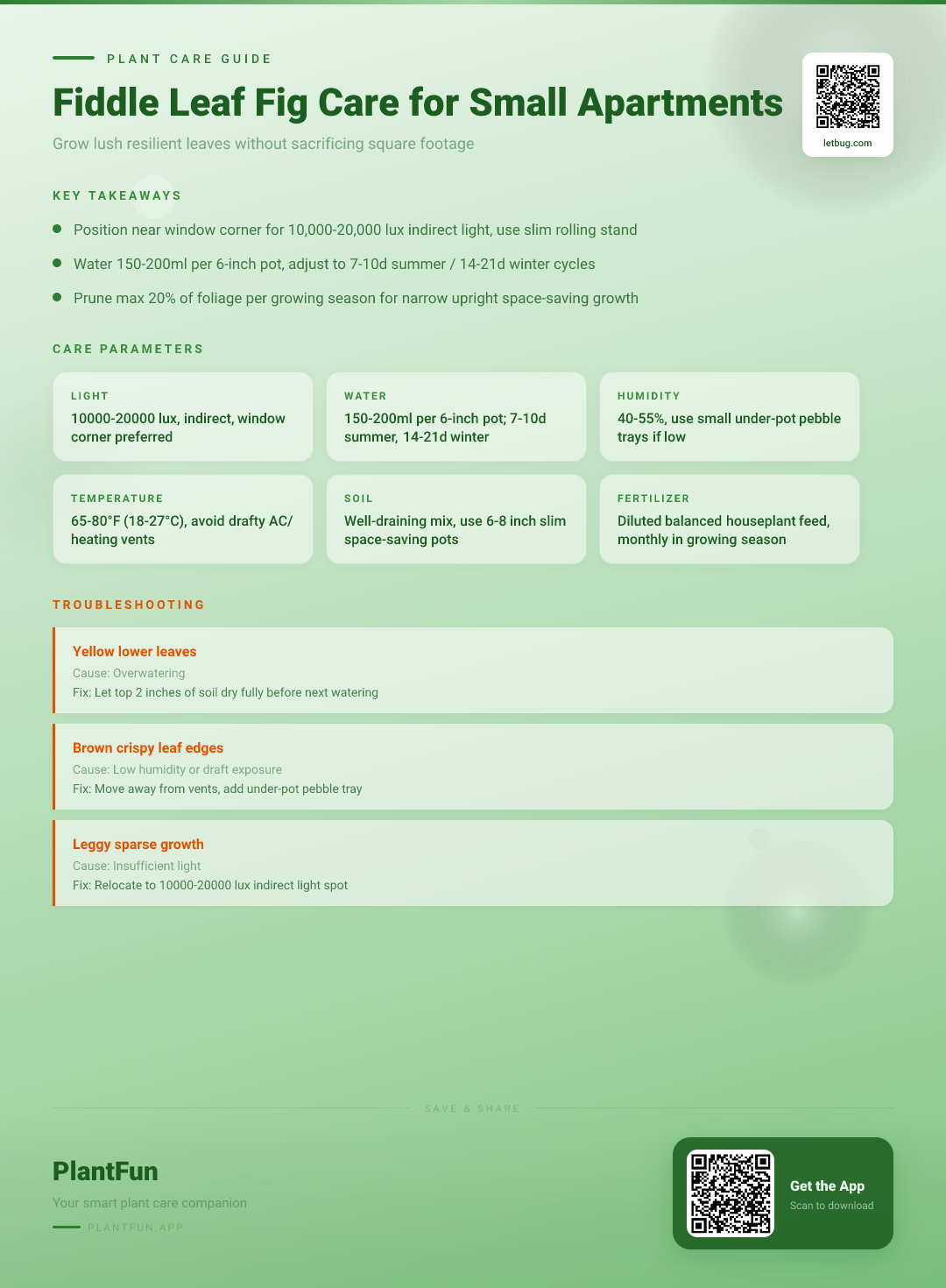
Quick Care Card: Printable 1-page checklist of all core care thresholds optimized for small apartments
| Care Factor | Apartment-Optimized Threshold | Quick Tip |
|---|---|---|
| Light | 10,000-20,000 lux, bright indirect | Tuck in a corner 2-3ft from a south/east window to avoid blocking walkways |
| Water | 150-200ml per 6-inch pot, only when top 2in of soil is dry | No rigid schedule — always test soil first to avoid overwatering |
| Humidity | 40-55% | Use a small pebble tray under your pot to raise humidity without bulky tools |
| Temperature | 65-80°F (18-27°C) | Keep 3ft away from AC/heating vents to avoid draft stress |
| Soil | 1:1:1 mix of all-purpose potting soil, perlite, orchid bark | Fast drainage prevents root rot in compact pots |
| Fertilizer | Half-strength balanced liquid, once per month in spring/summer | Skip fertilizing in winter when growth slows |
| Toxicity | Toxic to cats, dogs, and horses (ASPCA, 2026) | Place on a high stand if you share your space with pets |
Save this table to your phone or print it out to post near your FLF for 2-second reference whenever you need it.
Why Small Apartment FLF Care Is Different
Generic Fiddle Leaf Fig care guides are written for large homes with abundant natural light, high ceilings, and open floor plans — they ignore the three unique constraints of 500-700 sq ft urban apartments:
- Uneven, limited light from shared building windows, often blocked by adjacent structures
- Low 20-30% humidity from central HVAC, far below the FLF’s native tropical habitat
- Extremely limited floor and counter space where every inch counts
Myth vs Reality: Myth: FLFs need 6 hours of direct sunlight daily to thrive. Reality: Apartment FLFs can grow lush, resilient leaves with bright indirect light as long as it meets the 10,000 lux minimum threshold (PlantwisePlus, 2022). If you’re new to caring for this species, our complete Fiddle Leaf Fig care for beginners guide covers core growth basics tailored to new owners.
Step 1: Light Placement for Small Spaces
Fiddle Leaf Fig light requirements for apartments are 10,000-20,000 lux of bright indirect light (NC State Extension, 2026). Too little light causes stunted growth and leaf drop, while too much direct sun scorches leaves.
Space-saving placement options that don’t block walkways:
- Tuck the plant in a 12-18 inch wide corner 2-3ft from your brightest south or east facing window
- Use a slim 10-inch wide rolling stand so you can roll the plant into a light spot when you’re home, and tuck it away when you have guests
Quick test: Hold your hand at the plant’s canopy height at midday. A faint, soft shadow means you hit the 10,000 lux sweet spot. No shadow = too little light, sharp dark shadow = too much direct sun.
Step 2: Watering Schedule for Apartment Conditions
Wondering how often to water Fiddle Leaf Fig in apartment settings? The measurable rule is 150-200ml of water per 6-inch pot, only when the top 2 inches of soil are completely dry (NC State Extension, 2026).
No-mess soil moisture test: Stick your index finger 2 inches deep into the soil. If no soil sticks to your finger when you pull it out, it’s time to water. If soil clings to your finger, wait 3-5 days and test again.
Compact drainage solution for small spaces: Use a 1-inch high plastic drainage tray that fits perfectly under your slim pot, no oversized saucers that take up extra floor space. Empty excess water 10 minutes after watering to avoid root rot.
Step 3: Humidity & Temperature Regulation Without Bulky Tools
Fiddle Leaf Fig humidity requirements indoor are 40-55%, with a temperature range of 65-80°F (18-27°C) (PlantwisePlus, 2022). Central HVAC in apartments usually drops humidity to 20-30% in winter, leading to brown leaf edges.
Space-saving hacks to hit these thresholds without bulky humidifiers:
- Use a small pebble tray that fits under your slim pot: Fill it with pebbles, then add water to just below the top of the pebbles. Evaporation raises local humidity by 5-10% with no extra space used
- Keep the plant at least 3ft away from all AC and heating vents, as sudden temperature drafts are the top cause of sudden leaf drop
Quick test: Place a $5 hygrometer near the plant’s canopy for 24 hours to get an accurate humidity reading. For more tips on adjusting humidity for tropical plants, see our small apartment humidity hacks guide.
Step 4: Space-Saving Pruning for Resilient Growth
Fiddle Leaf Fig pruning for small spaces is designed to encourage upright, narrow growth that fits perfectly in 12-18 inch wide apartment corners, without sacrificing foliage health.
Follow this rule: Prune no more than 20% of the plant’s foliage per growing season (spring and summer) (NC State Extension, 2026). Cut off side branches that grow wider than 18 inches, making your cut just above a leaf node (the small bump on the stem where leaves grow) to encourage new upward growth instead of outward spread. This is the easiest way to stop Fiddle Leaf Fig from growing too big for your space.
Never prune more than 20% of foliage at once, as this can stress the plant and lead to leaf drop. Skip pruning entirely in winter when growth slows.
Step 5: Soil & Potting for Small Apartments
Skip large, wide planters that take up precious floor space. Opt for 6-8 inch slim tapered planters (max 12 inches wide, 14 inches tall) that fit perfectly in apartment corners. Only repot when you see roots growing out of the drainage holes, using a pot only 1-2 inches larger than the current root ball to avoid overwatering.
Well-draining soil mix recipe for compact pots:
- 1 part all-purpose potting soil
- 1 part perlite (improves drainage)
- 1 part orchid bark (prevents soil compaction in small pots)
This mix drains fast enough to avoid root rot, even in compact pots with limited drainage space. For more recommendations on space-efficient planters, check out our best slim planters for small apartments guide.
Seasonal Care Calendar for Apartment FLFs
Adjust your care routine to match apartment HVAC cycles throughout the year:
Summer (AC running, higher light)
- Water every 7-10 days (follow the 2-inch soil test first) — this is your Fiddle Leaf Fig summer watering schedule
- Wipe leaves with a damp microfiber cloth once a week to remove dust that blocks light
- Mist leaves once every 3 days if humidity drops below 40%
- Apply half-strength fertilizer once per month
Winter (heating running, lower light)
- This is your Fiddle Leaf Fig winter care for apartments routine: Water every 14-21 days, only when the top 3 inches of soil are dry
- Stop fertilizing entirely, as growth slows significantly
- Move the plant 1 foot further from windows if the glass gets cold to avoid cold damage
- Keep the plant 4ft away from heating vents to avoid drying out foliage
Common Small Apartment FLF Mistakes to Avoid
-
Mistake: Placing your FLF near drafty AC or heating vents What happens: Sudden temperature changes cause sudden leaf drop, which is the top answer to “why is my Fiddle Leaf Fig dropping leaves in apartment” Instead: Keep the plant at least 3ft away from all vents, and use a draft stopper on leaky windows if your plant is placed near a window sill
-
Mistake: Overpotting your FLF to save repotting time What happens: Excess soil holds extra water, leading to root rot and yellow leaves Instead: Use a pot only 1-2 inches larger than the current root ball, and repot every 2-3 years max
-
Mistake: Letting foliage grow wider than 18 inches, blocking walkways What happens: You’ll bump into the plant regularly, damaging leaves, and it will take over your limited living space Instead: Prune side branches annually during the growing season to keep growth narrow and upright, one of the most effective Fiddle Leaf Fig space saving hacks
-
Mistake: Placing your FLF in a dark corner far from windows to save space What happens: Stunted growth, thin weak leaves, and frequent leaf drop Instead: Use a slim rolling stand to move the plant to a bright spot when you’re not using the area, and tuck it away when you have guests
FAQ
Can I keep my Fiddle Leaf Fig in a small apartment with only north-facing windows?
Yes! North-facing windows provide consistent bright indirect light all day, so you can absolutely keep a FLF here as long as you hit the 10,000 lux minimum threshold (NC State Extension, 2026). Place the plant 1-2ft directly in front of the window, with no obstructions like curtains or furniture blocking light. If light is still too low, use a small clip-on grow light that attaches to the edge of your pot (no extra space needed) for 4 hours a day. This applies even if you’re wondering “can I keep Fiddle Leaf Fig in studio apartment” with limited window options.
How do I stop my Fiddle Leaf Fig from growing too big for my studio apartment?
Follow two simple rules: First, prune no more than 20% of foliage per growing season, cutting back wide side branches and the top of the main stem if it grows taller than 6ft (the perfect height for standard 8ft apartment ceilings). Second, keep your plant in a 6-8 inch pot, as smaller pots limit root growth and slow overall plant size gain. You can root the pruned top of the stem to make a new small FLF to give to a friend or neighbor.
Why is my apartment Fiddle Leaf Fig getting yellow leaves even when I water it regularly?
The most common causes are overwatering, insufficient light, or exposure to cold drafts from HVAC vents (PlantwisePlus, 2022). First, check if the top 2 inches of soil are wet — if yes, hold off on watering for 1-2 weeks, and tip out any excess water from the drainage tray. Next, check if the plant is near a cold window or AC vent, and move it 3ft away if needed. If yellow leaves are paired with crispy brown edges, Fiddle Leaf Fig brown edges apartment care requires you to raise humidity with a pebble tray to resolve both issues. If you notice persistent yellowing with small spots, see our guide to common indoor plant pests to rule out infestations.
Troubleshooting Quick Reference
Use this 1-minute check to fix common issues fast:
Brown Crispy Edges on Leaves
Symptom: Dry, brown edges along the sides of mature leaves, with the rest of the leaf remaining bright green
Likely cause: Low humidity from central HVAC, or underwatering
Fix:
- Fill the pebble tray under your pot with water to raise local humidity by 5-10% immediately
- Check soil moisture, and water with 150-200ml if the top 2 inches are completely dry
Drooping Leaves
Symptom: Soft, limp drooping leaves with no brown or yellow spots
Likely cause: Either underwatering or overwatering
Fix:
- Check soil moisture: if the top 2 inches are dry, water immediately with 150-200ml
- If soil is soaking wet, tip out all excess water from the drainage tray, and hold off on watering for 2 weeks
Stunted Growth
Symptom: No new leaves growing for 3+ months, with new leaves being smaller and thinner than mature leaves
Likely cause: Insufficient light below 10,000 lux, or lack of fertilizer during the growing season
Fix:
- Move the plant 1ft closer to your brightest window, or add a clip-on grow light for 4 hours a day
- Apply half-strength balanced liquid fertilizer once per month during spring and summer
Sudden Leaf Drop
Symptom: Healthy green leaves dropping off the plant without yellowing or browning first
Likely cause: Sudden temperature change from drafts, or recent movement to a new spot in your apartment
Fix:
- Move the plant at least 3ft away from AC/heating vents and drafty windows
- Leave the plant in its new spot for 2-3 weeks — it will acclimate to the new conditions and stop dropping leaves
References
- PlantwisePlus Knowledge Bank. (2022). Ficus lyrata (fiddle-leaf fig). https://doi.org/10.1079/pwkb.species.24125. Accessed 2026-03-06.
- Astuti, E.; Mufrodi, Z. (2019). The Utilization of Fiddle-Leaf Fig Waste Into Food Preservative. Jurnal Bahan Alam Terbarukan. https://doi.org/10.15294/jbat.v8i1.19859. Accessed 2026-03-06.
- ASPCA. (2026). Toxic and Non-Toxic Plants List — ASPCA. https://www.aspca.org/pet-care/animal-poison-control/toxic-and-non-toxic-plants. Accessed 2026-03-06.
- NC State Extension. (2026). Fiddle Leaf Fig Care — NC State Extension Gardener Plant Toolbox. https://plants.ces.ncsu.edu/plants/fig-care/. Accessed 2026-03-06.
Optional Helper: Plantfun.App
Plantfun.App identifies your plants by photo, diagnoses pests and diseases with clear fixes, and creates personalised watering and light schedules that adapt to your home conditions — a handy companion for putting this guide into daily practice.
Found an error or have suggestions? We'd love your feedback.
Need help identifying this problem?
Get instant identification, personalized care schedules, and effective pest treatment plans directly on your phone.
Sponsored • We may earn a commission from app downloads
Related Guides
The Complete Fiddle Leaf Fig Care Checklist: Budget Tips for Thriving Growth in Small Apartments
Grow a lush, resilient fiddle leaf fig in your small apartment on a budget. Get 12 actionable checklist items, exact light, water, and humidity specs to avoid brown leaves and stunted growth.
Care GuideThe Complete Budget Fiddle Leaf Fig Care Checklist for Resilient Growth in Typical Apartments
Grow a tall, lush fiddle leaf fig in your apartment on a $10 monthly budget. Get exact light, water, and soil thresholds plus a free printable checklist to avoid common mistakes.
Care GuideFiddle Leaf Fig Care Checklist for Apartment Dwellers: Fix Common Mistakes & Boost Resilient Growth
Stop dealing with brown edges and leaf drop on your apartment Fiddle Leaf Fig. Get a printable care checklist, exact light/water thresholds, and simple fixes for common growth issues.
Pest ControlAnts on Plants: What They Mean and What to Do
Ants usually aren't eating your plant. They are farming other pests.