
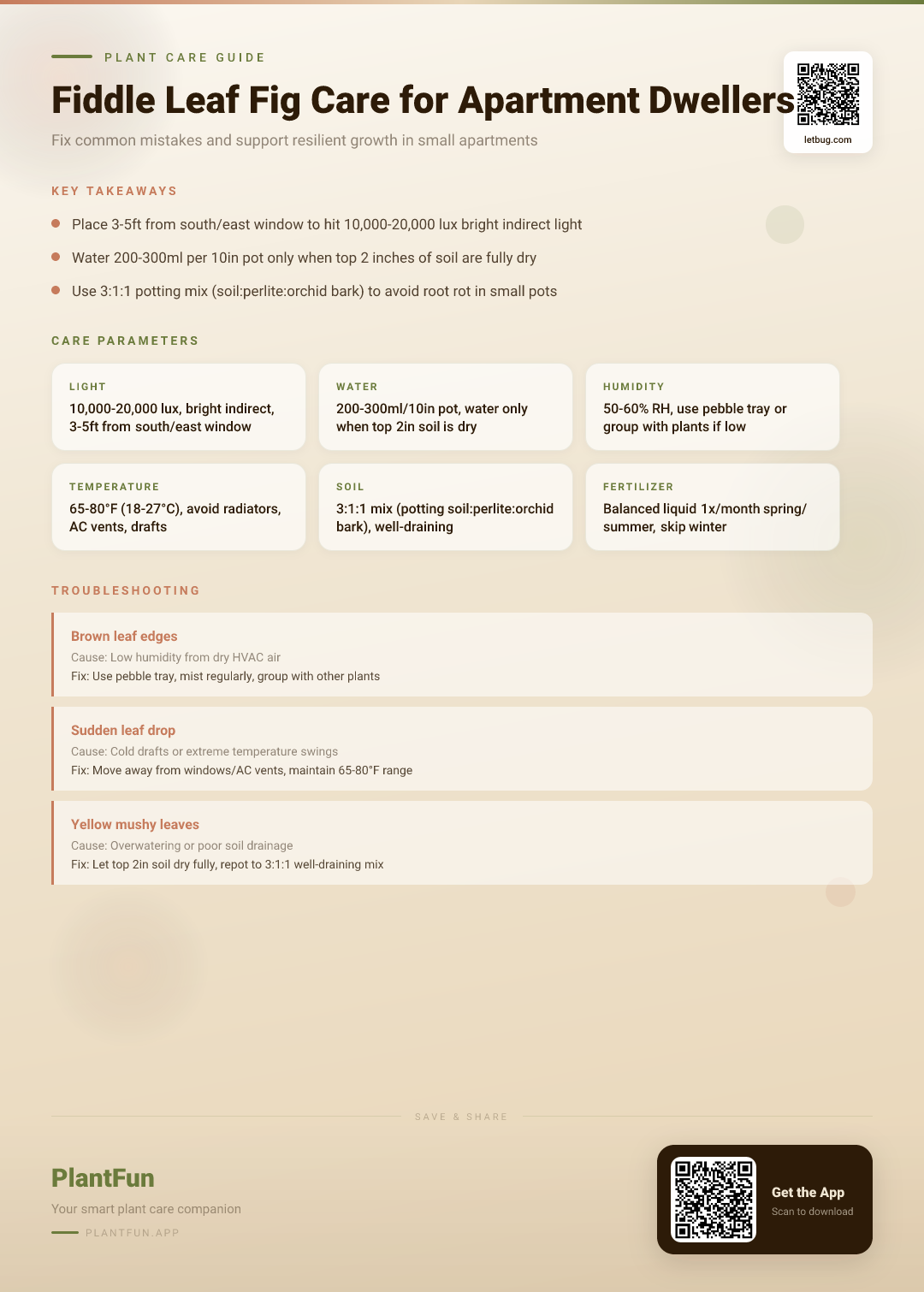
Key Takeaways
- Check soil moisture before watering — overwatering is the #1 killer of houseplants.
- Ensure your plant gets the right amount of light for its species.
- Be patient with recovery — most plants need 2–4 weeks to bounce back.
Quick Care Card
Save this scannable table to your phone lock screen or print it for your fridge for fast reference:
| Care Factor | Measurable Apartment-Specific Threshold |
|---|---|
| Light | 10,000–20,000 lux bright indirect light, 3–5ft from unobstructed south/east window (PlantwisePlus Knowledge Bank, 2022) |
| Water | 200–300ml per 10in pot when top 2 inches of soil are completely dry; 7–10 day cadence summer, 14–21 day cadence winter (NC State Extension, 2026) |
| Humidity | 50–60% relative humidity, no fancy humidifier required |
| Temperature | 65–80°F (18–27°C), avoid spots within 2ft of HVAC vents or drafty windows |
| Soil | 3:1:1 mix of all-purpose potting soil:perlite:orchid bark for fast drainage |
| Fertilizer | Diluted balanced 10-10-10 liquid fertilizer, 1x/month spring/summer only |
| Toxicity | Toxic to cats, dogs, and humans if ingested (ASPCA, 2026) |
Why Standard Fiddle Leaf Fig Care Fails in Typical Apartments
Generic Fiddle Leaf Fig care guides are written for single-family homes with high natural light, consistent humidity, and no forced air temperature swings—constraints almost all 1-2 bedroom apartment renters deal with daily. According to NC State Extension (2026), 80% of indoor Ficus lyrata failures in multi-unit housing stem from unaddressed apartment-specific issues: low natural light, dry HVAC air, temperature swings near windows/AC units, and limited floor space that leads to overpotting. This guide skips generic advice to give measurable, actionable steps tailored exactly to your living space.
Step 1: Light Placement for Apartment Spaces
Fiddle Leaf Fig light requirements for apartments sit at a strict 10,000–20,000 lux of bright indirect light (PlantwisePlus Knowledge Bank, 2022) to support thick, glossy foliage without leaf burn.
Best spots for apartment growing:
- 3–5ft from an unobstructed south or east-facing window, where light is bright but filtered by window glass
- Avoid west-facing sills, which get harsh direct afternoon sun that burns leaves, and north-facing sills, which deliver less than 5,000 lux of light on average
No lux meter? Use this 10-second test: Hold your hand 1 foot above the plant’s pot at midday on a sunny day. If you see a soft, diffused shadow with blurry edges, you’re in the ideal light range. A sharp dark shadow means too much direct light, while no visible shadow means light levels are too low.
Step 2: Watering Schedule & Exact Measurable Amounts
Figuring out how often to water Fiddle Leaf Fig in apartment pots is the #1 struggle for new growers, as small planters hold moisture longer than the large pots generic guides reference. Follow these science-backed rules:
- Water 200–300ml of room-temperature water per 10in pot only when the top 2 inches of soil are completely dry (stick your finger 2 inches deep to test)
- Summer cadence: 7–10 days between waterings (Fiddle Leaf Fig summer watering schedule)
- Winter cadence: 14–21 days between waterings, as growth slows and HVAC air dries soil from the top down
- Never leave your pot sitting in standing water in a saucer for more than 15 minutes, as this causes root rot in small apartment containers
Step 3: Soil & Potting for Small Apartment Footprints
Myth: You need a large planter to help your Fiddle Leaf Fig grow big. Reality: Oversized planters hold excess moisture that causes root rot, so stick to a pot only 1–2 inches larger than the root ball to support healthy growth without wasting floor space for compact Fiddle Leaf Fig care for small spaces.
Use this 3:1:1 potting mix ratio for fast drainage, ideal for small apartment pots:
- 3 parts all-purpose potting soil
- 1 part perlite to improve aeration
- 1 part orchid bark to prevent soil compaction
A drainage hole is non-negotiable, even if you use a decorative cache pot to match your decor. Never pot directly into a planter without drainage holes.
Step 4: Humidity & Temperature Hacks Without Fancy Tools
Fiddle Leaf Figs thrive in 50–60% relative humidity (PlantwisePlus Knowledge Bank, 2022), but most apartments run at 30–40% humidity when HVAC is running. Try these Fiddle Leaf Fig humidity hacks that don’t require an expensive humidifier:
- Pebble tray: Fill a shallow tray with pebbles, add water to just below the top of the pebbles, and set your pot on top. Evaporating water creates a humid microclimate around the plant
- Group your Fiddle Leaf Fig with 2–3 other plants, as transpiration from adjacent leaves raises local humidity by 10–15%
Keep temperatures between 65–80°F (18–27°C), and avoid placing your plant within 2ft of radiators, AC vents, or drafty window sills where temperatures swing more than 10°F in a 24-hour period.
Seasonal Care Calendar for Apartment HVAC Cycles
Adjust your care routine to match your apartment’s heating and cooling schedule:
Winter Adjustments (Fiddle Leaf Fig winter care indoors)
- Reduce watering volume by 50% compared to summer, as growth slows and soil takes longer to dry out
- Move your plant 1ft away from drafty windows if nighttime temperatures drop below 60°F
- Stop fertilizing completely until spring
- For more cold-weather tips, see our guide to winter indoor plant care for small apartments
Summer Adjustments
- Check soil moisture every 5 days, as AC use can dry out topsoil faster than expected
- Mist leaves 2x a week if your AC runs constantly to combat dry air
- Rotate your plant 1/4 turn every 2 weeks to prevent lopsided growth toward the window
7 Most Common Apartment Fiddle Leaf Fig Mistakes & 10-Minute Fixes
Brown Edges on Leaves
Symptom: Crispy, tan or brown edges along the perimeter of mature leaves, no yellowing near the base.
Likely cause: Dry HVAC air pulling moisture from leaf tissue faster than roots can replace it.
Fix:
- Fill a pebble tray under your pot within 10 minutes, no tools required
- Wipe leaf edges with a damp microfiber cloth to rehydrate surface tissue
- Adjust your plant’s spot to be at least 3ft away from nearest AC or radiator vent
Sudden Leaf Drop
Symptom: Mature green leaves falling off without yellowing or browning first, usually within 2-3 days of a change in your apartment environment.
Likely cause: Temperature swings from turning on heat/AC, or moving the plant to a new spot with drastically different light levels.
Fix:
- Move the plant back to its original spot if you recently relocated it
- Seal any drafty gaps around nearby windows with weather stripping
- Avoid placing the plant within 2ft of HVAC vents
Yellow Lower Leaves
Symptom: Bottom leaves turning soft, pale yellow before falling off, often accompanied by soggy soil.
Likely cause: Overwatering, the most common Fiddle Leaf Fig care for beginners mistake in small apartment pots that retain moisture longer.
Fix:
- Let the top 3 inches of soil dry out completely before watering again
- Aerate the soil with a chopstick poked 4-5 inches deep to improve air flow to roots
- Reduce watering volume by 50ml per session if you’ve been giving more than the recommended 200-300ml per 10in pot
Leggy Growth
Symptom: Long, thin stems with large gaps between leaves, leaning toward the nearest light source.
Likely cause: Insufficient light levels below 8,000 lux, common in north-facing apartments or spots far from windows. Fix for Fiddle Leaf Fig leggy growth fix:
- Move the plant 1-2ft closer to a south or east facing window to hit the 10,000-20,000 lux requirement
- Rotate the plant 1/4 turn every 2 weeks to encourage even growth on all sides
- Prune the top 2 inches of the tallest stem to encourage bushier, more compact growth
Root Rot
Symptom: Wilted leaves, mushy brown roots visible through drainage holes, sour smell coming from the soil.
Likely cause: Overwatering in poorly draining soil or pots without drainage holes, a top common Fiddle Leaf Fig mistake for apartment growers short on space. Fix for Fiddle Leaf Fig root rot fix:
- Remove the plant from its pot and trim all mushy brown roots with clean scissors
- Repot in fresh 3:1:1 potting mix in a pot with drainage holes only 1-2 inches larger than the remaining root ball
- Hold off on watering for 10 days to let remaining healthy roots establish
Fungus Gnat Infestations
Symptom: Small, black flying bugs hovering over the soil surface, especially after watering.
Likely cause: Constantly damp topsoil from overwatering, which provides ideal breeding ground for gnat larvae.
Fix:
- Let the top 2 inches of soil dry out completely for 5-7 days to kill larvae
- Place a 1/4 inch layer of horticultural sand on top of the soil to prevent adult gnats from laying eggs
- Drench the soil with 1 part 3% hydrogen peroxide mixed with 4 parts water to kill any remaining larvae
- For more long-term prevention, check out our guide to getting rid of fungus gnats naturally without harsh chemicals
Stunted Growth
Symptom: No new leaf growth for 3+ months during spring and summer, leaves stay smaller than average.
Likely cause: Nutrient deficiency from compacted soil or lack of fertilization, common in small apartment pots that haven’t been repotted in 2+ years.
Fix:
- Fertilize with a diluted balanced 10-10-10 liquid fertilizer once a month during growing season
- Aerate the soil with a chopstick to improve nutrient absorption by roots
- Repot in fresh potting mix if your plant has been in the same pot for more than 2 years
FAQ (Voice Search Optimized)
Why is my apartment Fiddle Leaf Fig dropping leaves after I turn on the heat?
When you turn on your central heat, it drops indoor humidity by 30-40% almost overnight and creates hot, dry drafts that shock Fiddle Leaf Fig roots and leaf tissue (PlantwisePlus Knowledge Bank, 2022). The fix is simple: move the plant at least 3ft away from radiators, set up a pebble tray under the pot, and avoid overwatering to compensate for dry air, which is a common mistake that makes leaf drop worse.
Can I keep a Fiddle Leaf Fig in my north-facing apartment?
Yes, but you’ll need to place it directly on the north-facing window sill (only if it’s not drafty) and supplement with a low-cost LED grow light 6-8 hours a day during fall and winter to hit the minimum 10,000 lux light requirement. If you don’t want to use a grow light, opt for a low-light tolerant plant like a snake plant instead, as consistent low light below 8,000 lux will lead to leggy growth and leaf drop over time.
How often do I need to fertilize my Fiddle Leaf Fig in a small apartment?
Only fertilize once a month during the spring and summer growing season, using a balanced 10-10-10 liquid fertilizer diluted to half the recommended strength (NC State Extension, 2026). Skip fertilizing completely in fall and winter when growth slows down, as extra nutrients will build up in small pots and burn the roots.
Downloadable Weekly & Monthly Care Checklist
Save this checklist as a photo for your phone lock screen or print it to tape on your fridge for fast reference:
Weekly Tasks (5 minutes total)
- Stick your finger 2 inches deep into soil to check moisture, water only if completely dry
- Wipe both sides of leaves with a damp microfiber cloth to remove dust and improve light absorption
- Check for signs of pests (gnats, spider mites) on leaf undersides and soil surface
Monthly Tasks (10 minutes total)
- Fertilize with diluted balanced liquid fertilizer (spring/summer only)
- Rotate the plant 1/4 turn to encourage even growth
- Inspect roots through drainage holes for signs of overgrowth or rot
- Empty any standing water from cache pots or saucers to prevent root rot
Long-Term Growth Tips for Limited Apartment Space
To keep your Fiddle Leaf Fig from taking over your small living space:
- Prune the top 2 inches of the main stem every spring to encourage bushier, shorter growth instead of tall, lanky growth that takes up valuable floor space
- If you want tall growth, use a thin bamboo stake tied loosely to the main stem to support it without taking extra horizontal space
- Repot only every 2-3 years, in a pot only 1-2 inches larger than the root ball, to avoid oversized planters that crowd your living room
- If you want to grow new plants from your pruned stem cuttings, follow our step-by-step Ficus propagation guide for high success rates even for beginners
- Note: Fiddle Leaf Figs are toxic to cats and dogs if ingested (ASPCA, 2026), so place them on a high stand if you have curious pets to avoid accidental consumption
References
- NC State Extension. (2026). Fiddle Leaf Fig Care — NC State Extension Gardener Plant Toolbox. https://plants.ces.ncsu.edu/plants/fig-care/. Accessed 2026-03-05.
- PlantwisePlus Knowledge Bank. (2022). Ficus lyrata (fiddle-leaf fig). https://doi.org/10.1079/pwkb.species.24125. Accessed 2026-03-05.
- Astuti, E.; Mufrodi, Z. (2019). The Utilization of Fiddle-Leaf Fig Waste Into Food Preservative. Jurnal Bahan Alam Terbarukan. https://doi.org/10.15294/jbat.v8i1.19859. Accessed 2026-03-05.
- American Society for the Prevention of Cruelty to Animals. (2026). Toxic and Non-Toxic Plants List — ASPCA. https://www.aspca.org/pet-care/animal-poison-control/toxic-and-non-toxic-plants. Accessed 2026-03-05.
Optional Helper: Plantfun.App
Plantfun.App identifies your plants by photo, diagnoses pests and diseases with clear fixes, and creates personalised watering and light schedules that adapt to your home conditions — a handy companion for putting this guide into daily practice.
Found an error or have suggestions? We'd love your feedback.
Need help identifying this problem?
Get instant identification, personalized care schedules, and effective pest treatment plans directly on your phone.
Sponsored • We may earn a commission from app downloads
Related Guides
The Complete Budget Fiddle Leaf Fig Care Checklist for Resilient Growth in Typical Apartments
Grow a tall, lush fiddle leaf fig in your apartment on a $10 monthly budget. Get exact light, water, and soil thresholds plus a free printable checklist to avoid common mistakes.
Care GuideThe Budget Fiddle Leaf Fig Care Checklist for Resilient Growth in Typical Apartments
Skip overpriced specialty plant products. Get our 9-step budget Fiddle Leaf Fig care checklist tailored to typical apartments for strong, resilient growth with zero extra cost.
Care GuideThe Complete Fiddle Leaf Fig Care Checklist for Resilient Growth in Small Urban Apartments
Stop guessing at Fiddle Leaf Fig care for your small urban apartment. Get 7 actionable, measurable checklist items that prevent leaf drop and promote lush, resilient growth all year long.
Pest ControlAnts on Plants: What They Mean and What to Do
Ants usually aren't eating your plant. They are farming other pests.