
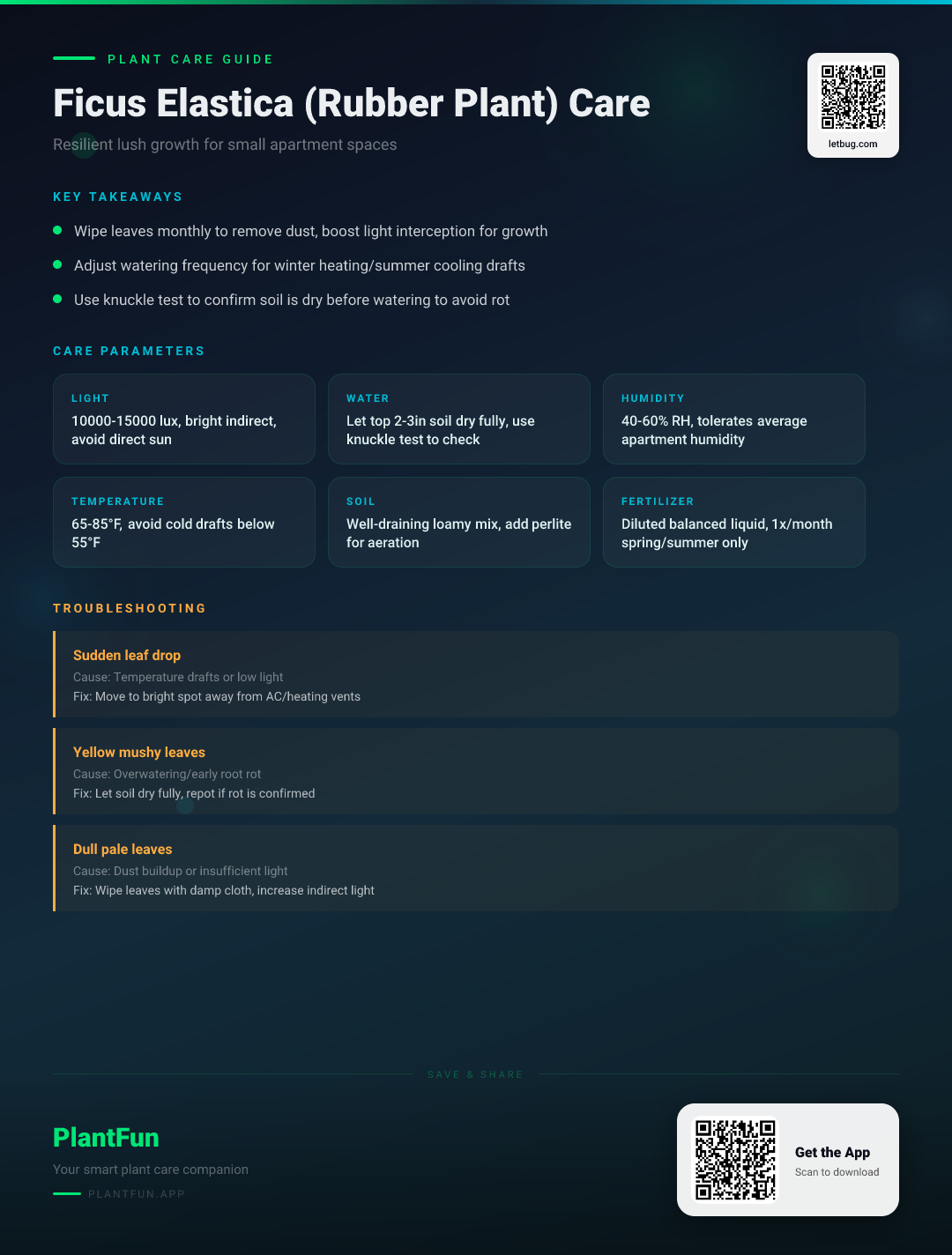
Key Takeaways
- Check soil moisture before watering — overwatering is the #1 killer of houseplants.
- Ensure your plant gets the right amount of light for its species.
- Be patient with recovery — most plants need 2–4 weeks to bounce back.
Quick Care Card: The Non-Negotiable Thresholds (Lux, Temperature, Humidity, and Water)
| Requirement | Optimal Threshold |
|---|---|
| Light | 10,000–15,000 Lux (Bright, Indirect) |
| Temperature | 18°C–29°C (65°F–85°F) |
| Humidity | 40%–60% |
| Water | Allow top 50% of soil to dry out |
| Soil | Well-draining, peat-based mix |
| Fertilizer | Balanced 10-10-10 (Monthly in spring/summer) |
| Toxicity | Toxic to cats and dogs (ASPCA, 2026) |
TL;DR: Why Your Rubber Plant Struggles in Smaller Living Spaces
When I first brought home my Ficus elastica, I made the mistake of placing it in a dimly lit corner. Within three weeks, the bottom leaves began to yellow and drop. Rubber plants struggle in apartments primarily due to light deprivation and stagnant airflow. In small rooms, light levels often plummet, and lack of air movement prevents the soil from drying evenly, leading to root stress. By mimicking their native tropical environment—prioritizing consistent light and strategic watering—you can avoid these common pitfalls.
Understanding the Anatomy of Resilient Growth: Light Interception at 15,000 Lux
Ficus elastica is a sun-loving species that thrives in the understory of tropical forests (PlantwisePlus Knowledge Bank, 2022). In an apartment, your goal is to maximize photon interception. While you may not need a professional light meter, aim for a spot where the plant can “see” the sky without the sun scorching its leaves directly. If the plant is leaning, it is begging for more light—rotate it 90 degrees every week to maintain an upright, symmetrical habit.
Mastering the Moisture Balance: The ‘Knuckle Test’ vs. Moisture Meter Accuracy
I prefer the ‘knuckle test’ over electronic meters, which can sometimes provide false readings in dry, compacted peat. Simply insert your finger into the soil up to your second knuckle. If you feel moisture, wait another two days. The Ficus elastica is a hearty plant, but it does not tolerate “wet feet,” which leads to root suffocation and eventual leaf drop (NC State Extension, 2026).
Step-by-Step: Managing Soil Hydration in High-Density Apartment Air
- Assess Drainage: Ensure your pot has drainage holes. If using a decorative cachepot, empty it 30 minutes after watering.
- The Pour: Pour water evenly across the surface until it flows freely from the base (aim for 250ml–500ml depending on plant size).
- Clear the Tray: Never let the plant sit in standing water, as this creates a breeding ground for pathogens (Esser, 1981).
- Airflow: In high-density apartments, place a small fan nearby to circulate air, which helps mimic the plant’s natural habitat and prevents fungal issues.
Seasonal Care Calendar: How to Adjust for Winter Heating and Summer Cooling
- Spring/Summer (Growth Phase): Increase water frequency as temperatures rise. Apply a diluted balanced fertilizer once a month.
- Autumn/Winter (Dormancy): Growth slows significantly. Reduce watering frequency by 50% and cease fertilization. Keep the plant away from drafty radiators or air conditioning vents, as rapid temperature fluctuations trigger leaf drop.
Voice Search FAQ: Why is my Rubber Plant dropping leaves in my apartment?
Leaf drop is usually a stress response to radical changes in light or overwatering. If the lower leaves are yellowing and dropping, check your soil moisture; if they are crisp and browning, the plant is likely too close to a heat source or suffering from light shock.
Voice Search FAQ: Can I keep my Ficus elastica in a room without a window?
No. While Ficus elastica is tolerant of lower light than some other species, it will eventually decline in a windowless room. If you lack natural light, you must supplement with a high-intensity LED grow light set to an 8-12 hour cycle to mimic natural day lengths.
Common Apartment Pitfalls: Dust Accumulation and Poor Air Circulation
In small apartments, dust collects on large leaves rapidly, which physically blocks the plant’s ability to photosynthesize. I wipe my plant’s leaves with a damp cloth every two weeks. This not only improves light absorption but also keeps pests like spider mites at bay (Esser, 1981).
Professional Diagnostic Tips: Identifying Root Rot Before It Becomes Visible
Root rot often starts with a sour smell from the soil or mushy, dark brown stems at the base. If you suspect this, gently slide the plant out of the pot. Healthy roots are firm and light-colored; rotted roots are dark, slimy, and break easily when touched (NC State Extension, 2026).
Advanced Care: Techniques for Encouraging Lateral Branching in Small Spaces
To make a rubber plant bushy rather than tall and spindly, you can use a technique called “notching” or simply prune the top apical bud. By removing the main growing tip, you force the plant to redirect its energy into lateral dormant buds, encouraging a fuller, more architectural shape.
References
- PlantwisePlus Knowledge Bank. (2022). Ficus elastica (rubber plant). https://doi.org/10.1079/pwkb.species.24090. Accessed 2026-03-09.
- Esser, R. (1981). Distribution of Aphelenchoides fragariae in Leaves of Ficus elastica and Asplenium nidus. Plant Disease. https://doi.org/10.1094/pd-65-425. Accessed 2026-03-09.
- ASPCA. (2026). Toxic and Non-Toxic Plants List — ASPCA. https://www.aspca.org/pet-care/animal-poison-control/toxic-and-non-toxic-plants. Accessed 2026-03-09.
- NC State Extension. (2026). Ficus Elastica — NC State Extension Gardener Plant Toolbox. https://plants.ces.ncsu.edu/plants/ficus-elastica/. Accessed 2026-03-09.
Optional Helper: Plantfun.App
Plantfun.App identifies your plants by photo, diagnoses pests and diseases with clear fixes, and creates personalised watering and light schedules that adapt to your home conditions — a handy companion for putting this guide into daily practice.
Found an error or have suggestions? We'd love your feedback.
Need help identifying this problem?
Get instant identification, personalized care schedules, and effective pest treatment plans directly on your phone.
Sponsored • We may earn a commission from app downloads
Related Guides
Ficus Elastica in a Dim Apartment: The Complete Rubber Plant Care Guide for Resilient Growth
Transform your Ficus elastica in a dim apartment with these 5 expert tips. Master light optimization and watering to achieve lush, resilient rubber plant growth.
Care GuideThe Complete Rubber Plant Care Checklist for Resilient Growth in Small Urban Apartments
Stop stunting your rubber plant’s growth in your apartment. Get 8 actionable care steps, exact light and water thresholds, and a free printable checklist for lush, resilient foliage year-round.
Care GuideThe Complete Ficus Elastica (Rubber Plant) Care Checklist for Resilient Growth in Typical Apartments
Stop dealing with droopy, yellowing rubber plant leaves. Get exact light, water, and humidity thresholds plus a mistake-proof checklist to keep your Ficus elastica thriving year-round in your apartment.
Pest ControlAnts on Plants: What They Mean and What to Do
Ants usually aren't eating your plant. They are farming other pests.