
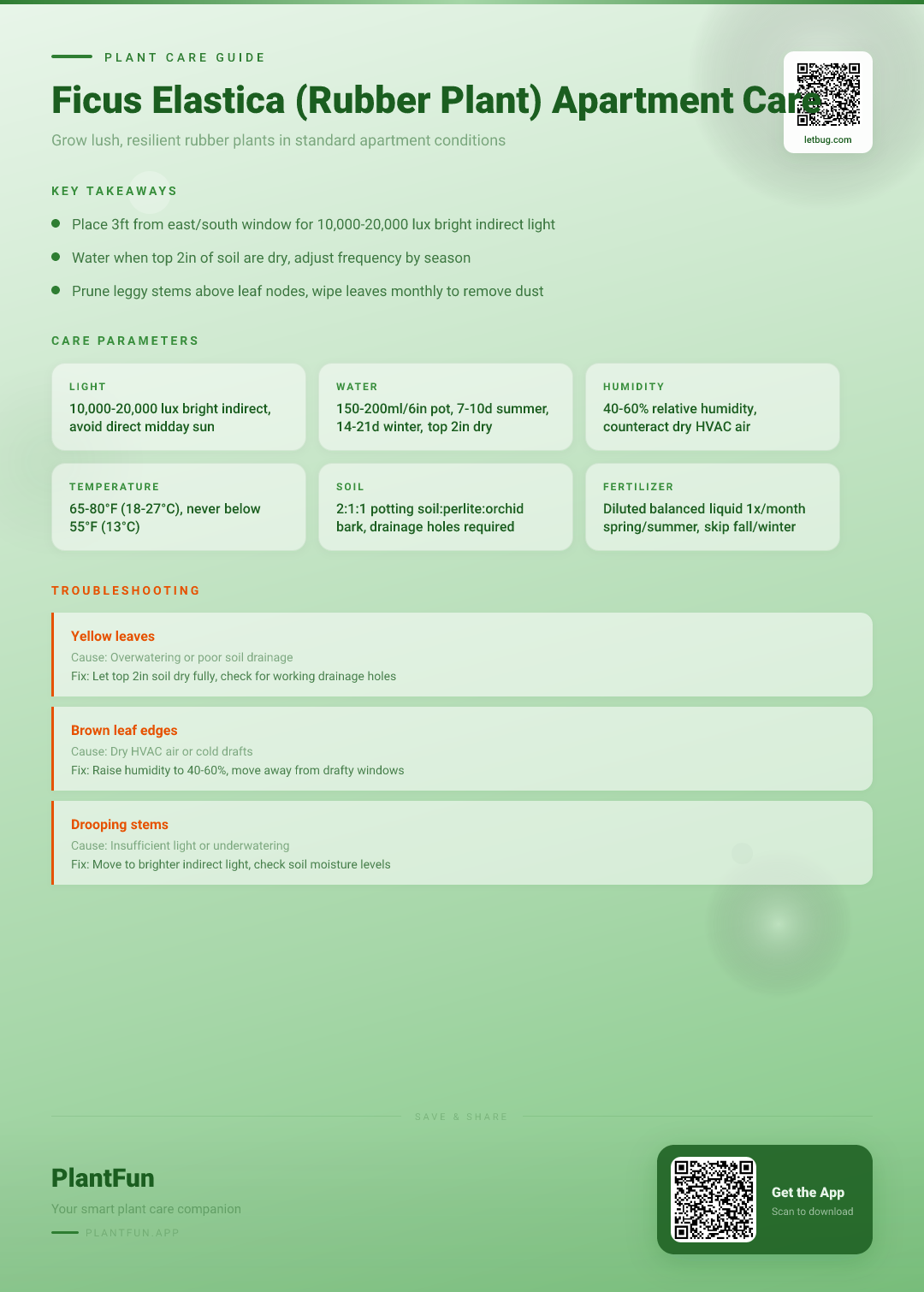
Key Takeaways
- Check soil moisture before watering — overwatering is the #1 killer of houseplants.
- Ensure your plant gets the right amount of light for its species.
- Be patient with recovery — most plants need 2–4 weeks to bounce back.
Quick Care Card: At-a-Glance Apartment Ficus Elastica Thresholds
| Care Factor | Apartment-Specific Threshold | Quick Notes |
|---|---|---|
| Light | 10,000–20,000 lux bright indirect | Avoid direct midday sun through glass |
| Water | 150–200ml for 6in pots, when top 2in of soil is dry | 7–10 days summer, 14–21 days winter |
| Humidity | 40–60% relative humidity | Adjust for forced air HVAC systems |
| Temperature | 65–80°F (18–27°C) | Never place below 55°F (13°C) near drafts |
| Soil | 2:1:1 mix of potting soil, perlite, orchid bark | Drainage holes are non-negotiable |
| Fertilizer | Diluted 10-10-10 liquid fertilizer, 1x/month spring/summer | Skip entirely in fall/winter |
| Toxicity | Toxic to cats, dogs, and small children if ingested | Keep out of reach of curious pets/kids (ASPCA, 2026) |
Why This Guide Is Built For Apartment Dwellers
Generic rubber plant care advice is designed for greenhouse or outdoor conditions, not the unique stressors of 600–1000 sq ft urban apartments: low north-facing light blocked by neighboring buildings, dry forced air from heating and AC units, drafty window sills, limited counter space, and inconsistent watering schedules from busy work routines. NC State Extension rates Ficus elastica as one of the most adaptable indoor plants, but it fails to thrive in apartments when these specific stressors are not addressed (NC State Extension, 2026).
Myth: Rubber plants need full, direct sun to grow fast. Reality: Glass windows amplify UV rays in apartments, leading to leaf burn in as little as 30 minutes of midday sun, so bright indirect light is always better for indoor growth. If you’re new to houseplant care, our Ficus elastica care for beginners guide covers the basics before you dive into apartment-specific tweaks.
Step 1: Light Placement That Avoids Leaf Burn & Leggy Growth
Rubber plant light requirements sit at 10,000–20,000 lux of bright indirect light (PlantwisePlus Knowledge Bank, 2022). Ideal spots are 3ft away from an east or south-facing window, filtered by a sheer curtain if the window gets direct midday sun (12–3pm).
Quick test: Hold your palm up at the plant’s intended spot at noon. If you see a sharp, defined shadow, the light is too strong; a soft, diffused shadow means it’s perfect. If you want to measure lux levels accurately, follow our step-by-step guide to testing indoor light levels for apartment plants.
Step 2: Watering Schedule Tailored to Apartment Humidity Levels
Wondering how often to water rubber plant in a small apartment? For a standard 6in nursery pot, water with 150–200ml of room-temperature water only when the top 2 inches of soil are completely dry (NC State Extension, 2026). This works out to every 7–10 days in summer (when AC runs and increases evaporation) and every 14–21 days in winter (when heating dries out the air but plant growth slows).
Quick test: Stick your index finger 2 inches deep into the soil, past the dry surface layer. If it feels damp, wait 2–3 days and test again. Overwatering is the #1 cause of rubber plant death in apartments, so never follow a strict calendar without testing the soil first.
Step 3: Humidity & Temperature Adjustments For Forced Air Apartments
Rubber plant humidity needs are 40–60% relative humidity, with a temperature range of 65–80°F (18–27°C) (PlantwisePlus Knowledge Bank, 2022). Never place your plant within 2ft of AC vents, heating units, or drafty window sills where temperatures drop below 55°F (13°C). A 1981 study found that low humidity and dust buildup make Ficus elastica leaves more susceptible to foliar pests and disease (Esser, 1981).
For low-effort ways to boost humidity without a fancy humidifier, check out our guide to increasing humidity for apartment houseplants.
Step 4: Soil & Potting Setup That Prevents Root Rot
The best soil for rubber plant in apartment growing is a fast-draining 2:1:1 mix of standard indoor potting soil, perlite, and orchid bark. Drainage holes are mandatory for apartment growing, as low indoor air flow slows soil evaporation significantly, leading to root rot if excess water can’t escape. Avoid decorative pots without drainage holes; if you want to use one, keep the plant in its nursery pot inside the decorative pot and empty any standing water after watering.
Step 5: Fertilizing Routine For Slow Apartment Growth
To learn how to make rubber plant grow faster, use a diluted balanced 10-10-10 liquid fertilizer once a month only in spring and summer, when the plant is actively growing (NC State Extension, 2026). Skip fertilizing entirely in fall and winter, when growth slows, as excess salt buildup from fertilizer will burn root systems and cause brown leaf edges.
Step 6: Pruning & Maintenance Tips To Keep Shape Compact
To fix leggy rubber plant growth, trim overgrown stems ¼ inch above a leaf node (the small bump on the stem where leaves grow) to encourage bushy, full growth. Wipe leaves with a damp microfiber cloth once a month to remove apartment dust, which blocks light absorption and slows photosynthesis. Rotate the plant ¼ turn every week to ensure even growth on all sides, so it doesn’t lean toward the nearest window.
Symptom-To-Action Troubleshooting Guide
Yellow Leaves
Symptom: Lower leaves turn pale yellow and fall off, or new leaves are yellow when they unfurl.
Likely cause: Overwatering from following a generic watering schedule without testing soil, or standing water in the pot saucer.
Fix:
- Stop watering immediately and let the top 3 inches of soil dry out completely before watering again.
- Check that the pot has working drainage holes, and empty any standing water from the decorative outer pot within 10 minutes of watering.
Brown Leaf Edges
Symptom: Crispy, brown edges on mature leaves, with the center of the leaf remaining dark green.
Likely cause: Dry forced air from HVAC systems, or exposure to cold drafts near windows or AC vents.
Fix:
- Move the plant at least 2ft away from heating/AC vents and drafty window sills.
- Boost humidity to 40%+ using a pebble tray, humidifier, or grouping it with other humidity-loving plants.
Drooping Stems
Symptom: Stems feel soft and droop, even after recent watering, or leaves drop suddenly after a move.
Likely cause: Severe underwatering, or transplant shock from sudden changes in light, temperature, or humidity when moving apartments (rubber plant drooping after moving is extremely common).
Fix:
- If soil is completely dry, give it a full 200ml watering and let excess water drain.
- If you recently moved, keep the plant in a consistent spot with bright indirect light and avoid adjusting care for 2–4 weeks while it acclimates.
Leggy Sparse Growth
Symptom: Long, thin stems with large gaps between leaves, and growth leans heavily toward the nearest light source.
Likely cause: Insufficient light levels below 10,000 lux, common in north-facing apartments or spots far from windows.
Fix:
- Move the plant to a spot 3ft from an east or south-facing window, or add a grow light set to run 8–10 hours per day.
- Trim leggy stems ¼ inch above a leaf node to encourage new, bushy growth.
Seasonal Care Calendar For Apartment Rubber Plants
This calendar is tailored to northern hemisphere apartment conditions, accounting for winter heating and summer AC use:
- January–February (Winter Heating Season): Water every 14–21 days, run a humidifier near the plant if relative humidity drops below 40%, keep it 3ft away from heating vents, no fertilizer. This follows standard rubber plant winter care best practices.
- March–April (Spring): Start testing soil moisture every 5 days as growth picks up, resume monthly fertilizing, rotate the plant ¼ turn weekly for even growth.
- May–August (Summer AC Season): Follow rubber plant summer watering guidelines of every 7–10 days, keep the plant 2ft away from AC vents, avoid direct midday sun, wipe leaves monthly to remove dust.
- September–October (Fall): Gradually reduce watering frequency as temperatures cool, stop fertilizing entirely, move the plant away from drafty windows as overnight temps drop.
- November–December (Early Winter): Keep the plant off cold window sills where temps drop below 55°F, minimize watering, avoid placing it near holiday draft sources like exterior doors.
Frequently Asked Questions
Can I keep a rubber plant in a north facing apartment?
Yes, as long as you supplement natural light with a full-spectrum grow light that delivers 10,000 lux for 8–10 hours per day (PlantwisePlus Knowledge Bank, 2022). Place the grow light 12–18 inches above the top of the plant for best results.
Why is my rubber plant dropping leaves after I moved?
Ficus elastica is highly sensitive to sudden changes in light, temperature, and humidity, all of which are common when moving between apartments. This stress response is temporary: keep the plant in a consistent spot with bright indirect light, avoid adjusting your care routine, and it will stop dropping leaves and acclimate within 2–4 weeks.
How do I make my rubber plant grow bushier?
Trim leggy stems ¼ inch above a leaf node to trigger new side growth, ensure it gets 10,000–20,000 lux of bright indirect light daily, and fertilize once a month with diluted balanced liquid fertilizer in spring and summer.
How often should I repot my rubber plant in an apartment?
Repot every 2–3 years in spring, only when you see roots growing out of the drainage holes. Use a pot that is 1–2 inches larger than the current pot to avoid overwatering from excess soil volume.
References
- NC State Extension. (2026). Ficus Elastica Care Checklist — NC State Extension Gardener Plant Toolbox. https://plants.ces.ncsu.edu/plants/ficus-elastica/. Accessed 2026-03-02.
- PlantwisePlus Knowledge Bank. (2022). Ficus elastica (rubber plant). https://doi.org/10.1079/pwkb.species.24090. Accessed 2026-03-02.
- Esser, R. (1981). Distribution of <i>Aphelenchoides fragariae</i> in Leaves of <i>Ficus elastica</i> and <i>Asplenium nidus</i>. Plant Disease. https://doi.org/10.1094/pd-65-425. Accessed 2026-03-02.
- ASPCA. (2026). Toxic and Non-Toxic Plants List — ASPCA. https://www.aspca.org/pet-care/animal-poison-control/toxic-and-non-toxic-plants. Accessed 2026-03-02.
Optional Helper: Plantfun.App
Plantfun.App identifies your plants by photo, diagnoses pests and diseases with clear fixes, and creates personalised watering and light schedules that adapt to your home conditions — a handy companion for putting this guide into daily practice.
Found an error or have suggestions? We'd love your feedback.
Need help identifying this problem?
Get instant identification, personalized care schedules, and effective pest treatment plans directly on your phone.
Sponsored • We may earn a commission from app downloads
Related Guides
The Complete Ficus Elastica (Rubber Plant) Care Guide for Small Apartments: Get Lush Resilient Growth
Grow a lush, resilient rubber plant even in your small apartment. Get exact light levels, watering amounts, and space-saving tips for glossy, low-fuss foliage that won’t outgrow its nook.
Care GuideThe Complete Rubber Plant Care Checklist for Resilient Budget-Friendly Growth in Typical Urban Apartments
Grow a lush, unkillable rubber plant on a tight budget. Get exact light levels, watering amounts, and zero-cost hacks tailored for standard apartment living conditions.
Care GuideThe Complete Rubber Plant Care Guide for Typical Urban Apartments: Resilient Growth Made Easy
Grow a lush, resilient rubber plant in your typical urban apartment without guesswork. Get exact light levels, watering amounts, and a free weekly checklist to avoid yellow leaves and leggy growth.
Pest ControlAnts on Plants: What They Mean and What to Do
Ants usually aren't eating your plant. They are farming other pests.