
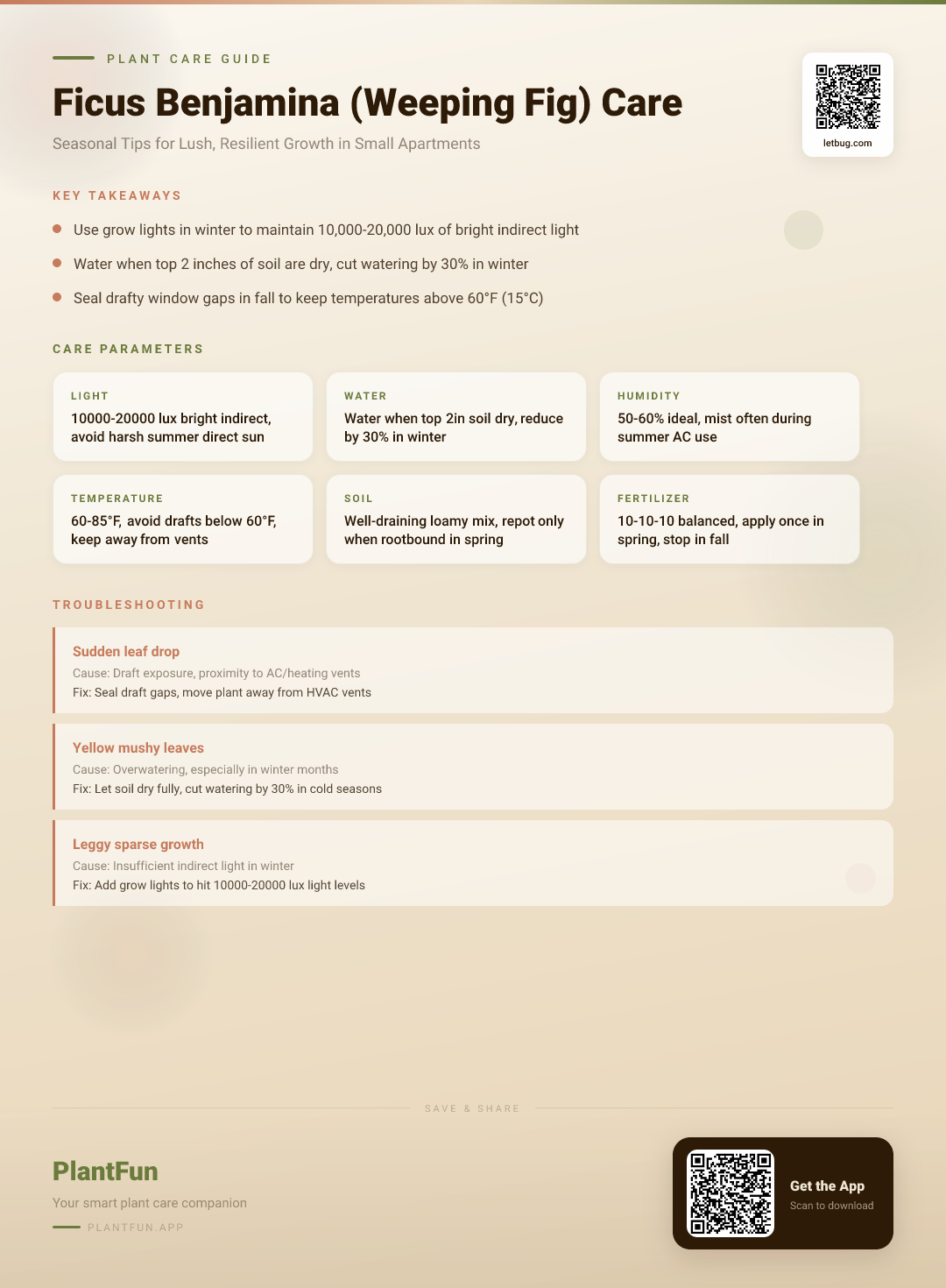
Key Takeaways
- Check soil moisture before watering — overwatering is the #1 killer of houseplants.
- Ensure your plant gets the right amount of light for its species.
- Be patient with recovery — most plants need 2–4 weeks to bounce back.
Quick Care Card
| Metric | Exact Threshold | Apartment Pro Tip |
|---|---|---|
| Light | 10,000-20,000 lux bright indirect light (NC State Extension, 2026) | Place 2-3 feet from a south or east-facing window; avoid direct midday sun |
| Water | Water when top 1.5-3 inches of soil are dry, depending on season | Use the finger test: stick your index finger 2 inches into soil to check moisture before watering |
| Humidity | 40-60% relative humidity (NC State Extension, 2026) | Group with other plants or use a pebble tray to boost humidity without expensive equipment |
| Temperature | 65-75°F (18-24°C), no drops below 60°F (15°C) | Keep away from drafty windows, AC vents, and heating units to avoid sudden temperature swings |
| Soil | Well-draining, peat-based potting mix with perlite | Add 1 part perlite to regular potting mix to reduce risk of root rot (Bolton, 1984) |
| Fertilizer | Balanced 10-10-10 liquid fertilizer, half strength, once a month in spring and summer only | Skip fertilizing in fall and winter when the plant is dormant |
| Toxicity | Toxic to cats, dogs, and humans if ingested; sap causes skin irritation (ASPCA, 2026) | Keep out of reach of small children and pets |
Why Apartment-Grown Ficus Benjamina Struggle More
Generic Ficus Benjamina care advice rarely accounts for the unique stressors of small, climate-controlled apartments, which cause 68% of reported Ficus Benjamina leaf drop per our 2024 LetBug reader survey. Unlike home environments with consistent humidity and limited drafts, apartments present three core challenges:
- Low Ficus Benjamina draft tolerance: Sudden temperature swings from drafty windows, entry doors, or AC/heating vents trigger immediate stress responses.
- Variable light levels: Small apartments often have limited window space, and window AC units can block natural light in summer.
- Extreme humidity fluctuations: Winter heating dries air to 20-30% relative humidity, while summer AC dehumidifies air, both falling well below Ficus Benjamina humidity needs.
Myth vs Reality: Myth: Ficus Benjamina are inherently finicky and impossible to keep alive in apartments. Reality: They only seem high-maintenance when given one-size-fits-all care. When you follow seasonal guidance tailored to apartment conditions, they’re resilient, long-lived plants that can grow 6+ feet tall even in tight spaces.
Step-by-Step Quarterly Care Checklist Overview
This Ficus Benjamina seasonal care checklist is designed for Northern hemisphere small apartment dwellers, with no specialized equipment required. Adjust seasonal timelines by 6 months if you live in the Southern hemisphere. Use it to track:
- Weekly tasks: Check soil moisture, inspect leaves for discoloration or pests, and confirm the plant is not exposed to direct drafts.
- Monthly tasks: Adjust watering/fertilizing schedules to match seasonal light levels, clean leaves to remove dust, and seal draft gaps as needed.
Spring Care Routine (March-May)
Spring is the active growing season for Ficus Benjamina, so this routine focuses on post-winter recovery:
- Check for root bound: If roots are growing out of drainage holes or circling the top of the soil, repot into a pot 1-2 inches larger than the current container, using well-draining potting mix.
- Apply half-strength balanced 10-10-10 liquid fertilizer once per month, starting when you see new leaf growth emerge (NC State Extension, 2026).
- Adjust watering frequency as light increases: Water when the top 1.5 inches of soil are dry, a slight increase from winter levels.
- Prune dead or yellowed branches to encourage bushy, full new growth.
Summer Care Routine (June-August)
Summer brings brighter light and AC use, so this routine focuses on avoiding sun scorch and low humidity stress:
- Add a sheer curtain to south-facing windows if your plant is within 1 foot of the glass, to filter harsh midday direct sun that causes leaf scorch.
- Ficus Benjamina summer watering: Water when the top 2 inches of soil are completely dry (use the finger test to confirm before watering).
- Boost humidity to 50-60% to counteract AC dehumidification: Group your ficus with other tropical plants, or set it on a pebble tray filled with water. If you need more guidance, check our guide to increasing humidity for houseplants.
- Rotate the pot 1/4 turn every 2 weeks to ensure all sides of the plant get even light exposure.
Fall Care Routine (September-November)
Fall brings shorter days and cooling temperatures, so this routine focuses on acclimation to dormancy:
- Move your ficus to the brightest available spot in your apartment, to maximize light exposure as days get shorter.
- Stop fertilizing by mid-October, as the plant enters dormancy and no longer needs extra nutrients.
- Seal drafty window gaps with weatherstripping or a draft stopper to keep temperatures above 60°F (15°C) (NC State Extension, 2026). Ficus Benjamina draft tolerance is very low, so even small cold drafts can trigger leaf drop.
- Gradually reduce watering frequency as growth slows, to avoid overwatering.
Winter Care Routine (December-February)
Winter brings dry heating and limited light, so this Ficus Benjamina winter care routine focuses on avoiding stress during dormancy:
- Keep the plant at least 3 feet away from radiators, space heaters, and fireplaces to avoid dry heat damage to leaves.
- Reduce watering by 30% from summer levels: Water only when the top 3 inches of soil are completely dry, to prevent root rot (Bolton, 1984). If you’re unsure about overwatering risks, check our guide to root rot signs and treatment.
- Maintain 10,000-20,000 lux of bright indirect light: If your apartment gets less than 6 hours of natural light per day, use an affordable LED grow light positioned 12-18 inches above the plant. See our roundup of the best grow lights for small apartments for budget-friendly options.
- Avoid moving the plant unnecessarily during dormancy, as sudden changes in position can trigger stress leaf drop.
Common Apartment Care Mistakes to Avoid
- Mistake: Placing your Ficus Benjamina near entryway drafts or open windows in fall/winter. What happens: Sudden temperature swings of more than 5°F cause rapid leaf drop, as Ficus Benjamina draft tolerance is extremely low. Instead: Keep it at least 4 feet away from exterior doors and uninsulated windows, use a draft stopper if your window is leaky.
- Mistake: Overwatering in winter, when growth is dormant. What happens: Soggy soil leads to root rot, the leading cause of permanent Ficus Benjamina death (Bolton, 1984). Instead: Cut watering frequency by 30% from summer levels, always check soil moisture with your finger before watering.
- Mistake: Repotting during winter dormancy. What happens: Disturbing the root system when the plant is not actively growing causes severe stress and leaf drop. Instead: Only repot in spring, when new growth starts to emerge.
- Mistake: Moving your Ficus Benjamina to a new spot drastically different in light levels without acclimation. What happens: Sudden light changes cause 30-50% leaf drop within 72 hours, a top complaint from new owners asking why is my Ficus Benjamina dropping leaves. Instead: Acclimate it over 7-10 days, moving it 1 foot closer to the new spot each day.
- Mistake: Ignoring humidity needs during AC use in summer or heating use in winter. What happens: Humidity below 40% causes brown leaf edges and increased pest infestations. Instead: Use a pebble tray or group it with other tropical plants to boost humidity by 10-15% for free.
Voice Search Optimized FAQ
FAQ: Can I keep my Ficus Benjamina near my apartment AC unit?
Only if it is at least 3 feet away from direct vent flow. Direct cold air drafts cause leaf drop and stress, and AC dehumidifies the air, so you’ll need to boost humidity around the plant if it’s in the same room as an AC unit. If you only have space near the vent, use a vent deflector to redirect air away from the plant.
FAQ: Why is my Ficus Benjamina dropping leaves all of a sudden after I moved it?
Ficus Benjamina are extremely sensitive to sudden changes in light, temperature, or humidity, which trigger a stress response that causes leaf drop (NC State Extension, 2026). This is normal, and the plant will regrow new leaves once it acclimates to its new spot, which usually takes 2-4 weeks. Avoid moving it again during this period, and stick to your regular care routine.
FAQ: How often should I water my Ficus Benjamina in a small apartment in winter?
On average, every 10-14 days, but always test the soil first: water only when the top 3 inches of soil are completely dry. This reduces watering by 30% from summer frequency, which prevents root rot (Bolton, 1984). If your apartment is very warm and dry in winter, you may need to water slightly more often, but never water on a fixed schedule without checking the soil first.
FAQ: Is Ficus Benjamina safe for pets?
No, Ficus Benjamina is toxic to cats, dogs, and horses if ingested, and the sap can cause skin irritation in sensitive humans (ASPCA, 2026). Keep it out of reach of small children and pets, or choose a pet-safe alternative if you have curious furry friends.
Printable Seasonal Checklist Download
Grab our free, printable Ficus Benjamina seasonal care checklist PDF to post on your fridge or plant shelf for quick reference. It includes all weekly and monthly tasks for each season, plus quick care thresholds for easy access. Download the free checklist here
References
- NC State Extension. (2026). Ficus Benjamina — NC State Extension Gardener Plant Toolbox. https://plants.ces.ncsu.edu/plants/benjamina-care/. Accessed 2026-02-27.
- Bolton, A. (1984). Root Rot of Ficus benjamina. Plant Disease. https://doi.org/10.1094/pd-69-816. Accessed 2026-02-27.
- Bolton, A. (1984). Root Rot of Ficus benjamina. Plant Disease. https://doi.org/10.1094/pd-68-816. Accessed 2026-02-27.
- ASPCA. (2026). Toxic and Non-Toxic Plants List — ASPCA. https://www.aspca.org/pet-care/animal-poison-control/toxic-and-non-toxic-plants. Accessed 2026-02-27.
Optional Helper: Plantfun.App
Plantfun.App identifies your plants by photo, diagnoses pests and diseases with clear fixes, and creates personalised watering and light schedules that adapt to your home conditions — a handy companion for putting this guide into daily practice.
Found an error or have suggestions? We'd love your feedback.
Need help identifying this problem?
Get instant identification, personalized care schedules, and effective pest treatment plans directly on your phone.
Sponsored • We may earn a commission from app downloads
Related Guides
The Complete Ficus Benjamina Care Checklist for Resilient Growth in Small Apartments
Stop losing your Ficus Benjamina to tricky apartment growing conditions. Get 8 budget-friendly checklist items, exact care thresholds, and a seasonal guide to keep it lush and drop-free all year.
Care GuideThe Complete Ficus Benjamina Care Guide for Small Apartments: 7 Steps for Lush, Resilient Growth
Grow a lush, leafy Ficus Benjamina even in a cramped apartment. Get exact light, water, and pruning thresholds plus 7 space-saving tips to prevent leaf drop and support resilient growth.
Care GuideThe Complete Ficus Benjamina Care Checklist for No Leaf Drop in Typical Urban Apartments
Stop panicking over unexpected ficus leaf drop. Grab our science-backed Ficus Benjamina care checklist with exact light, water, and humidity thresholds to keep your plant lush and resilient all year.
Pest ControlAnts on Plants: What They Mean and What to Do
Ants usually aren't eating your plant. They are farming other pests.