
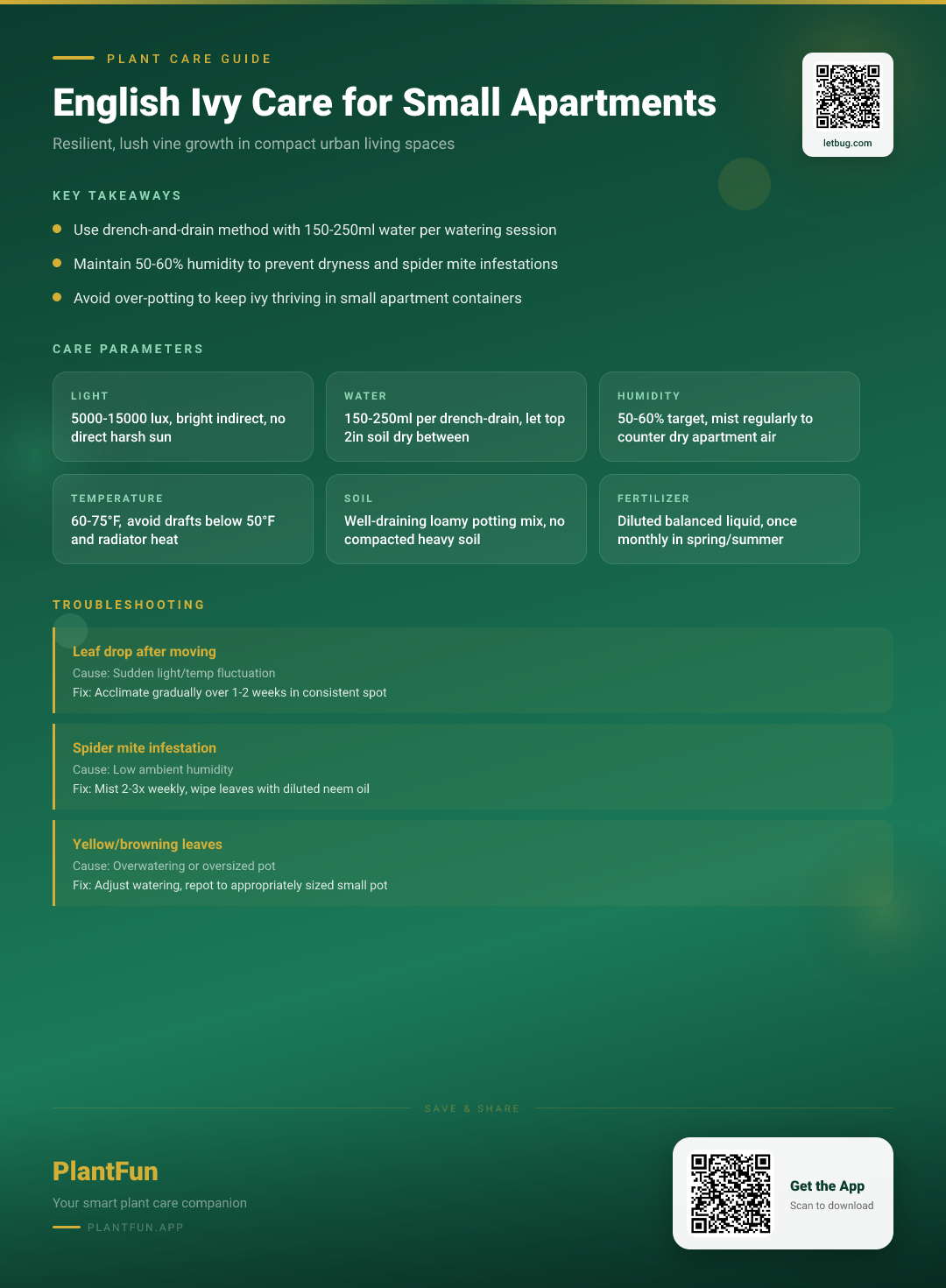
Key Takeaways
- Check soil moisture before watering — overwatering is the #1 killer of houseplants.
- Ensure your plant gets the right amount of light for its species.
- Be patient with recovery — most plants need 2–4 weeks to bounce back.
When I first brought home my first English Ivy (Hedera helix), I made the classic mistake of placing it directly above a radiator in my studio apartment. Within weeks, the leaves turned crispy and brown—a harsh introduction to the realities of indoor plant care for beginners. Through trial and error and a deeper look at the science, I learned that this plant is incredibly resilient, provided you mimic its preferred micro-climate.
Quick Care Card: Essential Thresholds for Apartment Ivy
| Feature | Requirement |
|---|---|
| Light | 5,000–15,000 Lux (Bright, indirect) |
| Watering | Drench when top 2 inches of soil are dry |
| Humidity | 50–60% (Use pebble trays or humidifiers) |
| Temperature | 50°F–70°F (10°C–21°C) |
| Soil | Well-draining, peat-based mix |
| Fertilizer | Balanced liquid feed during growing season |
| Toxicity | Toxic to cats and dogs (ASPCA, 2026) |
Why English Ivy Struggles in Compact Urban Spaces
English Ivy naturally thrives in temperate, humid environments with constant airflow (NC State Extension, 2026). In a small apartment, we often subject these plants to “stagnant” air, low humidity, and erratic temperature shifts. These conditions stress the plant, making it highly susceptible to spider mites, which thrive in dry, warm, and still air.
Format A: The Complete Scenario Guide - TL;DR Summary
If you want a thriving ivy, focus on the “Golden Triangle”: high light, consistent moisture, and active airflow. If your apartment is dry, do not rely on misting alone; use a dedicated humidity tray or a small fan to mimic the natural outdoor breeze.
Light Requirements: Achieving 5,000-15,000 Lux Without Direct Sun
While English Ivy is often categorized as a low-light plant, it actually performs best in bright, indirect light. According to research on variegation and coloration, higher light intensities promote better leaf health and structural integrity (Kim et al., 2012). Place your plant within 2-3 feet of an east-facing window to ensure it receives sufficient intensity without the scorching effects of afternoon direct sun.
Mastering the Watering Routine: The ‘Drench and Drain’ Technique (150-250ml focus)
How often to water English Ivy depends on your specific apartment environment. I use a “drench and drain” method. I measure approximately 150-250ml of water for a 6-inch pot, ensuring the water runs freely out of the drainage holes. Never let the pot sit in standing water, as this leads to root rot. Always check the soil depth with your finger; if it feels dry 2 inches down, it is time to hydrate.
Humidity & Airflow: Solving the ‘Apartment Dryness’ Problem (50-60% target)
To prevent common issues like browning edges, I maintain a target of 50-60% relative humidity. If your apartment plant care guide suggests daily misting, note that this only provides a temporary spike in humidity. Instead, group your ivy with other plants to create a humid micro-climate or use a small circulating fan to prevent the stagnant air that attracts pests.
Seasonal Care Calendar: From Radiator Heat Cycles to Summer Cooling
- Winter: Keep away from heat vents. Use a humidifier to counteract radiator-induced dryness (English Ivy winter care is all about moisture maintenance).
- Spring/Summer: This is peak growth time. Feed with a balanced fertilizer monthly. Ensure English Ivy summer care includes avoiding direct midday sun, which can cause leaf burn.
Voice FAQ: Why is my English Ivy dropping leaves after I moved it?
Leaf drop is usually a sign of acclimation stress. Moving the plant to a new environment with different light or airflow forces the plant to shed older leaves to conserve energy. Ensure the new spot has stable light and check for pests that may have been triggered by the move.
Voice FAQ: How often should I mist my ivy to prevent spider mites?
Misting is generally ineffective for preventing spider mites. Instead, prioritize increasing ambient humidity and ensuring good airflow. You can also preventing spider mites on ivy by periodically rinsing the foliage in the shower to physically remove any hitchhiking insects.
Common Mistakes: Avoiding the Over-Potting Trap in Small Containers
- Mistake: Using a pot that is too large. What happens: The excess soil stays wet, leading to root rot. Instead: Only size up by 1-2 inches when the roots are pot-bound (Polito & Chang, 1984).
- Mistake: Ignoring the ASPCA warning. What happens: Your pet may ingest toxic foliage. Instead: Keep English Ivy on high shelves away from curious pets (ASPCA, 2026).
Troubleshooting Guide: Identifying Initial Signs of Stress
Yellowing Leaves
Symptom: Leaves turn yellow and drop off.
Likely cause: Often due to overwatering or poor drainage.
Fix:
- Check the soil moisture; wait until the top 2 inches are dry before watering again.
- Ensure the pot has functioning drainage holes.
Crispy Brown Tips
Symptom: The edges of the leaves are dry and brittle.
Likely cause: Low humidity or mineral buildup from tap water.
Fix:
- Increase ambient humidity using a tray of pebbles and water.
- Consider using filtered or distilled water if your tap water has high mineral content.
Webbing on Underside of Leaves
Symptom: Fine, silky webs appearing near the leaf stems.
Likely cause: Spider mite infestation.
Fix:
- Wipe the leaves with a damp cloth.
- Treat the plant with insecticidal soap or neem oil, following package instructions for delicate foliage.
References
- ASPCA. (2026). Toxic and Non-Toxic Plants List — ASPCA. https://www.aspca.org/pet-care/animal-poison-control/toxic-and-non-toxic-plants. Accessed 2026-03-11.
- Kim, J.; Kang, S.; Pak, C. (2012). Changes in Leaf Variegation and Coloration of English Ivy and Polka Dot Plant under Various Indoor Light Intensities. HortTechnology. https://doi.org/10.21273/horttech.22.1.49. Accessed 2026-03-11.
- NC State Extension. (2026). English Ivy — NC State Extension Gardener Plant Toolbox. https://plants.ces.ncsu.edu/plants/ivy-care/. Accessed 2026-03-11.
- Polito, V.; Chang, Y. (1984). Quantitative nuclear cytology of english ivy (Hedera helix L.). Plant Science Letters. https://doi.org/10.1016/s0304-4211(84)80017-6. Accessed 2026-03-11.
Optional Helper: Plantfun.App
Plantfun.App identifies your plants by photo, diagnoses pests and diseases with clear fixes, and creates personalised watering and light schedules that adapt to your home conditions — a handy companion for putting this guide into daily practice.
Found an error or have suggestions? We'd love your feedback.
Need help identifying this problem?
Get instant identification, personalized care schedules, and effective pest treatment plans directly on your phone.
Sponsored • We may earn a commission from app downloads
Related Guides
English Ivy in Low-Humidity Apartments: The Complete Rescue and Resilience Care Guide
Stop your English Ivy from browning in dry apartment air. Master 4 specific humidity and light thresholds to grow lush, resilient vines all year long. Read on.
Care GuideEnglish Ivy in Apartment Living: The Resilient Growth Guide for Beginners and Pros
Transform your English Ivy into a lush apartment feature with these 4 simple care rules. Master light, soil, and humidity for resilient, pest-free trailing vines.
Care GuideEnglish Ivy in Small Apartments: The Fail-Proof Guide to Resilient Growth and Lush Vines
Stop your English Ivy leaves from turning brown. Master the 4 key environmental thresholds for resilient apartment growth and keep your vines lush all year.
Pest ControlAnts on Plants: What They Mean and What to Do
Ants usually aren't eating your plant. They are farming other pests.