
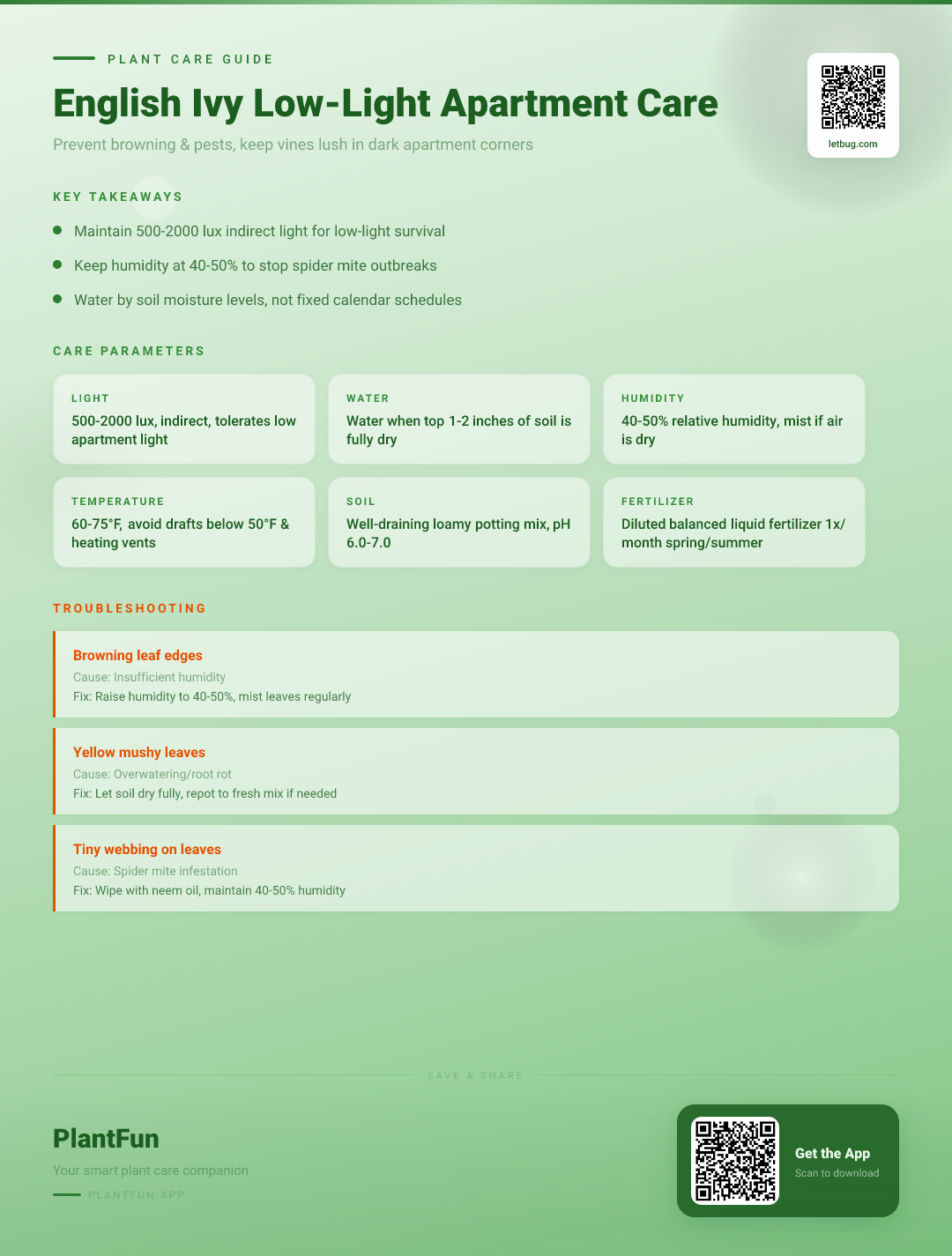
Key Takeaways
- Check soil moisture before watering — overwatering is the #1 killer of houseplants.
- Ensure your plant gets the right amount of light for its species.
- Be patient with recovery — most plants need 2–4 weeks to bounce back.
TL;DR: English Ivy (Hedera helix) thrives in apartments by balancing bright, indirect light with cool temperatures and consistent moisture. To prevent browning, maintain 40–50% humidity, water only when the top two inches of soil feel dry, and ensure good airflow to deter spider mites. Never let it sit in stagnant water.
My Experience
When I first got my initial English Ivy, I made the mistake of placing it in a dark, poorly ventilated corner of my studio. Within weeks, the leaves yellowed and tiny webs appeared under the foliage. I learned the hard way that ivy isn’t a “low-light, no-care” plant; it is a woodland dweller that despises the stagnant, dry air typical of modern apartments.
Quick Care Card: Essential Thresholds for Apartment Ivy
| Feature | Optimal Range |
|---|---|
| Light | 500–2,000 Lux (Bright, indirect) |
| Water | When top 2” of soil are dry |
| Humidity | 40%–50% (Use a pebble tray or humidifier) |
| Temperature | 55°F–70°F (13°C–21°C) |
| Soil | Well-draining, peat-based mix |
| Fertilizer | Balanced liquid feed, monthly (Spring/Summer) |
| Toxicity | Toxic to cats and dogs (ASPCA, 2026) |
Why English Ivy Struggles in Typical Apartments
English Ivy is often marketed as a “durable” houseplant, but it is actually a temperate outdoor perennial that enjoys cool, breezy environments. In apartments, we often subject them to low light (below 500 lux) and stagnant, dry air from central heating. According to the NC State Extension (2026), these plants require consistent environmental stability to prevent rapid decline.
Decoding Your Ivy’s Environment: Light and Airflow
Light intensity directly impacts leaf variegation and overall vigor (Kim et al., 2012). While ivy can survive in low light, it will not thrive; the stems will grow thin and “leggy” as the plant stretches for a light source. Ensure your plant is within 3 feet of a window, but avoid direct scorching sun, which causes crisp, brown edges.
The 500-2,000 Lux Rule for Low-Light Survival
If your apartment is dark, use a light meter app to ensure your ivy receives at least 500 lux. If you fall below this, your plant will slow its metabolic processes significantly (Kim et al., 2012). If you need help choosing a spot, check our guide on choosing the best indoor lighting to ensure your plant isn’t starving.
Hydration Protocols: Watering by Soil Moisture, Not the Calendar
Never water on a strict schedule. Instead, perform the “knuckle test”: push your finger two inches into the soil. If it feels moist, wait. If it feels dry, water thoroughly until liquid drains from the bottom. NC State Extension (2026) confirms that keeping the soil consistently damp but not saturated is key to healthy root development.
Maintaining 40-50% Humidity to Prevent Spider Mite Outbreaks
Spider mites adore dry, stagnant air. In an apartment, your HVAC system often drops humidity below 30%. To prevent infestations, use a small humidifier nearby or mist the leaves weekly. If you’re struggling with pests, read our guide on managing indoor plant pests for long-term solutions.
Seasonal Shifts: How to Adjust Care for Winter Heating
In winter, move your ivy away from heaters and radiators. Forced air dries out the foliage, leading to leaf drop. Lower your watering frequency, as the plant’s growth rate slows down significantly during the shorter, colder days.
Troubleshooting Guide
Leaf Browning
Symptom: Leaf tips turn dry and brown.
Likely cause: Low humidity or salt buildup from tap water.
Fix:
- Increase humidity to 40%–50%.
- Flush the soil with filtered water every third watering.
Yellowing Leaves
Symptom: Lower leaves turn yellow and drop.
Likely cause: Overwatering or root rot.
Fix:
- Reduce watering frequency immediately.
- Ensure the pot has proper drainage holes.
Wilting Vine
Symptom: Entire vines droop despite moist soil.
Likely cause: Root rot restricting water uptake.
Fix:
- Inspect roots for a mushy texture.
- Repot into a fresh, well-draining potting mix.
Stunted Growth
Symptom: Small leaves, very little new growth.
Likely cause: Insufficient light.
Fix:
- Move the plant closer to a bright, indirect light source.
- Ensure the plant isn’t crowded by other decor.
Frequently Asked Questions
- Can I keep my English Ivy in a bathroom without windows? While ivy appreciates the humidity, it will eventually fail without at least 500 lux. Consider using an LED grow bulb to supplement the light.
- Is English Ivy safe for my cat? No, the ASPCA (2026) lists Hedera helix as toxic to cats and dogs if ingested. Keep it on a high shelf.
- How do I make my English Ivy grow faster? Provide consistent bright, indirect light and a balanced liquid fertilizer during the growing season (Polito & Chang, 1984).
References
- Kim, J.; Kang, S.; Pak, C. (2012). Changes in Leaf Variegation and Coloration of English Ivy and Polka Dot Plant under Various Indoor Light Intensities. HortTechnology. https://doi.org/10.21273/horttech.22.1.49. Accessed 2026-03-19.
- Polito, V.; Chang, Y. (1984). Quantitative nuclear cytology of english ivy (Hedera helix L.). Plant Science Letters. https://doi.org/10.1016/s0304-4211(84)80017-6. Accessed 2026-03-19.
- ASPCA. (2026). Toxic and Non-Toxic Plants List — ASPCA. https://www.aspca.org/pet-care/animal-poison-control/toxic-and-non-toxic-plants. Accessed 2026-03-19.
- NC State Extension. (2026). English Ivy — NC State Extension Gardener Plant Toolbox. https://plants.ces.ncsu.edu/plants/ivy-care/. Accessed 2026-03-19.
Optional Helper: Plantfun.App
Plantfun.App identifies your plants by photo, diagnoses pests and diseases with clear fixes, and creates personalised watering and light schedules that adapt to your home conditions — a handy companion for putting this guide into daily practice.
Found an error or have suggestions? We'd love your feedback.
Need help identifying this problem?
Get instant identification, personalized care schedules, and effective pest treatment plans directly on your phone.
Sponsored • We may earn a commission from app downloads
Related Guides
English Ivy Care Checklist: Grow Resilient, Lush Vines in Your Typical Urban Apartment
Stop struggling with crispy, yellowing English ivy in your apartment. Get 8 actionable checklist steps, exact light/water thresholds, and symptom fixes for resilient, trailing vines.
Care GuideEnglish Ivy in Small Urban Apartments: The Budget Care Checklist for Resilient Growth
Grow lush, resilient English Ivy in your small urban apartment without spending a fortune. Get exact light, water, and humidity thresholds plus a free printable weekly care checklist you can use today.
Care GuideThe Complete English Ivy Care Guide for Apartments: Resilient, Lush Growth Year-Round
Grow lush, full English Ivy in your apartment without guesswork. Get exact light levels, watering amounts, and a seasonal care calendar to avoid leggy growth and crispy leaves.
Pest ControlAnts on Plants: What They Mean and What to Do
Ants usually aren't eating your plant. They are farming other pests.