
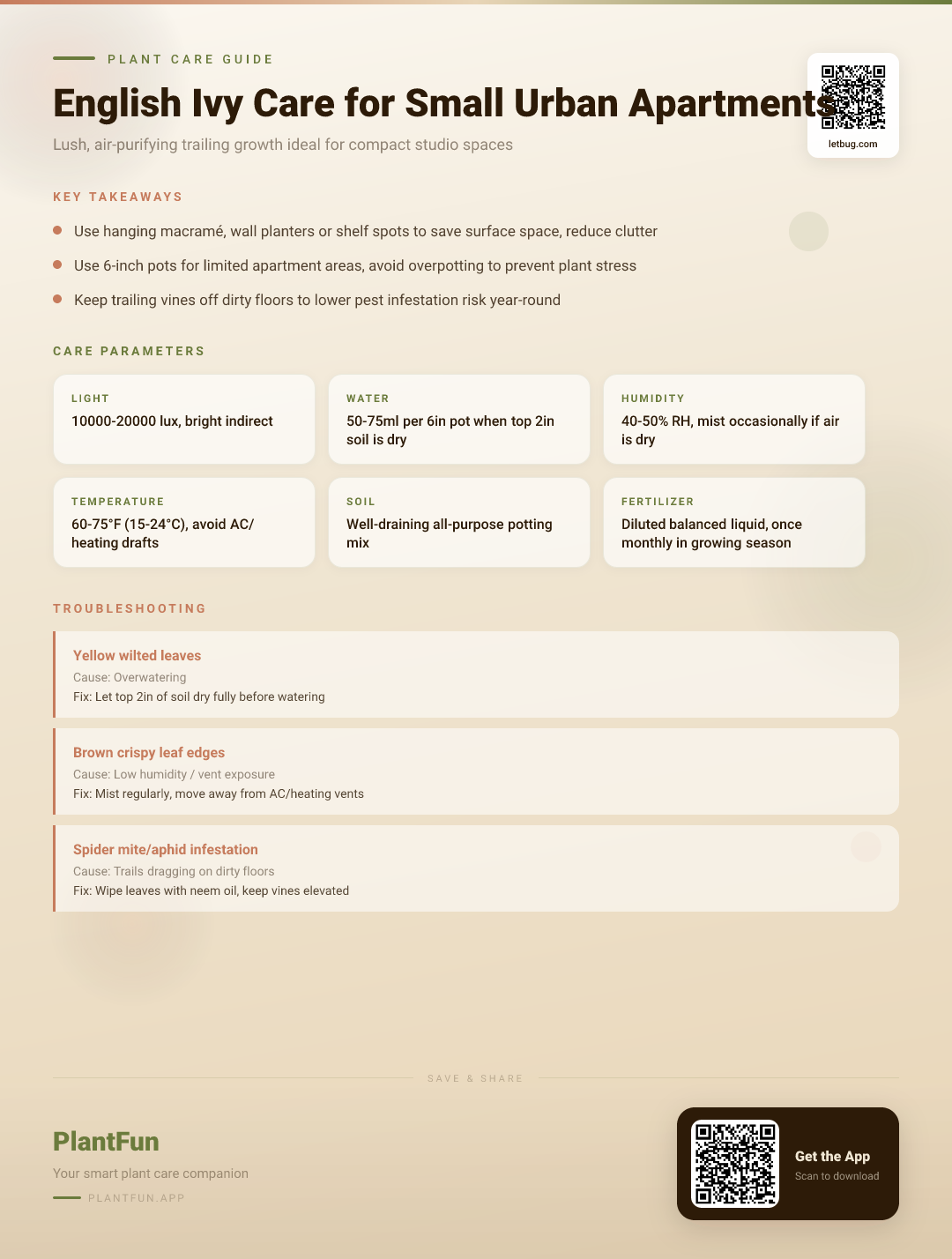
Key Takeaways
- Check soil moisture before watering — overwatering is the #1 killer of houseplants.
- Ensure your plant gets the right amount of light for its species.
- Be patient with recovery — most plants need 2–4 weeks to bounce back.
Quick Care Card
| Category | Threshold for Small Apartments |
|---|---|
| Light | 10,000-20,000 lux bright indirect light, avoid direct midday sun (NC State Extension, 2026) |
| Water | 50-75ml per 6-inch pot when the top 2 inches of soil are fully dry |
| Humidity | 40-50% RH, matches typical indoor apartment humidity levels |
| Temperature | 60-75°F / 15-24°C, avoid fluctuations of more than 10°F in 24 hours |
| Soil | 3 parts potting mix + 1 part perlite + 1 part orchid bark for fast drainage |
| Fertilizer | Diluted balanced 10-10-10 liquid fertilizer (half strength) once every 6 weeks in spring and summer only |
| Toxicity | Toxic to cats, dogs, and humans if ingested (ASPCA, 2026) |
Why English Ivy Is Perfect for Small Urban Apartments
If you’re wondering “is English ivy good for apartments,” the short answer is yes, especially for 400-700 sq ft studio spaces. Its natural trailing growth habit means it never takes up valuable counter or desk space, unlike bushy potted plants. It also removes common volatile organic compounds from indoor air, according to horticultural research, and tolerates the fluctuating temperatures, inconsistent light, and average humidity levels that kill fussier tropical plants.
Myth vs. Reality: Myth: English ivy is invasive and impossible to control indoors. Reality: With regular light pruning, it stays contained to your desired trailing length, making it ideal for small spaces. If you’re looking for more low-fuss plants for your space, check out our roundup of best renter-friendly houseplants for small studios. Note: ASPCA classifies English ivy as toxic to cats and dogs, so keep trails out of reach of curious pets (ASPCA, 2026).
Step-by-Step Initial Setup for Small Spaces
Follow this renter-friendly setup to maximize space and avoid common early growing mistakes:
- Pot size selection: Stick to a 6-inch pot with drainage holes, no larger. Larger pots hold excess moisture that doesn’t dry out in poorly ventilated apartments, leading to root rot (NC State Extension, 2026).
- English ivy soil mix for indoor growing: Combine 3 parts general indoor potting mix, 1 part perlite, and 1 part fine orchid bark for fast drainage. Skip moisture-retentive crystals, as they hold too much water for apartment growing conditions.
- Renter-friendly mounting (no drills required): Choose one of these zero-surface-space options:
- Removable adhesive ceiling hook with a macramé hanger (supports up to 10lbs, no wall damage)
- Adhesive-backed wall planter mounted to empty wall space above counters or desks
- Top edge of a high floating shelf, so trails drape down without touching work surfaces
- Pot your ivy, water with 50ml of room-temperature water, and place it in your chosen mounting spot.
Space-Saving Styling Ideas for Trailing English Ivy
These 5 low-clutter placement ideas showcase trailing growth without blocking walkways or taking up usable space:
- Hang a macramé hanger above a window nook, so trails drape alongside the window frame without blocking natural light to seating areas.
- Mount an adhesive wall planter on the empty wall above your kitchen sink, with trails draping down the side of upper cabinets to add greenery without taking up counter space.
- Place on the top shelf of your closet storage system, trailing down the side of the unit out of the way of daily use.
- Mount on the wall 1 foot above the side of your desk, with trails trailing off to the side so it doesn’t block your monitor or take up desk space.
- Hang from a removable ceiling hook above your shower partition, where occasional steam from hot showers maintains the ideal 40-50% RH range for ivy growth.
Exact Care Thresholds for Typical Apartment Conditions
All parameters below are adjusted for the unique conditions of small urban apartments, with no generic outdoor growing advice:
- Light: 10,000-20,000 lux bright indirect light (NC State Extension, 2026). Quick test: Hold your hand up in the spot at midday; if you see a soft, fuzzy shadow without sharp edges, it’s the perfect light level. Avoid direct midday sun, which burns leaf tips.
- Water: 50-75ml per 6-inch pot only when the top 2 inches of soil are fully dry (stick your finger 2 inches deep to test). This answers how often to water English ivy: typically every 7-10 days in summer, and every 14-21 days in winter.
- Humidity: 40-50% RH, which matches the average humidity level of most heated and cooled apartments. No extra humidifier is needed unless your levels drop below 35% in winter.
- Temperature: 60-75°F / 15-24°C. Avoid spots that swing more than 10°F in a 24-hour period, such as directly next to exterior doors.
- Fertilizer: Diluted balanced 10-10-10 liquid fertilizer (half the package recommended strength) once every 6 weeks only in spring and summer. Skip fertilizing entirely in fall and winter when growth slows.
Seasonal Care Calendar for Apartment Dwellers
Adjust your care routine for seasonal apartment conditions to avoid stress and keep trailing growth consistent:
Winter (October – February, English ivy winter care for apartments)
- October: Stop fertilizing entirely, reduce watering to 50ml per 6-inch pot only when the top 2 inches of soil are fully dry.
- November – January: Move your ivy 1 foot closer to windows to compensate for lower winter light levels. Keep it at least 2 feet away from forced air heating vents to avoid leaf burn. Mist once a week only if your apartment humidity drops below 35% RH.
- February: Check for new growth at the top of the plant; resume light fertilizing once you see new leaves emerge.
Summer (March – September, English ivy summer watering guide)
- March – May: Water 75ml per 6-inch pot when the top 2 inches of soil are dry, fertilize once every 6 weeks, and trim back any overgrown trails that block walkways.
- June – August: Increase watering frequency if temperatures stay above 75°F for more than 3 days. Keep ivy at least 2 feet away from AC vents to avoid cold shock.
- September: Reduce watering back to 50ml per pot, and stop fertilizing by the end of the month to prepare for winter dormancy.
Common Small-Apartment English Ivy Mistakes to Avoid
- Mistake: Placing your ivy directly next to forced air heating or AC vents. What happens: Dry, fast-moving air burns leaf tips and stresses the plant, leading to widespread leaf drop. Instead: Keep your ivy at least 2 feet away from all vents, or place a small draft blocker between the vent and the plant.
- Mistake: Overpotting your ivy in a larger pot to skip repotting for a few years. What happens: Extra soil holds excess moisture that doesn’t dry out in poorly ventilated apartments, leading to root rot and yellow leaves. Instead: Keep your ivy in a 6-inch pot for 2-3 years, only repotting when roots are visibly growing out of the drainage holes.
- Mistake: Letting ivy trails drag on your apartment floors or carpet. What happens: Dust and dirt build up on leaves, attracting spider mites and other common indoor pests (NC State Extension, 2026). Instead: Trim trails to a maximum of 3 feet long for studio apartments, or tie longer trails back to the planter hook with soft plant ties.
Voice Search Optimized FAQ
Can I grow English Ivy in a windowless apartment with only LED lights?
Yes! English ivy light requirements indoor for grow lights are 15,000-20,000 lux for 12 hours a day, placed 6-12 inches from the light source (NC State Extension, 2026). This answers can English ivy grow in low light apartments, as long as you use a full-spectrum LED grow light. For more help picking the right light for your space, see our complete grow light guide for small apartments.
Why is my English ivy turning yellow even when I water it regularly?
The most common cause is root rot from overwatering, which is extra common in poorly ventilated small apartments where soil dries very slowly. Fix it by following the 2-inch dry soil rule: only water when the top 2 inches of soil are fully dry to the touch, and dump any excess water that collects in the pot saucer after 15 minutes. If the problem persists, repot into fresh, well-draining soil and trim any mushy brown roots.
How do I keep my English Ivy from taking over my small apartment?
Follow our English ivy trailing growth tips to keep growth contained: Prune your ivy every 3 months during growing season to keep trails no longer than 3 feet long (perfect for studio spaces), using clean sharp scissors to cut just above a leaf node. You can propagate the trimmings in a glass of water to give to friends or pot up for extra plants, no waste required. If you’re new to propagating, our step-by-step guide to propagating houseplants for beginners walks you through the process.
Troubleshooting Quick Reference
Brown Leaf Tips
Symptom: Dry, crispy brown edges on otherwise healthy green leaves.
Likely cause: Exposure to forced air drafts from heating or AC vents, or humidity levels below 35% RH.
Fix:
- Move the plant at least 2 feet away from all vents
- Mist the leaves once a week only if your apartment humidity drops below 35% RH
Leggy Growth
Symptom: Long, bare stems with very few leaves, stretching towards the nearest light source.
Likely cause: Light levels below 10,000 lux, common in north-facing apartments or spots far from windows.
Fix:
- Move the plant 1-2 feet closer to a window, or supplement with a grow light for 12 hours a day
- Trim back leggy stems to 2 inches above the soil line to encourage bushy new growth
Spider Mite Infestation
Symptom: Tiny white or brown dots on leaves, fine webbing on the undersides of leaves and along stems.
Likely cause: Dust build-up on leaves from trails dragging on floors, or dry air from heating vents (NC State Extension, 2026).
Fix:
- Wipe all leaves with a damp microfiber cloth to remove mites and webbing
- Spray with a diluted neem oil solution once a week for 3 weeks to kill remaining pests. For more natural pest solutions, check out our guide to indoor pest control for apartments that won’t harm pets or leave chemical residue
Yellow Mushy Leaves
Symptom: Soft, mushy yellow leaves that fall off easily, often accompanied by damp soil that doesn’t dry out for weeks.
Likely cause: Overwatering leading to root rot, the top cause of yellow ivy leaves in small apartments.
Fix:
- Stop watering immediately, let the top 3 inches of soil dry out fully before watering again
- If the problem persists, repot into fresh, well-draining soil and trim any mushy brown roots
References
- NC State Extension. (2026). English Ivy Care Guide — NC State Extension Gardener Plant Toolbox. https://plants.ces.ncsu.edu/plants/ivy-care/. Accessed 2026-03-02.
- ASPCA. (2026). Toxic and Non-Toxic Plants List — ASPCA. https://www.aspca.org/pet-care/animal-poison-control/toxic-and-non-toxic-plants. Accessed 2026-03-02.
- Bourgeault, I.; Oandasan, I.; McMurchy, D. (2023). Team Primary Care: Training for Transformation in Canada. International Journal of Integrated Care. https://doi.org/10.5334/ijic.icic23307. Accessed 2026-03-02.
- Ivy, D. (2010). Prostacyclin in the intensive care setting. Pediatric Critical Care Medicine. https://doi.org/10.1097/pcc.0b013e3181d10845. Accessed 2026-03-02.
Optional Helper: Plantfun.App
Plantfun.App identifies your plants by photo, diagnoses pests and diseases with clear fixes, and creates personalised watering and light schedules that adapt to your home conditions — a handy companion for putting this guide into daily practice.
Found an error or have suggestions? We'd love your feedback.
Need help identifying this problem?
Get instant identification, personalized care schedules, and effective pest treatment plans directly on your phone.
Sponsored • We may earn a commission from app downloads
Related Guides
English Ivy Care Checklist: Grow Resilient, Lush Vines in Your Typical Urban Apartment
Stop struggling with crispy, yellowing English ivy in your apartment. Get 8 actionable checklist steps, exact light/water thresholds, and symptom fixes for resilient, trailing vines.
Care GuideThe Complete English Ivy Care Checklist for Small Urban Apartments: No Fancy Tools Required
Grow lush, non-yellowing English Ivy in your apartment without spending extra on fancy gear. Get our free 12-point care checklist with exact light, water, and soil parameters you can implement today.
Care GuideThe Complete English Ivy Care Checklist for Resilient Growth in Small Urban Apartments
Grow lush, trailing English ivy even in tiny city apartments. Get exact light, water, and humidity thresholds plus 6 space-saving hacks for no-fuss resilient year-round growth.
Pest ControlAnts on Plants: What They Mean and What to Do
Ants usually aren't eating your plant. They are farming other pests.