
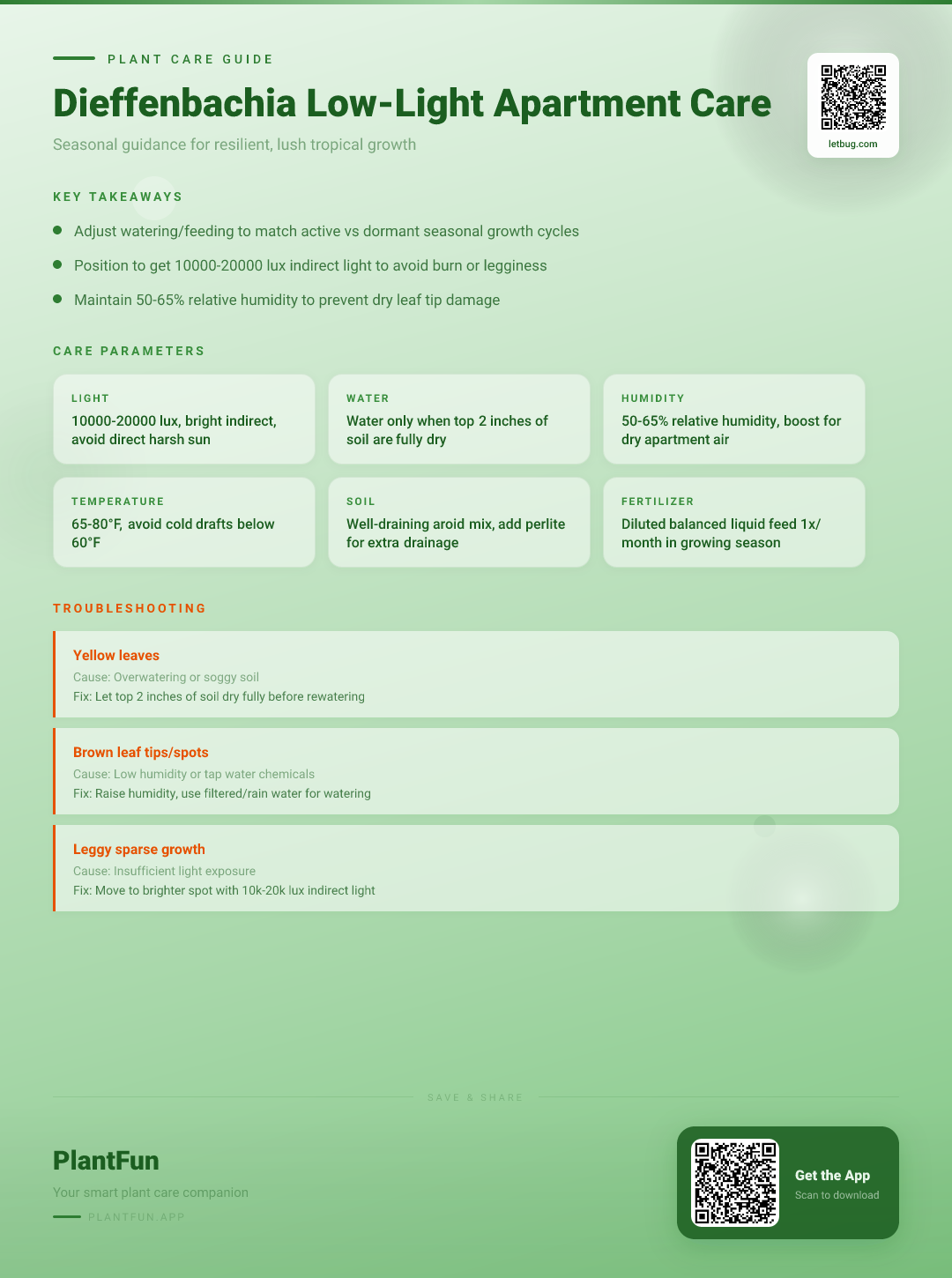
Key Takeaways
- Check soil moisture before watering — overwatering is the #1 killer of houseplants.
- Ensure your plant gets the right amount of light for its species.
- Be patient with recovery — most plants need 2–4 weeks to bounce back.
TL;DR: The Essentials
To keep your Dieffenbachia thriving in an apartment, maintain bright, indirect light (15,000 lux), water only when the top 2 inches of soil are dry, and sustain humidity levels between 50-65%. Avoid cold drafts and ensure your potting mix is well-draining to prevent root rot. Note: This plant is toxic to pets (ASPCA, 2026).
My Experience: The “Dumb Cane” Lesson
When I first brought home my Dieffenbachia seguine, I placed it in a dark corner, thinking it would thrive as a “low light” plant. Within three weeks, the bottom leaves turned yellow and dropped. I learned the hard way that while these plants tolerate lower light, they thrive only when they have a clear view of the sky. I had to move mine within 3 feet of a south-facing window, and the growth rate doubled. I also learned to avoid handling the stems without gloves, as the sap is notoriously irritating.
Quick Care Card: Essential Thresholds for Dieffenbachia
| Feature | Optimal Range |
|---|---|
| Light | 10,000–20,000 lux (Bright, indirect) |
| Water | When top 2 inches of soil are dry |
| Humidity | 50–65% |
| Temperature | 65–80°F (18–27°C) |
| Soil | Peat-based, well-draining aroid mix |
| Fertilizer | Balanced liquid feed, monthly in summer |
| Toxicity | Toxic to cats and dogs (ASPCA, 2026) |
Why Your Apartment Dieffenbachia Needs a Seasonal Strategy
Dieffenbachia are tropical aroids that undergo distinct phases of growth. During the long days of spring and summer, the plant is in an active growth cycle and requires more water and nutrients. In winter, light levels in apartments often plummet, triggering a semi-dormant state. Treating the plant the same way in January as you do in July is the primary reason for failure (NC State Extension, 2026).
The Lighting Equation
Dieffenbachia are often mislabeled as low-light plants. They can survive in dim conditions, but they will become “leggy”—stretching for light. Aim for 10,000 to 20,000 lux. If you don’t have a light meter, imagine the plant being able to “see” the window clearly. Avoid direct midday sun, which can scorch the variegated foliage.
Step-by-Step Watering Routine
Consistency is the only way to prevent brown, crunchy leaf tips.
- The Finger Test: Insert your index finger 2 inches into the soil. If it feels damp, wait. If it’s dry, it’s time to water.
- The Soak: Use tepid water to avoid shocking the roots. Pour until water drains from the bottom holes.
- The Purge: Never let your pot sit in standing water. This creates an anaerobic environment leading to root rot (NC State Extension, 2026).
The Humidity Gap
Most apartments hover around 30% humidity, which is too dry for a tropical plant. To hit that 50-65% target, I suggest grouping plants together or using a dedicated humidifier. Pebble trays offer minimal help; consistent localized moisture is far more effective for lush foliage.
Seasonal Care Calendar
- March–May (Wake Up): Begin increasing water frequency as light levels rise. Start a monthly fertilizing schedule.
- June–August (Peak Growth): Ensure the plant is in its brightest spot. Water thoroughly when the top 2 inches are dry.
- September–November (Transition): Reduce fertilizer by half. Allow the soil to dry slightly more between waterings.
- December–February (Winter Care): Maintain consistent temperature (above 65°F). Keep away from heaters/vents which exacerbate dry air.
Common Mistakes to Avoid
- Mistake: Using dense, garden-variety soil. What happens: Compacted soil holds too much water, suffocating roots. Instead: Use a mix of peat moss, perlite, and pine bark.
- Mistake: Placement near a window AC or heater. What happens: Extreme temperature shifts cause leaf drop. Instead: Keep at least 3 feet away from HVAC vents.
Voice Search FAQ
Why is my Dieffenbachia dropping lower leaves?
Usually, this is a sign of inconsistent watering or light stress. As the plant ages, losing the very bottom leaf is normal, but mass yellowing suggests a need for a more stable schedule.
How do I tell if my plant needs more light?
If the plant is leaning heavily toward the window or the internodes (the stem space between leaves) are getting long and thin, it’s starving for light.
Can I use tap water for my Dieffenbachia?
Yes, though some cultivars are sensitive to fluoride. If you notice brown edges, try using filtered water or leaving your tap water out overnight to dissipate chlorine.
Troubleshooting Guide
Yellowing Leaves
Symptom: Leaves turn yellow, starting from the bottom.
Likely cause: Overwatering or poor drainage leading to root stress.
Fix:
- Check the drainage holes for blockage.
- Reduce watering frequency and allow the soil to dry to 3 inches deep.
Brown Leaf Tips
Symptom: Crisp, brown edges on otherwise healthy leaves.
Likely cause: Low humidity or salt buildup from fertilizer.
Fix:
- Increase humidity using a room humidifier.
- Flush the soil with distilled water to remove mineral salts.
Leggy/Stretching Stems
Symptom: The plant looks spindly and sparse.
Likely cause: Insufficient light intensity.
Fix:
- Move the plant to a spot with more indirect, natural light.
- Prune the top stem to encourage bushier regrowth in spring.
References
- ASPCA. (2026). Toxic and Non-Toxic Plants List — ASPCA. https://www.aspca.org/pet-care/animal-poison-control/toxic-and-non-toxic-plants. Accessed 2026-03-17.
- NC State Extension. (2026). Dieffenbachia — NC State Extension Gardener Plant Toolbox. https://plants.ces.ncsu.edu/plants/dieffenbachia-care/. Accessed 2026-03-17.
- Ajay, P.; Fatmi, U. (2024). Performance of Different Dieffenbachia (Dieffenbachia seguine) Varieties under Prayagraj Agro-climatic Conditions. International Journal of Plant & Soil Science. https://doi.org/10.9734/ijpss/2024/v36i74815. Accessed 2026-03-17.
- Chase, A. (1982). Dasheen Mosaic Virus Infection of Dieffenbachia Cultivars. Plant Disease. https://doi.org/10.1094/pd-66-891. Accessed 2026-03-17.
Optional Helper: Plantfun.App
Plantfun.App identifies your plants by photo, diagnoses pests and diseases with clear fixes, and creates personalised watering and light schedules that adapt to your home conditions — a handy companion for putting this guide into daily practice.
Found an error or have suggestions? We'd love your feedback.
Need help identifying this problem?
Get instant identification, personalized care schedules, and effective pest treatment plans directly on your phone.
Sponsored • We may earn a commission from app downloads
Related Guides
Dieffenbachia Care in Small Apartments: How to Thrive in Limited Light and Space
Master your indoor jungle. Learn the 4 exact light and water thresholds needed to keep your Dieffenbachia lush and pest-free in a compact apartment today.
Care GuideDieffenbachia Care in Low-Humidity Apartments: The Complete Seasonal Guide for Lush Growth
Transform your Dieffenbachia with our seasonal care guide. Discover exact humidity levels, watering cycles, and apartment-friendly tips for year-round success.
Care GuideDieffenbachia Care in Low-Light Apartments: A Resilient Growth Plan for Busy Owners
Transform your Dieffenbachia into a thriving apartment centerpiece. Master precise watering, ideal lux levels, and simple seasonal hacks to avoid yellowing leaves.
Pest ControlAnts on Plants: What They Mean and What to Do
Ants usually aren't eating your plant. They are farming other pests.