
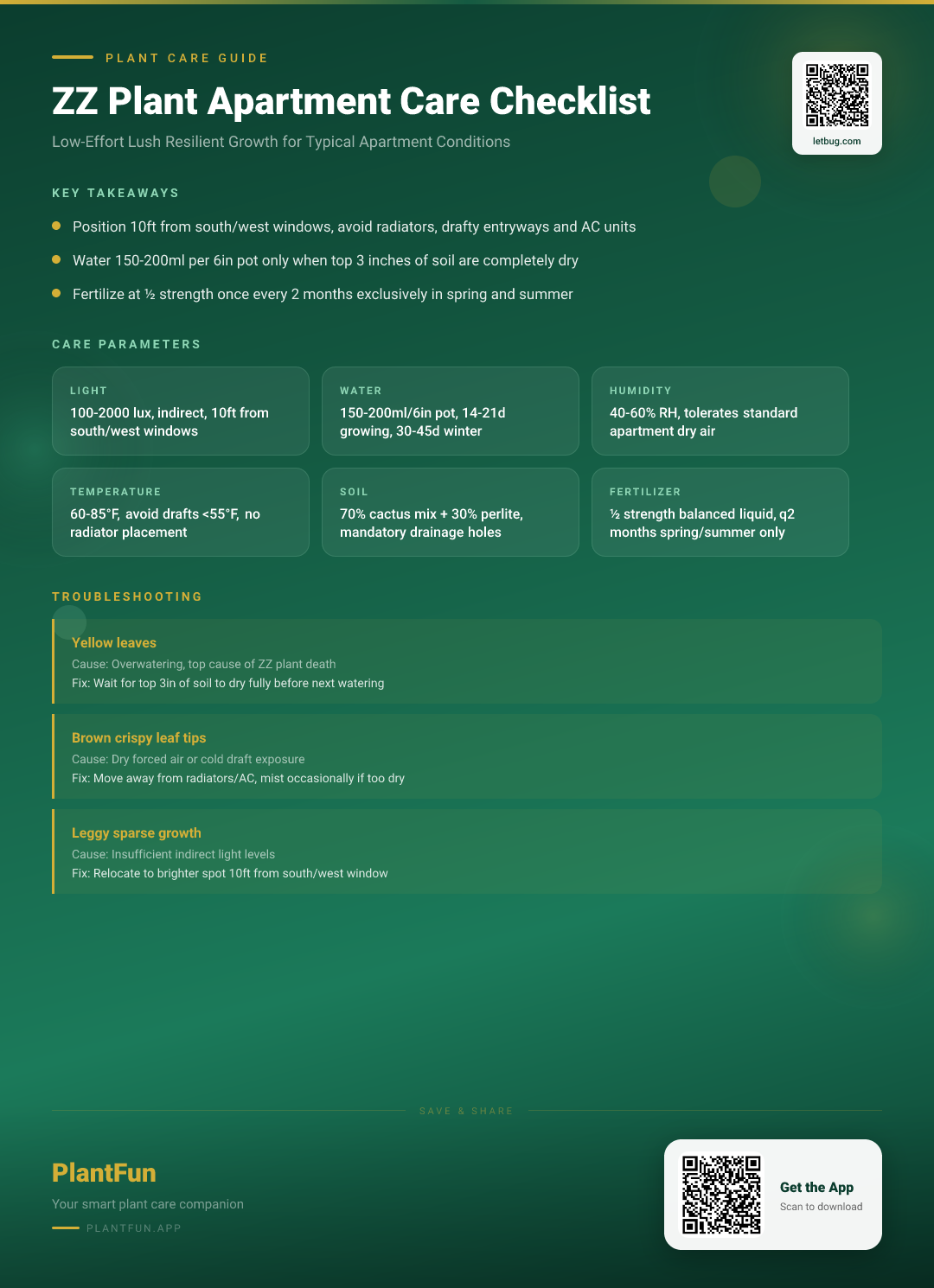
Key Takeaways
- Check soil moisture before watering — overwatering is the #1 killer of houseplants.
- Ensure your plant gets the right amount of light for its species.
- Be patient with recovery — most plants need 2–4 weeks to bounce back.
Quick Care Card: At-a-glance measurable thresholds for ZZ plants in typical apartments (light lux, humidity, temperature, watering frequency) for 10-second reference
| Parameter | Threshold for Typical Apartments |
|---|---|
| Light | 50-2500 lux, no direct midday sun (Henny & Chen, 2013) |
| Water | 150-200ml per 6in pot when top 3in of soil is fully dry; 14-21 days growing season, 30-45 days winter |
| Humidity | 30-50% (standard apartment humidity is sufficient) |
| Temperature | 60-85°F (15-29°C) |
| Soil | 70% cactus/succulent mix + 30% perlite |
| Fertilizer | ½ strength balanced 10-10-10 liquid fertilizer, once every 2 months spring/summer only |
| Toxicity | Mildly toxic to cats, dogs, and humans if ingested (ASPCA, 2026) |
Why This Guide Is Built For Apartments
Generic ZZ plant care advice often repeats the same vague line: “thrives on neglect, tolerates low light”. But it ignores the unique stressors that come with rental apartment living: drafty old window sills, forced air heat that drops humidity to 20% in winter, north-facing units that get less than 100 lux of ambient light, and AC vents that blow cold air directly on plant foliage. These small, consistent stressors are the leading cause of yellow leaves, stunted growth, and even ZZ plant death for renters, even if you follow generic care rules. This guide is built exclusively for apartment conditions, with measurable, testable care thresholds backed by horticultural research, so even ZZ plant care for beginners is foolproof. We also debunk the pervasive myth that ZZ plants need total neglect: tiny, seasonal tweaks can double your ZZ’s foliage growth in 12 months with less than 5 minutes of care per month.
Step 1: Ideal Apartment Placement Rules
The right ZZ plant apartment placement balances light access and protection from stressors. ZZ plant light requirements range from 50 lux (minimum for survival) to 2500 lux (maximum before leaf scorch), with fastest growth at 200-1000 lux (Henny & Chen, 2013).
Approved apartment spots:
- 8-10ft from unobstructed south or west-facing windows (filters harsh midday sun)
- 1-3ft from east-facing windows (gets gentle morning sun with no risk of scorch)
- Any spot in a north-facing room that gets consistent ambient daylight (great for ZZ plant low light care)
Spots to avoid at all costs:
- Within 2ft of radiators or baseboard heat
- Unheated entryways that drop below 55°F (13°C) for extended periods
- Directly in the path of AC vents, window drafts, or exterior door drafts
Quick test: Hold your hand in the spot you want to place your ZZ for 1 minute. If you feel a constant, noticeable draft, pick a new spot. ZZ plant draft tolerance is low for consistent exposure, even if short drafts are fine (Šrámek, 1999). For more tips on low-light plant placement, check our guide to low-light apartment plants.
Step 2: Exact Watering Routine For Apartment Humidity
The most common question we get is how often to water ZZ plant and how much to water ZZ plant, and the answer is tailored directly to average apartment humidity levels. For a standard 6-inch nursery pot:
- Give 150-200ml of room temperature water only when the top 3 inches of soil are completely dry
- Quick test: Stick your index finger all the way into the soil up to your second knuckle. If no soil sticks to your finger, it’s time to water.
- Growing season (March-August): 14-21 days between waterings, adjust to 14 days if your apartment humidity is consistently below 30%
- Winter (December-February): 30-45 days between waterings, even if the top layer of soil looks dry. Forced air heat dries top soil quickly, but ZZ rhizomes (thick, potato-like root structures that store water) hold enough moisture to last weeks.
Overwatering is the number one cause of ZZ plant death, so it’s always better to underwater than overwater (Henny & Chen, 2013). For tips on avoiding overwatering and root rot, check our root rot prevention guide.
Step 3: Soil & Potting For Low-Effort Growth
The right soil and pot setup eliminates 90% of ZZ plant care work for renters:
- Soil mix: Use a 70% cactus/succulent mix + 30% perlite ratio to ensure fast drainage and prevent water from sitting around the rhizomes.
- Drainage holes: Non-negotiable, no exceptions. Pots without drainage holes trap excess water and lead to root rot even if you water perfectly.
- Pot material choice: If your apartment is very dry (common in winter with forced air heat), use a plastic pot to retain moisture longer. If you tend to overwater, use an unglazed terracotta pot to wick away excess moisture from the soil.
- Repotting rule: Repot only once every 2-3 years, when you see roots growing out of the drainage holes. ZZs hate root disturbance, and repotting too often causes stunted growth.
Seasonal Care Calendar (Spring/Summer/Fall/Winter)
This simple ZZ plant seasonal care routine requires less than 5 minutes of work per season, and will deliver consistent ZZ plant resilient growth tips you can see year-round:
Spring (March-May)
- Move your ZZ 1-2ft closer to windows to take advantage of longer daylight hours
- Apply first dose of ½ strength balanced 10-10-10 liquid fertilizer as part of your ZZ plant fertilizing schedule
- Check the base of the plant for new light green stems, a sign of active growth
Summer (June-August)
- ZZ plant summer watering: Adjust frequency to 14 days if your apartment humidity drops below 30%
- Keep out of direct midday sun, which can scorch leaves
- Apply second dose of fertilizer in late July
- Dust large leaves every 2 weeks to improve light absorption
Fall (September-November)
- Pull your ZZ back from windows if you feel cold drafts coming through the frame
- Stop all fertilizing as light levels drop
- Extend watering frequency to 21-30 days as growth slows
Winter (December-February)
- ZZ plant winter care: Move your ZZ to the brightest spot in your apartment to compensate for short, dark days
- Extend watering frequency to 30-45 days, even if top soil looks dry
- Keep at least 3ft away from radiators to avoid leaf desiccation
- If apartment humidity drops below 25%, place a tray of pebbles and water under the pot (don’t let the pot sit in standing water) to boost local humidity by 5-10% (Šrámek, 1999)
For more season-specific care tips, check our winter apartment plant care guide.
5 Common Apartment ZZ Plant Mistakes To Avoid
- Mistake: Overwatering on a fixed schedule instead of checking soil dryness What happens: Rhizome rot, mushy yellow leaves, sudden leaf drop Instead: Check the top 3 inches of soil every 2 weeks, only water when completely dry
- Mistake: Placing in direct midday sun What happens: Scorched brown leaf tips, faded pale foliage Instead: Keep ZZ at least 8ft from unobstructed south/west windows, or filter light with a sheer curtain
- Mistake: Ignoring consistent draft exposure What happens: Stunted growth, random leaf drop, no new foliage in growing season Instead: Use the 1-minute hand test for drafts before placing your ZZ, move away from AC vents, drafty windows, and entry doors
- Mistake: Over-fertilizing or fertilizing in winter What happens: Brown crispy leaf edges, salt buildup in soil, root burn Instead: Follow the ZZ plant fertilizing schedule: only 2 doses of half-strength fertilizer per year, in spring and mid-summer
- Mistake: Repotting too often or into an oversized pot What happens: Excess soil holds too much moisture, leading to root rot even if you water correctly Instead: Repot only once every 2-3 years, into a pot only 1-2 inches larger than the current one
FAQ
How do I know if my ZZ plant is getting enough light in my dark apartment?
If you get 1-2 new stems per growing season, your ZZ is getting enough light for healthy ZZ plant low light care. If you see no new growth for 12+ months, or stems are stretching and leaning heavily toward the nearest window, it needs more light. You can also use a cheap light meter app to confirm you’re getting at least 50 lux, the minimum threshold for ZZ survival (Henny & Chen, 2013). For help measuring light levels in your apartment, check our guide to testing indoor light levels.
Can I keep my ZZ plant next to my apartment’s AC unit in summer?
No, consistent cold drafts from AC units fall well below ZZ plant draft tolerance, and will cause leaf drop and stunted growth over time (Šrámek, 1999). If your only available spot is near an AC, make sure the vent is directed away from the plant, and use the 1-minute hand test to confirm no constant cold air hits the foliage.
Why is my ZZ plant turning yellow even when I rarely water it?
This is almost always caused by pre-existing root rot from overwatering in the past, or the pot sitting in standing water in its drainage tray. Even if you water rarely, poorly draining soil or a pot without drainage holes will trap moisture around the rhizome and cause rot. Less common causes include consistent cold drafts, or exposure to temperatures below 55°F for extended periods.
2-Minute Monthly Checkup Checklist
This simple no-tool routine helps you catch issues early before they cause permanent damage:
- (30 seconds) Stick your finger 3 inches into the soil to check if it’s time to water
- (30 seconds) Inspect all foliage for yellowing, brown tips, or unusual leaf drop, and check the base for new light green growth
- (30 seconds) Hold your hand near the plant for 30 seconds to check for consistent drafts from vents, windows, or doors
- (30 seconds) Wipe dust off the top 3-4 largest leaves with a damp cloth to improve light absorption
Total time per month: 2 minutes max, perfect for busy renters.
References
- Henny, R.; Chen, J. (2013). Florida Foliage House Plant Care: ZZ Plant. EDIS. https://doi.org/10.32473/edis-ep480-2013. Accessed 2026-03-06.
- Šrámek, F. (1999). Vaughan, M.J.: The Complete Book on Cut Flower Care. Biologia plantarum. https://doi.org/10.1023/a:1001770114931. Accessed 2026-03-06.
- ASPCA. (2026). Toxic and Non-Toxic Plants List. American Society for the Prevention of Cruelty to Animals. https://www.aspca.org/pet-care/animal-poison-control/toxic-and-non-toxic-plants. Accessed 2026-03-06.
Optional Helper: Plantfun.App
Plantfun.App identifies your plants by photo, diagnoses pests and diseases with clear fixes, and creates personalised watering and light schedules that adapt to your home conditions — a handy companion for putting this guide into daily practice.
Found an error or have suggestions? We'd love your feedback.
Need help identifying this problem?
Get instant identification, personalized care schedules, and effective pest treatment plans directly on your phone.
Sponsored • We may earn a commission from app downloads
Related Guides
ZZ Plant Care Checklist for Urban Apartments: 7 Tips for Resilient, Lush Growth
Stop guessing at ZZ Plant care. Grab our apartment-specific checklist with exact light, water, and soil parameters to avoid yellow leaves and grow lush, resilient fronds year-round.
Care GuideZZ Plant in Typical Apartments: The Only Care Checklist for Resilient, Lush Growth
Skip generic ZZ plant care advice. Get an apartment-specific checklist with exact light, water, and temperature thresholds to grow a lush, low-fuss ZZ that survives even forgotten waterings and dark corners.
Care GuideThe Complete ZZ Plant Care Checklist for Resilient Growth in Low-Light Urban Apartments
Keep your ZZ plant thriving even in dark apartment corners. Get exact light levels, watering amounts, and a seasonal care checklist for lush, resilient growth all year long.
Pest ControlAnts on Plants: What They Mean and What to Do
Ants usually aren't eating your plant. They are farming other pests.