
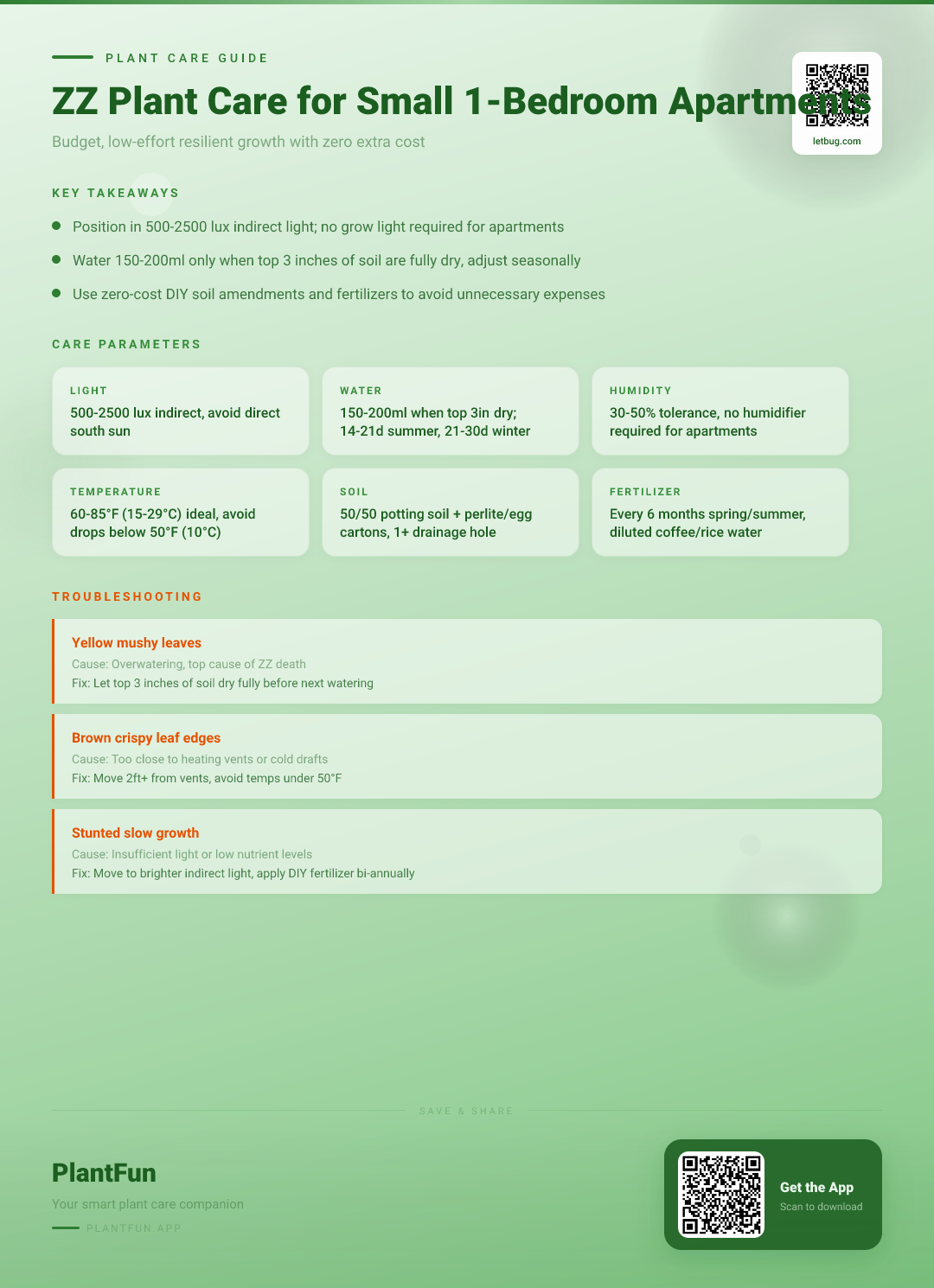
Key Takeaways
- Check soil moisture before watering — overwatering is the #1 killer of houseplants.
- Ensure your plant gets the right amount of light for its species.
- Be patient with recovery — most plants need 2–4 weeks to bounce back.
Quick Care Card
| Parameter | Exact Threshold For 1-Bedroom Apartments |
|---|---|
| Light | 500-2500 lux, no direct south sun, no grow light required |
| Water | 150-200ml only when top 3 inches of soil are fully dry; 14-21 days summer, 21-30 days winter |
| Humidity | 30-50% tolerance, no humidifier required |
| Temperature | 60-85°F (15-29°C) ideal, never below 50°F (10°C) |
| Soil | 50/50 regular potting soil + perlite (or crushed egg cartons) for drainage |
| Fertilizer | Once every 6 months (spring/summer only) with diluted coffee, rice, or unsalted pasta water; no commercial fertilizer needed |
| Toxicity | Mildly toxic to cats, dogs, and humans if ingested (ASPCA, 2026) |
Why This Guide Is Tailored For 1-Bedroom Apartments
Generic ZZ plant care guides often push expensive specialty products and one-size-fits-all rules that ignore the unique constraints of small 1-bedroom city apartments: low north-facing light, dry forced-air heat, limited window and counter space, tight budgets, and busy work schedules that lead to inconsistent watering. This checklist skips all the fluff and expensive gear, with rules tailored exactly to the conditions you deal with daily.
Myth vs Reality: Myth: ZZ plants need succulent soil and grow lights to thrive in apartments. Reality: ZZ plants (Zamioculcas zamiifolia) are adapted to harsh, low-light understory conditions in their native East Africa, so they can thrive with basic household items and no extra purchases (Henny & Chen, 2013). The ASPCA classifies ZZ plants as toxic to cats and dogs, so place them out of reach of curious pets if you share your space with fur babies (ASPCA, 2026). If you’re looking for other low-fuss plants for your space, check out our roundup of the best low light apartment plants for 1-bedroom units.
Step 1: Light Placement For Apartment ZZ Plants
ZZ plants have one of the widest light tolerance ranges of any common houseplant, perfect for low-light apartment environments (Henny & Chen, 2013). Stick to the 500-2500 lux acceptable range for consistent, lush growth:
- Quick test: Hold your hand 1 foot above the planned spot at midday. If you cast a faint, blurry shadow (no sharp, dark shadow, no no shadow at all), the light level is perfect.
- Best spots: North-facing windowsill (consistent low indirect light), 3ft from east or west windows (avoids harsh midday/afternoon sun that scorches leaves)
- Avoid: Direct south-facing sun for more than 1 hour per day, which will cause brown, crispy leaf edges.
No grow light is required, even for dim apartments, making this perfect for ZZ plant low light care and ZZ plant small apartment placement where window space is limited.
Step 2: Exact Watering Schedule For Inconsistent Apartment Routines
ZZ plant drought tolerance is extremely high thanks to their thick, water-storing rhizomes (potato-like root structures) so they are very forgiving of missed waterings (Šrámek, 1999). Follow this exact rule to avoid overwatering, the top cause of ZZ plant death:
- Only water 150-200ml (about 2/3 of a standard coffee mug) when the top 3 inches of soil are fully dry. Quick test: Stick your index finger all the way into the soil; if it’s dry past your second knuckle, it’s time to water.
- Schedule guidelines: 14-21 days in summer (ZZ plant summer watering), 21-30 days in winter (ZZ plant winter care)
- Budget hack: Use cooled, unsalted leftover pasta water instead of plain water for a free, mild nutrient boost.
If you notice yellow mushy leaves from accidental overwatering, follow our step-by-step guide to fixing root rot in houseplants to save your ZZ before it’s too late. This schedule answers the common question of how often to water ZZ plant in apartment, even if you travel frequently or forget watering days.
Step 3: Budget Soil & Potting Hack
You never need to buy expensive specialty succulent or cactus soil for your ZZ plant. This ZZ plant soil mix budget recipe uses items you likely already have at home:
- 50% regular all-purpose potting soil (cheap, widely available, and works perfectly)
- 50% perlite, or crushed dry egg cartons (tear into ¼-inch pieces) for drainage, no extra cost required
- Pot requirement: Any container you already own, as long as it has at least 1 drainage hole to let excess water escape. No fancy terracotta pots needed.
Step 4: Temperature & Humidity For Forced-Air Apartment Environments
ZZ plants are perfectly adapted to the standard conditions of most forced-air heated and cooled 1-bedroom apartments:
- Ideal temperature range: 60-85°F (15-29°C), never let temperatures drop below 50°F (10°C) which can damage the rhizomes (Henny & Chen, 2013)
- Humidity tolerance: 30-50%, which matches the average humidity of most city apartments, so no humidifier is required. Skip misting leaves, as it provides no benefit for ZZ plants and wastes time.
Step 5: Zero-Cost Fertilizing Routine
Skip expensive commercial plant fertilizers entirely with these cheap ZZ plant care hacks: ZZ plants are light feeders, so they only need a small nutrient boost twice a year. Here’s how to fertilize ZZ plant for free:
- Feed once every 6 months, only in spring and summer (when the plant is actively growing) with diluted leftover black coffee (1 part coffee to 3 parts water) or cooled unsalted rice water.
- Skip fertilizing entirely in fall and winter, when growth slows down. Over-fertilizing will cause brown leaf tips and stunted growth.
For more free nutrient ideas for all your houseplants, see our full list of zero-cost plant fertilizer hacks you can make with kitchen scraps.
Seasonal Care Calendar For Apartment Dwellers
Adjust your care routine easily with this month-by-month guide tailored to apartment conditions:
- December-February (Winter): Water only every 21-30 days, move plant at least 2ft away from drafty windows and heating vents, no fertilizing, wipe leaves once every 2 months to remove dust buildup that blocks light.
- March-May (Spring): Gradually increase watering to every 18-21 days, give your first fertilization of the year with diluted coffee or rice water, wipe leaves monthly to improve light absorption.
- June-August (Summer): Water every 14-21 days, give your second (and final) fertilization of the year, move plant 1ft further back from east/west windows if you notice brown leaf scorch, wipe leaves monthly.
- September-November (Fall): Gradually reduce watering to every 21-30 days, stop fertilizing, move plants away from drafty windows as outdoor temperatures drop.
3 Most Common Apartment ZZ Plant Mistakes To Avoid
- Mistake: Overwatering your ZZ plant What happens: Soft, yellow mushy lower leaves, rotting rhizomes, this is the top cause of ZZ plant death for apartment dwellers (Henny & Chen, 2013) (answers the common question of why is my ZZ plant turning yellow) Instead: Wait until the top 3 inches of soil are completely dry before watering, and only use 150-200ml each time. If you notice yellow leaves, stop watering for 4 weeks, and repot into fresh dry soil if the current soil is soggy.
- Mistake: Placing your ZZ plant within 1ft of a heating vent or drafty window What happens: Dry, crispy leaf edges, stunted growth, or leaf drop if exposed to cold drafts below 50°F Instead: Keep your plant at least 2ft away from heating vents, and move it away from north-facing windows during cold winter snaps if the window frame feels cold to the touch.
- Mistake: Repotting your ZZ plant too often, or into a pot that’s more than 2 inches larger than the current one What happens: Extra unused soil holds excess moisture, leading to root rot and stunted growth. ZZ plants prefer to be root-bound, so they only need repotting once every 2-3 years. Instead: Only repot when you see roots growing out of the drainage hole, and only size up the pot by 1-2 inches maximum.
FAQ
Can I keep my ZZ plant in a dark apartment closet with no windows?
This common voice-search question answers can ZZ plants survive in dark apartments: ZZ plants can survive in as low as 200 lux for up to 4 weeks, but they will stop growing and eventually lose leaves if kept in permanent full darkness with no natural or artificial light. If you want to keep your ZZ in a closet, move it to a bright spot for 8 hours once a week to keep it healthy (Henny & Chen, 2013).
How do I know if I’m overwatering my ZZ plant when I’m gone for work trips?
The first clear sign of overwatering is soft, yellow lower leaves (the ones closest to the soil). To avoid this when you’re traveling, water your ZZ plant only if the top 3 inches of soil are dry 1 day before you leave, and don’t leave it sitting in a tray of water. ZZ plants can easily go 4 weeks without water, so you don’t need to ask a friend to water it for trips under 30 days (Šrámek, 1999).
Can I grow my ZZ plant in a plastic container I already have at home?
Yes! Plastic containers work perfectly for ZZ plants, as long as you drill or poke at least one ¼-inch drainage hole in the bottom to let excess water escape. You can even use old food storage containers, yogurt buckets, or takeout containers for zero-cost pots. If you’re looking for pet-safe plant options for your apartment, browse our curated list of non-toxic apartment plants for cats and dogs.
References
- ASPCA. (2026). Toxic and Non-Toxic Plants List — ASPCA. https://www.aspca.org/pet-care/animal-poison-control/toxic-and-non-toxic-plants. Accessed 2026-02-28.
- Henny, R.; Chen, J. (2013). Florida Foliage House Plant Care: ZZ Plant. EDIS. https://doi.org/10.32473/edis-ep480-2013. Accessed 2026-02-28.
- Šrámek, F. (1999). Vaughan, M.J.: The Complete Book on Cut Flower Care. Biologia plantarum. https://doi.org/10.1023/a:1001770114931. Accessed 2026-02-28.
Optional Helper: Plantfun.App
Plantfun.App identifies your plants by photo, diagnoses pests and diseases with clear fixes, and creates personalised watering and light schedules that adapt to your home conditions — a handy companion for putting this guide into daily practice.
Found an error or have suggestions? We'd love your feedback.
Need help identifying this problem?
Get instant identification, personalized care schedules, and effective pest treatment plans directly on your phone.
Sponsored • We may earn a commission from app downloads
Related Guides
ZZ Plant Care for North-Facing Studio Apartments: Checklist for Lush Resilient Growth
Stop guessing at ZZ plant care for your dark north-facing apartment. Get exact light thresholds, watering amounts, and a 7-step checklist for consistent, lush growth year-round.
Care GuideThe Complete ZZ Plant Care Checklist for Typical Apartments: Seasonal Tips for Lush Resilient Growth
Stop guessing at ZZ plant care in your apartment. Get exact light levels, watering amounts, and a seasonal checklist to grow lush, resilient ZZ foliage year-round with no extra work.
Care GuideZZ Plant in Typical Apartments: The Only Care Checklist for Resilient, Lush Growth
Skip generic ZZ plant care advice. Get an apartment-specific checklist with exact light, water, and temperature thresholds to grow a lush, low-fuss ZZ that survives even forgotten waterings and dark corners.
Pest ControlAnts on Plants: What They Mean and What to Do
Ants usually aren't eating your plant. They are farming other pests.