
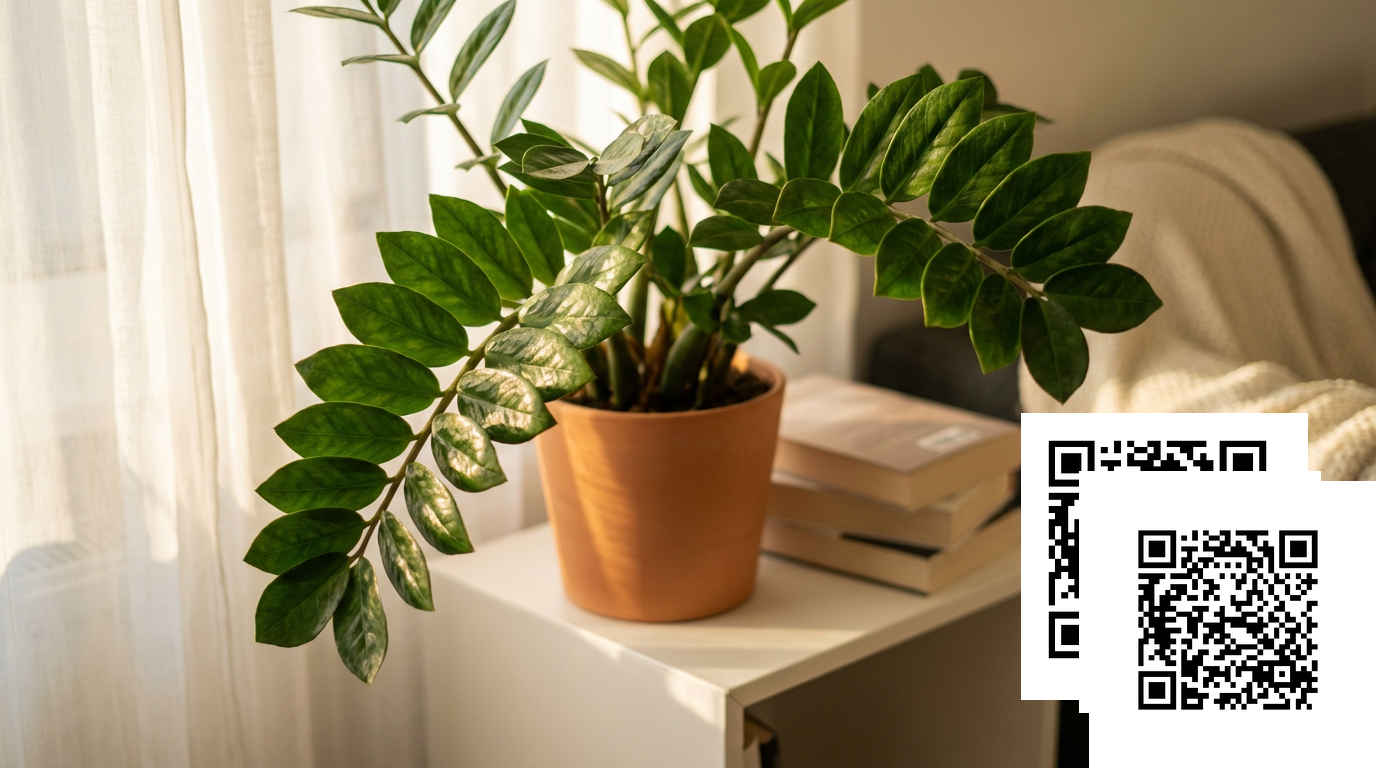
Key Takeaways
- Check soil moisture before watering — overwatering is the #1 killer of houseplants.
- Ensure your plant gets the right amount of light for its species.
- Be patient with recovery — most plants need 2–4 weeks to bounce back.
Quick Care Card
| Parameter | Exact Threshold for Low-Light Apartments |
|---|---|
| Light | 100–2,500 lux (no direct sun) |
| Water | 100–250ml per 6in pot, adjusted by season (only water when 2in of soil is completely dry) |
| Humidity | 30–50% RH (no misting required) |
| Temperature | 60–85°F / 15–29°C (avoid drafts below 55°F / 13°C) |
| Soil | Well-draining cactus/succulent potting mix with 30% perlite |
| Fertilizer | Diluted 10-10-10 houseplant fertilizer, once per quarter (spring and summer only) |
| Toxicity | Toxic to cats, dogs, and humans if ingested (keep out of reach of pets and small children) (ASPCA, 2026) |
Save or print this card for fast, no-guess reference whenever you’re checking on your ZZ plant.
Why This Guide Works for Apartment Dwellers
Generic ZZ plant care guides often assume bright indirect light, consistent humidity, and ample space — conditions rarely found in 600–800 sq ft urban apartments, where ZZs are typically tucked in dim entryways, living room corners, or desks 10+ feet from windows. Unlike generic advice, this guide is tailored to the fluctuating conditions of apartment living: low ambient light, dry forced air from heating and AC, and limited surface space.
ZZ plants store water in thick, potato-like underground structures called rhizomes, which make them exceptionally drought tolerant (Henny & Chen, 2013). Our seasonal adjustment framework eliminates the most common ZZ problems (yellow leaves, stunted growth, root rot) by aligning care with how your apartment’s conditions change across the year. If you’re looking for other tough plants that fit small, low-light spaces, check our roundup of the best low-light apartment plants on LetBug.com.
Step-by-Step 2-Minute Weekly Care Routine
This quick routine takes less time than making a cup of coffee and prevents 90% of common ZZ plant issues:
- Test soil moisture: Stick your index finger 2 inches deep into the soil. If any moisture sticks to your skin, hold off on watering. A quick test for beginners: lift the pot — if it feels light, it’s likely time to water.
- Dust fronds: Wipe leaves with a dry microfiber cloth to remove dust that blocks limited low light from reaching the leaf surface.
- Check for drafts: Confirm the plant is at least 3 feet away from HVAC vents, drafty windows, or exterior doors.
- Optional light check: Use a $10 lux meter to confirm light levels stay above 100 lux, the minimum threshold for ZZ survival (Henny & Chen, 2013).
If you struggle to tell when your soil is dry enough to water, our guide to testing soil moisture for houseplants has 3 simple no-tool tricks.
Spring Care Adjustments (March–May)
As daylight hours increase and your apartment warms up, your ZZ will exit its slow winter growth phase:
- Watering: 150–200ml per 6in pot every 10–14 days, only when 2 inches of soil is completely dry. If you’re wondering how often to water ZZ plants in spring, this measurable range eliminates guesswork.
- Light: Ideal range 500–2,500 lux, no direct sun. Move your ZZ a foot closer to a north-facing window if it has stayed in a very dark spot all winter to encourage new growth.
- Fertilizer: Apply one dose of diluted 10-10-10 houseplant fertilizer (half the recommended label strength) to support new frond growth. This is the only feeding your ZZ will need for 3 months.
Summer Care Adjustments (June–August)
Summer brings longer days and drier air from AC use, so adjust care accordingly:
- Watering: 200–250ml per 6in pot every 7–10 days, aligned with your ZZ plant summer watering needs as growth speeds up.
- Humidity: ZZ plant humidity requirements are just 30–50% RH, which is standard for most air-conditioned apartments. Myth vs reality: Misting is unnecessary and can increase fungal growth risk, so skip it entirely (Henny & Chen, 2013).
- Sun protection: Keep ZZs at least 3 feet away from south or west-facing windows to avoid sun scorch from stray afternoon direct sun, which causes brown, crispy leaf edges.
Fall Care Adjustments (September–November)
As daylight shortens and temperatures drop, your ZZ will slow its growth:
- Watering: Gradually reduce watering volume by 50ml every 2 weeks, shifting from the summer 200–250ml range down to 100–150ml by late November.
- Temperature: Keep plants in the 60–85°F / 15–29°C range, and move them away from drafty window sills where temperatures can drop below 55°F /13°C overnight.
- Fertilizer pause: Stop all fertilizing entirely, as your ZZ will not use extra nutrients during its slow winter growth phase.
Winter Care Adjustments (December–February)
Winter brings the lowest light levels and driest air from forced heating, so follow this ZZ plant winter care guidance:
- Watering: 100–150ml per 6in pot every 21–28 days. Overwatering in winter is the top cause of yellow ZZ leaves, so err on the side of underwatering.
- Light tolerance: ZZs can survive in light as low as 100 lux, so they will do fine even in very dark corners during short winter days (Henny & Chen, 2013).
- Heating protection: Keep ZZs at least 3 feet away from heating vents to prevent dry, crispy leaf edges from forced hot air.
Common Mistakes to Avoid
- Mistake: Watering on a fixed weekly schedule regardless of soil moisture. What happens: Soggy soil causes rhizome rot, the most common cause of ZZ plant death. ZZ plant overwatering signs include yellow, mushy leaves and a sour smell coming from the soil. Instead: Only water when 2 inches of soil is completely dry, and follow the seasonal volume guidelines outlined above.
- Mistake: Placing your ZZ directly next to an AC or heating vent to save surface space. What happens: Constant forced air dries out leaf edges and stunts new growth. Instead: Keep plants at least 3 feet away from all HVAC outlets, or use a small shelf to elevate them above draft levels.
- Mistake: Repotting your ZZ every year to “help it grow faster”. What happens: ZZs prefer tight pots, and frequent repotting damages delicate rhizomes, slowing growth significantly. Instead: Only repot when you see roots growing out of the drainage holes, every 2–3 years at most.
FAQ 1: Why is my ZZ plant getting yellow leaves in my apartment?
90% of the time, yellow ZZ leaves are caused by overwatering (Henny & Chen, 2013). First, check the soil 2 inches deep: if it is soggy, stop watering immediately, and repot into dry, well-draining cactus mix if the soil does not dry out within 7 days. If the soil is completely dry, yellow leaves may be caused by placement directly next to a heating vent drying out the plant. If you need help saving an overwatered ZZ, our overwatered plant rescue guide walks you through step-by-step fixes.
FAQ 2: Can I keep my ZZ plant in a windowless bathroom or closet?
Yes, as long as the space gets at least 100 lux of artificial light for 8+ hours per day (the equivalent of a standard overhead LED bulb). ZZs are one of the few plants that can thrive in completely windowless spaces, making them perfect for dark apartments with limited window access (Henny & Chen, 2013). If you notice very slow or no growth, add a small grow light set to a 10-hour daily timer to boost growth.
FAQ 3: How often do I need to repot my ZZ plant that’s in a low-light apartment?
Low light slows ZZ growth significantly, so you will only need to repot every 2–3 years at most. Only repot if you see roots growing out of the drainage holes at the bottom of the pot, or if the rhizomes are pushing up above the soil surface. ZZs grow best when their roots are tightly packed, so size up only 1–2 inches in pot diameter when you do repot. When it is time to repot, follow our step-by-step succulent and cactus repotting guide to avoid damaging your ZZ’s delicate rhizomes.
Printable Seasonal Care Checklist
Download our free, fillable ZZ plant care checklist PDF to track all care tasks across the year. The checklist includes:
- Weekly checkboxes for soil moisture, dusting, and draft checks
- Seasonal watering and fertilization reminders
- Quarterly pest check prompts
- Notes section to track growth and adjust care for your specific apartment conditions
You can access the free download by signing up for our weekly plant care tips newsletter (no spam, unsubscribe at any time).
References
- Henny, R.; Chen, J. (2013). Florida Foliage House Plant Care: ZZ Plant. EDIS. https://doi.org/10.32473/edis-ep480-2013. Accessed 2026-03-06.
- Šrámek, F. (1999). Vaughan, M.J.: The Complete Book on Cut Flower Care. Biologia plantarum. https://doi.org/10.1023/a:1001770114931. Accessed 2026-03-06.
- ASPCA. (2026). Toxic and Non-Toxic Plants List — ASPCA. American Society for the Prevention of Cruelty to Animals. https://www.aspca.org/pet-care/animal-poison-control/toxic-and-non-toxic-plants. Accessed 2026-03-06.
Optional Helper: Plantfun.App
Plantfun.App identifies your plants by photo, diagnoses pests and diseases with clear fixes, and creates personalised watering and light schedules that adapt to your home conditions — a handy companion for putting this guide into daily practice.
Found an error or have suggestions? We'd love your feedback.
Need help identifying this problem?
Get instant identification, personalized care schedules, and effective pest treatment plans directly on your phone.
Sponsored • We may earn a commission from app downloads
Related Guides
ZZ Plant Care Checklist for Small Urban Apartments: Budget Tips for Resilient Lush Growth
Stop guessing at ZZ plant care. Grab our free printable checklist, 4 science-backed measurable thresholds, and budget-friendly tips for lush growth even in dark small urban apartments.
Care GuideZZ Plant Care Checklist for North-Facing Apartments: Get Lush Resilient Growth Year-Round
Stop letting your ZZ plant turn yellow or grow leggy in your dim north-facing apartment. Get exact light levels, water amounts, and a seasonal calendar for lush, resilient growth all year.
Care GuideZZ Plant in North-Facing Studio Apartments: The Only Care Checklist You’ll Ever Need
Stop guessing ZZ plant care for your low-light north-facing apartment. Get exact lux thresholds, water amounts, and a seasonal checklist to grow thick, glossy fronds for years.
Pest ControlAnts on Plants: What They Mean and What to Do
Ants usually aren't eating your plant. They are farming other pests.