
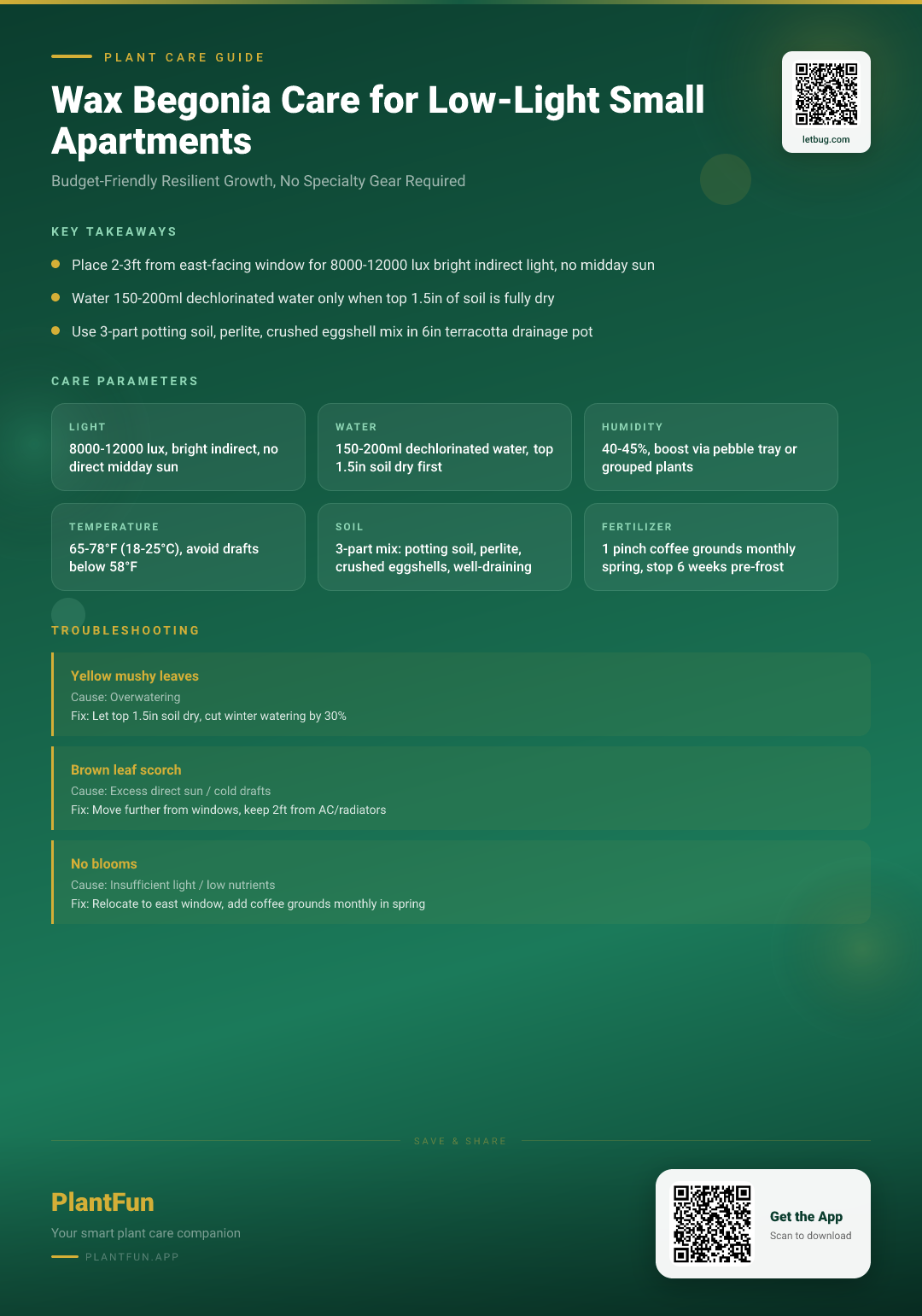
Key Takeaways
- Check soil moisture before watering — overwatering is the #1 killer of houseplants.
- Ensure your plant gets the right amount of light for its species.
- Be patient with recovery — most plants need 2–4 weeks to bounce back.
Quick Care Card
| Parameter | Measurable Threshold (Low-Light Apartments) |
|---|---|
| Light | 2-3ft from unobstructed east-facing window, 8,000-12,000 lux, no direct midday sun |
| Water | 150-200ml dechlorinated water, only when top 1.5in of soil is dry: 9-12 days cool months, 6-8 days warm months |
| Humidity | 40-45% local humidity, no humidifier required |
| Temperature | 65-78°F (18-25°C), no exposure below 58°F (14°C) |
| Soil | 3-part mix: 1/3 potting soil, 1/3 perlite, 1/3 crushed eggshells |
| Fertilizer | 1 pinch of used coffee grounds monthly in spring, no specialty fertilizer needed |
| Toxicity | Non-toxic to cats, dogs, and humans (ASPCA, 2026) |
Why This Guide Is Different
Most generic wax begonia care guides assume outdoor growing or large, well-lit homes, with recommendations for expensive grow lights, humidifiers, and specialty fertilizer that add unnecessary cost for renters. This guide is tailored exclusively for 500-700 sq ft urban apartments with <40% average humidity, with zero-fluff, measurable steps that use only common household items. Wax begonias (Begonia x semperflorens-cultorum) are far more durable than many popular houseplants (Hanum et al., 2021), making them perfect for beginner plant owners looking for low-effort, blooming foliage without a big investment. This guide covers everything you need for wax begonia care for beginners, with zero specialty products required.
Step 1: Light Placement Hack (No Grow Lights Needed)
Skip the expensive grow lights for your wax begonia low light care routine. Position your plant 2-3ft away from an unobstructed east-facing window, which delivers soft morning sun and bright indirect light measuring 8,000-12,000 lux — exactly the light level wax begonias need to bloom consistently without leaf scorch. Quick test: Hold your hand at plant height at midday; if you see a faint, soft shadow, the light is perfect. If you see a dark, sharp shadow, move the plant 6 inches further back from the window. This placement answers the common question: do wax begonias need grow lights? No, this simple hack works for even dim urban apartments (Hanum et al., 2021).
Step 2: Budget Watering Routine (No Moisture Meter Required)
Overwatering is the #1 cause of death for indoor wax begonias, especially in low-light apartments where soil dries slowly. Follow this measurable routine to avoid guesswork:
- Quick test: Stick your index finger 1.5 inches into the soil. Only water if the soil is completely dry, no dampness at all.
- Use 150-200ml of dechlorinated tap water (leave tap water in an open jug for 24 hours to let chlorine evaporate for free).
- Schedule: Every 9-12 days in cool fall/winter months, every 6-8 days in warm spring/summer months for wax begonia summer watering. This routine answers how often to water wax begonia in low-light spaces, no fancy moisture meter needed.
Step 3: Soil & Potting Hack Using Household Scraps
For a budget wax begonia soil mix that prevents root rot, use this 3-part mix made from items you already have at home:
- 1/3 regular all-purpose potting soil
- 1/3 perlite (or crushed Styrofoam from packaging if you don’t have perlite)
- 1/3 crushed eggshells (save from cooking, rinse, and crush into fine pieces to improve drainage and add calcium) Plant your begonia in a 6-inch terracotta pot with at least 2 drainage holes; terracotta wicks away excess moisture to prevent soggy roots, which is the biggest risk for potted wax begonias. Only repot when roots are growing out of the drainage holes, which usually takes 2-3 years.
Step 4: $0 Humidity Boost Tips
Wax begonia humidity requirements sit at 40-45% local humidity, which is easy to achieve without an expensive humidifier, even in dry apartments:
- Group it with your other low-light houseplants that thrive in small apartments; transpiration from their leaves naturally raises local humidity by 5-10% around the group.
- Repurpose an old plastic takeout tray: Fill it with clean pebbles (or glass marbles you have lying around), add water until it is just below the top of the pebbles, then set the pot on top of the pebbles. Evaporating water raises humidity right around the plant for free, no misting required.
Step 5: Temperature Parameters to Avoid Stress
Wax begonias thrive in standard indoor apartment temperatures between 65-78°F (18-25°C), which requires no extra heating or cooling adjustments. The only rule to follow: Never place your plant within 2ft of drafty AC vents, radiators, or exterior doors, where temperatures can drop below 58°F (14°C). Quick test: Hold a thermometer at plant height for 1 hour; if the temperature stays within the 65-78°F range, the spot is perfect. Cold drafts are a common cause of leaf drop and stunted growth, so this small adjustment will make a huge difference.
Seasonal Care Calendar
Adjust your care routine slightly each season to encourage year-round blooms:
- Winter (wax begonia winter care): Reduce watering volume by 30% (use 105-140ml instead of 150-200ml) because growth slows in low winter light, so soil dries much slower. Skip all fertilizer in winter.
- Spring: Add 1 pinch of used coffee grounds (from your morning brew, no cost) to the top of the soil once a month. Coffee grounds add nitrogen and slightly acidify the soil, which wax begonias love, no specialty bloom booster needed. You can learn more about other free nutrient sources in our guide to using household scraps as free plant fertilizer.
- Summer: Move your plant 1ft further from the east-facing window to avoid scorch from stronger late-morning summer sun. Keep to the 6-8 day watering schedule for wax begonia summer watering.
- Fall: Stop fertilizing 6 weeks before your area’s first average frost date to let the plant harden off for slower winter growth.
Common Budget Care Mistakes to Avoid
These easy-to-fix mistakes are the most common reasons wax begonias struggle in apartments:
- Mistake: Overwatering on a fixed schedule without checking soil moisture first. What happens: Root rot, yellow leaves, and plant death. Instead: Always stick your finger 1.5 inches into the soil before watering, only water if it is completely dry.
- Mistake: Using straight tap water immediately without dechlorinating. What happens: Chlorine and fluoride burn leaf edges and stunt growth. Instead: Leave tap water in an open jug for 24 hours to let chemicals evaporate for free.
- Mistake: Placing the plant near drafty vents or exterior doors. What happens: Sudden temperature swings cause leaf drop and no blooms. Instead: Keep the plant 2ft away from all heat/cool sources and exterior doors.
- Mistake: Buying expensive specialty begonia fertilizer or bloom boosters. What happens: Wasted money, salt buildup in soil that damages roots. Instead: Use used coffee grounds once a month in spring, which provides all the nutrients your wax begonia needs.
- Mistake: Repotting into a pot that is more than 2 inches larger than the current pot. What happens: Extra soil holds excess moisture, leading to root rot. Instead: Keep your begonia in a 6-inch pot for 2-3 years, only repot when roots are growing out of the drainage holes.
Voice Search FAQ
Why are my wax begonia leaves turning yellow and crispy in my apartment?
The most common causes are overwatering, exposure to cold drafts, or low humidity. First, check if the top 1.5 inches of soil are soggy; if yes, let it dry completely before watering again. Next, check if the plant is within 2ft of a vent or exterior door, and move it if needed. Finally, set up the pebble tray humidity hack to raise local humidity to 40-45%. If root rot has already set in, follow our step-by-step guide to fixing root rot in houseplants to save your plant.
How often do I need to water my wax begonia if I don’t get a lot of natural light?
In low-light apartments, water 150-200ml of dechlorinated water only when the top 1.5 inches of soil are completely dry: every 9-12 days in cool fall/winter months, and every 6-8 days in warm spring/summer months. This is slower than the recommended watering schedule for bright outdoor or high-light spaces, since soil dries much slower in low light.
Can I grow a wax begonia in my apartment without a grow light?
Yes! Position it 2-3ft away from an unobstructed east-facing window, which provides 8,000-12,000 lux of soft bright indirect light, exactly what wax begonias need to bloom consistently. A 2021 study of begonia durability as indoor plants found that they thrive in low to medium bright indirect light with no supplemental lighting required (Hanum et al., 2021). This simple placement is the easiest hack for how to keep wax begonia alive indoors with no extra cost.
Why do I have wax begonia no blooms in apartment?
This is almost always caused by too little light or overfertilizing. Make sure your plant is positioned 2-3ft from an unobstructed east-facing window, and only fertilize with a pinch of coffee grounds once a month in spring, no other fertilizer. Too much nitrogen will encourage leaf growth over blooms.
Troubleshooting Quick Reference Table
| Symptom | Root Cause | 5-Minute Fix |
|---|---|---|
| Yellow, mushy leaves | Overwatering, root rot risk | Pour off any standing water in the saucer, let top 2 inches of soil dry completely before next watering |
| No blooms for 2+ months | Insufficient light, excess fertilizer | Move plant 6 inches closer to east-facing window, scrape any excess fertilizer off top of soil |
| Brown, crispy leaf edges | Low humidity, chlorinated water | Set up pebble tray under pot, start using dechlorinated water left out for 24 hours |
| Dropping leaves suddenly | Cold draft, sudden temperature swing | Move plant 2ft away from vent/door, check that ambient temperature stays above 58°F (14°C) |
| White powdery spots on leaves | Powdery mildew from poor air circulation | Wipe leaves with a damp paper towel, move plant to a spot with slight air flow (not a draft). For persistent mildew, follow our guide to getting rid of powdery mildew without harsh chemicals. |
Understanding the Science
Wax begonias (Begonia x semperflorens-cultorum) are bred specifically for durability as indoor and landscape plants, making them far more tolerant of fluctuating apartment conditions than many other begonia varieties. A 2021 study evaluating begonia durability as indoor pot plants found that they tolerate low light levels and low humidity better than most common houseplants, making them ideal for urban apartment dwellers (Hanum et al., 2021). A 2022 plant pathology study notes that wax begonias are relatively disease-resistant, with almost all common health issues caused by cultural care mistakes (like overwatering) rather than pathogens (Kim et al., 2022). The ASPCA confirms that wax begonias are non-toxic to cats, dogs, and humans, so they are safe for households with pets and small children (ASPCA, 2026).
References
- ASPCA. (2026). Toxic and Non-Toxic Plants List — ASPCA. https://www.aspca.org/pet-care/animal-poison-control/toxic-and-non-toxic-plants. Accessed 2026-02-24.
- Hanum, S.; Rahayu, A.; Darma, I. (2021). Begonia muricata Blume and Begonia serratipetala Irmsch durability as indoor pot plant in Eka Karya Bali Botanic Garden. Berkala Penelitian Hayati. https://doi.org/10.23869/bphjbr.26.2.20217. Accessed 2026-02-24.
- Kim, S.; Kim, S.; Lee, H. (2022). First report of zucchini yellow mosaic virus infecting wax begonia (Begonia semperflorens) in Korea. Journal of Plant Pathology. https://doi.org/10.1007/s42161-022-01276-y. Accessed 2026-02-24.
Optional Helper: Plantfun.App
Plantfun.App identifies your plants by photo, diagnoses pests and diseases with clear fixes, and creates personalised watering and light schedules that adapt to your home conditions — a handy companion for putting this guide into daily practice.
Found an error or have suggestions? We'd love your feedback.
Need help identifying this problem?
Get instant identification, personalized care schedules, and effective pest treatment plans directly on your phone.
Sponsored • We may earn a commission from app downloads
Related Guides
Wax Begonia Care Checklist: 9 Actionable Steps for Resilient Growth in East-Facing Apartments
Stop guessing at wax begonia care for your east-facing apartment. Get 9 actionable checklist steps, exact light, water, and humidity thresholds to grow lush, blooming plants year-round.
Care GuideThe Complete Wax Begonia Care Guide for Typical Apartments: Easy Resilient Growth Year-Round
Grow lush, blooming wax begonias in your apartment no green thumb required. Get exact light levels, watering amounts, and a seasonal calendar to prevent leaf drop and boost blooms all year.
Care GuideThe Complete Wax Begonia Care Checklist for Resilient Growth in Small East-Facing Studio Apartments
Grow bushy, continuously blooming wax begonias in your small apartment without bulky care equipment. Get exact light levels, watering amounts, and space-saving tips for resilient, low-fuss growth.
Pest ControlAnts on Plants: What They Mean and What to Do
Ants usually aren't eating your plant. They are farming other pests.